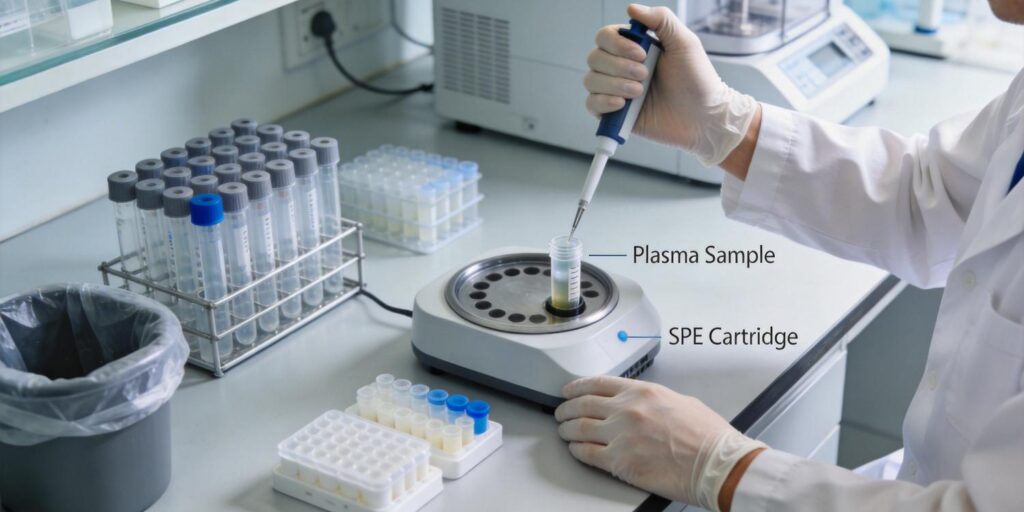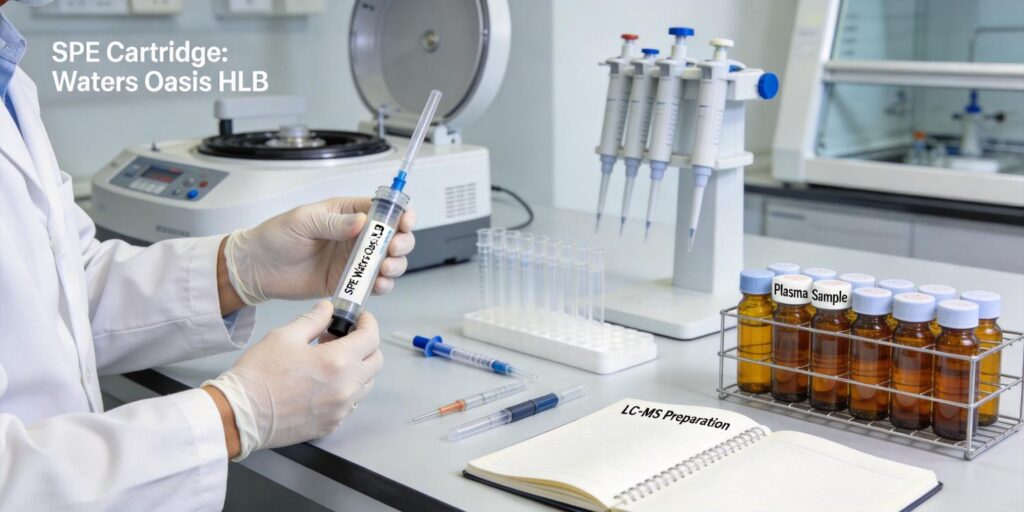
1. Types of Endogenous Compounds Interfering in LC-MS Analysis
Plasma samples present a complex matrix challenge for LC-MS analysis due to numerous endogenous compounds that can interfere with accurate analyte detection. These interfering substances fall into several key categories:
Proteinaceous Components
Proteins represent the most abundant endogenous interferents in plasma, comprising approximately 60-80 g/L. Albumin, globulins, and fibrinogen can cause significant matrix effects through ion suppression in electrospray ionization (ESI) sources. These large molecules can foul MS interfaces and analytical columns, leading to reduced sensitivity and instrument downtime.
Lipids and Fatty Acids
Plasma contains approximately 4-9 g/L of lipids, including triglycerides, phospholipids, and cholesterol esters. These hydrophobic compounds can co-elute with analytes, causing ion suppression and interfering with chromatographic separation. Phospholipids are particularly problematic as they can cause significant matrix effects in both positive and negative ionization modes.
Small Molecule Metabolites
Endogenous metabolites such as amino acids, sugars, urea, creatinine, and various organic acids can interfere with analyte detection. These compounds vary significantly between individuals based on diet, health status, and metabolic conditions, creating variable matrix effects that complicate quantitative analysis.
Inorganic Ions and Salts
Plasma contains approximately 0.9% NaCl along with other electrolytes including potassium, calcium, and bicarbonate. These ions can cause ion suppression in MS detection and may precipitate in organic solvents during sample preparation.
Hormones and Signaling Molecules
Endogenous hormones, cytokines, and other signaling molecules present at low concentrations can interfere with analyte detection, particularly when analyzing pharmaceutical compounds with similar chemical properties.
2. Why Endogenous Metabolites Cause Quantitation Errors
Endogenous compounds cause quantitation errors through several mechanisms that directly impact LC-MS performance:
Ion Suppression and Enhancement
Co-eluting endogenous compounds compete with analytes for ionization in the MS source. This competition reduces (suppresses) or occasionally enhances analyte signal intensity, leading to inaccurate quantification. The effect is particularly pronounced in electrospray ionization where ionization efficiency depends on droplet formation and charge competition.
Chromatographic Interference
Endogenous compounds with similar retention times to analytes can cause peak overlap, broadening, or tailing. This interference compromises peak integration accuracy and can lead to false identification or quantification errors.
Matrix-Induced Response Variation
Sample-to-sample variability in endogenous compound composition creates inconsistent matrix effects. This variability makes calibration with neat standards unreliable and necessitates matrix-matched calibration or extensive sample cleanup.
Instrument Fouling
Proteins and phospholipids can deposit in LC columns, transfer lines, and MS ion sources, gradually reducing sensitivity and requiring frequent instrument maintenance. This fouling effect is well-documented in LC-MS applications where biological samples are analyzed without adequate cleanup.
Carryover Effects
Highly retained endogenous compounds can elute in subsequent injections, causing carryover that interferes with low-level analyte detection in following samples.
3. SPE Strategies for Selective Analyte Retention
Effective SPE method development for plasma samples requires strategic selection of sorbent chemistry and optimization of extraction conditions:
Sorbent Selection Based on Analyte Properties
The choice of SPE sorbent depends on the physicochemical properties of target analytes. For basic compounds, mixed-mode cation exchange sorbents (like our MCX cartridges) provide dual retention mechanisms through hydrophobic interactions and cation exchange. For acidic compounds, mixed-mode anion exchange sorbents (such as our MAX cartridges) offer similar dual retention capabilities.
pH Optimization for Selective Retention
Controlling sample pH is critical for maximizing analyte retention while minimizing endogenous interference retention. For basic analytes, acidifying samples to pH 2-3 ensures protonation and strong cation exchange retention. For acidic analytes, alkaline conditions (pH 8-9) promote deprotonation and anion exchange retention.
Mixed-Mode Extraction Approaches
Mixed-mode SPE cartridges combine hydrophobic and ion-exchange interactions, providing superior selectivity compared to single-mode sorbents. This approach allows retention of analytes through multiple mechanisms while enabling selective washing to remove endogenous interferences.
Protein Precipitation Integration
Combining protein precipitation with SPE provides enhanced cleanup. Initial protein removal using organic solvents (acetonitrile or methanol) followed by SPE of the supernatant reduces protein-related matrix effects and prevents sorbent clogging.
Dilution Strategies
Appropriate sample dilution with buffer or water before SPE application reduces matrix effects and improves analyte recovery. Dilution decreases ionic strength and protein concentration, enhancing sorbent-analyte interactions.
4. Washing Steps Designed to Eliminate Endogenous Compounds
Strategic washing protocols are essential for removing endogenous interferences while retaining target analytes:
Hydrophobic Wash Optimization
For reversed-phase SPE, water or low-percentage organic washes (5-20% methanol or acetonitrile in water) effectively remove polar endogenous compounds while retaining hydrophobic analytes. The wash composition should be optimized to maximize interference removal without causing analyte elution.
Ion-Exchange Wash Strategies
For mixed-mode SPE, washing with organic solvents containing volatile acids or bases can disrupt hydrophobic interactions while maintaining ionic retention. For cation exchange, washes with methanol containing 2-5% formic acid remove neutral and acidic interferences. For anion exchange, methanol with 2-5% ammonium hydroxide serves a similar purpose.
Selective Phospholipid Removal
Phospholipids represent a major source of matrix effects in plasma analysis. Washes with methyl tert-butyl ether (MTBE) or hexane can selectively remove phospholipids from reversed-phase sorbents while retaining most pharmaceutical analytes.
Protein and Salt Removal
Water or buffer washes effectively remove residual salts and water-soluble proteins that may have been carried over from sample pretreatment. For methods involving protein precipitation, additional water washes ensure complete removal of precipitation reagents.
Flow Rate Optimization
Controlled flow rates during washing (typically 1-3 mL/min) ensure adequate contact time for interference removal without causing premature analyte elution. Automated systems provide superior flow control compared to manual vacuum manifolds.
5. Evaluating Matrix Effects After Cleanup
Comprehensive matrix effect evaluation is essential for validating SPE methods:
Post-Extraction Spike Experiments
Comparing analyte response in post-extraction spiked samples versus neat standards quantifies residual matrix effects. Signal suppression or enhancement greater than 15-20% typically indicates inadequate cleanup.
Matrix Factor Calculation
Matrix factor (MF) calculations provide quantitative assessment of matrix effects: MF = (analyte response in post-extraction spike) / (analyte response in neat solution). Ideal methods achieve MF values close to 1.0 with minimal variability between different plasma lots.
Ion Suppression Mapping
Endogenous Compound Monitoring
Monitoring specific endogenous markers (such as phospholipids using precursor ion scanning) provides direct assessment of interference removal efficiency.
Cross-Validation with Different Plasma Lots
Testing SPE methods with plasma from at least six different donors evaluates method robustness against biological variability. Significant differences in matrix effects between lots may indicate method sensitivity to specific endogenous compounds.
6. LC-MS Validation Experiments
Comprehensive validation ensures SPE methods meet analytical requirements:
Recovery and Precision Assessment
Determining absolute recovery (comparison of extracted versus non-extracted samples) and precision (intra- and inter-day variability) validates extraction efficiency. SPE methods should achieve recoveries >70% with RSD <15% for bioanalytical applications.
Linearity and Sensitivity
Establishing linear calibration curves over the expected concentration range validates method sensitivity. Lower limits of quantification (LLOQ) should demonstrate acceptable accuracy and precision (typically ±20% bias, <20% RSD).
Selectivity and Specificity
Demonstrating absence of interference at analyte retention times in blank plasma extracts confirms method selectivity. This includes testing for interference from metabolites, concomitant medications, and endogenous compounds.
Stability Evaluation
Assessing analyte stability during sample processing, storage, and extraction ensures reliable quantification. This includes evaluation of freeze-thaw stability, benchtop stability, and processed sample stability.
Carryover Assessment
Testing for carryover by injecting blank samples after high-concentration standards ensures method reliability for sequential sample analysis.
7. Real-World Case Study from Bioanalysis
A recent application in our laboratory demonstrates the effectiveness of optimized SPE for removing endogenous interferences:
Challenge: Analysis of Basic Drug Candidate in Plasma
We developed an LC-MS/MS method for a basic pharmaceutical compound (pKa ~9.5) requiring quantification at sub-ng/mL levels in human plasma. Initial protein precipitation methods showed severe ion suppression (>60%) and poor reproducibility.
SPE Method Development
We selected mixed-mode cation exchange SPE (MCX cartridges) for dual retention capability. Sample pretreatment involved dilution with 0.1% formic acid to ensure analyte protonation. The washing protocol included: 1) 2 mL water, 2) 2 mL 0.1% formic acid in methanol, and 3) 2 mL hexane for phospholipid removal.
Results and Performance
The optimized method achieved 85% recovery with RSD <8%. Matrix effects were reduced to <15% suppression across six different plasma lots. The method demonstrated linearity from 0.1-100 ng/mL with excellent precision and accuracy. Phospholipid removal efficiency exceeded 95%, significantly reducing source contamination and extending instrument uptime.
Implementation in High-Throughput Format
The method was successfully transferred to 96-well SPE plates for automated processing, increasing throughput to 192 samples per day while maintaining method performance.
Key Takeaways
This case study highlights several critical success factors: 1) Proper sorbent selection based on analyte properties, 2) Strategic washing for specific interference removal, 3) Comprehensive matrix effect evaluation, and 4) Method optimization for high-throughput applications.
Effective SPE workflow development for plasma samples requires systematic approach addressing each aspect of endogenous interference removal. By combining appropriate sorbent chemistry with optimized washing protocols and comprehensive validation, laboratories can achieve reliable quantification even for challenging analytes at trace levels.