Principle of Mixed-Mode SPE Interactions
Mixed-mode solid phase extraction represents a sophisticated advancement in sample preparation technology that combines multiple retention mechanisms within a single sorbent. According to established literature, mixed-mode SPE columns are prevalent in drug extractions because they offer multiple binding mechanisms for improved sensitivity and excellent sample cleanup. A mixed-mode sorbent employs two or more binding mechanisms in the same column, with the most common combination being reversed-phase with ion exchangers.
The fundamental principle behind mixed-mode interactions involves simultaneous utilization of different chemical forces to retain analytes. These include hydrophobic (van der Waals) interactions, ionic (coulombic) forces, and potentially polar interactions. The term “mixed mode” specifically describes the retention of an analyte by two or more retention mechanisms, creating a synergistic effect that enhances selectivity and cleanup efficiency.
Combining Reversed-Phase and Ion-Exchange Mechanisms
The most powerful mixed-mode configurations combine reversed-phase (hydrophobic) and ion-exchange mechanisms. This dual chemistry is particularly beneficial when analyzing both neutral and charged compounds, which is common when a neutral parent drug metabolizes and becomes a charged compound. Mixed-mode sorbents can be manufactured by blending sorbents of each functional type, or they can be true copolymers whereby different functional silanes are polymerized to the substrate.
Each manufacturing approach has distinct advantages. Blended phases offer greater capacity flexibility by altering the blend to change carbon loading or milliequivalent levels of ion exchangers. Copolymers, on the other hand, typically yield greater lot-to-lot reproducibility as no physical blending of phases is required. These copolymeric phases are produced in a way that allows for equal parts of each functional group to attach to the silica backbone, yielding reproducible bonded phases and unique copolymeric chemistries.
The controlled and built-in ion exchange capability of these materials allows more robust methods to be developed than would be possible with standard reversed-phase materials. The retention through ion exchange means that these columns can be washed with relatively strong solvents such as methanol, giving effective removal of anionic and neutral interferences without seriously affecting the recovery of the analyte.
Applications in Complex Biological Matrices
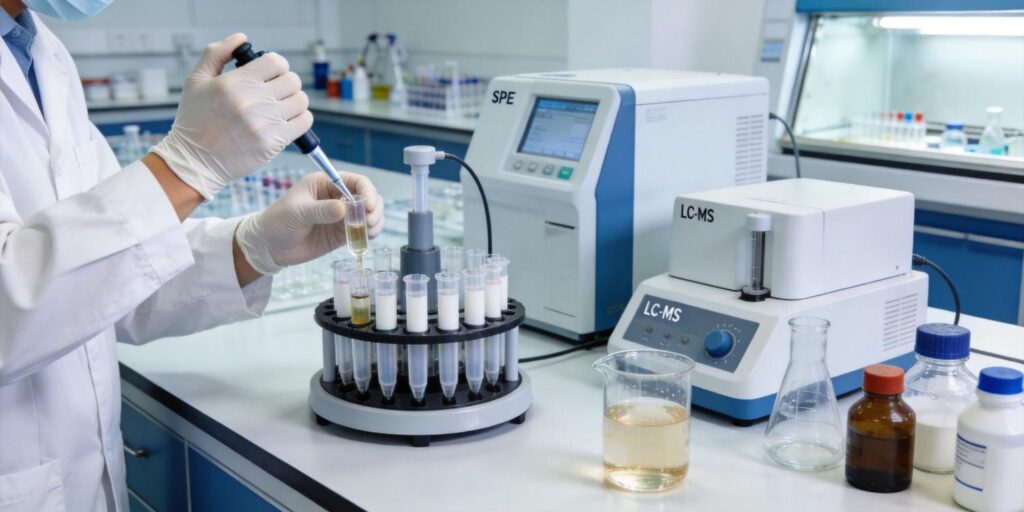
Mixed-mode SPE sorbents excel in handling complex biological matrices such as urine, blood, plasma, and serum. These matrices present significant challenges due to their diverse composition of proteins, lipids, salts, and endogenous compounds that can interfere with analysis. The dual retention mechanism of mixed-mode sorbents provides orthogonal selectivity that is particularly valuable in these environments.
In forensic and clinical applications, mixed-mode SPE has become the gold standard for drug extractions. The ability to simultaneously retain compounds through hydrophobic and ionic interactions allows for superior cleanup of biological samples. This is especially important when dealing with drug metabolites that may have different chemical properties than their parent compounds. The matrix is critical in sorbent extraction because the retention of an isolate on a sorbent is strongly influenced by the chemistry of the matrix.
Research indicates that mixed-mode materials were introduced as early as 1986, but their adoption has grown significantly as analysts recognize their advantages for complex matrix cleanup. The retention through multiple mechanisms gives a greater degree and control of selectivity than would have been possible if the cartridge acted as a pure reversed phase.
Washing Strategies Enabled by Dual-Mode Retention
One of the most significant advantages of mixed-mode SPE is the enhanced washing capabilities enabled by dual-mode retention. The strong ionic bonds (50-250 kcal/mol) allow the use of aggressive wash solvents that would typically elute analytes from single-mode sorbents. This translates to cleaner extracts with higher signal-to-noise ratios and typically higher absolute recoveries.
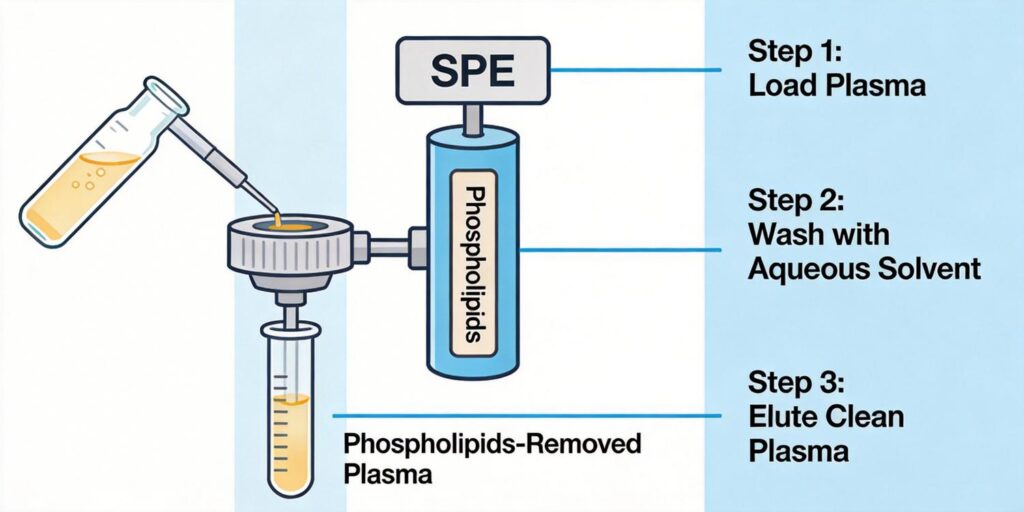
Effective washing strategies with mixed-mode sorbents typically involve sequential application of different solvent systems:
- Aqueous washes: These remove water-soluble interferences while analytes remain retained through hydrophobic interactions.
- Organic washes: Methanol or acetonitrile washes can remove neutral and hydrophobic interferences without affecting ionically retained analytes.
- pH-adjusted washes: Specific pH conditions can be used to selectively remove certain classes of interferences while maintaining analyte retention.
The ideal washing process removes as many interferences as possible while retaining the analyte(s). With mixed-mode sorbents, analysts can use stronger washes (aqueous acids and buffers, polar organics, and mixtures of organics) to remove matrix contaminants without loss of target analytes. This is particularly valuable in biological samples where acidic, neutral, and basic compounds all abound.
Optimizing pH for Analyte Selectivity
pH optimization is crucial for maximizing the benefits of mixed-mode SPE. The pKa values of both the analytes and the sorbent functional groups must be considered. For ion-exchange interactions to occur effectively, analytes must be in their ionized form. Basic compounds must be 2 pH units below their pKa for full ionization, while acidic compounds must be 2 pH units above their pKa for full ionization.
The pH range of 3.0-8.0 is typically optimal for sorbent extractions, though mixed-mode sorbents often offer stability across wider pH ranges. When using mixed-mode extractions, the elution solvent must be able to reverse or disrupt all bonding mechanisms simultaneously, so pH, polarity, and solubility must all be considered.
For cation-exchange applications, acidic conditions (pH 2-3) ensure basic analytes are protonated and positively charged. For anion-exchange applications, basic conditions (pH 8-9) ensure acidic analytes are deprotonated and negatively charged. The ability to manipulate pH conditions provides an additional dimension of selectivity that is not available with single-mode sorbents.
Practical Workflow Examples
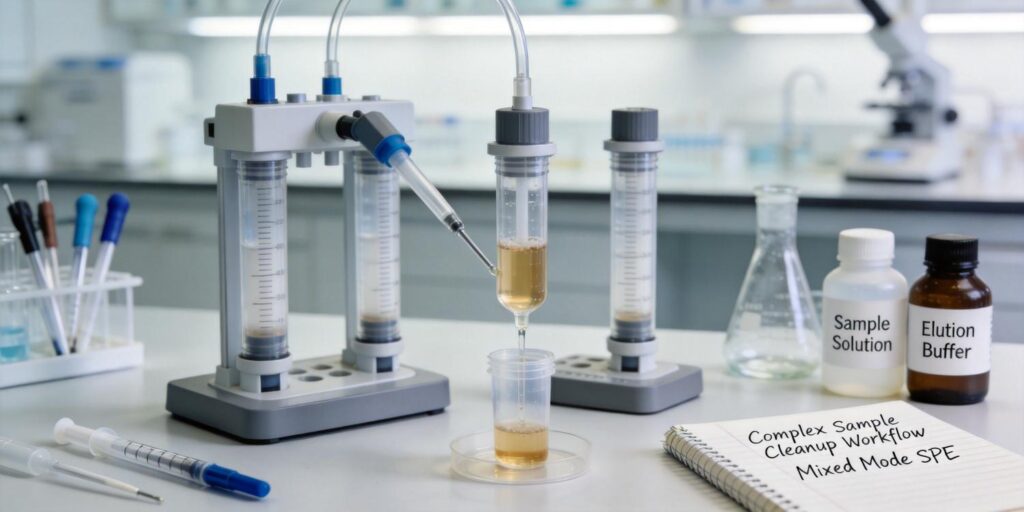
A typical mixed-mode SPE workflow involves five fundamental steps that must be optimized for specific compounds and matrices:
1. Conditioning and Solvation
Columns with hydrophobic character need to be solvated to interact efficiently and reproducibly with aqueous matrices. Sample capacity is severely reduced on a dry column. For mixed-mode sorbents, conditioning typically involves methanol or acetonitrile followed by water or buffer to ensure proper pH for desired interactions.
2. Sample Application
Apply sample at a rate of approximately 1 mL/min. The analyte and sorbent should be uncharged for optimum hydrophobic retention, while for ion-exchange interactions, analytes must carry the opposite charge of the sorbent. During sample application, the analyte binds by displacing a counter ion on the sorbent.
3. Washing
Use sequential washes to remove interferences while maintaining analyte retention. A common strategy involves water or aqueous buffer followed by organic solvent washes. The strong bonds in mixed-mode sorbents allow use of stronger washes without analyte loss.
4. Drying
Remove aqueous or immiscible solvents to prepare sorbent for elution solvent. This step is particularly important when eluting with non-polar solvents.
5. Elution
Use solvents that disrupt all binding mechanisms simultaneously. For mixed-mode sorbents, this typically requires solvents with appropriate pH adjustment and organic composition. Common elution strategies involve two-step elution with different solvent systems to ensure complete recovery.
Comparison with Single-Mode Sorbents
Mixed-mode sorbents offer several distinct advantages over single-mode alternatives:
Enhanced Selectivity
Mixed-mode sorbents provide orthogonal selectivity through multiple retention mechanisms, resulting in cleaner extracts and reduced matrix effects. This is particularly valuable in complex matrices where single-mode sorbents may co-extract interfering compounds.
Improved Sensitivity
The ability to use aggressive wash solvents without analyte loss allows for better removal of interferences, leading to improved signal-to-noise ratios and lower detection limits.
Greater Method Robustness
Mixed-mode methods tend to be more robust due to the multiple retention mechanisms. If one mechanism is compromised (e.g., due to pH variations), the other mechanism can still provide adequate retention.
Broader Applicability
Mixed-mode sorbents can handle a wider range of compound classes within a single method, reducing the need for multiple extraction procedures.
Higher Capacity for Certain Applications
For compounds that can interact through both mechanisms, mixed-mode sorbents often provide higher effective capacity than single-mode alternatives.
However, mixed-mode sorbents do have some limitations. They typically require more careful method development, particularly regarding pH optimization. The elution process can be more complex, requiring solvents that disrupt multiple binding mechanisms simultaneously. Additionally, mixed-mode sorbents may have slightly higher costs compared to single-mode alternatives.
Despite these considerations, the benefits of mixed-mode SPE for complex sample cleanup are substantial. As analytical demands increase for sensitivity, selectivity, and throughput, mixed-mode sorbents continue to gain popularity in pharmaceutical, clinical, forensic, and environmental applications. Their ability to provide cleaner extracts with higher recoveries makes them an essential tool in modern analytical laboratories.
For laboratories considering implementation of mixed-mode SPE, Poseidon Scientific offers a comprehensive range of mixed-mode SPE products including MCX (Mixed-mode Cation eXchange), MAX (Mixed-mode Anion eXchange), WAX (Weak Anion eXchange), and WCX (Weak Cation eXchange) cartridges, as well as 96-well SPE plates for high-throughput applications.