Typical Multi-Residue Drug Analysis Workflow in LC-MS
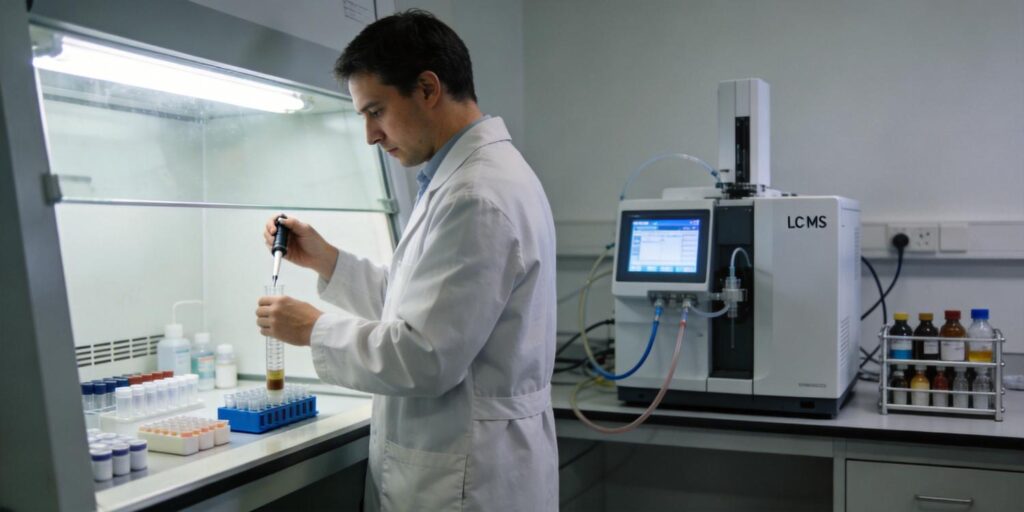
Multi-residue drug analysis in LC-MS represents a critical challenge in modern analytical chemistry, requiring robust sample preparation methods to handle complex biological matrices. The typical workflow begins with sample collection and proceeds through several systematic steps to ensure accurate quantification of diverse pharmaceutical compounds. According to established protocols, this process involves sample pretreatment, solid-phase extraction (SPE), and subsequent LC-MS analysis.
The SPE strategy generally comprises the isolation and concentration of analytes from complex matrices by adsorption onto an appropriate sorbent, removal of interfering impurities by washing with suitable solvent systems, and selective recovery of retained analytes with modified solvent systems of appropriate elution strength. This approach has proven particularly effective for broad-spectrum drug screening in toxicological analysis, where simultaneous detection of multiple drug classes is essential.
Research indicates that mixed-mode cartridges providing both hydrophobic and cation exchange interactions, combined with pH-dependent sample application and extraction, can yield high recoveries of analytes from plasma, urine, whole blood, and tissues. The resulting SPE eluates are easily amenable to subsequent GC- and HPLC-analysis, with chromatograms showing minimal interference from endogenous matrix components.
Sample Matrices: Plasma, Serum, and Urine Considerations
Different biological matrices present unique challenges in multi-residue drug analysis. Plasma and serum samples typically contain proteins, lipids, and other endogenous compounds that can interfere with analysis, while urine samples often have higher salt concentrations and varying pH levels. Studies have demonstrated that SPE procedures must be optimized for each matrix type to achieve optimal recovery and cleanliness.
For plasma and serum samples, protein precipitation or dilution with appropriate buffers is often necessary before SPE. Research shows that plasma samples diluted 1:1 with phosphoric acid (pH 2.2) provide better retention of acidic drugs compared to higher dilutions. The starting pH significantly affects recovery, with pH 2.2 resulting in less ionization of acidic drugs and hence better retention on the cartridge. However, the amounts of water in the sample application step and in the wash step should be kept as small as possible to prevent washing away more polar acidic compounds.
Urine samples typically require different treatment approaches. Studies have shown that introducing an extra wash step with 20% acetonitrile in water between the cartridge wash and pH adjustment steps can significantly improve extract cleanliness, especially for basic drug analysis using GC/NPD. This additional wash removes polar interfering compounds without significantly affecting the recoveries of basic analytes under investigation.
HLB SPE Conditioning Protocol (MeOH → Water)
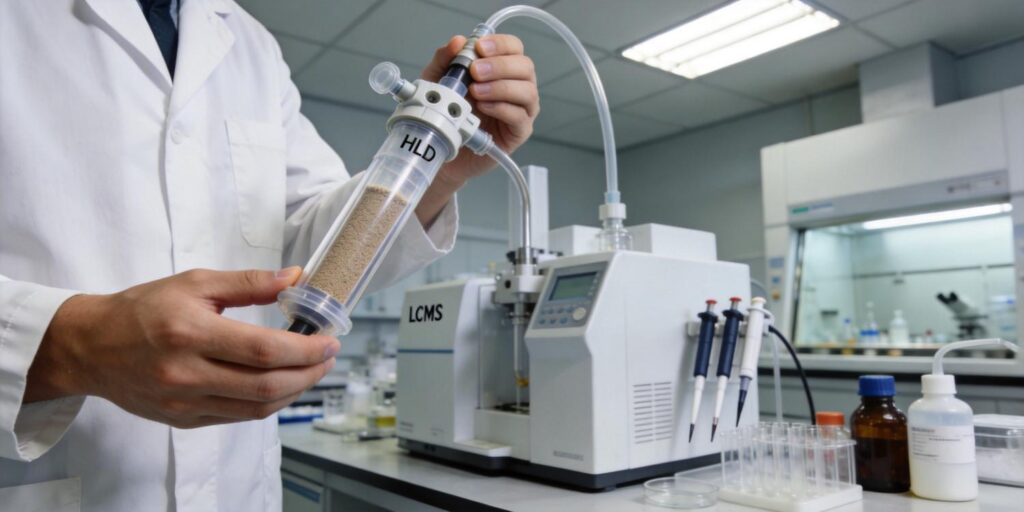
The conditioning protocol for HLB (Hydrophilic-Lipophilic Balance) SPE cartridges follows a standardized approach that ensures optimal sorbent activation. The typical conditioning sequence involves:
- 1 mL methanol to activate the polymeric sorbent
- 1 mL water to create an aqueous layer for sample loading
This methanol-to-water conditioning sequence is critical for HLB cartridges because it properly wets the polymeric sorbent and establishes the appropriate environment for analyte retention. The methanol serves to solvate the polymer chains and remove any residual impurities from manufacturing, while the water step creates the aqueous layer necessary for proper sample loading.
Recent advancements in SPE technology have introduced novel approaches like Oasis PRiME HLB, which eliminates the conditioning and equilibration steps that are essential with silica-based or other polymeric sorbents. This innovation saves valuable sample processing time and reduces solvent consumption and disposal costs.
Sample Loading Conditions (pH 6–7 Buffer)
Sample loading conditions significantly impact analyte retention and recovery in HLB SPE. For multi-residue drug analysis, maintaining sample pH between 6.0 and 7.0 during loading is crucial for optimal retention of both acidic and basic compounds. Research indicates that buffering samples at pH 6.0 using phosphate buffer provides a good compromise for retaining diverse drug classes.
Studies have shown that when samples are buffered at pH 6.0, more strongly acidic drugs are present in their dissociated, ionic forms. These ionic species retain poorly by non-polar mechanisms compared to neutral species. Therefore, some comprehensive procedures have modified the starting pH to 2.2 for better retention of polar acidic compounds like salicylic acid, paracetamol, and morphine.
The volume and composition of the loading solution also affect recovery. For plasma samples, research suggests that only a 1:1 dilution with appropriate buffer (rather than higher dilutions) and minimal wash volumes (0.5 mL instead of larger volumes) help maintain recovery of polar compounds.
Wash Solvent Optimization (5% MeOH Aqueous)
Wash solvent optimization represents a critical step in balancing analyte retention and matrix removal. For HLB SPE in multi-residue drug analysis, 5% methanol in water has emerged as an effective wash solvent that removes interfering compounds while maintaining high analyte recovery.
Research comparing different wash solvents has demonstrated that 5% methanol aqueous solution effectively removes salts, proteins, and other polar matrix components without eluting the target analytes. This concentration provides sufficient elution strength to remove hydrophilic interferences while maintaining strong retention of the target drugs on the HLB sorbent.
For urine samples, additional wash optimization may be necessary. Studies have shown that introducing an extra wash step with 20% acetonitrile in water between the cartridge wash and pH adjustment steps can significantly improve extract cleanliness for basic drug analysis using GC/NPD, removing polar interfering compounds without affecting analyte recoveries.
Elution Solvent Comparison (MeOH vs ACN vs MeOH+NH₄OH)
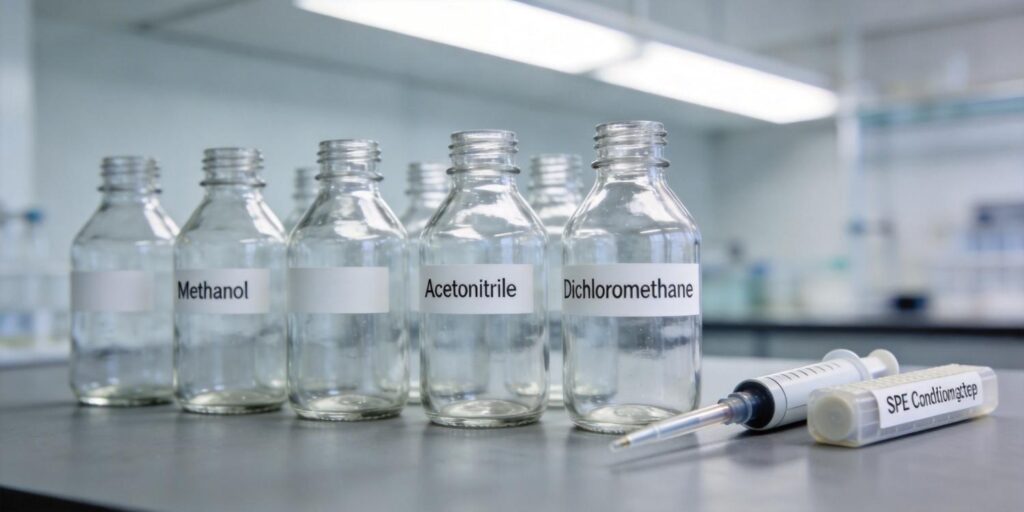
Elution solvent selection significantly impacts recovery efficiency and extract cleanliness in multi-residue drug analysis. Three primary elution solvents are commonly evaluated:
Methanol (MeOH)
Methanol provides strong elution power for a wide range of compounds and is particularly effective for polar to moderately non-polar analytes. Research shows methanol can achieve recoveries between 90-100% for many drug classes when used in appropriate volumes (typically 2-3 mL).
Acetonitrile (ACN)
Acetonitrile offers different selectivity compared to methanol and may provide cleaner extracts for certain applications. Studies have demonstrated that acetonitrile can be particularly effective when combined with methanol in specific ratios (such as 90:10 acetonitrile:methanol) for optimal elution of diverse drug classes.
Methanol with Ammonium Hydroxide (MeOH+NH₄OH)
The addition of ammonium hydroxide (typically 2-5%) to methanol creates a basic elution solvent that is particularly effective for basic drugs. Research indicates that ammoniated methanol or ammoniated ethyl acetate can achieve excellent recoveries for basic compounds while maintaining good selectivity.
Comparative studies have shown that different drug classes may respond better to specific elution solvents. For instance, acidic drugs typically elute well with neutral or acidic organic solvents, while basic drugs often require basic conditions for optimal recovery. Some comprehensive procedures use sequential elution with different solvents to fractionate drug classes.
Recovery Evaluation and Method Validation Parameters
Recovery evaluation and method validation represent the final critical steps in HLB SPE method development for multi-residue drug analysis. Comprehensive validation should include several key parameters:
Recovery Assessment
Recovery studies should evaluate extraction efficiency across the entire analytical range. Research demonstrates that well-optimized HLB SPE methods can achieve recoveries between 90-100% for most drug classes with relative standard deviations of 10% or less. For example, studies with 25 drugs spiked in calf plasma at 10 μg/mL showed total recoveries between 90-100% with RSDs ≤10%.
Linearity and Range
Method linearity should be established across the expected concentration range. Studies have shown linear responses from therapeutic to toxic concentrations, with some methods demonstrating linearity from 1-100 mg/L for certain analytes.
Precision and Accuracy
Both intra-day and inter-day precision should be evaluated, typically expressed as relative standard deviation (RSD). Well-validated methods generally show RSDs below 10-15% for both precision measures. Accuracy should be within ±15% of the nominal value for most concentrations.
Specificity and Selectivity
Method specificity should be demonstrated by analyzing blank matrices from multiple sources to ensure no interfering peaks co-elute with target analytes. Selectivity can be enhanced through appropriate wash steps and elution solvent optimization.
Stability Studies
Analyte stability should be evaluated in various conditions, including storage stability, processed sample stability, and freeze-thaw stability. Research indicates that properly processed samples can maintain stability for extended periods when stored appropriately.
Matrix Effects
Matrix effects should be evaluated using post-extraction addition methods or stable isotope-labeled internal standards. HLB SPE has demonstrated excellent matrix removal capabilities, with studies showing removal of 95% of common matrix interferences such as salts, proteins, and phospholipids.
By systematically addressing each of these validation parameters, analysts can develop robust, reliable HLB SPE methods for multi-residue drug analysis that meet regulatory requirements and provide accurate, reproducible results across diverse biological matrices.