Using MAX SPE to Isolate Acidic Metabolites in Urine
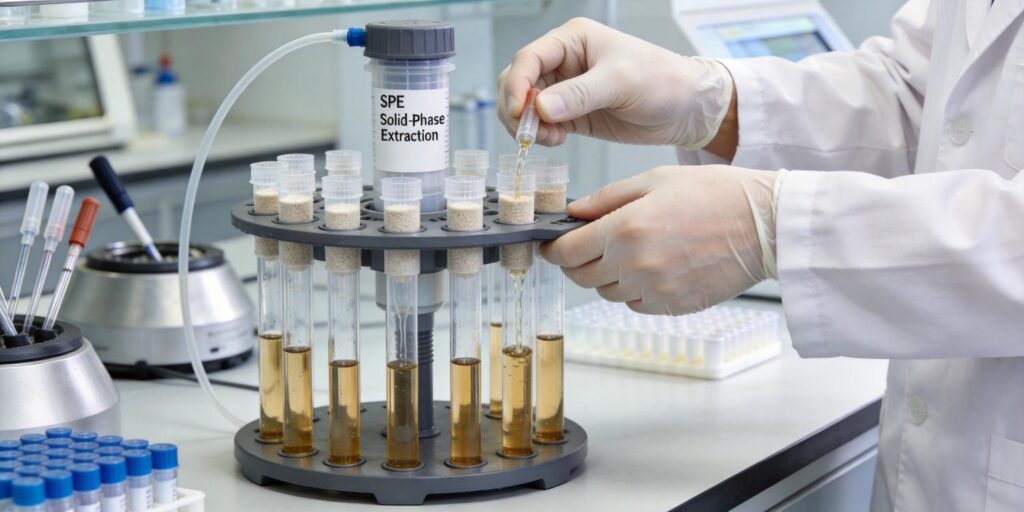
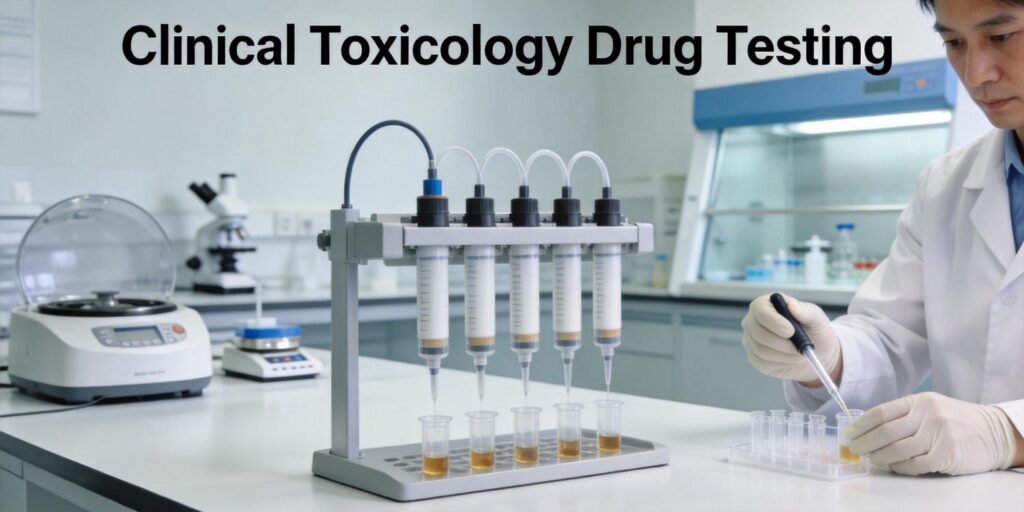
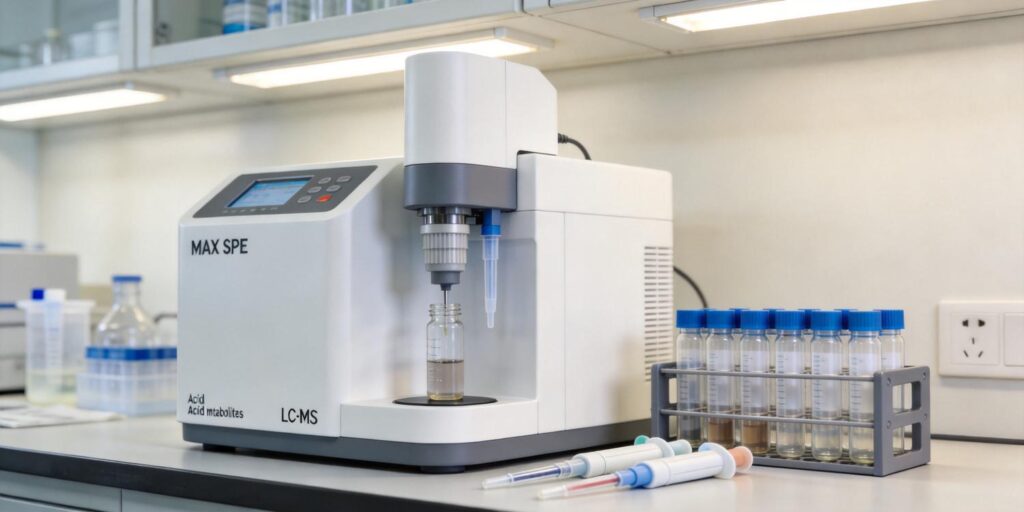
In pharmacokinetics and metabolomics, isolating acidic metabolites from complex biological matrices like urine is critical for accurate quantification and structural elucidation. Solid-phase extraction (SPE) with mixed-mode anion exchange sorbents, such as the Poseidon MAX SPE Cartridges, offers superior selectivity for acidic compounds. This article outlines a validated workflow for recovering acidic metabolites from urine using MAX SPE, emphasizing the underlying retention mechanisms and practical steps for robust LC-MS analysis.
1. Overview of Acidic Metabolites in Pharmacokinetics
Acidic metabolites—such as glucuronides, sulfates, and carboxylic acid conjugates—are common Phase II metabolic products. Their polar, ionizable nature makes them challenging to extract from urine, which contains salts, urea, and other endogenous interferences. Efficient isolation requires an SPE sorbent that exploits ionic interactions under controlled pH conditions, combined with reversed-phase (RP) retention of hydrophobic moieties.
2. Mixed-Mode Anion Exchange Retention Mechanism
Poseidon MAX SPE cartridges feature a quaternary ammonium strong anion exchanger bonded to a polymeric RP backbone. At pH above the pKa of the acidic analyte (typically pH 6–8), the analyte is deprotonated (anionic), while the quaternary amine remains positively charged. This electrostatic attraction provides strong retention, while the RP component retains neutral hydrophobic regions. The dual retention mode allows selective washes to remove non-acidic interferences.
3. Urine Pretreatment and Dilution
Raw urine samples should be centrifuged at 10,000 × g for 10 minutes at 4°C to remove particulate matter. Dilute the supernatant 1:2 to 1:10 with deionized water to reduce matrix viscosity and salt concentration, which can compete for ion exchange sites. For metabolite stability, keep samples on ice and process within 4 hours of collection.
4. pH Adjustment to Promote Analyte Ionization
Adjust the diluted urine pH to 7.0–7.5 using ammonium hydroxide or phosphate buffer (pH 7.4). This ensures acidic metabolites (pKa < 5) are fully ionized for optimal anion exchange. Use pH indicator strips or a micro-pH meter; avoid extreme pH that could degrade labile conjugates.
5. Conditioning and Equilibration Protocol
Proper conditioning of the MAX cartridge is essential for reproducible results:
- Condition: Pass 3 mL of methanol through the cartridge at 1 mL/min to wet the sorbent.
- Equilibrate: Follow with 3 mL of 50 mM ammonium acetate buffer (pH 7.0) to establish the desired ionic environment.
- Avoid letting the bed go dry between steps.
6. Wash Steps Removing Neutral Interferences
After loading the sample (1–5 mL at ≤1 mL/min), wash with 2 mL of 50 mM ammonium acetate buffer (pH 7.0) containing 5% methanol. This removes neutral and cationic species (e.g., amino acids, creatinine) while retaining anions. For additional cleanup, a second wash with 2 mL of 100% methanol can elute weakly retained neutral compounds without disrupting ionic binding of strong anions.
7. Elution with Acidic Organic Solvent
To disrupt the ionic interaction, elute the acidic metabolites with 2 mL of 2% formic acid in methanol (v/v). The low pH protonates the analytes, neutralizing their charge and allowing release from the quaternary amine. Collect the eluate in a clean glass tube, evaporate under nitrogen at 40°C, and reconstitute in LC-MS-compatible mobile phase (e.g., 70:30 water:acetonitrile with 0.1% formic acid).
8. Quantitative LC-MS Validation Example
In a validation study using Poseidon 96-Well MAX SPE Plates, five acidic glucuronide metabolites were spiked into human urine at three concentration levels (10, 100, 500 ng/mL). Recovery rates ranged from 85% to 99% with RSD < 8% (n=6). Matrix effects were minimized to < 15% as measured by post-column infusion. The method was linear (R² > 0.999) from 1–1000 ng/mL, with LLOQ of 1 ng/mL.
For laboratories seeking high-throughput options, the 96-Well SPE Plate format allows parallel processing of 96 samples under identical conditions, ideal for pharmacokinetic studies with large cohorts.
Key Takeaways
- MAX SPE provides excellent selectivity for acidic metabolites via mixed-mode anion exchange + RP retention.
- Optimal pH (7.0–7.5) ensures target analytes are anionic.
- Washes remove neutral interferences; acidic methanol elutes analytes cleanly.
- Compatible with LC-MS for robust quantification.
Explore the full range of Poseidon MAX SPE Cartridges and 96-Well SPE Plates for your acidic metabolite isolation needs.