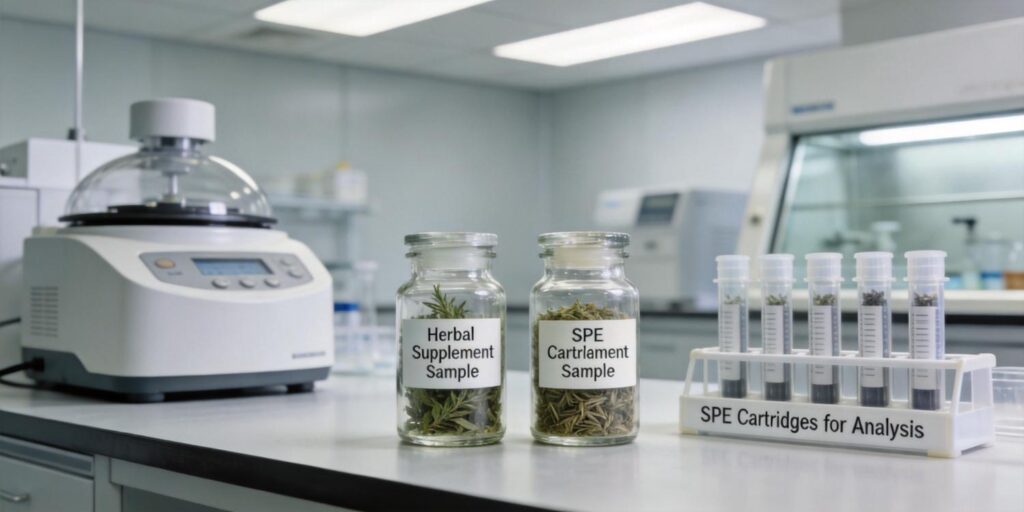
The Expanding Market for Botanical Supplements
The global botanical supplement market has experienced exponential growth over the past decade, driven by increasing consumer demand for natural health products, preventive healthcare approaches, and growing awareness of traditional medicine systems. According to market research, the herbal supplement industry is projected to reach over $100 billion by 2027, with annual growth rates exceeding 6-8%. This expansion presents both opportunities and challenges for analytical laboratories tasked with ensuring product quality, safety, and efficacy.
Botanical supplements encompass a wide range of products including herbal extracts, standardized phytochemical preparations, traditional medicine formulations, and nutraceuticals. Unlike synthetic pharmaceuticals, these products contain complex mixtures of bioactive compounds that can vary significantly based on plant source, growing conditions, harvesting time, and processing methods. This inherent variability necessitates robust analytical methods that can accurately profile and quantify active ingredients while eliminating matrix interferences.
The Analytical Challenge: Complexity of Plant-Based Formulations
Plant matrices present unique analytical challenges that distinguish them from synthetic pharmaceuticals. Botanical supplements typically contain hundreds to thousands of chemical constituents including:
- Primary metabolites: Carbohydrates, proteins, lipids, and chlorophyll
- Secondary metabolites: Alkaloids, flavonoids, terpenoids, phenolic acids, and glycosides
- Matrix components: Waxes, resins, tannins, pigments, and polysaccharides
- Processing artifacts: Degradation products, extraction solvent residues, and formulation excipients
This chemical complexity creates significant matrix effects that can interfere with analytical measurements, particularly in sensitive techniques like LC-MS. As noted in the literature, “Biological samples are notoriously dirty; injecting them with minimum cleanup onto very sensitive and expensive instruments makes very little sense. SPE has been shown to significantly increase gas (GC) and liquid chromatography (LC) column life while reducing the downtime on equipment like gas chromatography and liquid chromatography mass spectrometers (GCMS and LCMS) for source cleaning” (Forensic and Clinical Applications of Solid Phase Extraction).
Strategic SPE Sorbent Selection for Active Compounds
Proper sorbent selection is critical for successful SPE purification of botanical supplements. The choice depends on the chemical properties of target analytes and the nature of matrix interferences. Here’s a systematic approach to sorbent selection:
Hydrophilic-Lipophilic Balance (HLB) Sorbents
Oasis HLB and similar polymeric sorbents provide excellent retention for a broad range of compounds regardless of pH. These sorbents are particularly useful for:
- Simultaneous extraction of multiple compound classes
- Highly polar compounds that may be poorly retained on traditional C18 phases
- Applications requiring pH stability across a wide range (0-14)
Mixed-Mode Sorbents for Enhanced Selectivity
Mixed-mode sorbents combine hydrophobic and ion-exchange interactions for superior selectivity:
- MCX (Mixed-mode Cation Exchange): Ideal for basic compounds with pKa 2-10
- MAX (Mixed-mode Anion Exchange): Suitable for acidic compounds with pKa 2-8
- WCX (Weak Cation Exchange): Designed for strong bases with pKa >10
- WAX (Weak Anion Exchange): Optimized for strong acids with pKa <1
As documented in SPE literature, “The strategy of a mixed-mode cartridge providing hydrophobic and cation exchange interactions, combined with a pH-dependent sample application and extraction, can give high recoveries of analytes from plasma, urine, whole blood, and tissues, and the resulting SPE eluates are easily amenable to subsequent GC- and HPLC-analysis” (Solid Phase Extraction: Principles, Techniques and Applications).
Specialized Sorbents for Specific Applications
For particular botanical applications:
- Florisil: Effective for removing pigments and lipids
- Silica: Useful for separating compound classes based on polarity
- Amino (NH2) phases: Suitable for carbohydrate and lipid separations
Comprehensive Purification Workflow for Herbal Extracts
A typical SPE workflow for botanical supplement analysis involves several critical steps:
1. Sample Preparation
Proper sample preparation is essential for successful SPE. For solid botanical materials, this typically involves:
- Homogenization and particle size reduction
- Extraction with appropriate solvents (methanol, ethanol, water, or mixtures)
- Filtration or centrifugation to remove particulate matter
- pH adjustment to optimize compound retention
2. SPE Cartridge Conditioning
Proper conditioning ensures optimal sorbent performance:
- Activate with strong solvent (methanol or acetonitrile)
- Equilibrate with weak solvent (water or buffer matching sample pH)
- Maintain sorbent wetness throughout the process
3. Sample Loading
Critical parameters for sample loading include:
- Flow rate: Typically 1-3 mL/min for optimal recovery
- pH control: Adjust to maximize retention of target compounds
- Ionic strength: May need adjustment for ion-exchange mechanisms
4. Washing Steps
Selective washing removes matrix interferences while retaining target analytes:
- Water or low-percentage organic washes remove polar interferences
- pH-adjusted washes can selectively remove ionizable interferences
- Drying steps may be included to remove residual water
5. Elution Optimization
Efficient elution concentrates analytes in minimal volume:
- Use smallest possible volume of appropriate solvent
- Consider stepwise elution for complex mixtures
- Optimize solvent composition for LC-MS compatibility
The literature emphasizes that “SPE recoveries should exceed 90% absolute recovery. If you don’t get that kind of recovery you are not adjusting other parameters (such as solubility, pH, and solvent strength) correctly” (Forensic and Clinical Applications of Solid Phase Extraction).
LC-MS Profiling of Active Ingredients
Following SPE purification, LC-MS analysis provides comprehensive profiling of active ingredients:
Chromatographic Considerations
Modern LC-MS systems for botanical analysis typically employ:
- Reversed-phase columns (C18, C8) for most applications
- HILIC columns for highly polar compounds
- UPLC systems for improved resolution and sensitivity
- Gradient elution to separate complex mixtures
Mass Spectrometry Detection
Multiple MS approaches enhance botanical analysis:
- High-resolution MS: Accurate mass measurement for compound identification
- Tandem MS/MS: Structural elucidation and confirmation
- Multiple reaction monitoring (MRM): High sensitivity quantification
- Time-of-flight (TOF) MS: Comprehensive profiling and unknown identification
Data Analysis Strategies
Advanced data processing enables comprehensive analysis:
- Peak deconvolution for co-eluting compounds
- Mass defect filtering for natural product discovery
- Statistical analysis for quality control and authentication
- Database searching against natural product libraries
As noted in SPE literature, “The sensitivity issue is addressed by Bowers et al. (1997). Using an ion-spray MS/MS system linked to an auto-sampler and on-line SPE robot the authors were able to develop assays with cycle times of 5 to 7 minutes per sample, which yielded sensitivities of 50 pg/mL for sample sizes of only 200 μL” (Solid Phase Extraction: Principles, Techniques and Applications).
Quality Control Considerations for Botanical Supplements
Comprehensive quality control requires multiple analytical approaches:
Method Validation Parameters
Validated methods should demonstrate:
- Specificity: Ability to distinguish target compounds from matrix
- Linearity: Response proportional to concentration across relevant range
- Accuracy: Agreement between measured and true values
- Precision: Reproducibility within and between analyses
- Limit of detection/quantification: Sensitivity appropriate for application
- Robustness: Method performance under varied conditions
Stability Assessment
Botanical compounds may degrade during storage and analysis:
- Evaluate stability in extraction solvents
- Assess freeze-thaw stability
- Determine short-term and long-term storage stability
- Monitor degradation products
Matrix Effect Evaluation
LC-MS is particularly susceptible to matrix effects:
- Use stable isotope-labeled internal standards when available
- Perform post-column infusion experiments
- Calculate matrix factors for quantitative methods
- Optimize SPE conditions to minimize ion suppression/enhancement
Regulatory Compliance
Botanical supplement analysis must consider regulatory requirements:
- Good Manufacturing Practices (GMP) for production
- Good Laboratory Practices (GLP) for testing
- Pharmacopoeial standards (USP, EP, JP)
- FDA guidance for dietary supplements
Conclusion
SPE purification represents a critical step in the analytical workflow for botanical supplements, enabling accurate LC-MS profiling of active ingredients while eliminating matrix interferences. The selection of appropriate SPE sorbents and optimization of purification conditions are essential for achieving high recoveries, excellent selectivity, and minimal matrix effects. As the botanical supplement market continues to grow, robust analytical methods incorporating SPE purification will play an increasingly important role in ensuring product quality, safety, and efficacy.
For laboratories analyzing botanical supplements, investing in optimized SPE workflows provides significant benefits including extended instrument lifetime, improved data quality, reduced maintenance requirements, and enhanced regulatory compliance. By understanding the chemical complexity of plant matrices and implementing appropriate SPE strategies, analytical scientists can overcome the challenges associated with botanical supplement analysis and deliver reliable results that support product development and quality assurance.