Vacuum Gauge

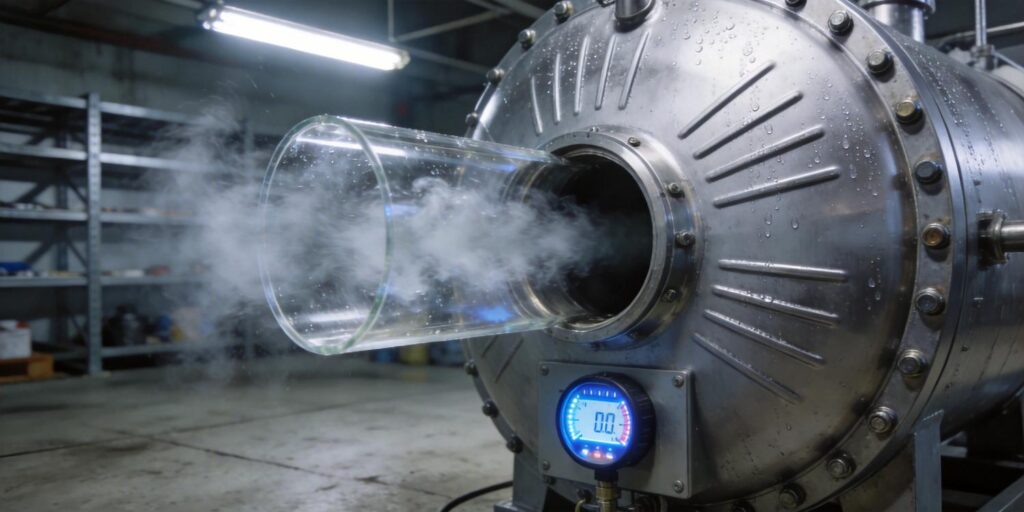
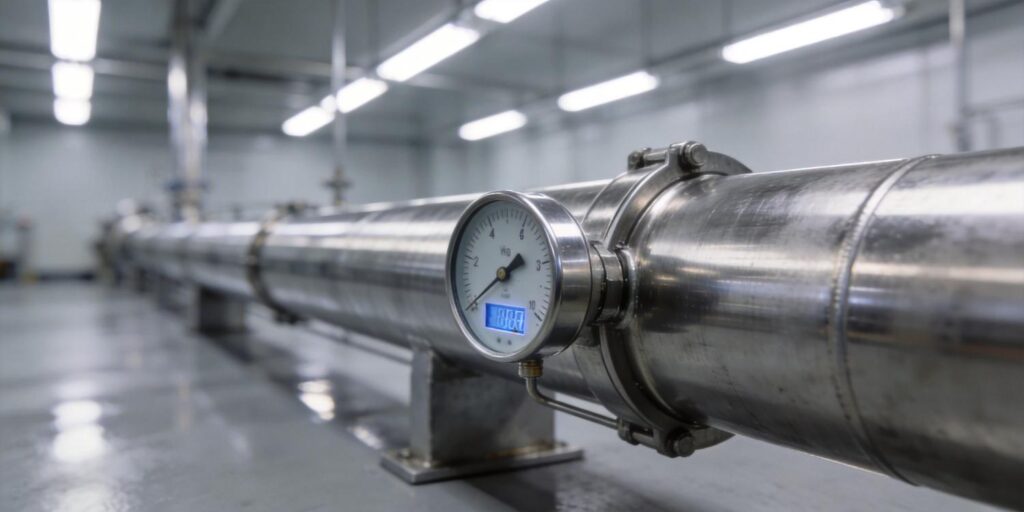
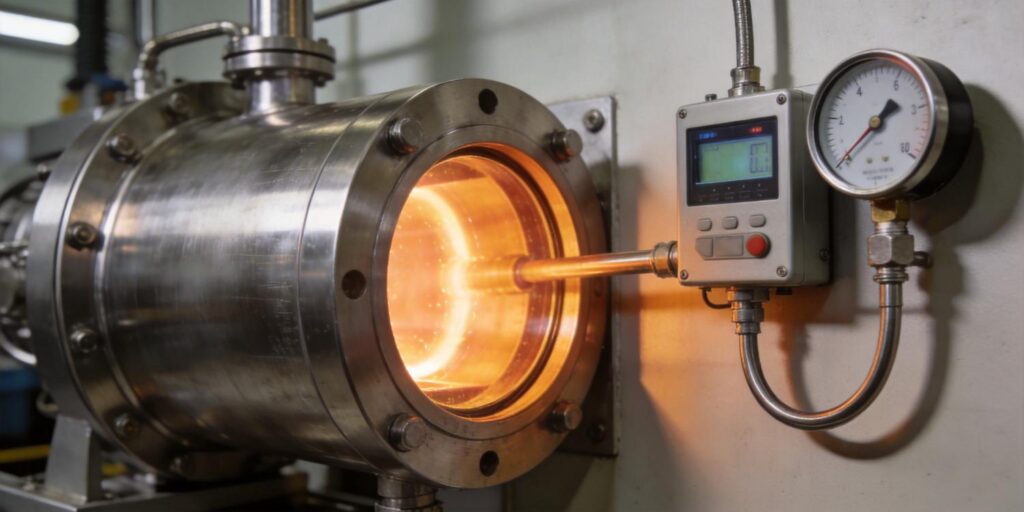
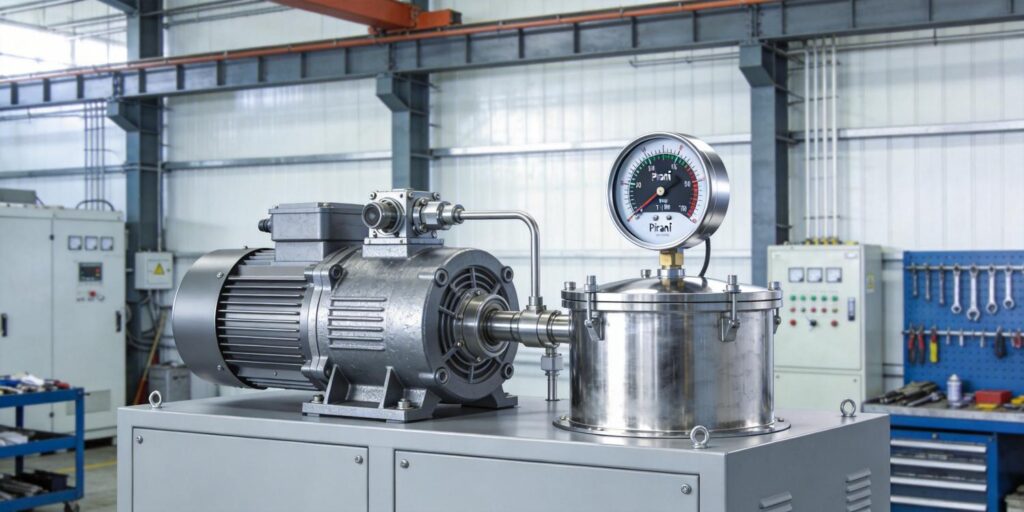
Technician installing vacuum gauge on stainless vacuum pipe

Why Your Vacuum Gauge Reads Differently After Maintenance

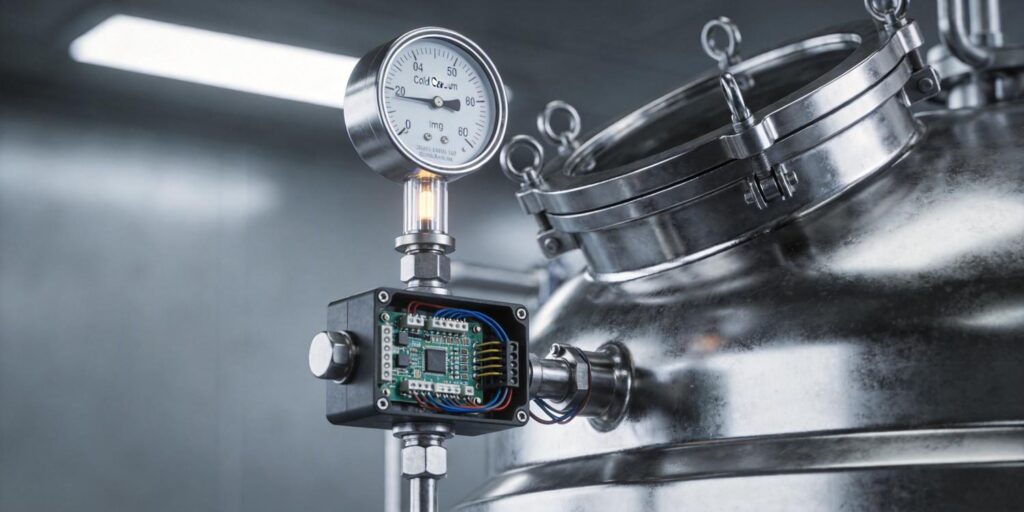
Reassembly Sealing Differences Maintenance on a cold-cathode gauge almost always involves disassembly. With the Poseidon Scientific VG-SM225 Cold Cathode Vacuum Gauge, the sensor head is intentionally removable without breaking the vacuum seal on the chamber. Operators unscrew the “工”-shaped electrode stack, lightly abrade the stainless-steel cathode and anode surfaces with 200- or 500-mesh sandpaper to […]

Why Your Vacuum Gauge Reads Differently After Maintenance Read More »

Interior of high vacuum stainless steel chamber

Understanding Molecular Flow Region in High Vacuum Measurement

Transition from Viscous to Molecular Flow In vacuum systems, gas behavior changes dramatically as pressure drops. At higher pressures (typically above ~1 Torr), gas flow is viscous or continuum: molecules collide far more frequently with each other than with chamber walls. Viscosity and pressure gradients govern transport, much like fluid flow in pipes at atmospheric

Understanding Molecular Flow Region in High Vacuum Measurement Read More »

Vacuum transmitter connected with long shielded cable

How Cable Length Impacts Vacuum Gauge Signal Stability

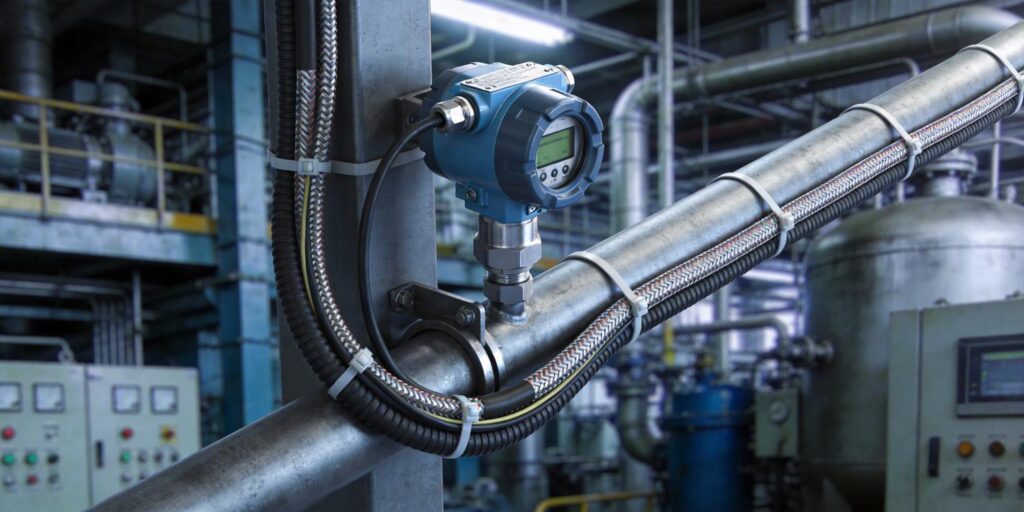
Signal Attenuation Analog signals from vacuum gauges—particularly the 0–10 V output used by both the Poseidon Scientific VG-SP205 Pirani Vacuum Transmitter and VG-SM225 Cold Cathode Vacuum Gauge—travel as voltage levels referenced to ground. Over distance, two primary mechanisms cause attenuation: resistive voltage drop in the cable conductors and capacitive loading that rounds sharp edges in

How Cable Length Impacts Vacuum Gauge Signal Stability Read More »

Vacuum gauge installed on PVD coating chamber wall

Vacuum Monitoring in PVD Coating: Where to Place Gauges for Best Film Quality

Pump-down Stage Monitoring Physical vapor deposition (PVD) coating quality starts with a clean, reproducible base vacuum. Residual gases—water vapor, oxygen, or hydrocarbons—can react with sputtered material and degrade film adhesion, stoichiometry, or optical properties. The pump-down phase therefore requires continuous, accurate monitoring from atmosphere down to at least 10−6 Torr. The Poseidon Scientific VG-SP205 Pirani

Vacuum Monitoring in PVD Coating: Where to Place Gauges for Best Film Quality Read More »

Vacuum gauge undergoing calibration on laboratory bench

Vacuum Gauge Calibration Interval: Annual or Process-Based?

ISO Calibration Recommendation Overview Vacuum gauge calibration practices are guided by international standards, but they emphasize risk-based decisions rather than rigid schedules. ISO 3567:2015 specifies the method for calibrating vacuum gauges by direct comparison with a reference gauge under controlled conditions. It defines traceability to national metrology institutes (such as NIST or PTB) and outlines

Vacuum Gauge Calibration Interval: Annual or Process-Based? Read More »

Vacuum gauges installed on semiconductor load lock chamber

Choosing Vacuum Gauges for Semiconductor Load Locks

Load Lock Vacuum Cycle Stages In semiconductor fabrication, load locks serve as critical airlocks between the cleanroom atmosphere and the ultrahigh-vacuum process chambers used for etching, deposition, and lithography. A typical load-lock cycle follows a repeatable sequence that protects wafer integrity while maximizing tool throughput. Stage 1 begins with the outer door open at atmospheric

Choosing Vacuum Gauges for Semiconductor Load Locks Read More »

Cold cathode vacuum gauge mounted on industrial vacuum system

How Contamination Affects Cold Cathode Plasma Stability

Plasma Discharge Principle in Cold Cathode Gauges Cold cathode ionization gauges, such as Poseidon Scientific’s VG-SM225, operate on the Penning discharge principle. A high-voltage electric field (typically –2000 V working, –2500 V startup) combined with an axial magnetic field (~100 gauss from NdFeB permanent magnets) traps electrons in cycloidal or spiral paths. These electrons collide

How Contamination Affects Cold Cathode Plasma Stability Read More »

Vacuum gauge monitoring chamber during leak test

Leak Detection Using Pressure Decay: How Accurate Is Your Gauge?

Leak Detection Using Pressure Decay: How Accurate Is Your Gauge? In vacuum systems for mass spectrometry, PVD coating, vacuum heat treatment, and semiconductor processing, leak detection is a daily reality. The pressure-decay method offers a simple, cost-effective way to quantify leaks without helium tracer gas or expensive mass spectrometers. Isolate the chamber, pump to a

Leak Detection Using Pressure Decay: How Accurate Is Your Gauge? Read More »

Digital vacuum gauge display during rapid pressure decrease

Vacuum Gauge Response Time in Fast Pump-Down Cycles

Vacuum Gauge Response Time in Fast Pump-Down Cycles In semiconductor processing, PVD coating systems, and analytical instruments, pump-down cycles are increasingly aggressive. Turbomolecular and cryo pumps can drop chamber pressure from atmosphere to 10⁻⁶ Torr in under 60 seconds. Vacuum gauges must keep pace—otherwise interlocks trip late, process recipes start at the wrong pressure, or

Vacuum Gauge Response Time in Fast Pump-Down Cycles Read More »

Cold cathode vacuum gauge installed on industrial vacuum chamber

Cold Cathode Electrode Wear: How Many Operating Hours Can You Expect?

Cold Cathode Electrode Wear: How Many Operating Hours Can You Expect? In high-vacuum applications such as mass spectrometry, scanning electron microscopy, and vacuum heat-treatment furnaces, the cold-cathode gauge has become the preferred sensor for pressures from 10⁻³ Torr down to 10⁻⁷ Torr. Unlike hot-cathode designs that rely on a fragile filament, cold-cathode gauges use a

Cold Cathode Electrode Wear: How Many Operating Hours Can You Expect? Read More »

Shopping Cart
Poseidon Scientific
Privacy Overview

This website uses cookies so that we can provide you with the best user experience possible. Cookie information is stored in your browser and performs functions such as recognising you when you return to our website and helping our team to understand which sections of the website you find most interesting and useful.