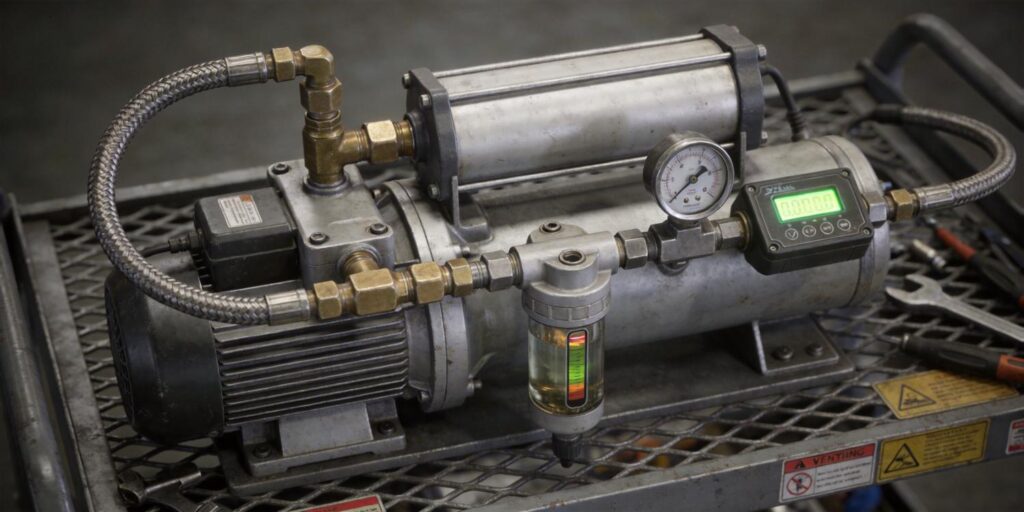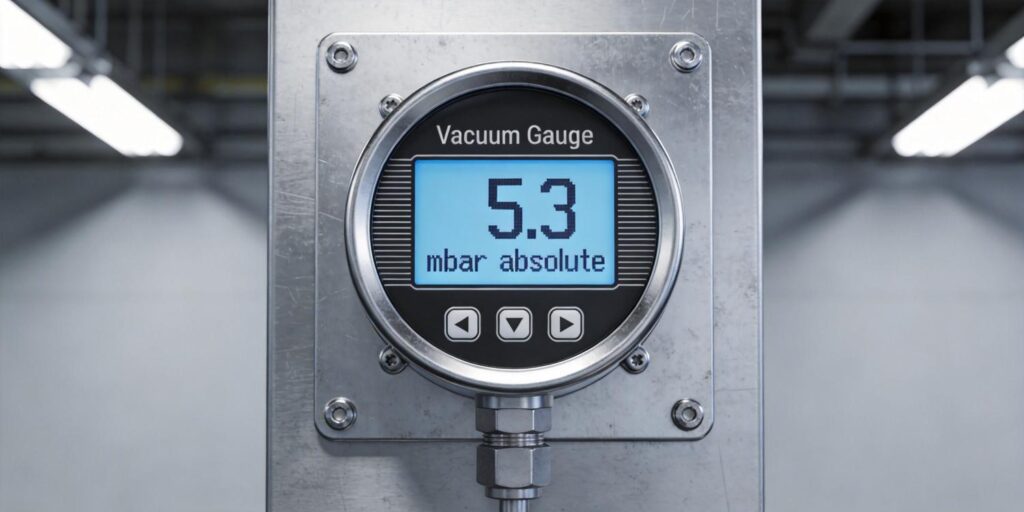
Vacuum Gauge

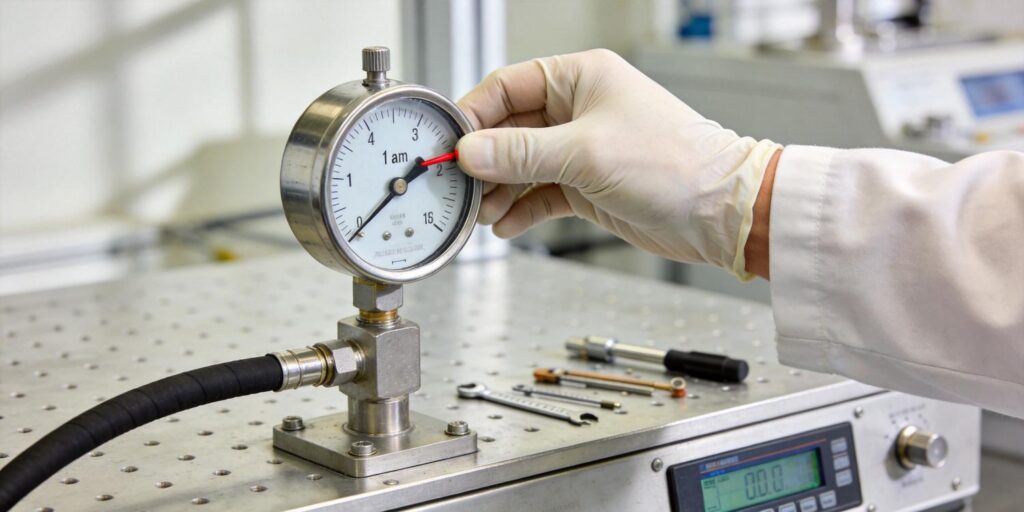
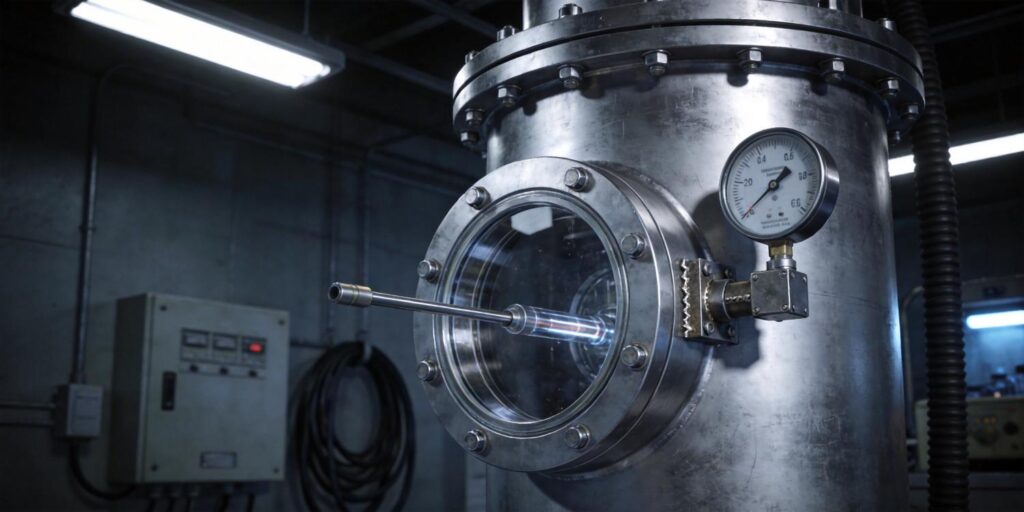
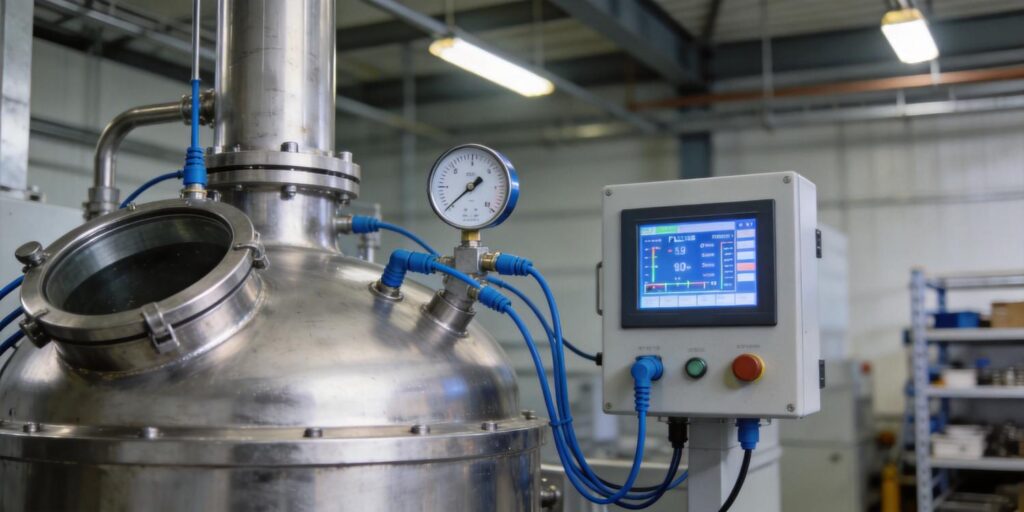
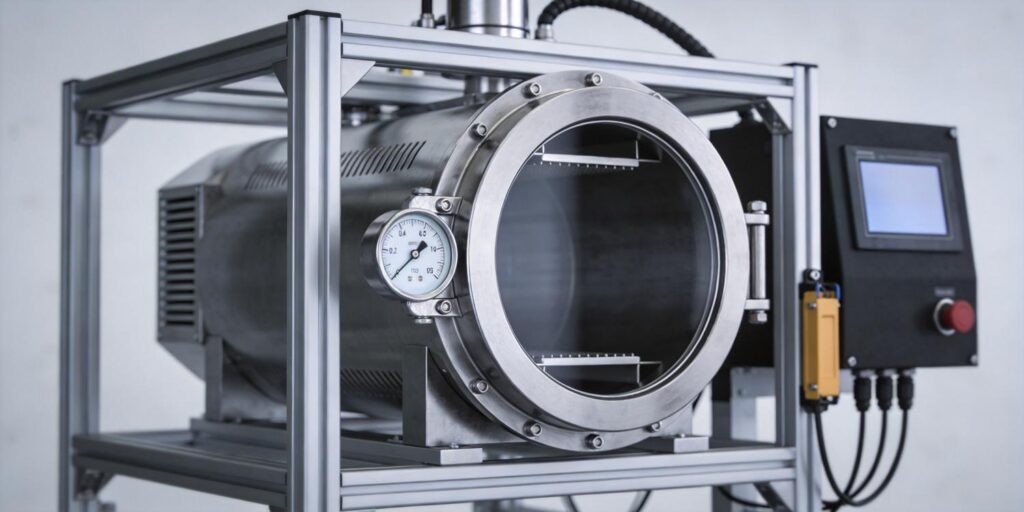
Cold cathode vacuum gauge mounted on high vacuum chamber

Cold Cathode Ignition Threshold: Why Your Gauge Won’t Start Below 1E-2 mbar

Explain Cold Cathode Ionization Ignition Physics Cold-cathode ionization gauges, such as the Poseidon VG-SM225, operate on the Penning discharge principle. A high electric field (typically –2000 V working voltage, –2500 V at startup) extracts initial electrons via field emission from the cathode surface. These electrons are trapped in crossed electric and magnetic fields (~100 gauss […]

Cold Cathode Ignition Threshold: Why Your Gauge Won’t Start Below 1E-2 mbar Read More »

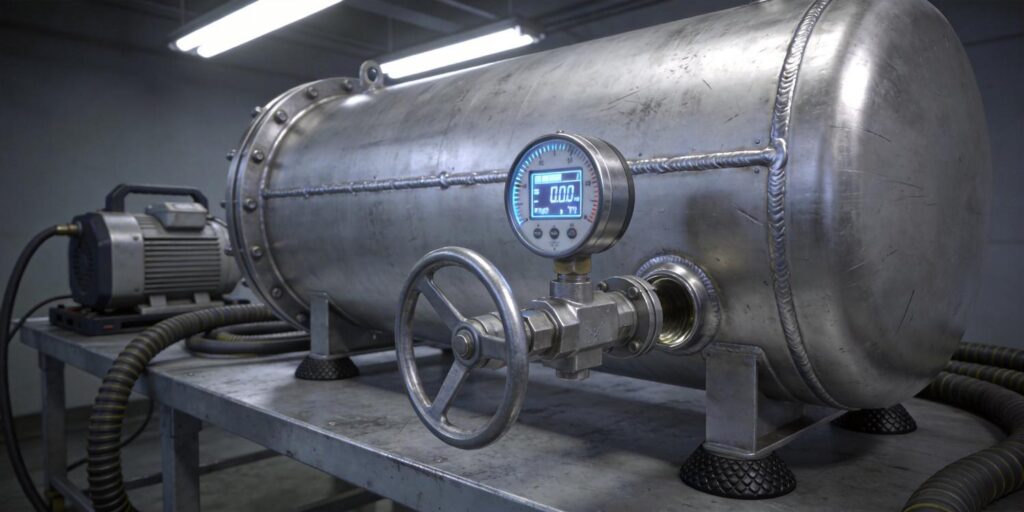
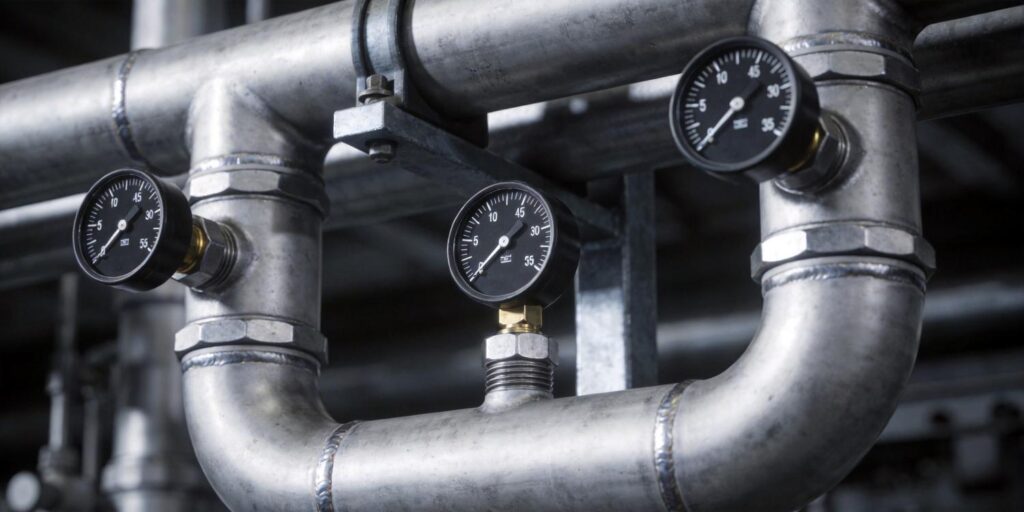
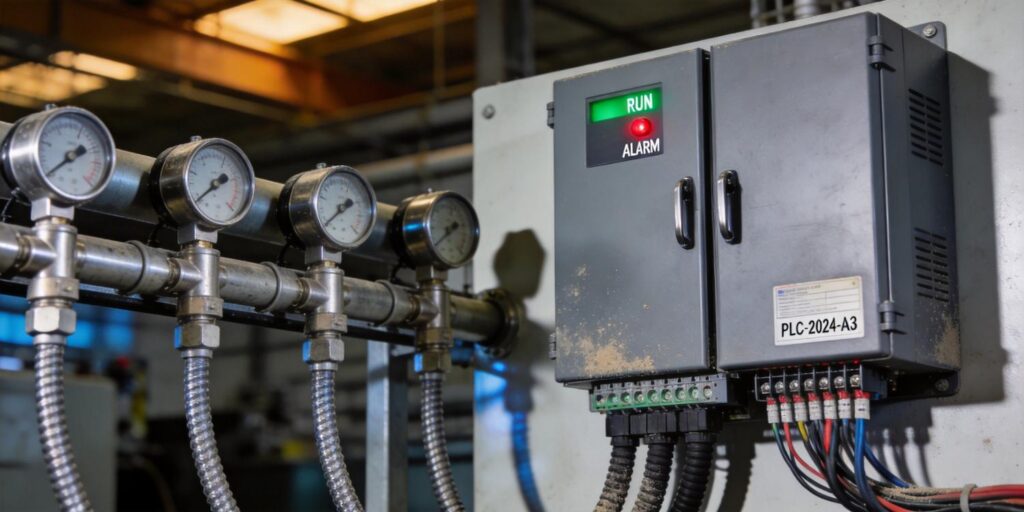
Vacuum gauge correctly mounted on industrial vacuum pipeline

How to Reduce Measurement Errors in Vacuum Systems

Installation Errors: Positioning and Mounting Practices That Eliminate Systematic Bias Vacuum gauge readings are only as accurate as the physical location and connection to the chamber. Even the most precise transmitter will report erroneous values if installed where pressure differs from the process volume. In thin-film deposition, metallurgy, and freeze-drying systems, engineers commonly encounter three

How to Reduce Measurement Errors in Vacuum Systems Read More »

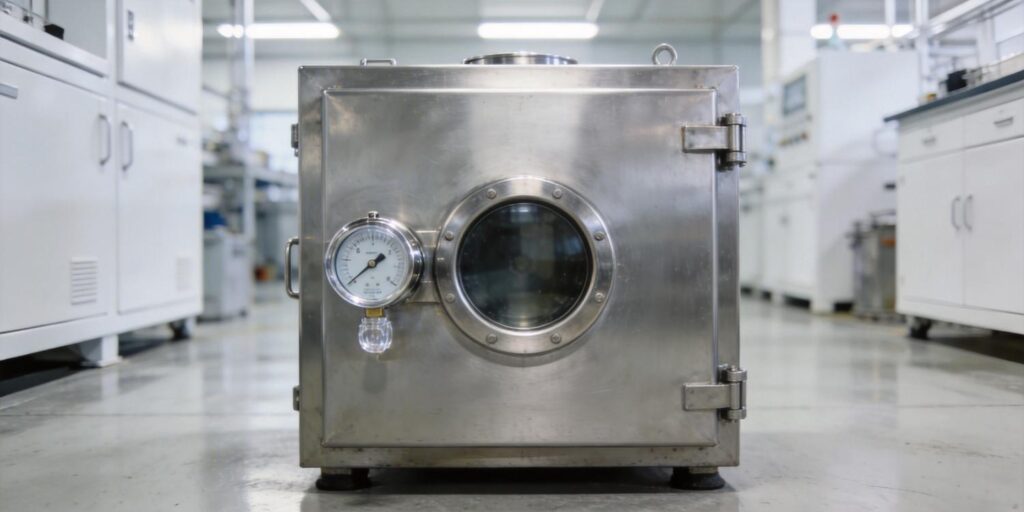
Engineer inspecting vacuum gauge on industrial vacuum system

Vacuum Gauge Maintenance Checklist for Industrial Engineers

Inspection Intervals: Scheduling Proactive Checks to Maximize Uptime Industrial vacuum systems run continuously in demanding environments—semiconductor fabs, pharmaceutical lyophilizers, vacuum heat-treatment furnaces, and thin-film deposition tools. Vacuum gauges are the eyes of these systems, yet many engineers treat them as “set it and forget it” components. A disciplined inspection schedule prevents unexpected downtime, protects product

Vacuum Gauge Maintenance Checklist for Industrial Engineers Read More »

Vacuum gauges installed on thin film deposition chamber

Monitoring Vacuum in Thin Film Deposition Systems

Deposition Stages: Where Vacuum Monitoring Drives Film Quality Thin-film deposition—whether by physical vapor deposition (PVD), sputtering, evaporation, or chemical vapor deposition (CVD)—is a sequence of precisely timed vacuum phases. Each stage imposes different pressure demands, and real-time monitoring determines film adhesion, density, stoichiometry, and defect density. Engineers and procurement teams in semiconductor, optics, and display

Monitoring Vacuum in Thin Film Deposition Systems Read More »

Vacuum gauge flange mounted on stainless vacuum pipeline

Vacuum Gauge Compatibility with Existing Systems

Mechanical Interfaces: Plug-and-Play Compatibility with Standard Vacuum Systems Vacuum gauge retrofits succeed or fail at the mechanical interface. Most industrial and laboratory vacuum systems—mass spectrometers, freeze dryers, vacuum furnaces, and semiconductor tools—use standardized KF quick-flange connections. The Poseidon VG-SP205 Pirani Vacuum Transmitter and VG-SM225 Cold Cathode Vacuum Gauge are engineered around exactly these interfaces, eliminating

Vacuum Gauge Compatibility with Existing Systems Read More »

Vacuum gauge mounted on metallurgical furnace pipeline

Choosing Vacuum Gauges for Metallurgy Applications

Metallurgy Vacuum Needs: Why Precise Pressure Control Matters Vacuum heat treatment has become a cornerstone of modern metallurgy. Processes such as annealing, brazing, sintering, tempering, and diffusion bonding rely on controlled low-pressure environments to eliminate oxidation, decarburization, and hydrogen embrittlement while promoting uniform microstructure and surface cleanliness. Without reliable vacuum monitoring, these outcomes become inconsistent,

Choosing Vacuum Gauges for Metallurgy Applications Read More »

Vacuum chamber venting process with installed vacuum gauge

Best Practices for Vacuum Gauge Venting Procedures

Safe Venting Steps: Protecting Your Vacuum System and Gauge Investment Venting a vacuum chamber is one of the most routine yet critical operations in any automated or laboratory vacuum system. Done incorrectly, it can introduce contamination, damage sensitive gauge sensors, or trigger false alarms that interrupt production cycles. Whether you operate mass spectrometers, pharmaceutical freeze

Best Practices for Vacuum Gauge Venting Procedures Read More »

Vacuum gauge installed on automated industrial vacuum system

Why Vacuum Gauge Response Time Matters in Automation

Response Definition: What “Response Time” Really Means for Vacuum Gauges In automated vacuum systems, response time is the interval between a sudden pressure change in the chamber and the moment the gauge output reaches a stable, usable value. Engineers typically measure it as the time to 63 % of final reading (one time constant, τ)

Why Vacuum Gauge Response Time Matters in Automation Read More »

Digital vacuum gauge display showing pressure units

Vacuum Technology Basics: Understanding Pressure Units

Pa, mbar, Torr: The Three Core Units of Vacuum Pressure Vacuum technology spans an enormous dynamic range—from atmospheric pressure down to ultra-high vacuum levels below 10−7 Torr. Because no single unit can conveniently express every value across this six-order-of-magnitude spectrum, three primary units have become industry standards: the pascal (Pa), millibar (mbar), and torr (Torr).

Vacuum Technology Basics: Understanding Pressure Units Read More »

Vacuum gauge installed on pharmaceutical freeze dryer chamber

Vacuum Gauge Requirements in Pharmaceutical Freeze Drying

Freeze Drying Vacuum Stages In pharmaceutical lyophilization, the vacuum system drives the transition from frozen product to stable dry powder while preserving active ingredients. The process divides into three primary stages, each with distinct vacuum requirements that demand reliable monitoring to maintain product quality and regulatory compliance. Freezing Stage The product solution freezes on cooled

Vacuum Gauge Requirements in Pharmaceutical Freeze Drying Read More »

Shopping Cart
Poseidon Scientific
Privacy Overview

This website uses cookies so that we can provide you with the best user experience possible. Cookie information is stored in your browser and performs functions such as recognising you when you return to our website and helping our team to understand which sections of the website you find most interesting and useful.