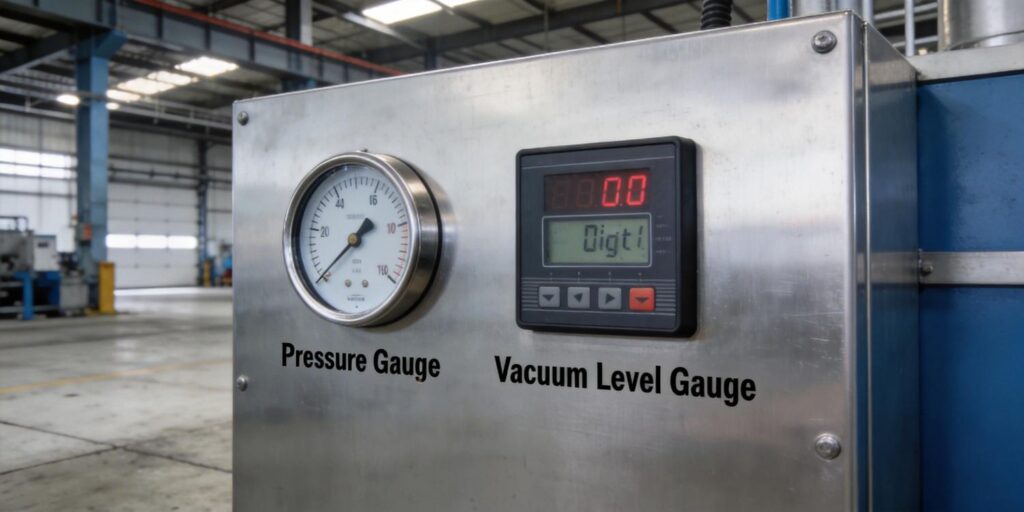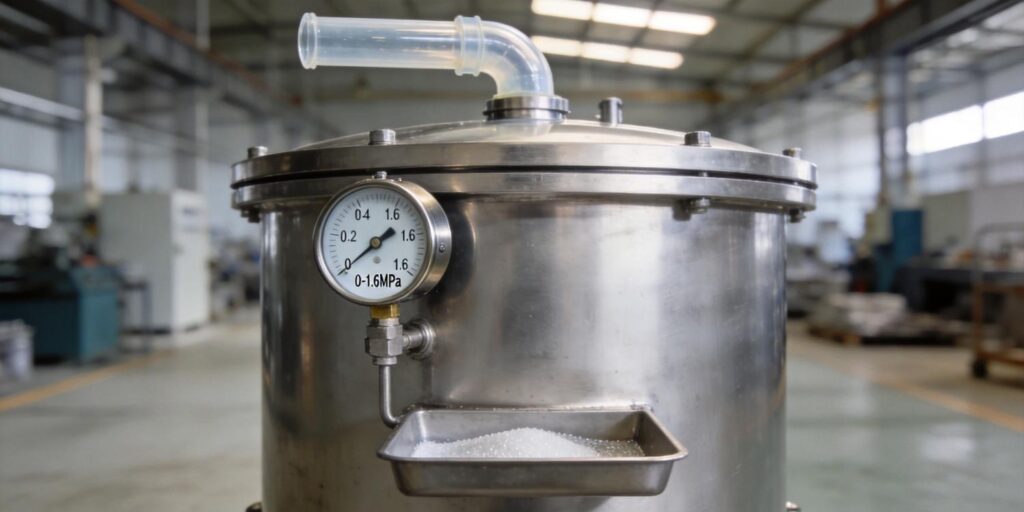
Vacuum Impregnation Process Overview
Vacuum impregnation is a critical manufacturing step used to fill microscopic voids, pores, and cracks in castings, windings, and composite parts with insulating resins or sealants. The process begins by placing the workpiece in a sealed chamber, evacuating air and moisture, then introducing low-viscosity resin under vacuum or pressure to ensure complete penetration. Once infused, the part is cured—often under continued vacuum or atmospheric pressure—producing void-free components with superior dielectric strength, corrosion resistance, and mechanical integrity.
Typical applications include electric motor rotors, transformer coils, aerospace castings, and medical-device housings. Cycle times range from 30 minutes to several hours, and the success of each batch depends on maintaining stable vacuum levels during the critical infusion phase. Even small pressure fluctuations or undetected leaks can trap air pockets, leading to scrap rates as high as 10–15 %. Poseidon Scientific’s VG-SP205 Pirani Vacuum Transmitter and VG-SM225 Cold Cathode Vacuum Gauge deliver the precise, reliable monitoring required to optimize these cycles while keeping total cost of ownership low for both OEMs and production facilities.
Pressure Drop Monitoring During Resin Infusion
During resin infusion, the chamber pressure must drop steadily and remain stable as resin flows into the part. A controlled pressure decrease (typically from 10 Torr to 0.1–1 Torr) drives the resin deep into the smallest voids without introducing new air. Real-time monitoring of this pressure drop allows operators to detect anomalies such as premature resin gelling, insufficient evacuation, or sudden gas release from the workpiece.
The VG-SP205 Pirani Vacuum Transmitter is ideally suited for this phase. Its thermal-conductivity principle provides fast response (<50 ms) and high repeatability across the atmospheric-to-10⁻³ Torr range, with best linearity in the 10 Torr to 10⁻² Torr band where most infusion occurs. Engineers use the 0–10 V analog output for closed-loop pump control and the customizable RS232 digital output for high-resolution data logging. This combination enables automated recipes that adjust pump speed or valve timing the moment pressure deviates from the target profile, ensuring consistent infusion quality batch after batch.
Leak Detection Importance
Undetected leaks are one of the leading causes of impregnation failure. Even a small leak can allow atmospheric air to re-enter the chamber, re-pressurizing voids and preventing complete resin penetration. In high-volume production, a single leaky seal can scrap an entire batch of expensive castings or windings.
Continuous pressure monitoring with sensitive gauges turns leak detection into a proactive process. The VG-SP205 Pirani excels at identifying slow pressure rises during the hold phase—rises that are invisible to less responsive instruments. By setting rate-of-change alarms (typically 0.05 Torr/min), the system can trigger an immediate alert or abort the cycle before resin is introduced. The VG-SM225 Cold Cathode provides additional confirmation at deeper vacuum levels, ensuring the chamber truly reaches and holds the target base pressure before infusion begins. Together, these gauges minimize scrap and protect downstream curing operations.
Pirani Suitability for Mid-Range Vacuum
Vacuum impregnation operates primarily in the mid-range vacuum regime (10 Torr to 10⁻³ Torr), exactly where thermal-conductivity gauges deliver their highest performance. Poseidon Scientific’s VG-SP205 Pirani Vacuum Transmitter uses a platinum filament chosen for its large temperature-resistance coefficient, chemical stability, and resistance to oxidation. This design yields monotonic, drift-resistant output across the full operating band, with factory-calibrated accuracy that meets or exceeds higher-priced imported units.
Key advantages for impregnation systems include:
- Linear high-accuracy region from 10 Torr to 10⁻² Torr—matching 90 % of typical infusion cycles
- Temperature compensation circuitry that maintains stability between 15 °C and 50 °C
- Maintenance-free operation with typical 3–5 year lifespan in clean service
- Standard KF16/KF25 flanges and RJ45 connectivity for rapid integration
Unlike cold-cathode gauges that require high-voltage startup and risk contamination in high-vapor environments, the Pirani operates continuously without auxiliary protection circuits, making it the logical primary gauge for resin infusion monitoring.
Protection Against Resin Vapor
Resin vapors and volatile solvents can condense inside vacuum sensors, causing calibration drift or premature failure. Poseidon designs address this challenge directly. The VG-SP205 Pirani employs a chemically inert platinum filament that resists corrosion far better than tungsten alternatives. Its sealed construction and smooth internal surfaces minimize vapor entrapment; any minor residue is typically cleared during normal pump-down.
When particularly aggressive resins are used, engineers can add short isolation tubing or specify Kalrez O-rings on the KF flange. The VG-SM225 Cold Cathode complements this with a modular, field-serviceable sensor head that can be removed and cleaned on-site with 500-mesh abrasive paper—no factory return required. These features ensure long-term accuracy even in continuous production environments while keeping routine maintenance simple and cost-effective.
System Restart Validation
After a chamber is opened for part loading or resin replenishment, a quick validation of vacuum integrity is essential before restarting the cycle. Residual moisture, trapped air, or minor leaks introduced during handling can compromise the next batch. The dual-gauge approach—VG-SP205 for roughing and VG-SM225 for final verification—provides layered confirmation: the Pirani confirms rapid pump-down to 10⁻³ Torr, while the cold cathode verifies stable base pressure below 5 × 10⁻⁴ Torr for a programmable dwell period.
Built-in status LEDs and RS232 status codes give operators immediate visual and digital feedback. This validation step typically adds less than two minutes to the cycle but prevents costly rework and ensures every impregnated part meets specification.
Application Case Example
A Tier-1 automotive supplier producing electric-motor stators experienced sporadic void formation despite following established impregnation recipes. After installing VG-SP205 Pirani transmitters for real-time pressure-drop monitoring and VG-SM225 Cold Cathode gauges for final vacuum verification, engineers added rate-of-change alarms and a 10-minute stable-hold interlock at 5 × 10⁻⁴ Torr.
The system now automatically extends evacuation time when gas-release peaks are detected, ensuring complete air removal before resin infusion. First-pass yield increased from 87 % to 98.5 %, resin usage dropped 11 %, and unplanned chamber cleaning frequency was reduced by 60 %. Total payback on the gauge investment occurred in under four months. The same dual-gauge configuration has since been rolled out across the customer’s global impregnation lines, demonstrating the scalability and reliability of Poseidon’s solution.
Conclusion: Choosing the Right Vacuum Measurement for Impregnation Success
Vacuum impregnation systems demand accurate, responsive pressure monitoring during the critical mid-range vacuum phase where resin infusion occurs. Poseidon Scientific’s VG-SP205 Pirani Vacuum Transmitter provides the speed, linearity, and vapor tolerance required for reliable pressure-drop tracking and leak detection, while the VG-SM225 Cold Cathode Vacuum Gauge offers dependable final verification and system restart validation. Together they deliver the layered visibility and field serviceability that production engineers and OEMs need—at a cost structure that supports both laboratory-scale and high-volume manufacturing.
By selecting gauges engineered specifically for real-world impregnation environments, manufacturers reduce scrap, improve part quality, and lower total ownership costs compared with legacy imported instrumentation.
Ready to optimize vacuum measurement in your impregnation systems? Contact Poseidon Scientific today for a no-obligation application review, custom interlock configuration, or sample units. Our team—led by the engineers who designed the VG-SP205 and VG-SM225—will deliver a tailored monitoring package that fits your resin types, chamber size, and existing control architecture.
Explore the full specifications of the VG-SP205 Pirani Vacuum Transmitter for mid-range monitoring or the VG-SM225 Cold Cathode Vacuum Gauge for final verification and take the next step toward void-free, high-quality impregnated components.