Technical Deep Dive

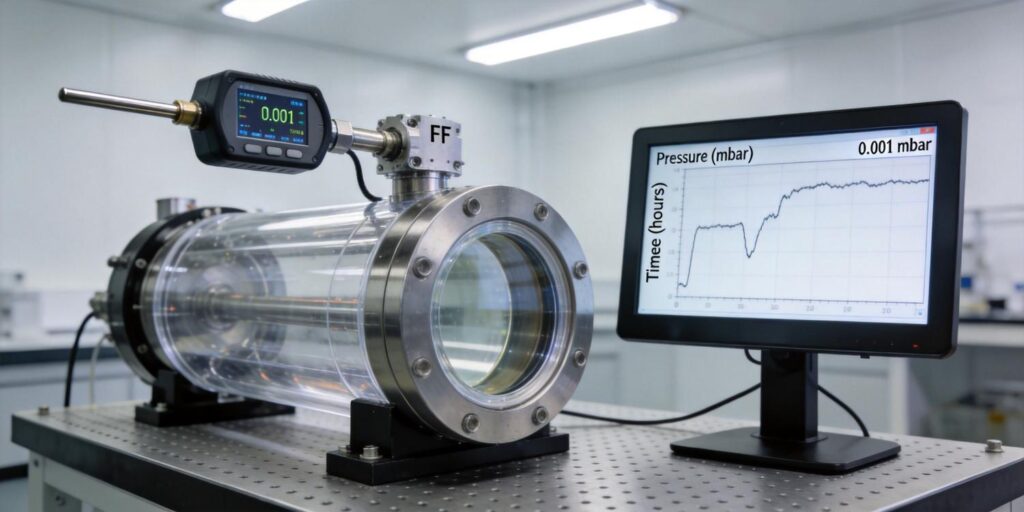
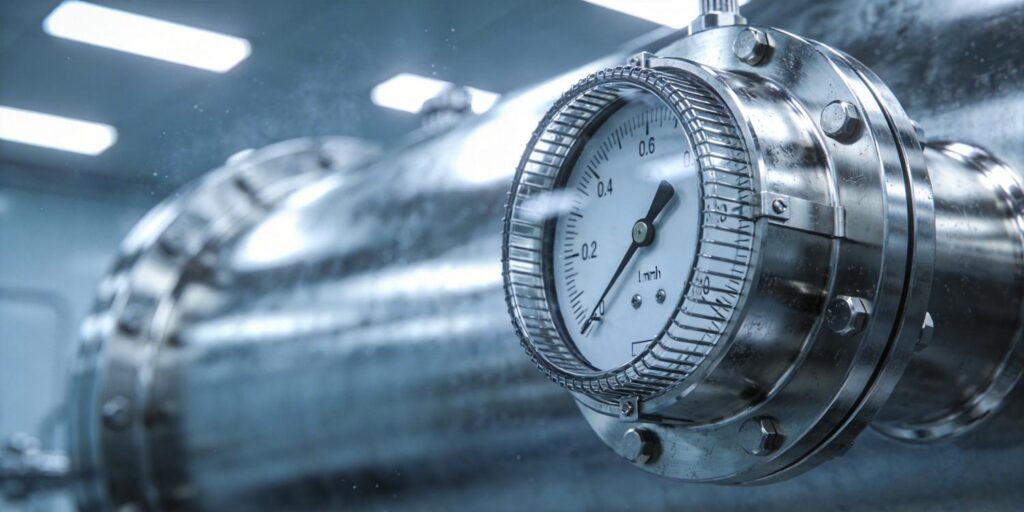
Vacuum gauge monitoring chamber during leak test

Leak Detection Using Pressure Decay: How Accurate Is Your Gauge?

Leak Detection Using Pressure Decay: How Accurate Is Your Gauge? In vacuum systems for mass spectrometry, PVD coating, vacuum heat treatment, and semiconductor processing, leak detection is a daily reality. The pressure-decay method offers a simple, cost-effective way to quantify leaks without helium tracer gas or expensive mass spectrometers. Isolate the chamber, pump to a […]

Leak Detection Using Pressure Decay: How Accurate Is Your Gauge? Read More »

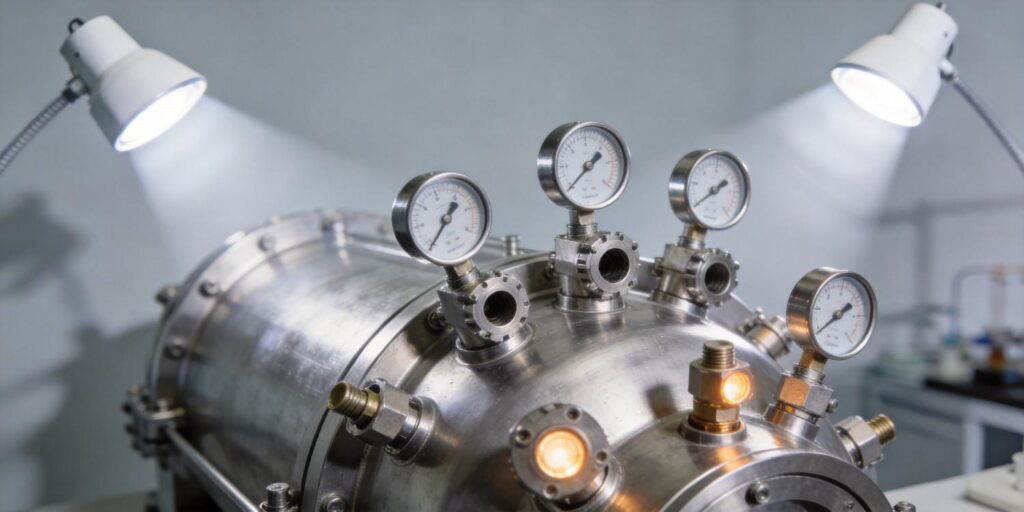
Vacuum gauge mounted near vacuum chamber connection

Vacuum Gauge Placement Near Pump vs Near Chamber: Pressure Gradient Impact

Vacuum Gauge Placement Near Pump vs Near Chamber: Pressure Gradient Impact In vacuum systems ranging from mass spectrometers to PVD coating chambers, engineers often debate where to mount the vacuum gauge: directly on the process chamber or near the pump inlet. The choice is far from cosmetic. A seemingly small difference in mounting location can

Vacuum Gauge Placement Near Pump vs Near Chamber: Pressure Gradient Impact Read More »

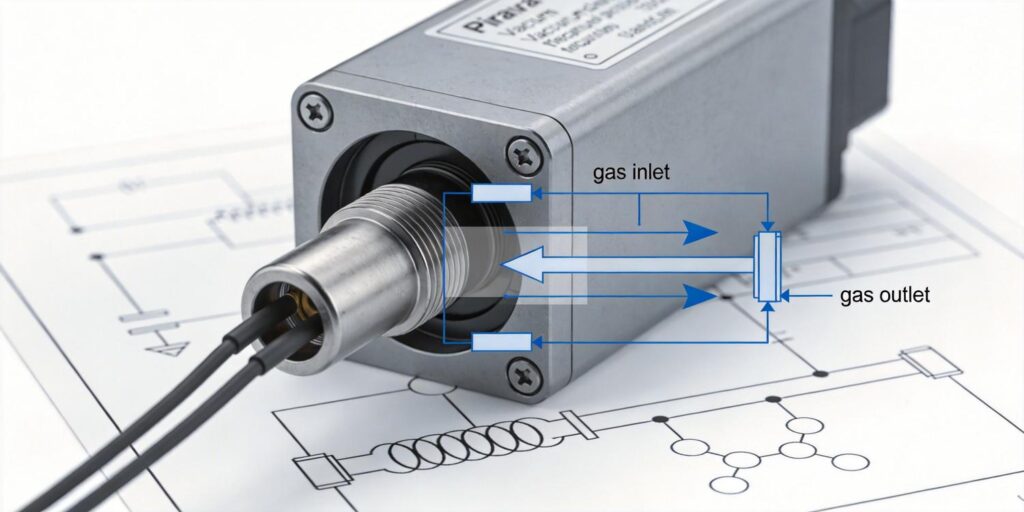
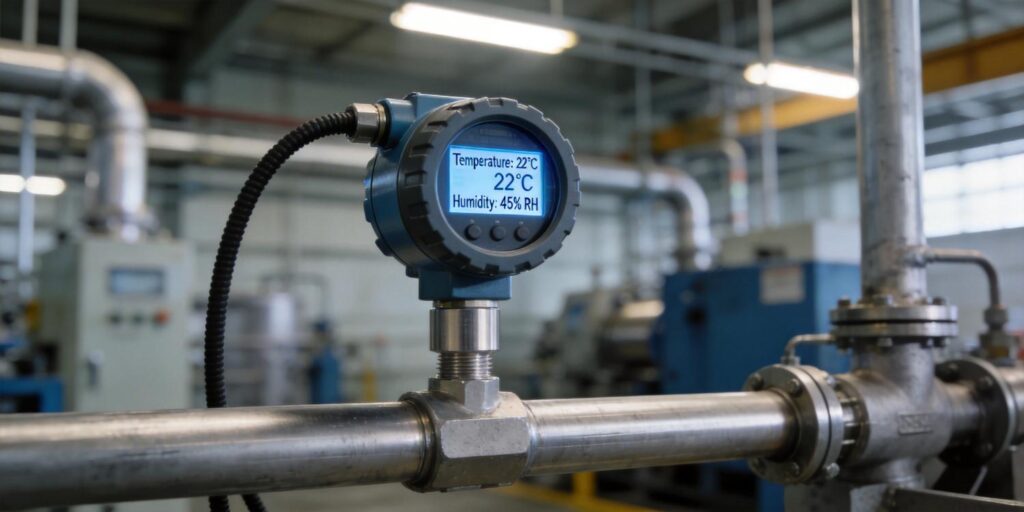
Pirani vacuum transmitter connected to industrial gas vacuum system

Why Pirani Gauges Drift When Switching Gas Types

Why Pirani Gauges Drift When Switching Gas Types In vacuum systems, engineers and procurement teams rely on Pirani gauges for reliable pressure monitoring from atmosphere down to roughly 10⁻³ Torr. Yet many users notice sudden, unexplained shifts in displayed pressure when the process gas changes—even when the true pressure has not moved. These “drifts” are

Why Pirani Gauges Drift When Switching Gas Types Read More »

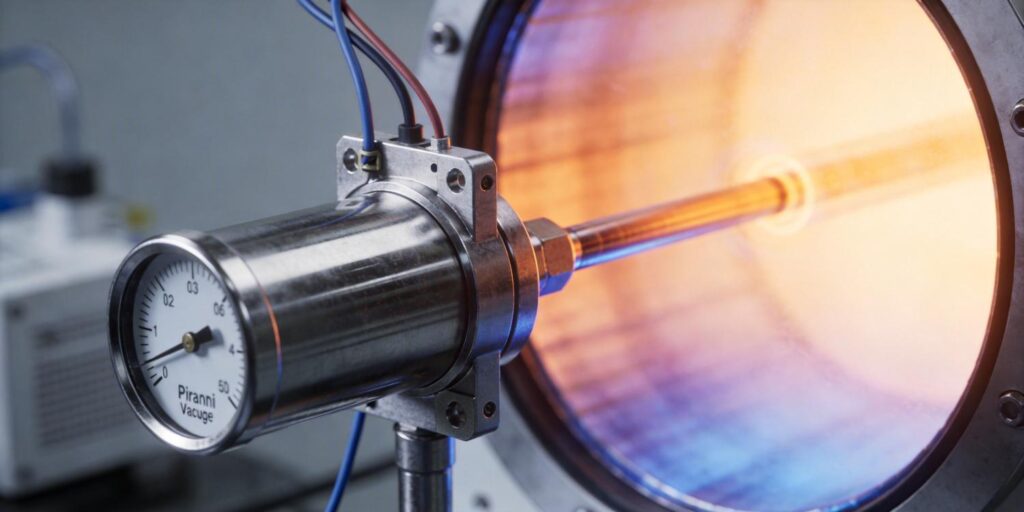
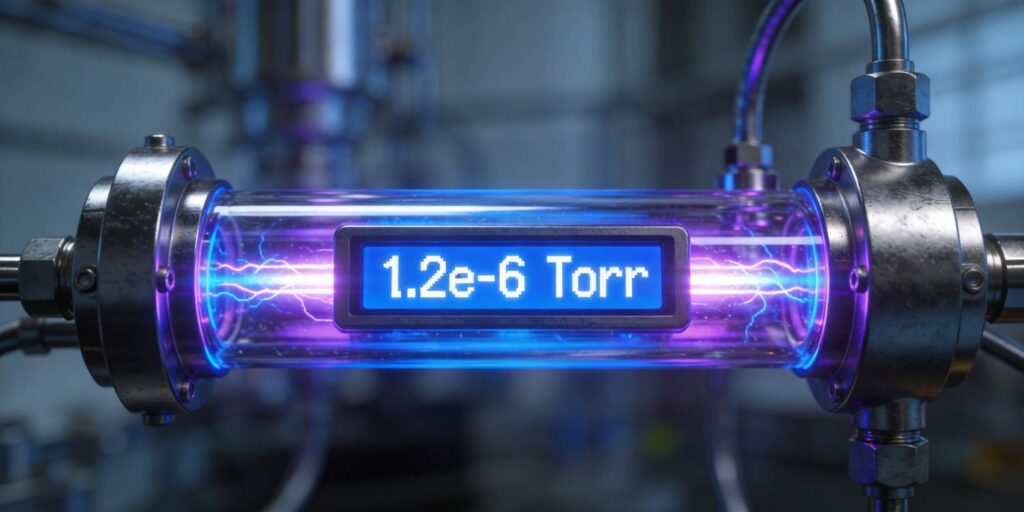
Cold cathode vacuum gauge mounted on high vacuum chamber

Cold Cathode Ignition Threshold: Why Your Gauge Won’t Start Below 1E-2 mbar

Explain Cold Cathode Ionization Ignition Physics Cold-cathode ionization gauges, such as the Poseidon VG-SM225, operate on the Penning discharge principle. A high electric field (typically –2000 V working voltage, –2500 V at startup) extracts initial electrons via field emission from the cathode surface. These electrons are trapped in crossed electric and magnetic fields (~100 gauss

Cold Cathode Ignition Threshold: Why Your Gauge Won’t Start Below 1E-2 mbar Read More »

Vacuum gauge correctly mounted on industrial vacuum pipeline

How to Reduce Measurement Errors in Vacuum Systems

Installation Errors: Positioning and Mounting Practices That Eliminate Systematic Bias Vacuum gauge readings are only as accurate as the physical location and connection to the chamber. Even the most precise transmitter will report erroneous values if installed where pressure differs from the process volume. In thin-film deposition, metallurgy, and freeze-drying systems, engineers commonly encounter three

How to Reduce Measurement Errors in Vacuum Systems Read More »

Pirani vacuum transmitter installed in laboratory environment

How Temperature Affects Pirani Vacuum Gauge Readings

Thermal Principle Review Pirani vacuum gauges operate on the fundamental principle of gas thermal conductivity. A thin metal filament—typically platinum in modern designs like the Poseidon Scientific VG-SP205 Pirani Vacuum Transmitter—is heated by an electrical current and maintained at a constant temperature via a Wheatstone bridge circuit. As residual gas molecules collide with the hot

How Temperature Affects Pirani Vacuum Gauge Readings Read More »

Cold cathode gauge installed on high vacuum stainless steel chamber

Why Cold Cathode Gauges Are Ideal for High Vacuum Ranges

Ionization Mechanism Cold cathode vacuum gauges measure high vacuum through a self-sustaining gas discharge known as the Penning discharge. Unlike hot-cathode ionization gauges that rely on a thermionic filament to emit electrons, cold cathode designs use field emission and crossed electric and magnetic fields to generate and trap electrons. This fundamental difference eliminates filament-related issues

Why Cold Cathode Gauges Are Ideal for High Vacuum Ranges Read More »

Industrial vacuum gauge display showing stable pressure reading

Vacuum Gauge Accuracy vs Repeatability: What Really Matters?

Define Accuracy vs Repeatability In vacuum measurement, two terms frequently cause confusion: accuracy and repeatability. Understanding the distinction is essential for engineers specifying gauges and procurement teams evaluating total system performance. Accuracy describes how close a gauge reading is to the true absolute pressure. It quantifies systematic error—how far the displayed value deviates from a

Vacuum Gauge Accuracy vs Repeatability: What Really Matters? Read More »

Vacuum gauge mounted on side of industrial chamber

Vacuum Gauge Placement: Does Position Affect Accuracy?

Conductance: Why Tube Length and Diameter Change What Your Gauge Reads In vacuum systems, gas does not flow instantly or uniformly. Conductance—the ease with which gas molecules move through a tube or orifice—creates a pressure drop between the chamber interior and any gauge mounted on an extension. In the molecular-flow regime (pressures below ~10⁻³ Torr,

Vacuum Gauge Placement: Does Position Affect Accuracy? Read More »

Pirani vacuum transmitter connected to vacuum system with gas lines

Understanding Gas Sensitivity in Pirani Vacuum Gauges

Thermal Conductivity Differences: Why Gas Type Matters Pirani vacuum gauges measure pressure indirectly through the thermal conductivity of the residual gas. In the VG-SP205 Pirani Vacuum Transmitter from Poseidon Scientific, a platinum filament is held at constant temperature by a precision feedback circuit. Gas molecules collide with the hot filament and transfer heat to the

Understanding Gas Sensitivity in Pirani Vacuum Gauges Read More »

Shopping Cart
Poseidon Scientific
Privacy Overview

This website uses cookies so that we can provide you with the best user experience possible. Cookie information is stored in your browser and performs functions such as recognising you when you return to our website and helping our team to understand which sections of the website you find most interesting and useful.