
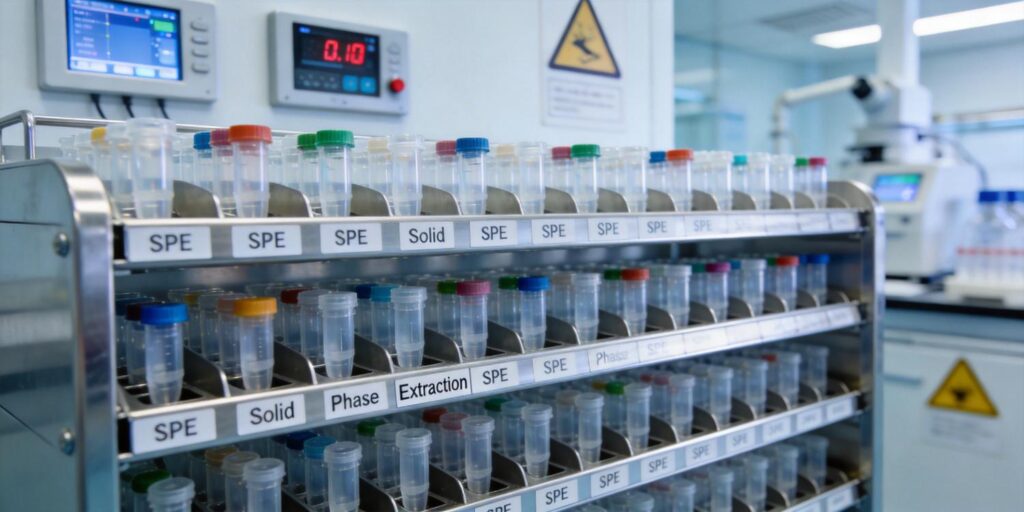
Proper Storage Conditions for SPE Cartridges
Solid-phase extraction (SPE) cartridges require specific storage conditions to maintain their performance characteristics and ensure consistent analytical results. The fundamental principle governing SPE cartridge storage is the preservation of sorbent integrity, which directly impacts extraction efficiency and reproducibility.
SPE cartridges, whether silica-based or polymeric, should be stored in their original packaging at controlled room temperature, typically between 15-25°C (59-77°F). The packaging serves as a primary barrier against environmental contaminants and moisture. For silica-based sorbents, which dominate the SPE market due to their availability in well-defined surface areas and pore sizes at relatively low cost, protection from humidity is particularly critical. Silica’s surface chemistry is dominated by silanol groups that can interact with atmospheric moisture, potentially altering the sorbent’s binding characteristics.
Key Storage Parameters
- Temperature Stability: Avoid temperature fluctuations that can cause condensation inside packaging
- Light Protection: Store away from direct sunlight to prevent photodegradation of sorbent materials
- Chemical Isolation: Keep separate from volatile organic compounds and laboratory chemicals
- Orientation: Store cartridges upright to maintain sorbent bed integrity and prevent settling
Avoiding Sorbent Contamination During Handling
Contamination during handling represents one of the most significant risks to SPE cartridge performance. SPE devices contain multiple components that can introduce impurities, including plasticizers, mold release agents, antioxidants from syringe barrels, frits and filters, as well as contaminants from the sorbent itself such as silanes, monomers, and metals.
Proper handling protocols should include:
Contamination Prevention Strategies
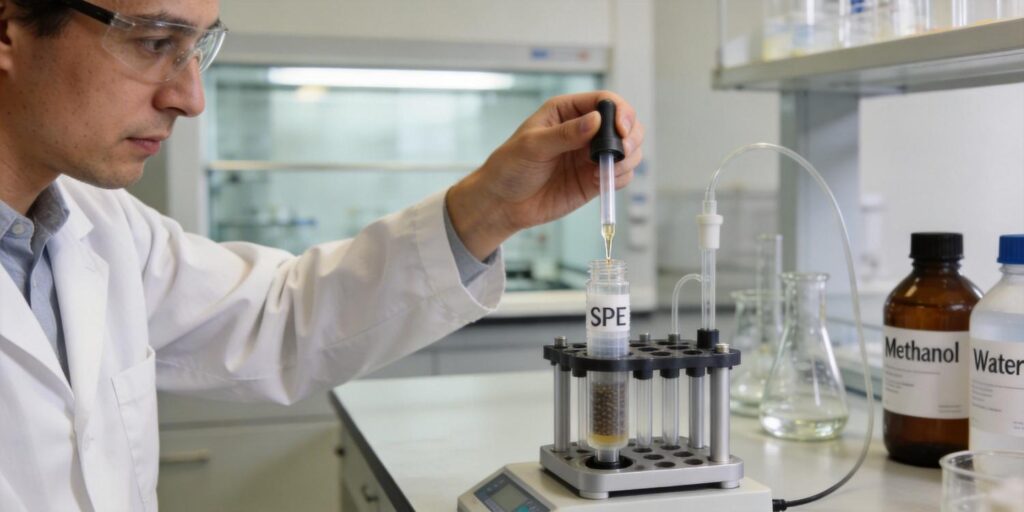
- Clean Handling Environment: Use gloves when handling cartridges to prevent skin oils and contaminants from transferring to the sorbent bed
- Dedicated Tools: Employ clean, dedicated forceps or tweezers rather than fingers for cartridge manipulation
- Work Surface Preparation: Ensure work surfaces are clean and free from chemical residues before opening cartridge packaging
- Immediate Use: Once removed from packaging, cartridges should be used promptly to minimize exposure to laboratory air
- Proper Sealing: Reseal partially used packages immediately to prevent contamination ingress
Research indicates that different construction materials exhibit varying levels of cleanliness. Glass cartridges with PTFE frits generally show lower extractable levels compared to plastic cartridges with polyethylene frits. Manufacturers typically specify cleanliness through weight of methanol extract residue as a fraction of unextracted sorbent weight, providing a measurable standard for contamination control.
Shelf Life Considerations: Polymeric vs Silica Sorbents
The shelf life of SPE cartridges varies significantly between polymeric and silica-based sorbents due to fundamental differences in their chemical structures and stability profiles.
Silica-Based Sorbents
Silica sorbents, particularly chemically modified versions with bonded phases like C18, C8, CN, or amino groups, typically have a shelf life of 2-3 years when stored properly. The primary degradation mechanism involves hydrolysis of siloxane bonds (Si-O-Si) at extreme pH values. Studies by Kirkland et al. (1989) demonstrated that sterically protected ligands containing isopropyl and butyl groups shield siloxane bonds from hydrolysis, enhancing stability up to pH 11.
Key factors affecting silica sorbent shelf life:
- pH Sensitivity: Buffer components like phosphate and carbonate cause more rapid hydrolysis than acetate, citrate, or borate
- Ligand Type: Polyfunctional (polymeric) silica sorbents show considerably greater hydrolytic stability than monofunctional ligands
- Moisture Exposure: Atmospheric humidity can gradually degrade silica surfaces over time
Polymeric Sorbents
Polymeric sorbents, including polystyrene-divinylbenzene (PS-DVB) and polymethacrylates, generally exhibit longer shelf lives of 3-5 years due to their superior chemical stability. Their main advantage lies in their ability to withstand pH extremes not achievable with silica-based sorbents. Novel functionalized polymer materials introduced since 1995, such as Oasis™ and Bond Elut™ PPL, offer modified non-polar properties with enhanced stability.
Polymeric sorbent advantages include:
- pH Tolerance: Stable across wide pH ranges (typically 1-14)
- Reduced Sensitivity to Drying: Less prone to performance degradation if accidentally dried out after conditioning
- Enhanced Polar Analyte Retention: Particularly effective for highly polar compounds like phenols
Temperature and Humidity Control
Temperature and humidity represent the two most critical environmental factors affecting SPE cartridge stability. Proper control of these parameters is essential for maintaining consistent extraction performance.
Temperature Considerations
Storage temperatures should remain consistent within the recommended range of 15-25°C. Temperature fluctuations can cause:
- Condensation: Temperature cycling can lead to moisture condensation inside packaging
- Polymer Degradation: Elevated temperatures accelerate oxidative degradation of polymeric components
- Phase Separation: Temperature extremes may affect bonded phase integrity on silica sorbents
Humidity Management
Relative humidity should be maintained below 60% for optimal SPE cartridge storage. High humidity environments pose particular risks:
- Silica Hydrolysis: Moisture accelerates hydrolysis of siloxane bonds in silica-based sorbents
- Microbial Growth: High humidity can promote microbial growth in organic sorbents
- Packaging Degradation: Moisture can compromise packaging integrity over time
For laboratories in humid climates, consider using desiccant packs in storage areas or humidity-controlled cabinets. Silica gel desiccants should be monitored and replaced regularly to maintain effectiveness.
Packaging Integrity Inspection Procedures
Regular inspection of SPE cartridge packaging is essential for ensuring product quality and performance. Packaging serves as the primary barrier against environmental contaminants and moisture.
Visual Inspection Protocol
- Seal Integrity: Check for intact seals, tears, or punctures in outer packaging
- Moisture Indicators: Look for signs of moisture exposure such as discoloration or dampness
- Label Legibility: Verify batch numbers, expiration dates, and storage conditions remain readable
- Physical Damage: Inspect for crushed or deformed packaging that may indicate cartridge damage
Functional Testing
For critical applications, consider implementing periodic functional testing:
- Extractables Testing: Perform solvent extraction tests on random samples to monitor contamination levels
- Performance Verification: Test recovery rates using standard analytes to confirm cartridge performance
- Flow Rate Assessment: Verify consistent flow characteristics across cartridges from the same batch
Manufacturers typically conduct extensive QC testing, including assessment of contaminants (hydrocarbons, environmental contaminants), sorbent functionality (ligand density, particle size distribution, surface activity), and chromatographic performance. Assembly specifications cover frit and barrel dimensional tolerance, chromatographic testing of total residual extractables, sorbent bed voiding, and consistent sample flow characteristics.
Laboratory SOP Recommendations
Implementing standardized operating procedures (SOPs) for SPE cartridge storage and handling ensures consistency and quality across laboratory operations.
Storage SOP Elements
- Designated Storage Area: Establish specific, controlled storage locations for SPE cartridges
- Inventory Management: Implement first-in-first-out (FIFO) inventory systems with clear labeling
- Environmental Monitoring: Regularly document temperature and humidity in storage areas
- Access Control: Limit access to storage areas to trained personnel only
Handling SOP Components
- Personal Protective Equipment: Require gloves for all cartridge handling procedures
- Work Area Preparation: Specify cleaning protocols for work surfaces before cartridge use
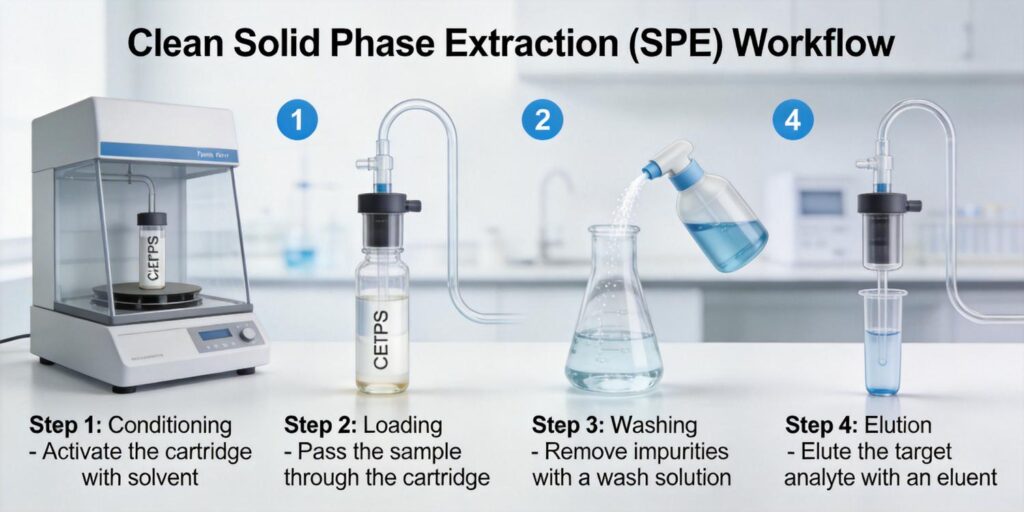
- Cartridge Conditioning: Standardize conditioning procedures based on sorbent type and application
- Documentation Requirements: Maintain records of cartridge lot numbers, storage conditions, and usage dates
Quality Control Integration
Incorporate quality control measures into SOPs:
- Batch Testing: Test each new batch of cartridges before routine use
- Performance Monitoring: Track recovery rates and reproducibility over time
- Contamination Screening: Implement regular blank runs to monitor for system contamination
Impact of Improper Storage on Extraction Performance
Improper storage conditions can significantly degrade SPE cartridge performance, leading to unreliable analytical results and increased costs.
Specific Performance Impacts
Reduced Recovery Rates
Degraded sorbents exhibit decreased binding capacity, resulting in lower analyte recovery. Studies have shown lot-to-lot variations in recovery rates correlate with differences in C18 ligand coverage, with coverage ranging from 2.9 to 3.6 micromols/m² affecting pentachlorophenol and simazine recovery.
Increased Variability
Improper storage leads to inconsistent performance between cartridges and across batches, compromising method reproducibility. Automatic packing machines can achieve high precision (<1% RSD) in sorbent mass and packing density, but storage degradation can introduce significant variability.
Elevated Background Contamination
Degraded packaging or contaminated storage conditions can introduce extractable compounds that interfere with analysis. Components such as plasticizers, mold release agents, and antioxidants can leach into extracts, compromising accuracy and precision, especially in GC and MS applications.
Flow Rate Issues
Moisture exposure can cause sorbent bed compaction or channeling, leading to inconsistent flow rates. Tightly packed beds flow more slowly than loosely packed beds due to changes in permeability, and storage conditions can exacerbate these differences.
Economic Consequences
The financial impact of improper storage extends beyond wasted cartridges to include:
- Reanalysis Costs: Failed analyses requiring repetition
- Instrument Downtime: Time spent troubleshooting extraction problems
- Sample Loss: Irreplaceable samples compromised by poor extraction
- Regulatory Non-compliance: Potential violations in regulated environments
Mitigation Strategies
To minimize the impact of storage-related issues:
- Regular Training: Ensure all personnel understand proper storage and handling procedures
- Environmental Controls: Invest in temperature and humidity monitoring systems
- Supplier Qualification: Select suppliers with robust quality control and manufacturing standards
- Performance Validation: Regularly validate cartridge performance using standardized protocols
By implementing comprehensive storage and handling protocols, laboratories can maximize the performance and longevity of SPE cartridges while ensuring consistent, reliable analytical results. Proper management of these critical sample preparation tools represents a fundamental aspect of quality assurance in analytical chemistry.

A very useful guide to SPE cartridge storage and handling. Proper storage conditions and careful handling are often overlooked, but they can have a direct impact on extraction performance and analytical consistency. Maintaining clear lot information, following recommended storage conditions, and documenting relevant material specifications can also help researchers reduce variability between experiments. Practical resources like this are valuable for laboratories working with sample preparation and analytical workflows.