Sources of Proteins in Biological Samples
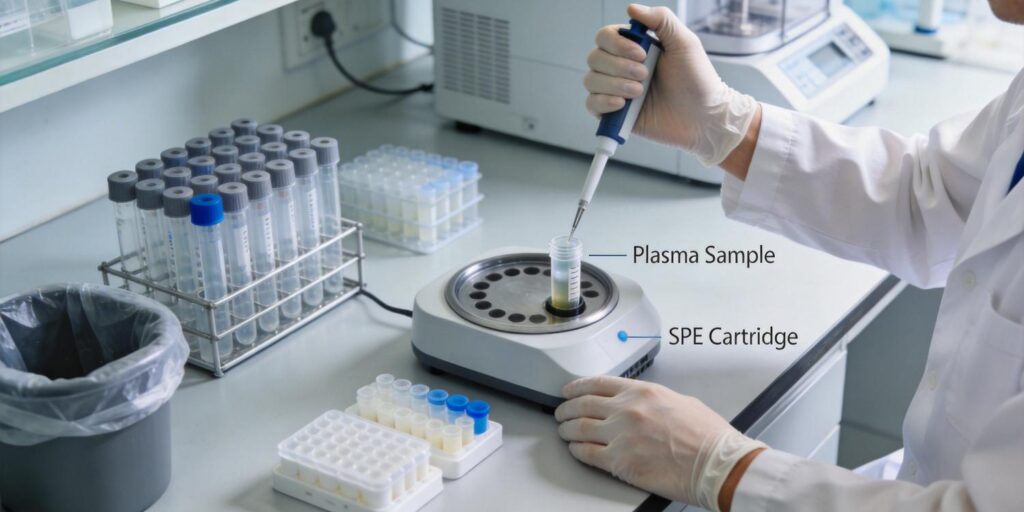
Biological samples such as plasma, serum, and tissue extracts present significant analytical challenges due to their complex protein composition. Human blood contains approximately 6-8% protein by weight, with plasma and serum being particularly rich in protein fractions that contribute to increased sample viscosity and potential clotting issues. The major protein constituents include albumin, globulins, fibrinogen, and various enzymes, all of which can interfere with analytical measurements.
Tissue extracts present additional complexities, as they contain not only soluble proteins but also structural proteins and cellular components that must be disrupted during homogenization. According to Simpson and Van Home (1993), tissue samples typically require pretreatment involving homogenization in buffers or organic solvents to liberate analytes from solid tissue constituents before SPE application.
Limitations of Protein Precipitation Alone
While protein precipitation using organic solvents like acetonitrile, methanol, or acetone is a common initial step, it has significant limitations. Research by Chen et al. (1992) demonstrated that protein precipitation techniques often result in lower recoveries compared to more sophisticated approaches. Their comparative study showed that techniques using inorganic precipitation (zinc sulfate/methanol) or organic solvent precipitation yielded recoveries approximately 50% lower than methods using dilution and sonication.
The fundamental problem with simple precipitation is twofold: first, analytes may co-precipitate with proteins, leading to significant losses; second, precipitated proteins may not be completely removed, potentially clogging analytical columns or interfering with downstream analysis. As noted in The Handbook of Sorbent Extraction Technology, techniques like lead acetate or zinc sulfate precipitation must be used carefully to avoid co-precipitation of analytes.
SPE Sorbents That Enhance Protein Removal
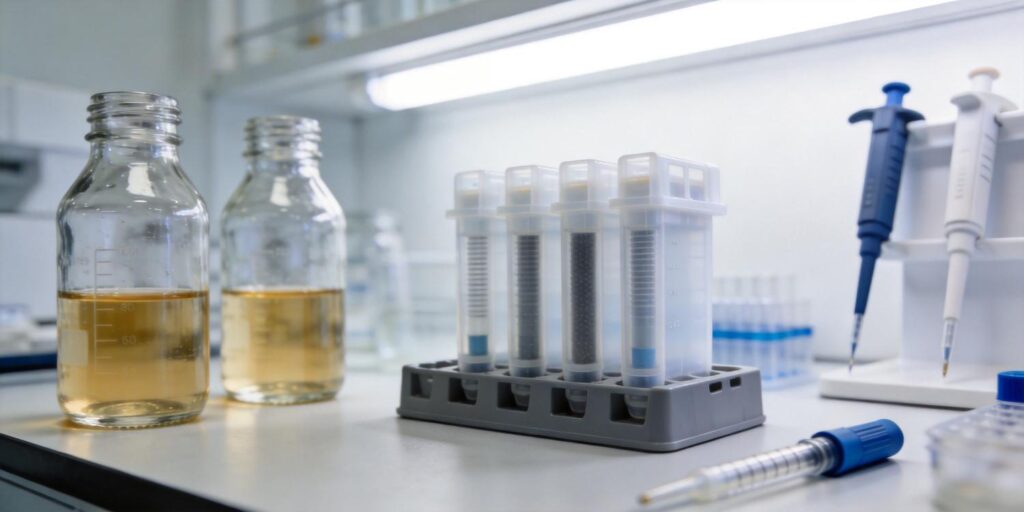
Modern SPE technology offers specialized sorbents designed specifically for protein removal from biological matrices. The most common SPE sorbents have pore sizes of less than 100 Angstroms, which effectively exclude molecules with molecular weights greater than approximately 20,000 Daltons. This size exclusion property is particularly advantageous for protein removal, as most proteins are too large to enter the sorbent pores and thus show minimal retention.
Several specialized sorbent types excel at protein removal:
Mixed-Mode Sorbents
Mixed-mode sorbents combine hydrophobic and ion-exchange properties, allowing for selective retention of small molecule analytes while proteins pass through. These sorbents are particularly effective for basic drugs that might otherwise bind to proteins.
Polymeric Sorbents
Polymeric sorbents offer advantages over traditional silica-based materials, including better chemical stability across a wide pH range and reduced secondary interactions. Their more uniform surface chemistry minimizes non-specific protein binding.
Wide-Pore Sorbents
While less common, wide-pore sorbents (150-200 Å) with larger particle sizes (150 μm) are available for applications involving extremely viscous samples or where reduced incidence of cartridge blockage is critical. However, these may offer reduced extraction efficiency for some applications.
Washing Solvent Design for Efficient Protein Elimination
Proper washing solvent design is crucial for effective protein removal while maintaining analyte recovery. The washing strategy must balance several factors:
Aqueous Washes
The first wash must be aqueous to remove plasma proteins effectively. Pure water or low-ionic-strength buffers are typically used initially to wash away unretained proteins and polar interferences.
Protein-Denaturing Washes
Washes containing protein-denaturing agents can significantly improve protein removal. Options include:
- Low levels of methanol (5-10%) in water
- Sodium dodecyl sulfate solutions
- Acid or base solutions (carefully selected based on analyte stability)
- Chaotropic agents like guanidine hydrochloride or urea (used with caution as they may interfere with extraction mechanisms)
Optimized Wash Composition
Research has shown that washes containing 20% acetonitrile in water can effectively remove polar interfering compounds without significantly affecting basic analyte recoveries. This approach has demonstrated recoveries exceeding 80% with relative standard deviations below 7.3% for diverse basic drugs.
Comparison of SPE vs Filtration Techniques
While filtration methods are sometimes used for protein removal, SPE offers distinct advantages:
| Parameter | SPE | Filtration |
|---|---|---|
| Protein Removal Efficiency | High, with selective retention mechanisms | Moderate, based on size exclusion only |
| Analyte Recovery | Typically >90% with proper optimization | Variable, potential for analyte binding to filter surfaces |
| Sample Cleanup | Comprehensive removal of multiple interference types | Primarily particulate removal |
| Concentration Factor | Significant (3-5 fold typical) | Minimal to none |
| Automation Compatibility | Excellent, especially with 96-well plate formats | Limited |
Filtration techniques, including syringe-type filter cartridges and silanized glass wool, can be useful adjuncts to SPE but generally don’t provide the comprehensive cleanup needed for sensitive analytical methods. As noted in forensic applications, SPE significantly increases chromatography column life while reducing instrument downtime for source cleaning.
Integration with LC-MS Workflows
The integration of SPE with LC-MS represents a powerful combination for biological sample analysis. The sensitivity of modern MS systems makes effective protein removal critical, as protein deposition in transfer capillaries and interfaces can rapidly degrade signal intensity and spectral quality.
On-line SPE-LC/MS
On-line SPE systems offer high throughput (320-960 samples per day reported by Beaudry et al., 1998) and excellent sensitivity. These systems typically use small particle size sorbents (30 μm) packed in narrow-bore cartridges (2 mm I.D.) to achieve sensitivities as low as 50 pg/mL from 200 μL samples.
96-Well Plate Formats
The adaptation of 96-well plate SPE devices has revolutionized high-throughput analysis. These systems allow parallel processing of multiple samples, with extraction times compatible with rapid LC-MS analysis cycles (5-7 minutes per sample). The plate format has been particularly valuable for pharmacokinetic studies during drug development.
Optimization for MS Compatibility
For optimal LC-MS performance, SPE methods should:
- Use volatile buffers like ammonium acetate
- Include pure water washes to remove excess ions
- Employ elution with pure organic solvents without modifiers
- Utilize polymers or sorbents that eliminate the need for buffer ions during elution
Analytical Performance Improvements After Protein Removal
Effective protein removal through SPE delivers measurable improvements in analytical performance:
Enhanced Sensitivity
Clean plasma extracts are essential for achieving the high sensitivities required in modern pharmacokinetic studies. SPE typically provides 3-5 fold improvement in limit of quantitation (LOQ) compared to direct injection of untreated samples.
Improved Chromatographic Performance
Protein removal prevents column clogging and degradation, extending column life and maintaining separation efficiency. This is particularly important for expensive analytical columns and sensitive MS instrumentation.
Reduced Matrix Effects
By removing proteins and other macromolecular interferences, SPE minimizes ion suppression/enhancement effects in MS detection, leading to more accurate and reproducible quantification.
Extended Instrument Uptime
Reduced protein loading onto analytical systems decreases the frequency of source cleaning and maintenance, increasing overall laboratory productivity.
Method Robustness
Well-optimized SPE methods provide consistent recoveries (>90% with RSD <10%) across different sample batches and operators, essential for regulated environments like pharmaceutical development and clinical testing.
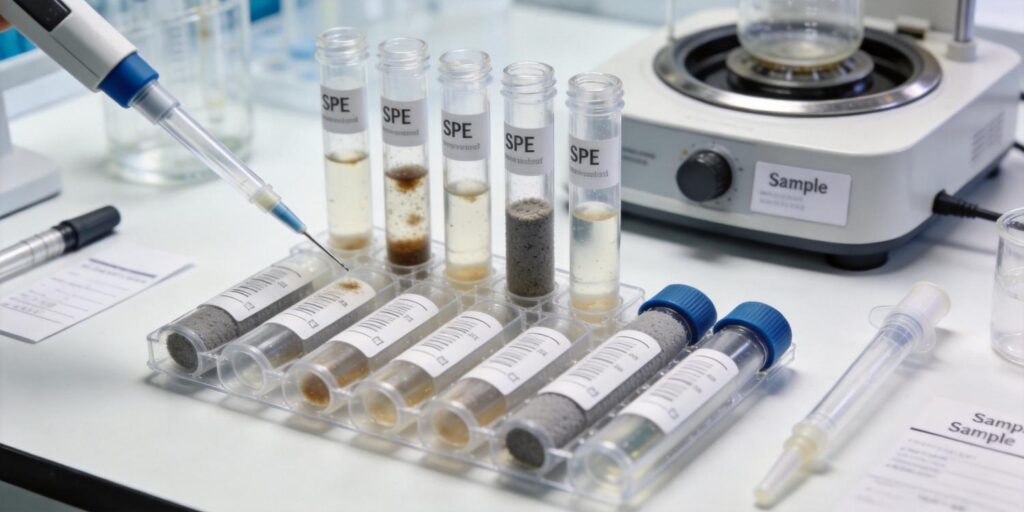
In conclusion, SPE represents a sophisticated approach to protein removal that goes beyond simple precipitation. By leveraging selective retention mechanisms, optimized washing protocols, and modern format technologies, SPE delivers the clean extracts necessary for sensitive and reliable analysis of biological samples in contemporary analytical workflows.