Common Cosmetic Preservatives: Parabens and Phenoxyethanol
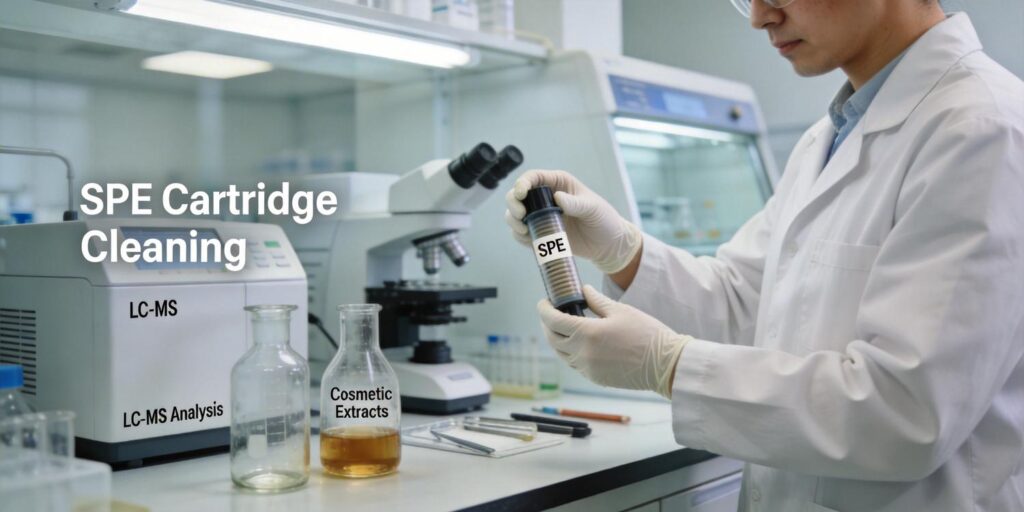
Cosmetic formulations present unique analytical challenges due to their complex matrices containing emulsifiers, surfactants, oils, waxes, and various active ingredients. Among the most commonly used preservatives in cosmetics are parabens (methyl-, ethyl-, propyl-, and butyl-paraben) and phenoxyethanol. These compounds serve as antimicrobial agents to prevent microbial growth and extend product shelf life. However, their analysis requires careful sample preparation to isolate them from interfering matrix components that could compromise LC-MS accuracy and sensitivity.
Parabens, being hydrophobic esters of p-hydroxybenzoic acid, exhibit strong retention on reversed-phase sorbents, making them ideal candidates for solid-phase extraction (SPE) cleanup. Phenoxyethanol, a glycol ether preservative, presents different polarity characteristics but can be effectively extracted using appropriate SPE strategies. According to research by Bonazzi et al. (1995), preservatives like methyl- and propyl-parabens can interfere with spectrophotometric assays of active pharmaceutical ingredients in creams, necessitating effective cleanup procedures.
Sample Dilution in Methanol to Dissolve Cosmetic Matrices
The first critical step in cosmetic preservative analysis involves dissolving the complex matrix to release target analytes. Methanol serves as an excellent solvent for this purpose due to its ability to dissolve both hydrophilic and lipophilic components commonly found in cosmetic formulations. A typical protocol involves weighing approximately 0.5-1.0 g of cosmetic sample into a suitable container and adding 10-20 mL of methanol.
For optimal extraction, the sample should be thoroughly mixed using vortexing or sonication for 15-30 minutes. Studies have shown that methanol effectively dissolves cream bases while maintaining preservative stability. In some cases, researchers have used methanol-phosphate buffer mixtures (1:1 or 1:9 v/v) to adjust pH conditions for specific analytes, particularly when dealing with ionizable compounds.
Removal of Insoluble Waxes by Centrifugation
Cosmetic formulations often contain insoluble components such as waxes, pigments, and certain thickeners that can clog SPE cartridges and interfere with subsequent analysis. After methanol extraction, centrifugation at 5000 rpm for 10-15 minutes effectively separates these insoluble materials from the supernatant containing the target preservatives.
The centrifugation step is crucial for preventing cartridge clogging and ensuring consistent flow rates during SPE processing. Research on fat-soluble vitamin extraction from feed samples demonstrates that centrifugation following ethanol extraction effectively removes particulate matter, providing a clear supernatant for SPE loading. This approach is directly applicable to cosmetic matrices where waxes and other insoluble components are common.
Conditioning HLB Cartridge
Hydrophilic-Lipophilic Balanced (HLB) cartridges represent the optimal choice for cosmetic preservative extraction due to their unique copolymer structure (poly divinylbenzene-co-N-vinylpyrrolidone) that provides both hydrophilic and lipophilic retention characteristics. Proper conditioning is essential for optimal analyte recovery.
The standard conditioning protocol involves:
- Passing 1-2 mL of methanol through the cartridge to activate the sorbent and remove any residual impurities
- Following with 1-2 mL of deionized water to create a compatible environment for aqueous sample loading
This two-step conditioning ensures the sorbent is properly wetted and prepared to retain target analytes effectively. Studies on fat-soluble vitamin extraction using Oasis HLB cartridges have demonstrated that proper conditioning with methanol followed by water provides optimal retention of medium-polar and non-polar compounds from mixtures of water and organic solvent.
Loading Cosmetic Extract onto SPE Cartridge
The loading step requires careful consideration of solvent composition to ensure optimal analyte retention. Research indicates that for compounds like parabens and phenoxyethanol, the methanol extract should be diluted with water to achieve an appropriate organic solvent concentration. Studies on vitamin extraction using HLB cartridges have shown that 65% ethanol-water solutions provide optimal retention for fat-soluble vitamins, suggesting similar optimization may be beneficial for cosmetic preservatives.
The loading process should be performed slowly, typically at a flow rate of 1-2 mL/min, to ensure adequate interaction between analytes and the sorbent. For cosmetic extracts, 1-3 mL of the centrifuged supernatant is typically loaded onto a conditioned 60 mg HLB cartridge. The flow-through should be collected and analyzed if necessary to check for breakthrough, though proper optimization should minimize analyte loss during loading.
Washing with Water to Remove Surfactants and Salts
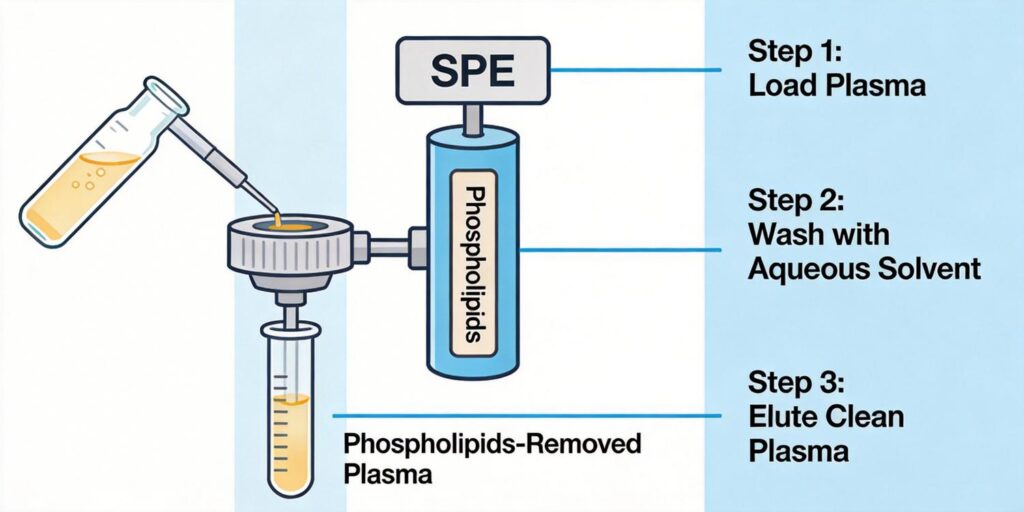
Cosmetic formulations contain various interfering components including surfactants, salts, and hydrophilic excipients that must be removed before elution of target preservatives. A water wash effectively removes these polar interferences while retaining the more hydrophobic preservatives on the HLB sorbent.
Typically, 1-2 mL of deionized water is passed through the cartridge after sample loading. Some protocols use 5% methanol-water solutions as wash solvents, as demonstrated in fat-soluble vitamin extraction studies where 5% methanol effectively removed salts and other organic interferences while maintaining analyte retention. The wash step is critical for eliminating matrix components that could cause ion suppression or enhancement during LC-MS analysis.
Elution with Methanol
Methanol serves as an effective elution solvent for cosmetic preservatives due to its strong elution strength and compatibility with subsequent LC-MS analysis. Typically, 1-2 mL of methanol is sufficient to quantitatively elute parabens and phenoxyethanol from HLB cartridges.
Research on pharmaceutical cream analysis has demonstrated that methanol effectively elutes various drugs from different sorbents, including C18, diol, and ion-exchange materials. For cosmetic preservatives, methanol provides excellent recovery while minimizing co-elution of residual matrix interferences. The eluate can be collected directly into LC vials or evaporated under gentle nitrogen stream and reconstituted in mobile phase compatible solvent if concentration is required.
LC-MS Analysis of Preservative Content
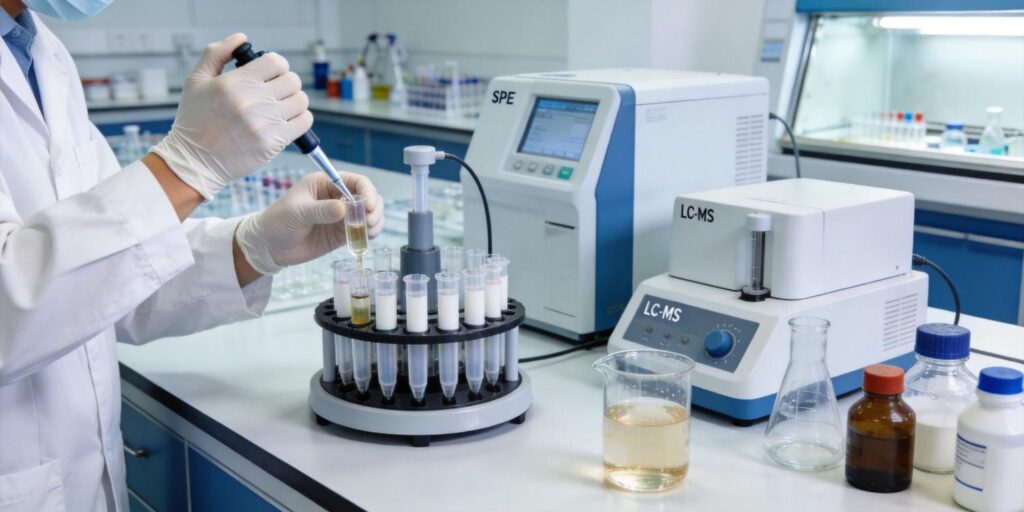
The final SPE eluate is now ready for LC-MS analysis, free from most matrix interferences that could compromise analytical performance. Typical LC conditions for cosmetic preservative analysis include:
- Column: C18 reversed-phase column (150 × 3.0 mm, 3-5 μm particle size)
- Mobile Phase: Gradient elution with water and methanol or acetonitrile
- Flow Rate: 0.3-0.5 mL/min
- Detection: Electrospray ionization (ESI) in negative or positive mode depending on analyte
Parabens typically show good response in negative ion mode due to their phenolic hydroxyl group, while phenoxyethanol may be analyzed in positive ion mode. Multiple reaction monitoring (MRM) transitions provide the necessary selectivity and sensitivity for accurate quantification at regulatory limits.
The SPE cleanup strategy described here offers significant advantages over direct injection methods, including reduced matrix effects, improved chromatographic performance, extended column lifetime, and enhanced method robustness. By effectively removing surfactants, emulsifiers, and other cosmetic matrix components, this approach ensures reliable quantification of preservatives even in complex formulations.
For laboratories analyzing cosmetic products, implementing this SPE cleanup protocol can significantly improve data quality and regulatory compliance. The use of HLB cartridges, with their balanced retention characteristics, provides a versatile platform adaptable to various cosmetic preservatives beyond parabens and phenoxyethanol, including formaldehyde-releasing agents, isothiazolinones, and organic acids.