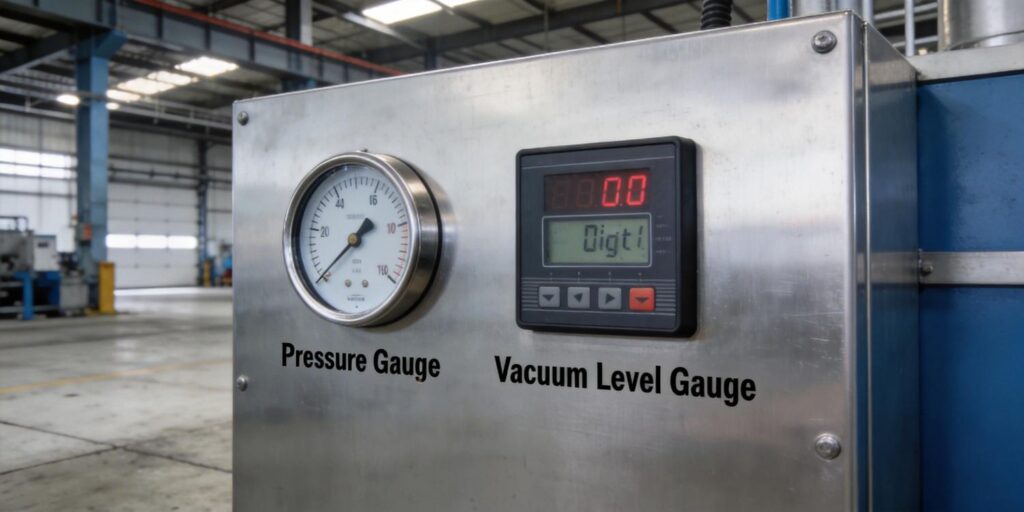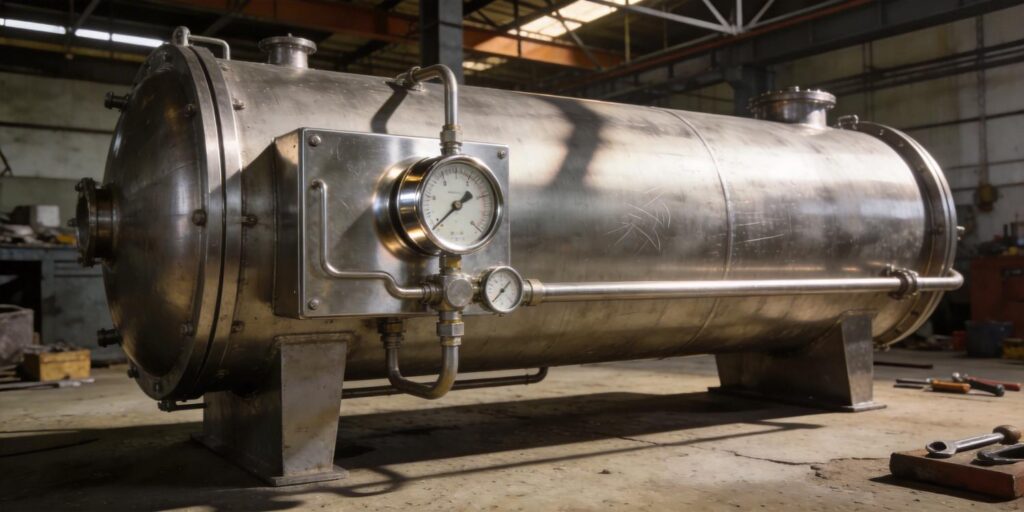
In vacuum metallurgy processes—vacuum arc melting, vacuum induction melting, electron-beam melting, and high-temperature heat treatment—precise pressure control directly determines material purity, microstructure, and final mechanical properties. Oxygen, nitrogen, or hydrogen partial pressures above 10⁻⁴ Torr can cause embrittlement, inclusions, or unwanted phase changes. Yet the operating environment is punishing: chamber temperatures often exceed 1500 °C, pump-down times stretch to hours, and residual gases shift continuously during degassing. A poorly chosen gauge can lead to scrap batches, extended cycle times, or safety interlock failures.
Poseidon Scientific’s complementary pair—the VG-SP205 Pirani Vacuum Transmitter (atmosphere to 10⁻³ Torr) and VG-SM225 Cold Cathode Vacuum Gauge (10⁻³ to 10⁻⁷ Torr)—was developed specifically for these demanding conditions. Both units share identical KF16/KF25 flanges and electrical interfaces, deliver full-range coverage at one-third the cost of imported equivalents, and include free protocol customization for seamless PLC integration. This article guides engineers and procurement teams through the key selection criteria for vacuum metallurgy applications.
Vacuum Melting Pressure Requirements
Vacuum metallurgy processes follow distinct pressure regimes that a single-technology gauge cannot cover reliably:
| Process Stage | Typical Pressure Range | Objective | Recommended Poseidon Gauge |
|---|---|---|---|
| Initial evacuation & melting | Atmosphere to 10⁻² Torr | Remove bulk air and prevent oxidation during melt pool formation | VG-SP205 Pirani |
| Refining & degassing | 10⁻² to 10⁻⁴ Torr | Remove dissolved gases and volatile impurities | VG-SP205 (primary) + VG-SM225 (verification) |
| Final refining / casting | 10⁻⁴ to 10⁻⁶ Torr | Achieve low interstitial content for aerospace-grade alloys | VG-SM225 Cold Cathode |
The VG-SP205’s thermal-conductivity principle provides fast response (≤100 ms) and linear output in the 10–10⁻² Torr band where most melting and initial degassing occur. Its platinum filament withstands the repeated atmosphere-to-vacuum cycling typical of batch melting furnaces. Once pressure drops below 10⁻³ Torr, the VG-SM225’s Penning-discharge ionization takes over, delivering stable ion-current readings down to 10⁻⁷ Torr without the X-ray limit or filament burnout risks of hot-cathode alternatives.
The intentional overlap at 10⁻³ Torr allows dual-gauge verification during the critical refining transition: any discrepancy between the two sensors immediately flags a virtual leak, valve issue, or sudden outgassing spike—preventing defective ingots before they solidify.
High Temperature Considerations
Vacuum metallurgy chambers routinely operate at 1200–1800 °C, far beyond the 15–50 °C working limit of any vacuum gauge. Direct mounting without thermal isolation would destroy the sensor or introduce massive temperature-induced drift.
Proven installation practices include:
- Extension tubes or water-cooled feedthroughs (300–500 mm) to keep the gauge head below 50 °C.
- Radiation shields or ceramic insulators between the hot zone and gauge port.
- Placement on cooler zones (load-lock doors or foreline) where possible.
The VG-SP205 and VG-SM225 are designed with these constraints in mind. Their compact footprints (smaller than most INFICON or MKS equivalents) fit easily into tight feedthrough clusters. Built-in dual temperature compensation—analog circuit plus firmware algorithm—keeps drift below 1 % even when ambient temperature fluctuates during long melt cycles. The VG-SM225’s low 100 gauss NdFeB magnet produces negligible interference with induction coils or electron-beam guns, a common problem with higher-field cold-cathode designs.
In practice, many vacuum metallurgy OEMs mount the Pirani on the roughing manifold (cooler and accessible) and the cold cathode directly on the chamber sidewall with a short water-cooled stub. This configuration has been validated in 1500 °C titanium and nickel-alloy melting furnaces with zero gauge-related failures after 18 months of continuous operation.
Stability Demands in Metallurgy Processes
Long refining holds (2–8 hours) and multi-batch campaigns require exceptional long-term stability. Temperature swings, changing gas composition (H₂, CO, N₂ during degassing), and contamination from metal vapors all challenge gauge performance.
The VG-SP205 Pirani uses a platinum filament chosen for its large temperature-resistance coefficient and superior chemical inertness. Factory multi-point calibration against reference capacitance gauges produces a power-versus-pressure curve that remains stable for 3–5 years in clean metallurgy service. Temperature compensation holds total error below 1 % across the full 15–50 °C range—critical when chamber walls heat the surrounding area during operation.
The VG-SM225 Cold Cathode exhibits inherently stable ion-current output once the Penning discharge is established. Its positive-magnetron geometry (2 mm electrode spacing, ~100 gauss field) minimizes sensitivity to minor magnetic field variations from nearby induction coils. Software-enforced high-voltage cutoff above 10⁻³ Torr prevents sputtering damage during pressure excursions, extending sensor life. When contamination eventually occurs (black carbon or oxide layers), the removable sensor head can be cleaned in-house with 500-grit sandpaper in under 15 minutes—no factory recalibration required.
Combined, the pair delivers composite stability that meets the ±10 % pressure tolerance demanded by aerospace and medical-grade alloy specifications, while built-in error codes (filament-open or discharge-failure) provide predictive maintenance alerts before stability degrades.
Ionization Advantages of the Cold Cathode Gauge
For the deep-vacuum stages of vacuum metallurgy, ionization-based measurement offers decisive advantages over thermal-conductivity or hot-cathode technologies:
- No hot filament: Eliminates burnout risk in the presence of metal vapors or reactive gases (tungsten filaments in hot-cathode gauges evaporate rapidly above 10⁻⁴ Torr).
- Robust to contamination: The VG-SM225’s stainless-steel electrodes and field-cleanable design tolerate the carbon and metal deposits common in melting processes far better than fragile hot filaments.
- Fast start-up in overlap zone: With automatic high-voltage enable at 10⁻³ Torr, the gauge reaches stable reading in seconds rather than minutes.
- Low magnetic interference: The 100 gauss field is 5–10× lower than many inverted-magnetron designs, preventing interaction with induction heating coils or electron-beam guns.
These ionization advantages make the VG-SM225 the preferred sensor for final refining and casting stages, where even brief pressure excursions can introduce interstitial impurities. Paired with the VG-SP205 for roughing, the system provides continuous coverage without the cost or complexity of hybrid hot-cathode/cold-cathode combinations.
Integration Strategy for Metallurgy Control Systems
Modern vacuum metallurgy lines integrate dozens of sensors into PLCs or SCADA systems that demand both analog simplicity and digital diagnostics. Poseidon transmitters support both paths with identical hardware:
- Analog 0–10 V output (effective 2–8 V): Direct connection to legacy PLC analog cards; temperature-compensated for drift-free trending.
- RS232 digital protocol: 9600 baud, 9-byte frame every 100 ms with status, error codes, unit flags, and checksum. Free customization (5+ units) adds Modbus RTU, EtherNet/IP, or custom averaging logic at no charge.
Typical integration architecture for a multi-furnace line:
- VG-SP205 on roughing manifold → PLC interlock for high-vacuum valve opening.
- VG-SM225 on chamber sidewall → primary control signal for refining hold and casting.
- Dual-gauge voting at 10⁻³ Torr crossover for automatic range switching.
- Error-code monitoring for predictive maintenance (filament or discharge alerts trigger SMS or maintenance ticket).
The shared mechanical footprint and electrical interface mean spare-part inventory is halved, and swapping a gauge never requires PLC reprogramming. For large-scale installations, the optional RS485 board spin allows up to 32 gauges on a single bus, dramatically reducing wiring costs in multi-chamber facilities.
Choose the Right Gauges for Your Vacuum Metallurgy Process
Vacuum metallurgy demands more than just accurate pressure readings—it requires rugged, full-range coverage that survives high temperatures, contamination, and long cycles while delivering the stability and integration flexibility modern production lines require. The VG-SP205 Pirani Vacuum Transmitter and VG-SM225 Cold Cathode Vacuum Gauge deliver exactly that combination: proven performance in melting and heat-treatment furnaces, automatic crossover logic, field-cleanable design, and open digital integration at a fraction of imported pricing.
Whether you are specifying instrumentation for a new vacuum arc melter, retrofitting legacy induction furnaces, or scaling a multi-zone heat-treatment line, this complementary pair simplifies your architecture, protects material quality, and strengthens your competitive edge.
Explore the VG-SP205 Pirani Vacuum Transmitter and VG-SM225 Cold Cathode Vacuum Gauge today. Need a custom system diagram for your furnace layout, PLC integration example code, high-temperature mounting guidelines, or a no-obligation sample pair for on-site validation? Contact our applications team directly—we respond within 24 hours and have helped leading metallurgy OEMs and foundries implement this exact strategy with zero process disruption.