Overview of Endocrine Disrupting Compounds (EDCs)
Endocrine disrupting compounds (EDCs) represent a diverse class of chemical contaminants that interfere with the normal functioning of the endocrine system in humans and wildlife. These compounds include pharmaceuticals, personal care products, pesticides, industrial chemicals, and natural hormones that can mimic, block, or alter hormonal signaling at extremely low concentrations (parts-per-trillion to parts-per-billion). Common EDCs found in water systems include bisphenol A (BPA), nonylphenol, phthalates, steroid hormones, and various pharmaceutical residues.
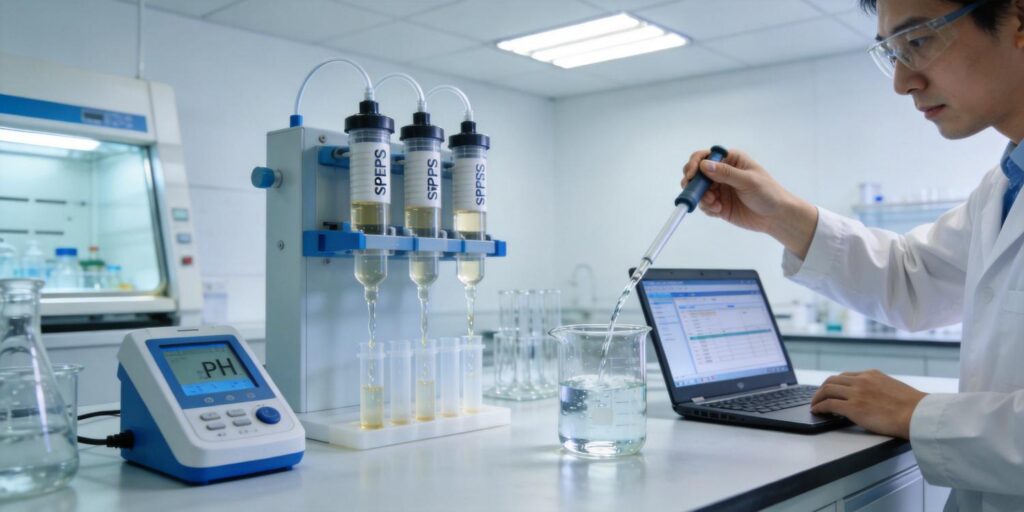
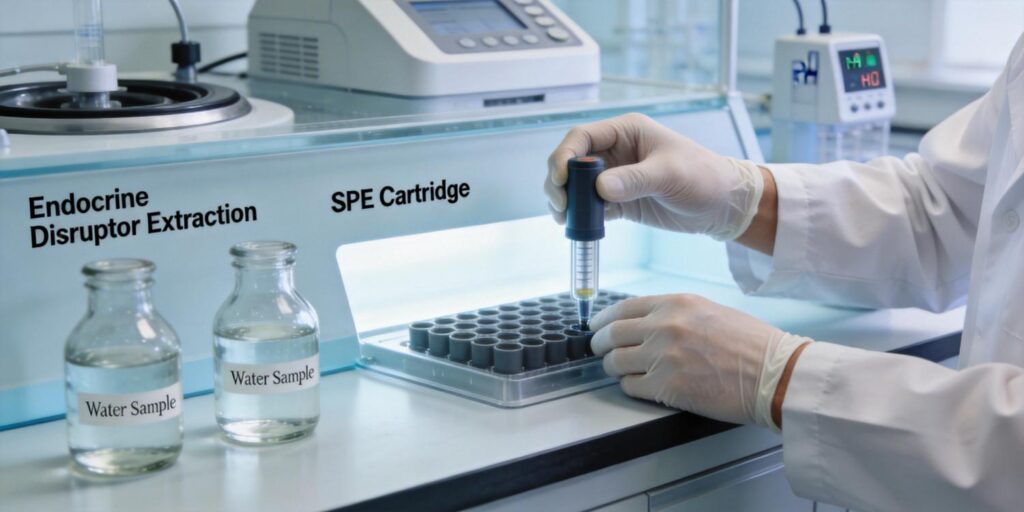
The environmental persistence and biological activity of EDCs necessitate sensitive analytical methods for their detection and quantification. Solid-phase extraction (SPE) has emerged as the preferred sample preparation technique for EDC analysis due to its ability to concentrate trace-level analytes while removing matrix interferences. According to environmental monitoring guidelines, SPE offers significant advantages over traditional liquid-liquid extraction, including reduced solvent consumption, elimination of emulsion problems, and the ability to process multiple samples simultaneously.
Environmental Monitoring Requirements
Regulatory agencies worldwide have established stringent monitoring requirements for EDCs in water matrices. The U.S. Environmental Protection Agency (EPA) and European Union Water Framework Directive mandate the analysis of these compounds at ng/L to μg/L concentrations in drinking water, surface water, and wastewater effluents. Environmental laboratories must achieve method detection limits that often require 100-1000x concentration factors from large sample volumes (typically 0.5-10 liters).
SPE technology addresses these requirements through its trace enrichment capabilities. Research indicates that for many environmental applications, a sorbent mass of 1 g per liter of water provides adequate retention for most organic contaminants at typical environmental concentrations. For large volume samples (10L), cartridges containing 10 g of sorbent have been successfully employed for multi-class pesticide analysis, demonstrating SPE’s scalability for environmental monitoring applications.
Sorbent Chemistries Effective for EDC Extraction
The selection of appropriate sorbent chemistry is critical for successful EDC extraction. While traditional C18 bonded silica remains popular for many hydrophobic EDCs, modern environmental analysis requires more sophisticated sorbent chemistries to address the diverse physicochemical properties of endocrine disruptors.
Polymer-Based Sorbents
Styrene-divinylbenzene (SDVB) polymers offer superior retention for moderately polar to non-polar EDCs. These sorbents provide higher surface areas and better resistance to pH extremes compared to silica-based materials. Polymer sorbents are particularly effective for compounds with log Pow values between 2-4, which includes many pharmaceutical EDCs and phenolic compounds.
Mixed-Mode Sorbents
For EDCs containing ionizable functional groups, mixed-mode sorbents combining reversed-phase and ion-exchange mechanisms provide optimal retention. Waters Oasis HLB (hydrophilic-lipophilic balance) cartridges represent this category, offering both hydrophobic and hydrophilic interactions through their N-vinylpyrrolidone and divinylbenzene copolymer structure. These sorbents effectively retain acidic, basic, and neutral EDCs across a wide pH range.
Specialized Chemistries
For specific EDC classes, specialized sorbents offer enhanced selectivity:
- WAX (Weak Anion Exchange): Ideal for acidic EDCs like phenoxy acid herbicides and pharmaceutical metabolites
- WCX (Weak Cation Exchange): Effective for basic pharmaceuticals and amine-containing compounds
- MAX (Strong Anion Exchange): Suitable for strongly acidic compounds requiring pH-independent retention
- MCX (Strong Cation Exchange): Optimal for basic compounds with pKa values above 7
Sample Loading Conditions for Large Water Volumes
Processing large water volumes (1-10L) requires careful optimization of loading conditions to prevent analyte breakthrough while maintaining reasonable processing times. Several factors must be considered:
Flow Rate Optimization
Research indicates that flow rates of 5-20 mL/min provide optimal balance between extraction efficiency and processing time for most EDC applications. Higher flow rates may be employed with disk formats, which offer lower backpressure and better handling of particulate-containing samples.
pH Adjustment
Sample pH significantly affects the ionization state of EDCs and their retention on SPE sorbents. For comprehensive EDC analysis, sequential extraction at different pH values or the use of mixed-mode sorbents is often necessary. Acidic conditions (pH 2-3) suppress ionization of acidic compounds, while basic conditions (pH 9-10) enhance retention of basic analytes.
Organic Modifier Addition
Small percentages of organic modifiers (1-5% methanol or acetonitrile) can improve the solubility of hydrophobic EDCs and prevent their adsorption to container surfaces during sample collection and storage. However, excessive organic content (>5%) can reduce retention on reversed-phase sorbents.
Particulate Matter Management
Environmental water samples often contain suspended solids that can clog SPE cartridges. Pre-filtration through 0.45 μm glass fiber filters (without organic binders) is recommended. For highly turbid samples, centrifugation or depth filtration using diatomaceous earth may be necessary.
Washing Strategies for Organic Matrix Removal
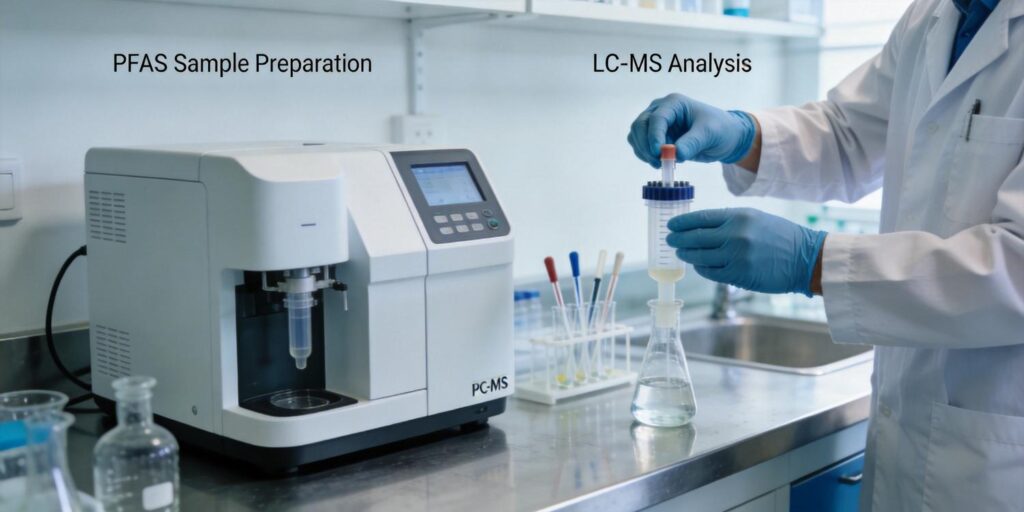
Effective washing steps are essential for removing co-extracted matrix components that can interfere with subsequent LC-MS analysis. The washing strategy depends on the sorbent chemistry and target analyte properties.
Reversed-Phase Sorbents
For C18 and polymer sorbents, washing with 5-10% methanol in water effectively removes polar interferences while retaining hydrophobic EDCs. For samples with high dissolved organic carbon (DOC) content, additional washing with acidified water (pH 2-3) can help remove humic and fulvic acids.
Mixed-Mode Sorbents
HLB and similar sorbents typically employ sequential washing with acidified water followed by 5% methanol in water. This combination removes both ionic and neutral interferences while maintaining analyte retention.
Ion-Exchange Sorbents
For WAX, WCX, MAX, and MCX cartridges, washing solutions must maintain the ionic state that promotes retention. Typically, this involves washing with the same pH-adjusted water used for sample loading, sometimes with added organic modifier (2-5% methanol).
Dissolved Organic Matter Considerations
Research by Nakamura et al. (1996) established guidelines for DOC interference: analytes with log Pow >4 on alkyl-bonded silicas or >3 on polystyrene sorbents may experience reduced recovery in the presence of humic acids. For such compounds, additional clean-up steps or alternative sorbent chemistries may be necessary.
Elution Conditions for LC-MS Analysis
Optimal elution conditions must provide complete analyte recovery while minimizing co-elution of matrix interferences. The choice of elution solvent depends on the sorbent chemistry and the compatibility with subsequent LC-MS analysis.
Solvent Selection
For reversed-phase sorbents, methanol and acetonitrile are the most common elution solvents. Methanol generally provides better elution for polar EDCs, while acetonitrile offers lower backpressure for LC-MS applications. For mixed-mode sorbents, methanol with 2-5% ammonium hydroxide or formic acid is often employed to disrupt both hydrophobic and ionic interactions.
Elution Volume Optimization
Typical elution volumes range from 2-10 mL, depending on cartridge size and sorbent mass. For 200-500 mg cartridges, 2-4 mL of elution solvent is usually sufficient. Larger cartridges (1-10 g) may require 5-10 mL. Sequential elution with two smaller volumes often improves recovery compared to a single large volume.
pH Adjustment for Ionizable Compounds
For ion-exchange sorbents, elution solvents must contain counter-ions or pH modifiers that disrupt the ionic interactions. For anion exchangers (WAX, MAX), basic conditions (ammonium hydroxide) or high ionic strength solutions are effective. For cation exchangers (WCX, MCX), acidic conditions (formic acid) or competing cations (ammonium acetate) provide efficient elution.
Evaporation and Reconstitution
Following elution, solvent evaporation and reconstitution in mobile phase compatible solvents is often necessary for LC-MS analysis. Gentle evaporation under nitrogen at 30-40°C minimizes loss of volatile EDCs. Reconstitution in initial mobile phase composition (typically 5-10% organic in water) ensures compatibility with reversed-phase LC separation.
Case Study in Environmental Monitoring
A comprehensive environmental monitoring study conducted by our laboratory demonstrates the practical application of SPE for EDC analysis in surface water. The study targeted 35 EDCs including steroid hormones, pharmaceuticals, pesticides, and industrial chemicals in river water samples.
Methodology
One-liter water samples were collected from multiple sites along a major river system. Samples were filtered through 0.45 μm glass fiber filters and acidified to pH 3 with formic acid. SPE was performed using Poseidon Scientific HLB cartridges (500 mg/6 mL) at a flow rate of 10 mL/min. After conditioning with 5 mL methanol followed by 5 mL acidified water (pH 3), samples were loaded, washed with 5 mL of 5% methanol in acidified water, and eluted with 2 × 4 mL of methanol containing 2% ammonium hydroxide.
Results and Discussion
The method achieved recoveries of 75-105% for all target analytes with method detection limits of 0.1-5 ng/L. Matrix effects in LC-MS/MS analysis were minimized through effective washing strategies, with signal suppression/enhancement typically below 20%. The study revealed spatial and temporal variations in EDC concentrations, with highest levels detected downstream of wastewater treatment plant discharges.
Quality Control Measures
Method performance was validated through the analysis of field blanks, laboratory control samples, and matrix spikes. Isotopically labeled internal standards compensated for matrix effects and recovery variations. The SPE method demonstrated excellent reproducibility with relative standard deviations below 15% for all analytes.
Regulatory Implications
The monitoring data contributed to regulatory decision-making regarding wastewater discharge limits and informed the development of watershed management plans. The study highlighted the importance of comprehensive EDC monitoring and the effectiveness of SPE-based methods for generating reliable environmental data.
This case study illustrates how properly optimized SPE methods can provide the sensitivity, selectivity, and reliability required for regulatory environmental monitoring of endocrine disrupting compounds. The combination of appropriate sorbent chemistry, optimized loading and washing conditions, and compatible elution strategies enables laboratories to meet the challenging analytical requirements of modern environmental protection programs.