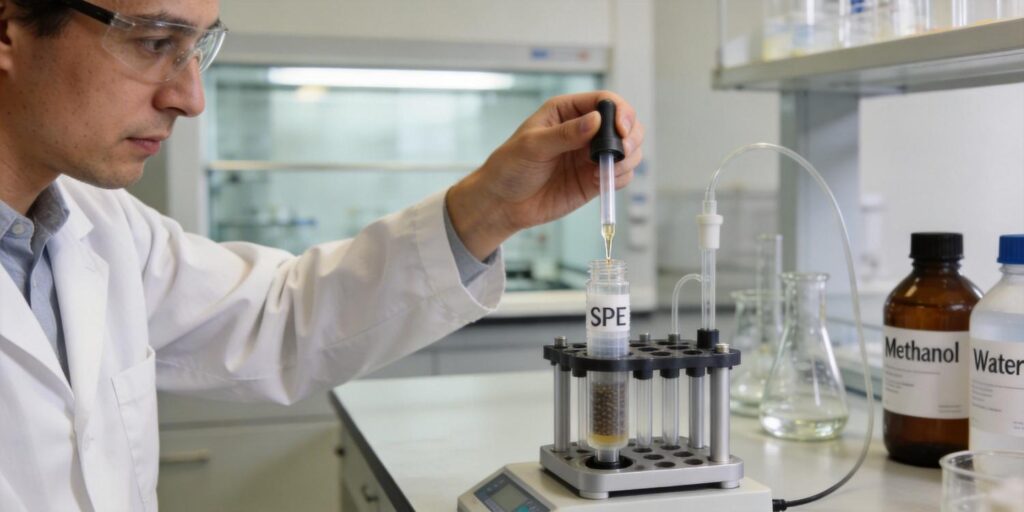
Sources of Variability Between Analysts in SPE Workflows
In multi-analyst laboratories, solid-phase extraction (SPE) reproducibility faces significant challenges from human-induced variability. According to established literature, “SPE is a technique and therefore depends upon human skill for ruggedness” (Simpson, 2000). This fundamental truth underscores why different analysts can produce varying results even when using identical equipment and reagents.
The primary sources of analyst-to-analyst variability include:
1. Flow Rate Control
Flow rate management represents one of the most critical variables in SPE reproducibility. As documented in troubleshooting guides, “regulation of flow rates is a critical aspect of extraction efficacy, particularly at sample application and elution steps” (Telepchak et al., 2007). Different analysts may apply vacuum or pressure inconsistently, leading to variations in analyte recovery. Studies have shown that lowering flow rates from 1.5 to 0.33 mL/minute can increase extraction yields from 80% to 95% (de Zeeuw, 2000), highlighting the sensitivity of SPE to flow control.
2. Solvent Volume Measurement and Application
Inconsistent solvent volume measurement and application techniques contribute significantly to variability. The precision of conditioning, washing, and elution steps depends heavily on accurate volume delivery. Analysts may differ in their approach to solvent addition, drainage timing, and cartridge drying procedures, all of which affect final recovery percentages.
3. Timing and Sequence Variations
SPE procedures involve multiple timed steps where consistency is crucial. Differences in how long analysts allow for conditioning, sample loading, washing, and elution can lead to variable results. Some analysts may rush through steps while others follow timing protocols more meticulously.
4. Technique in Sample Loading
The method of sample application—whether analysts use gravity flow, controlled vacuum, or positive pressure—can vary significantly. Inconsistent sample loading techniques affect how analytes interact with the sorbent bed, potentially leading to breakthrough or incomplete retention.
The Critical Importance of Standardized SOPs
Standard operating procedures (SOPs) serve as the foundation for reproducible SPE results across multiple analysts. Well-documented SOPs should address every potential source of variability, providing clear, unambiguous instructions for each step of the extraction process.
Key Elements of Effective SPE SOPs
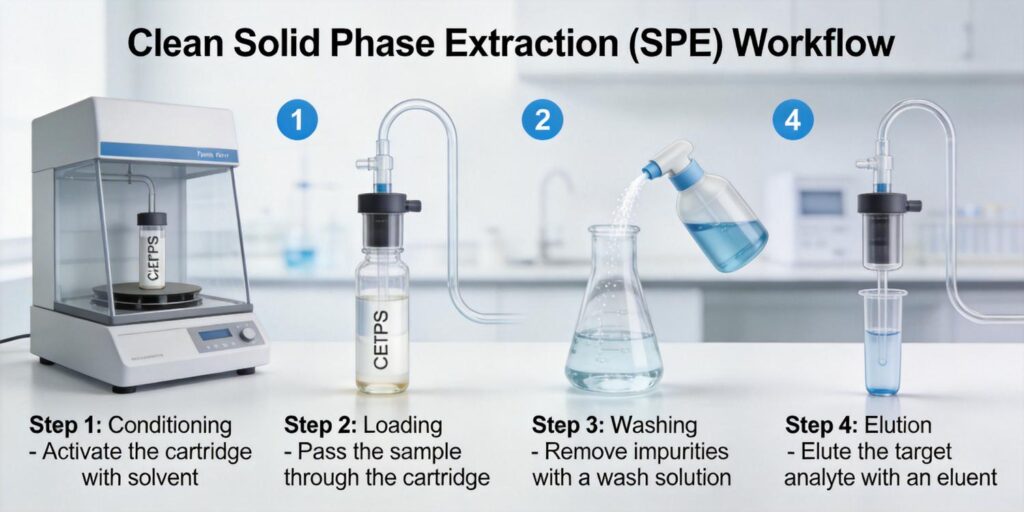
- Detailed Step-by-Step Instructions: Each SPE phase—conditioning, loading, washing, drying, and elution—requires explicit directions with specific parameters.
- Quantitative Specifications: Precise volumes, flow rates, and timing requirements must be documented numerically rather than descriptively.
- Equipment Calibration Requirements: SOPs should specify calibration frequencies for pipettes, vacuum systems, and timing devices.
- Troubleshooting Guidelines: Include decision trees for common issues like slow flow rates or poor recoveries.
Automation provides formal documentation of how sample preparation is done, recording in electronic form precise details of every step of every extraction” (Jordan, 2000). While not all laboratories can implement full automation, the documentation principles remain valuable for manual procedures.
Controlling Solvent Volumes and Flow Rates
Precise control of solvent volumes and flow rates represents one of the most effective strategies for improving SPE reproducibility. The relationship between flow rate and recovery is well-established: “The principal difference between SPE and liquid-liquid extractions is that SPE involves columnar flow kinetics vs homogenous mixing to achieve partition of target compounds from the matrix” (Telepchak et al., 2007).
Best Practices for Volume Control
- Calibrated Delivery Systems: Use calibrated positive displacement pipettes or automated dispensers for solvent addition.
- Consistent Drainage Techniques: Standardize whether analysts apply vacuum until “just dry” or for a specified time period after solvent passage.
- Volume Verification: Implement periodic checks of delivered volumes using gravimetric methods.
Flow Rate Standardization Strategies
- Vacuum Control Systems: Use calibrated vacuum gauges or manifolds with individual flow control valves.
- Positive Pressure Systems: Consider displacement systems where “solvents are not sucked through the cartridge but pushed through the cartridge” (de Zeeuw, 2000).
- Timing Protocols: Establish specific time parameters for each flow step rather than relying on visual cues.
Training Laboratory Personnel in SPE Workflows
Effective training programs are essential for minimizing analyst-to-analyst variability. Training should extend beyond basic technique to include understanding of the fundamental principles governing SPE performance.
Comprehensive Training Components
- Theoretical Foundation: Ensure analysts understand retention mechanisms, capacity limitations, and the impact of pH and ionic strength.
- Hands-on Demonstration: Provide supervised practice with feedback on technique consistency.
- Competency Assessment: Implement formal testing where analysts must demonstrate proficiency with control samples.
- Continuing Education: Regular refresher training and updates on technique improvements.
As noted in SPE literature, “the degree of perfection that will be achieved here ultimately depends upon many human traits, rather than scientific principles” (Simpson, 2000). Systematic training addresses these human factors directly.
Quality Control Samples for Monitoring Consistency
Implementing a robust quality control (QC) program is essential for monitoring and maintaining SPE reproducibility across multiple analysts. QC samples provide objective data on method performance and analyst consistency.
QC Sample Strategies
- Process Controls: Include blank samples, spiked samples, and certified reference materials in each batch.
- Analyst Performance Metrics: Track individual analyst recovery rates and precision over time.
- Inter-analyst Comparison: Periodically have multiple analysts extract identical QC samples to identify technique differences.
Published studies demonstrate the effectiveness of QC monitoring. For example, research on lot-to-lot reproducibility showed that “from the 12 lots of Bond Elut Certify cartridges, only one lot showed a somewhat higher recovery” (Chen et al., 1993), indicating that with proper controls, excellent reproducibility is achievable.
Cartridge Lot Validation Procedures
SPE cartridge variability represents another potential source of inconsistency in multi-analyst laboratories. Proper lot validation ensures that cartridge performance remains consistent over time and across different manufacturing batches.
Validation Protocol Components
- Initial Qualification: Test new lots against established performance criteria using standardized methods.
- Recovery Testing: Evaluate recovery percentages for target analytes across multiple cartridges from the same lot.
- Flow Characteristics: Assess flow rate consistency and back pressure development.
- Extract Cleanliness: Monitor background interference levels in blank extractions.
Manufacturers maintain “detailed and large lot history data banks, which evidence reproducibility” (Simpson, 2000). Laboratories should request and review this data when evaluating new lots. Table 20 from SPE literature demonstrates excellent lot-to-lot reproducibility with recoveries over 90% and CV values less than 3% for properly manufactured products.
Documentation and Audit Readiness
Comprehensive documentation practices not only support reproducibility but also ensure audit readiness for regulated laboratories. Proper documentation creates a transparent record of all variables that could affect SPE results.
Essential Documentation Elements
- Batch Records: Document all parameters for each extraction batch, including analyst identity, equipment used, and any deviations.
- Cartridge Tracking: Record lot numbers and expiration dates for all SPE materials.
- Reagent Documentation: Track preparation dates, expiration, and quality control data for all solvents and buffers.
- Equipment Maintenance Logs: Document calibration, maintenance, and performance verification for all SPE-related equipment.
Automated systems excel in this area, as they “provide formal documentation of how sample preparation is done, recording in electronic form, precise details of every step of every extraction” (Jordan, 2000). For manual procedures, standardized forms and electronic laboratory notebooks can achieve similar documentation quality.
Conclusion: Achieving Consistent SPE Results in Multi-Analyst Environments
Improving SPE reproducibility in laboratories with multiple analysts requires a systematic approach addressing both technical and human factors. By implementing standardized SOPs, controlling critical variables like flow rates and solvent volumes, providing comprehensive training, maintaining rigorous quality control, validating cartridge lots, and documenting all procedures thoroughly, laboratories can achieve the high level of reproducibility demanded by modern analytical standards.
The investment in reproducibility pays dividends in reduced rework, improved data quality, and enhanced confidence in analytical results. As SPE technology continues to evolve, with advancements in sorbent chemistry and automation capabilities, the fundamental principles of consistency and control remain essential for successful implementation in multi-analyst laboratories.
For laboratories seeking to optimize their SPE workflows, Poseidon Scientific offers a comprehensive range of HLB SPE cartridges, MAX SPE cartridges, MCX SPE cartridges, WAX SPE cartridges, WCX SPE cartridges, and 96-well SPE plates designed for consistent performance and excellent lot-to-lot reproducibility.