Wastewater Epidemiology as a Public Health Tool
Wastewater epidemiology has emerged as a powerful public health surveillance tool that provides objective, population-level data on substance use patterns. Unlike traditional surveys that rely on self-reported data, wastewater analysis offers an unbiased, real-time snapshot of community drug consumption by measuring drug residues and metabolites in municipal wastewater systems. This approach has gained significant traction in recent years for monitoring illicit drug use trends, evaluating the effectiveness of drug policies, and providing early warning signals for emerging drug threats.
The fundamental principle behind wastewater epidemiology is straightforward: when individuals consume drugs, their bodies metabolize these substances, and the resulting metabolites are excreted in urine and feces. These compounds enter the wastewater system, where they can be collected, concentrated, and analyzed. By measuring the concentration of specific drug biomarkers in wastewater influent and accounting for population served by the treatment plant, researchers can estimate community-wide drug consumption with remarkable accuracy.
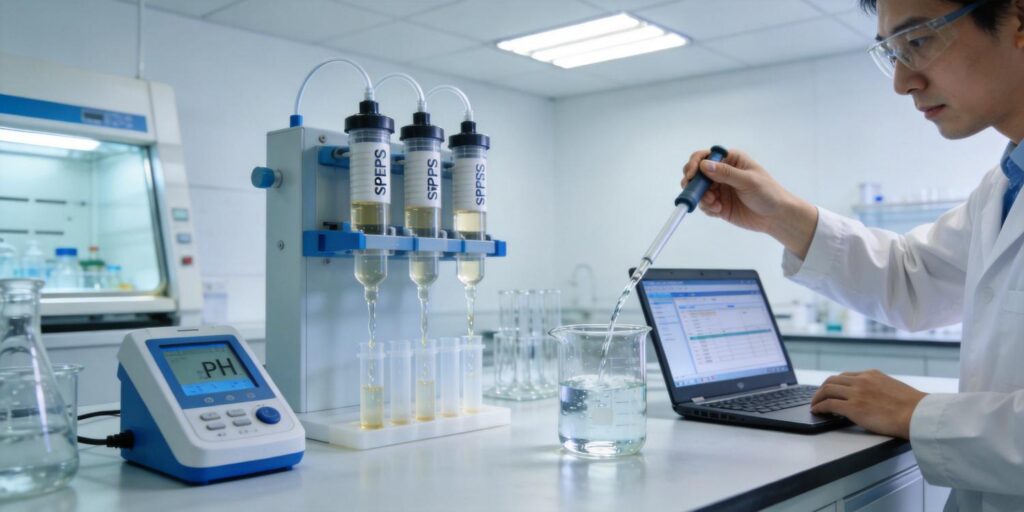
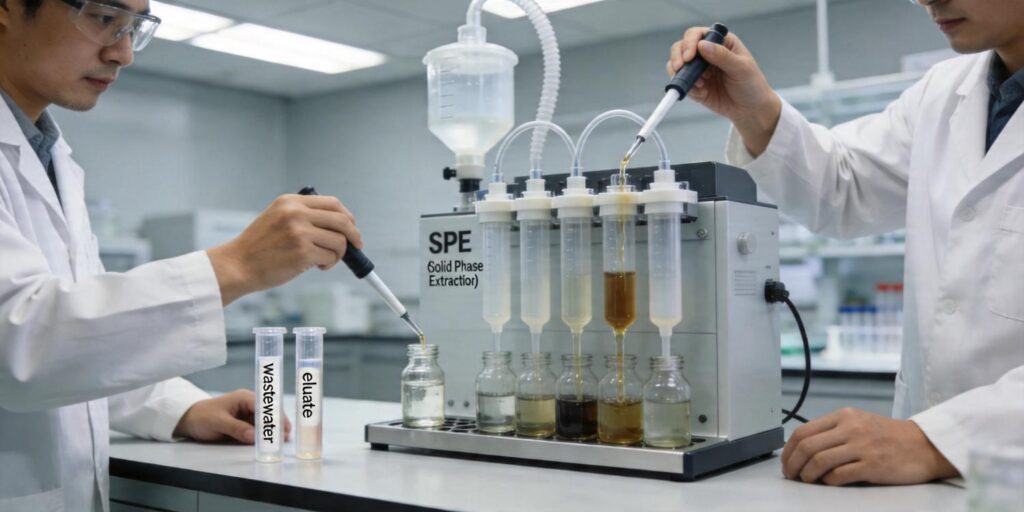
This methodology offers several distinct advantages over traditional epidemiological approaches. It provides near real-time data, eliminates self-reporting biases, captures the entire population served by the wastewater system, and maintains anonymity at the individual level. According to research from forensic toxicology literature, solid phase extraction (SPE) has become the cornerstone technique for preparing these complex environmental samples for analysis, enabling the detection of trace-level drug residues in large-volume wastewater samples.
Target Analytes: Cocaine and Amphetamine Metabolites
The selection of appropriate target analytes is critical for successful wastewater epidemiology studies. Researchers typically focus on specific drug metabolites rather than parent compounds, as metabolites provide more reliable indicators of actual drug consumption. For cocaine monitoring, benzoylecgonine serves as the primary biomarker, as it represents the major urinary metabolite of cocaine with consistent excretion patterns. Similarly, for amphetamine-type stimulants, metabolites such as amphetamine, methamphetamine, and their hydroxylated derivatives are commonly targeted.
From forensic toxicology literature, we know that these compounds present specific analytical challenges. Cocaine metabolites like benzoylecgonine are acidic compounds with pKa values around 3.5, while amphetamine and methamphetamine are basic drugs with pKa values around 9.9. This chemical diversity necessitates careful consideration during sample preparation to ensure efficient extraction of all target analytes. The CLEAN SCREEN DAU extraction column, as documented in forensic applications, has demonstrated effectiveness in isolating a wide range of drugs including amphetamine, benzoylecgonine, and their metabolites from complex biological matrices.
Other important analytes in wastewater epidemiology include opioid metabolites (morphine, codeine, oxycodone), cannabis metabolites (THC-COOH), and emerging synthetic drugs. Each compound class requires specific SPE conditions for optimal recovery. For instance, research shows that THC-COOH extraction typically achieves 92-96% recovery using mixed-mode SPE columns, while benzoylecgonine recovery ranges from 93-98% under optimized conditions.
Large-Volume Sample Enrichment Using SPE
Wastewater samples present unique challenges for analytical chemists due to their complex matrix composition and extremely low analyte concentrations (typically ng/L to μg/L). Solid phase extraction has proven indispensable for addressing these challenges through large-volume sample enrichment. The typical workflow involves processing 100-500 mL of wastewater sample through SPE cartridges or disks to concentrate target analytes by factors of 1000-5000 times.
Mixed-mode SPE sorbents, combining reversed-phase and ion-exchange mechanisms, have become the gold standard for wastewater drug analysis. These sorbents provide multiple retention mechanisms that can be selectively activated or deactivated through pH adjustment, allowing for comprehensive extraction of acidic, basic, and neutral compounds from a single sample. As documented in SPE literature, mixed-mode columns like Bond Elut Certify and CLEAN SCREEN DAU have demonstrated excellent performance for broad-spectrum drug screening in complex matrices.
The SPE process for wastewater samples typically follows these fundamental steps:
- Sample Pretreatment: Wastewater samples are filtered to remove particulate matter, adjusted to appropriate pH (typically pH 6-7 for mixed-mode extraction), and spiked with isotopically labeled internal standards to monitor extraction efficiency.
- SPE Cartridge Conditioning: Columns are conditioned with methanol followed by water or buffer to activate the sorbent and create an optimal environment for analyte retention.
- Sample Loading: Large volumes of wastewater are passed through the SPE cartridge at controlled flow rates (1-5 mL/min) to ensure efficient analyte capture.
- Column Washing: Interfering compounds are removed using appropriate wash solvents while retaining target analytes on the sorbent.
- Analyte Elution: Target compounds are eluted in minimal solvent volumes (typically 2-5 mL) using optimized elution conditions specific to each analyte class.
Research indicates that recovery levels for drugs of abuse in wastewater matrices typically range from 70-98% when using optimized SPE protocols. For example, amphetamine recovery has been documented at 74-96%, methamphetamine at 71-98%, and benzoylecgonine at 93-97% across different concentration levels.
Example Workflow for Municipal Wastewater Monitoring
A comprehensive municipal wastewater monitoring program requires careful planning and standardized procedures to ensure data comparability across different sampling locations and time points. Here’s a detailed example workflow based on established methodologies:
Sample Collection and Preservation
Wastewater samples are typically collected as 24-hour composite samples using automated samplers installed at wastewater treatment plant influent points. Samples are immediately preserved by adjusting pH to approximately 2-3 using hydrochloric or sulfuric acid to prevent microbial degradation of target analytes. Samples are then stored at 4°C and processed within 48 hours to minimize analyte degradation.
SPE-Based Sample Preparation Protocol
For a typical wastewater analysis targeting cocaine and amphetamine metabolites:
- Sample Preparation: 100 mL of filtered wastewater is adjusted to pH 6.0 using phosphate buffer and spiked with deuterated internal standards (benzoylecgonine-d3, amphetamine-d5, etc.).
- SPE Column Conditioning: A mixed-mode SPE cartridge (200 mg, 3 mL) is conditioned with 2 mL methanol followed by 2 mL deionized water and 2 mL phosphate buffer (0.1 M, pH 6.0).
- Sample Loading: The prepared sample is loaded onto the SPE cartridge at approximately 2 mL/min.
- Column Washing: The cartridge is washed with 2 mL deionized water followed by 2 mL methanol to remove interfering compounds.
- Analyte Elution: Target analytes are eluted with 3 mL of freshly prepared elution solvent (methylene chloride:isopropanol:ammonium hydroxide, 78:20:2 v/v/v).
- Sample Concentration: The eluate is evaporated to dryness under gentle nitrogen stream at 40°C and reconstituted in 100 μL of mobile phase for LC-MS/MS analysis.
This protocol, adapted from forensic applications documented in the literature, provides reliable extraction of target analytes while minimizing matrix interferences. The use of mixed-mode SPE cartridges allows simultaneous extraction of acidic (benzoylecgonine) and basic (amphetamine, methamphetamine) compounds through pH-dependent retention mechanisms.
LC-MS/MS Quantification of Drug Metabolites
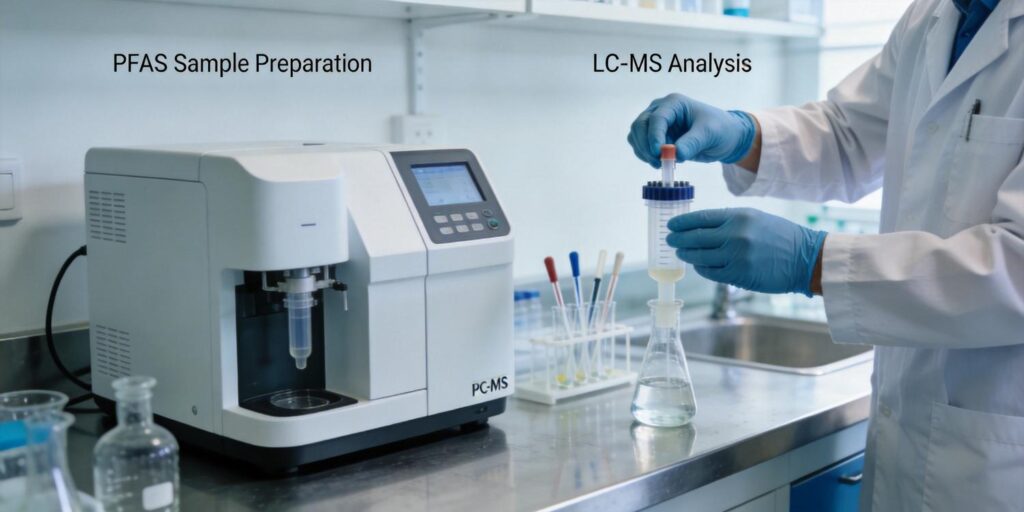
Liquid chromatography-tandem mass spectrometry (LC-MS/MS) has become the analytical method of choice for wastewater epidemiology due to its exceptional sensitivity, selectivity, and ability to quantify multiple analytes simultaneously. The combination of SPE sample preparation with LC-MS/MS analysis enables detection limits in the low ng/L range, which is essential for measuring trace-level drug residues in wastewater.
Modern LC-MS/MS methods for wastewater analysis typically employ:
- Chromatographic Separation: Reversed-phase C18 columns with gradient elution using water and methanol (or acetonitrile) containing formic acid or ammonium formate as mobile phase additives.
- Mass Spectrometric Detection: Triple quadrupole instruments operating in multiple reaction monitoring (MRM) mode, monitoring two transitions per analyte for confirmation.
- Quantification Approach: Isotope dilution method using deuterated internal standards for each target analyte to correct for matrix effects and extraction efficiency variations.
Method validation for wastewater analysis must address several key parameters including linearity (typically 1-500 ng/L), precision (RSD < 15%), accuracy (85-115% recovery), matrix effects, and stability. The clean extracts obtained through optimized SPE protocols significantly reduce matrix effects and improve method robustness compared to direct injection approaches.
Research has demonstrated that SPE-prepared wastewater extracts produce cleaner chromatograms with minimal interference from endogenous compounds, allowing for reliable quantification even at trace levels. This is particularly important for wastewater epidemiology, where accurate measurement of low concentrations is essential for calculating population-normalized drug consumption estimates.
Interpretation of Epidemiological Data
The transformation of analytical data into meaningful epidemiological insights requires careful consideration of several factors. The basic calculation for estimating drug consumption follows this formula:
Daily drug consumption = (C × F × 1000) / (P × E × R)
Where:
C = measured concentration in wastewater (μg/L)
F = wastewater flow rate (L/day)
P = population served by wastewater treatment plant
E = excretion factor (fraction of administered dose excreted as target metabolite)
R = recovery factor from sample preparation and analysis
Key considerations for data interpretation include:
- Excretion Factors: Accurate consumption estimates require reliable data on the percentage of parent drug excreted as the target metabolite. These factors vary between individuals and can be influenced by factors such as metabolism, route of administration, and co-consumption of other substances.
- Population Normalization:
Population estimates must account for temporal variations (tourist influx, commuter populations) and be validated against census data or chemical biomarkers of population size (such as creatinine or ammonia levels in wastewater).
- Spatial and Temporal Trends: Wastewater epidemiology excels at detecting spatial patterns (differences between communities) and temporal trends (weekly patterns, seasonal variations, policy impacts). Consistent sampling and analysis protocols are essential for meaningful trend analysis.
- Uncertainty Assessment: All sources of uncertainty must be quantified and reported, including analytical uncertainty, flow measurement uncertainty, population estimation uncertainty, and biological variability in excretion factors.
- Ethical Considerations: While wastewater epidemiology maintains individual anonymity, researchers must consider privacy implications and ensure appropriate data handling protocols are in place.
The integration of wastewater epidemiology data with other public health indicators (overdose statistics, treatment admissions, law enforcement data) provides a more comprehensive understanding of drug use patterns and their public health impacts. This multi-method approach enhances the validity of findings and supports evidence-based policy decisions.
Future Directions and Methodological Advances
The field of wastewater epidemiology continues to evolve with several promising developments on the horizon. Automated SPE systems are increasingly being adopted to improve throughput and reproducibility for large-scale monitoring programs. New sorbent materials, including molecularly imprinted polymers and mixed-mode phases with enhanced selectivity, offer potential improvements in extraction efficiency and specificity.
Emerging applications include the monitoring of pharmaceutical consumption patterns, assessment of community health through biomarkers of stress and inflammation, and evaluation of environmental exposure to contaminants. The integration of SPE with advanced analytical techniques continues to push detection limits lower, enabling the study of previously undetectable compounds and metabolites.
As documented in SPE literature, the future of solid phase extraction lies in continued innovation in sorbent technology, miniaturization of extraction devices, and increased automation. These advances will further enhance the capabilities of wastewater epidemiology as a public health surveillance tool, providing increasingly detailed and timely insights into community health and substance use patterns.
For laboratories implementing wastewater epidemiology programs, careful method development and validation are essential. The selection of appropriate SPE products, such as mixed-mode cartridges designed for broad-spectrum drug extraction, can significantly impact data quality and reliability. By leveraging established SPE protocols from forensic toxicology and adapting them for environmental applications, researchers can develop robust methods for monitoring illicit drugs in wastewater with the sensitivity and specificity required for meaningful public health surveillance.