Migration of Plastic Additives from Packaging Materials
The migration of plastic additives from packaging materials into bottled water represents a significant analytical challenge that requires sophisticated sample preparation techniques. Plastic additives, including plasticizers, stabilizers, and antioxidants, can leach into water through various mechanisms including diffusion, dissolution, and desorption processes. The rate and extent of migration depend on multiple factors including temperature, storage time, plastic composition, and the physicochemical properties of both the packaging material and the aqueous medium.
Research indicates that migration occurs most significantly when bottled water is exposed to elevated temperatures or prolonged storage periods. The hydrophobic nature of many plastic additives means they preferentially partition into the aqueous phase over time, creating potential health concerns even at trace levels. Understanding these migration dynamics is crucial for developing effective analytical methods to monitor packaging safety and compliance with regulatory standards.
Target Compounds: Phthalates and Bisphenols
Among the numerous plastic additives that can migrate into bottled water, phthalates and bisphenols have received particular attention due to their endocrine-disrupting properties and widespread use in plastic manufacturing. Phthalates, commonly used as plasticizers to increase flexibility, include compounds such as di(2-ethylhexyl) phthalate (DEHP), dibutyl phthalate (DBP), and benzyl butyl phthalate (BBP). These compounds are known to leach from polyethylene terephthalate (PET) bottles and other plastic containers.
Bisphenols, particularly bisphenol A (BPA), serve as monomers in polycarbonate plastics and epoxy resins used in bottle linings. Despite increasing regulatory restrictions, BPA and its analogs continue to be detected in various bottled water samples. The analytical challenge lies in detecting these compounds at trace levels (typically low ng/L to μg/L) while overcoming matrix interferences from the water itself and other potential contaminants.
Sample Preparation Strategies for Bottled Water Testing
Effective sample preparation is critical for accurate detection of plastic additives in bottled water. The relatively simple matrix of bottled water might suggest straightforward analysis, but the trace concentration levels and potential for contamination during sampling and analysis require meticulous approach. Key considerations include:
Sample Collection and Preservation
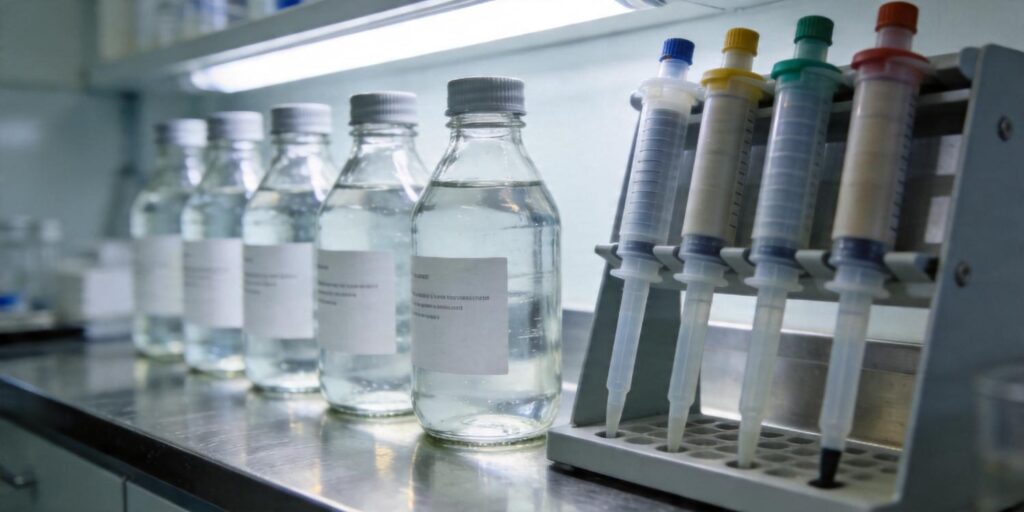
Proper sampling techniques are essential to avoid contamination from laboratory equipment, sampling containers, and environmental sources. Glass containers with Teflon-lined caps are typically recommended to minimize plasticizer contamination. Immediate preservation through acidification or refrigeration helps maintain analyte stability during storage and transport.
Filtration and Pre-treatment
Bottled water samples often require filtration to remove particulate matter that could interfere with subsequent extraction steps. Membrane filters composed of materials that don’t introduce plastic additives (such as glass fiber or stainless steel) are preferred. pH adjustment may be necessary depending on the target compounds and selected extraction methodology.
SPE Enrichment Methods for Trace Plastic Additives
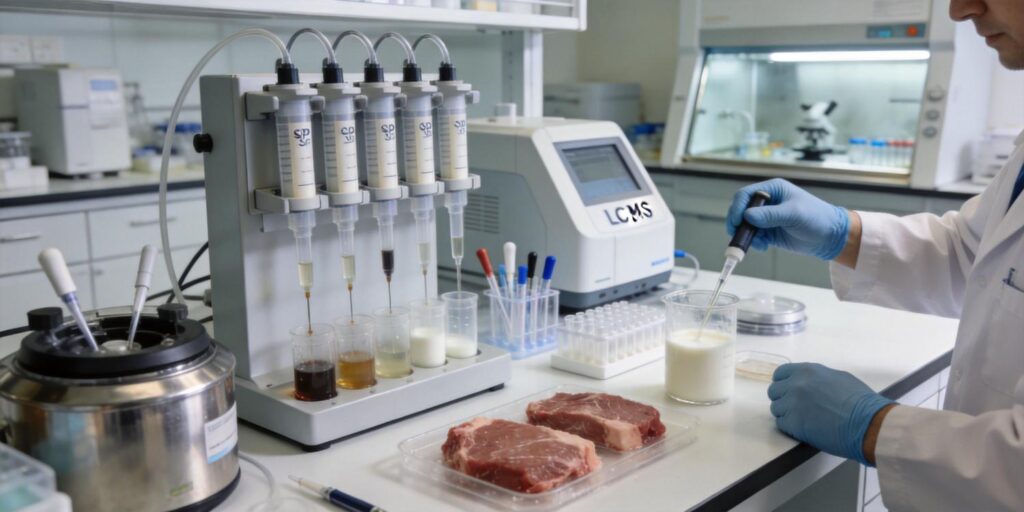
Solid Phase Extraction (SPE) has emerged as the method of choice for concentrating trace plastic additives from bottled water samples. The technique offers significant advantages over traditional liquid-liquid extraction, including reduced solvent consumption, improved reproducibility, and enhanced analyte recovery. As noted in SPE literature, “Improved throughput (parallel vs. serial processing), decreased organic solvent usage and waste generation, higher and more reproducible recoveries” make SPE particularly suitable for environmental water analysis.
SPE Sorbent Selection
The choice of SPE sorbent depends on the physicochemical properties of target compounds. For phthalates and bisphenols, several sorbent chemistries have proven effective:
- HLB (Hydrophilic-Lipophilic Balanced): Waters Oasis HLB sorbents, with their unique N-vinylpyrrolidone and divinylbenzene copolymer structure, provide excellent retention for a wide range of compounds with varying polarities. These sorbents are particularly effective for both phthalates and bisphenols due to their balanced hydrophilic-lipophilic properties.
- MAX (Mixed-mode Anion Exchange): For acidic compounds like certain bisphenol analogs, mixed-mode anion exchange sorbents offer selective retention through both reversed-phase and ion-exchange mechanisms.
- MCX (Mixed-mode Cation Exchange): While less commonly used for neutral plastic additives, MCX sorbents can be valuable for specific applications requiring additional selectivity.
SPE Method Optimization
Successful SPE method development follows a systematic approach: “Research the Problem — Previous SPE and analysis conditions for the analyte and matrix? Characterize the Analyte — Structure, pKa, polarity, functional groups. Characterize the Sample Matrix — Possible interferences — similar functional groups, pKa, etc.” For bottled water analysis, key parameters include:
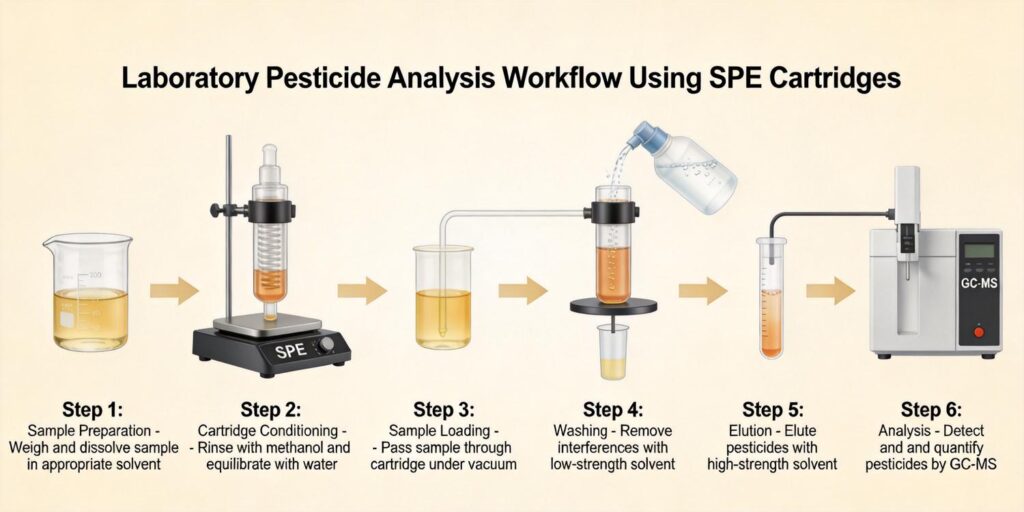
- Conditioning: Typically involves methanol followed by water or buffer to activate the sorbent and create an environment compatible with the sample matrix.
- Sample Loading: Flow rates of 1-3 drops per second are recommended to ensure adequate contact time between analytes and sorbent material.
- Washing: Selective removal of matrix interferences using solvents that don’t elute target compounds.
- Elution: Small volumes of appropriate organic solvents (typically methanol, acetonitrile, or mixtures with acid/base modifiers) to recover concentrated analytes.
Specialized SPE formats, such as 96-well plates, offer advantages for high-throughput analysis: “Automated SPE and Tandem MS Without HPLC Columns, for Quantifying Drugs at the Picogram Level” demonstrates the potential for automated systems in trace analysis.
LC-MS/MS Analytical Workflow
Following SPE enrichment, liquid chromatography coupled with tandem mass spectrometry (LC-MS/MS) provides the sensitivity and selectivity required for trace-level detection of plastic additives in bottled water. The analytical workflow typically involves:
Chromatographic Separation
Reversed-phase chromatography using C18 or similar stationary phases effectively separates phthalates and bisphenols. Gradient elution with water and organic modifiers (acetonitrile or methanol) provides optimal resolution of target compounds and potential interferences. The integration of SPE with LC systems has been demonstrated in various applications: “On-line SPE and HPLC Analysis of PAHs in Water Samples” shows the potential for automated systems.
Mass Spectrometric Detection
Electrospray ionization (ESI) in negative mode is typically employed for bisphenols, while atmospheric pressure chemical ionization (APCI) in positive mode may be preferred for phthalates. Multiple reaction monitoring (MRM) transitions provide the specificity needed to distinguish target compounds from matrix interferences at trace levels.
The combination of SPE with advanced detection techniques has been documented: “A closely-related detection system, employing ion mobility spectroscopy, has been demonstrated for the extraction of phthalate esters from water. In this case thermal desorption from the SPE device was employed to drive analytes off the sorbent and into the ionization zone.”
Applications in Packaging Safety Evaluation
The SPE-LC-MS/MS methodology for detecting plastic additives in bottled water has significant applications in packaging safety evaluation and regulatory compliance:
Quality Control and Compliance Monitoring
Bottled water manufacturers and regulatory agencies utilize these methods to ensure products meet safety standards. The ability to detect compounds at parts-per-trillion levels allows for early identification of potential contamination issues before they reach consumers.
Migration Studies and Packaging Development
Research laboratories employ SPE-based methods to study migration kinetics under various storage conditions. This information guides packaging material development and helps establish appropriate shelf-life recommendations.
Comparative Analysis of Packaging Materials
The methodology enables comparative assessment of different packaging materials, including various plastic formulations, glass alternatives, and emerging biodegradable options. This supports evidence-based decisions in packaging selection and innovation.
Regulatory Method Development
Standardized methods incorporating SPE techniques are increasingly adopted by regulatory bodies worldwide. The reproducibility and robustness of SPE make it suitable for standardized testing protocols in food contact material safety assessment.
The future of SPE in this application area continues to evolve with advancements in sorbent chemistry, automation, and miniaturization. As noted in SPE literature: “It seems reasonable to predict a bright future for the technique of solid-phase extraction. For over two decades applications, SPE sorbents, and engineering technology have kept pace with the increasing demands placed on the analytical laboratory and with the ever-tougher requirements of chemical analysis itself.”
For laboratories seeking reliable SPE solutions for bottled water analysis, Poseidon Scientific offers a comprehensive range of SPE products including HLB SPE Cartridges, MAX SPE Cartridges, MCX SPE Cartridges, and 96-well SPE Plates designed to meet the rigorous demands of trace plastic additive analysis.