Chemical Analysis Needs in Cosmetics Quality Control
Cosmetic products represent one of the most challenging matrices for analytical chemists due to their complex formulations containing oils, emulsifiers, preservatives, fragrances, and active ingredients. Quality control in the cosmetics industry requires precise chemical analysis to ensure product safety, efficacy, and regulatory compliance. According to research, cosmetic formulations present unique analytical challenges because they often contain difficult components that can interfere with target analyte detection.
The primary analytical needs in cosmetics quality control include:
- Preservative quantification to ensure proper antimicrobial protection
- Additive analysis for stability and performance assessment
- Contaminant detection to meet safety standards
- Active ingredient verification for efficacy claims
- Batch-to-batch consistency monitoring
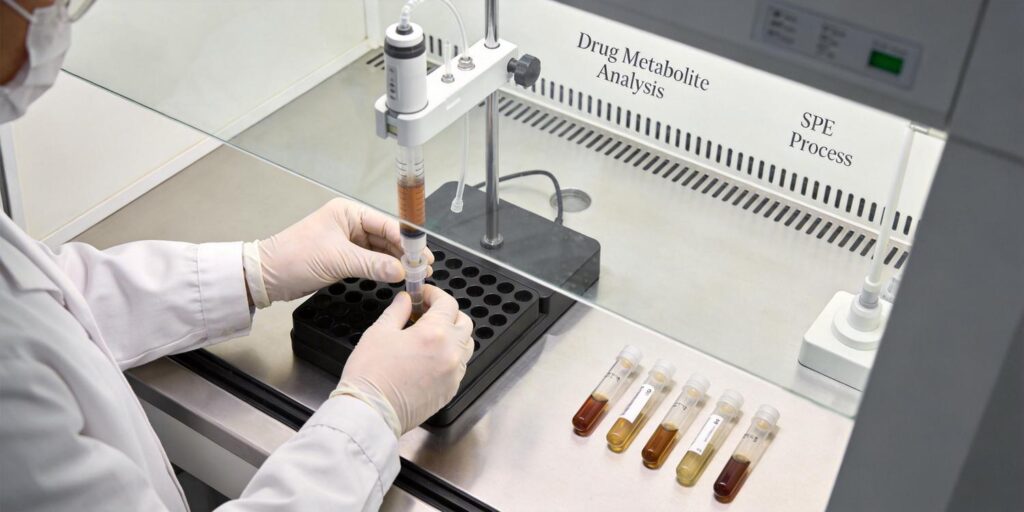
Solid-phase extraction (SPE) has emerged as a critical sample preparation technique for cosmetic analysis, offering superior cleanup compared to traditional methods. As noted in literature, SPE provides a convenient alternative to older, less efficient extraction methods, particularly when dealing with complex cosmetic matrices containing interfering components.
Extraction of Cosmetic Formulations
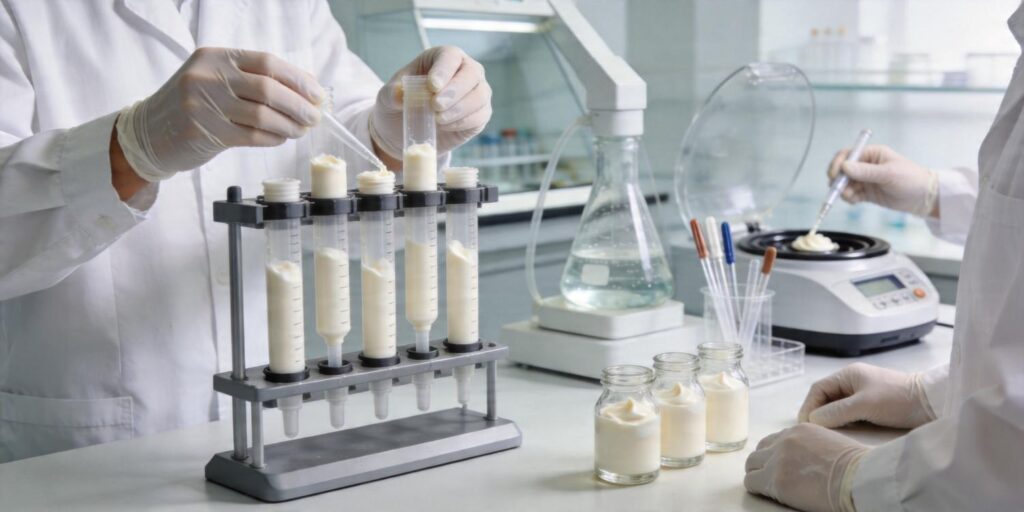
Cosmetic samples require careful pretreatment before SPE can be effectively applied. The extraction process typically begins with dissolving or suspending the cosmetic product in an appropriate solvent system. Research demonstrates that different cosmetic formulations require tailored extraction approaches:
For creams and lotions, common extraction methods include:
- Dissolution in water-methanol mixtures (typically 80:20 v/v)
- Solubilization under alkaline conditions for certain compounds
- Hexane extraction for lipid-soluble components
- Direct suspension in HPLC mobile phase with subsequent filtration
Studies have shown that cosmetic oils and creams containing lipid-soluble vitamins like A and E require specific extraction protocols. Similarly, toothpaste formulations containing plant-derived compounds may need alkaline solubilization followed by hexane extraction before aqueous SPE processing.
The choice of extraction solvent depends on the target analytes and the cosmetic matrix. For instance, research on fluorouracil cream analysis used water-methanol (80:20 v/v) to dissolve the sample, while other studies employed different solvent combinations based on the specific drug and preservative systems present.
SPE Sorbent Selection for Preservatives and Additives
Selecting the appropriate SPE sorbent is crucial for successful cosmetic sample analysis. The complex nature of cosmetic matrices requires careful consideration of sorbent chemistry to achieve optimal analyte recovery and matrix removal.
Common SPE Sorbents for Cosmetic Analysis
C18 (Reversed-Phase): Widely used for hydrophobic preservatives like parabens (methyl- and propyl-p-hydroxybenzoate). Research demonstrates that C18 sorbents effectively retain hydrophobic parabens while allowing hydrophilic analytes to pass through. In one study, C18 was used to remove paraben interferences during fluorouracil analysis in creams.
Mixed-Mode Sorbents: Combining reversed-phase and ion-exchange mechanisms, these sorbents offer enhanced selectivity. Poseidon Scientific’s MCX (mixed-mode cation exchange) and MAX (mixed-mode anion exchange) cartridges provide dual retention mechanisms for challenging cosmetic analyses.
Ion-Exchange Sorbents: SAX (strong anion exchange) and SCX (strong cation exchange) sorbents are valuable for ionic preservatives and additives. Studies show proper conditioning of SAX sorbents with methanol followed by methanol-buffer solutions (pH 8, 1:1 v/v) and SCX sorbents with methanol followed by buffer solutions (pH 4.5).
Diol Sorbents: Useful for normal-phase applications, particularly for certain drug compounds in cosmetic formulations. Research indicates diol sorbents require conditioning with dichloromethane followed by n-hexane.
Sorbent Selection Strategy
When developing SPE methods for cosmetics, consider:
- Analyte polarity and functional groups
- Matrix composition (oils, emulsifiers, etc.)
- pH requirements for optimal retention
- Elution solvent compatibility with analytical instrumentation
Conditioning and Loading Steps
Proper conditioning is essential for SPE success with cosmetic samples. The conditioning process prepares the sorbent surface for optimal analyte retention and ensures consistent flow characteristics.
Standard Conditioning Protocols
Research provides specific conditioning procedures for different sorbent types:
C18 Sorbents: Rinse with 6 mL methanol followed by water or aqueous buffer. The methanol wets the bonded alkyl phase, allowing water to efficiently wet the silica surface.
SAX Sorbents: Condition with 6 mL methanol followed by 3 mL methanol-buffer solution (pH 8, 1:1 v/v).
SCX Sorbents: Use 6 mL methanol followed by 3 mL buffer solution (pH 4.5).
Diol Sorbents: Condition with 6 mL dichloromethane followed by 1 mL n-hexane.
Sample Loading Considerations
For cosmetic samples, loading should occur as soon as possible after conditioning to prevent sorbent drying. Research emphasizes that allowing the sorbent to dry after conditioning can destroy the conditioned state, reducing extraction efficiency.
Sample loading flow rates should be controlled (typically 1-3 drops per second) as recovery is inversely proportional to flow rate. For gravity-fed systems, ensure consistent flow without allowing the sorbent bed to dry.
Washing to Remove Oils and Emulsifiers
Cosmetic formulations contain numerous matrix components that can interfere with analysis, including oils, emulsifiers, thickeners, and colorants. Effective washing steps are crucial for removing these interferences while retaining target analytes.
Wash Solvent Selection
The washing step uses solvents strong enough to remove matrix components but weak enough to retain target analytes. For cosmetic samples:
Aqueous Washes: Water or buffer solutions effectively remove hydrophilic matrix components. Research on fluorouracil cream analysis used 3.0 mL water wash after sample loading on C18 sorbent.
Organic Washes: Solvents like hexane, hexane-dichloromethane mixtures (7:3 v/v), or methanol-water mixtures can remove lipid components and weakly retained compounds.
pH-Adjusted Washes: Buffer solutions at specific pH values can selectively remove ionic interferences while retaining target analytes.
Wash Optimization Strategies
Studies recommend multiple wash steps for complex cosmetic matrices:
- Initial wash with sample matrix-compatible solvent
- Secondary wash with slightly stronger solvent to remove weakly retained impurities
- Optional drying step when elution solvent is immiscible with wash solvents
Research demonstrates that appropriate wash schemes must be optimized for different cosmetic formulations, as raw materials may be easier to analyze than finished products containing co-formulated excipients.
Elution Solvents Compatible with LC-MS
Elution solvent selection is critical for both analyte recovery and compatibility with subsequent LC-MS analysis. The ideal elution solvent should:
- Efficiently desorb target analytes from the sorbent
- Be compatible with LC-MS systems
- Allow for concentration if needed
- Minimize introduction of matrix components into the analytical system
Common Elution Solvents for Cosmetic Analysis
Methanol: Widely used for eluting a broad range of compounds from reversed-phase sorbents. Research shows methanol effectively elutes many preservatives and additives from cosmetic matrices.
Acetonitrile: Excellent for LC-MS compatibility, often used in mixtures with water or methanol.
Methylene Chloride-Based Mixtures: For more hydrophobic compounds, mixtures like methylene chloride-isopropyl alcohol-ammonium hydroxide (78:20:2) have been successfully employed.
Acidified or Basified Solvents: For ionizable compounds, adding acids (formic acid) or bases (ammonium hydroxide) to elution solvents can improve recovery.
Elution Optimization
Studies recommend several strategies for optimal elution:
- Use the smallest volume of solvent possible for concentration
- Allow cartridge to soak with eluent for 0.5-1 minute to improve recovery
- Consider multiple smaller eluent aliquots rather than one large volume
- Choose volatile solvents when evaporation and reconstitution are needed
Analytical Detection Workflow
Following SPE cleanup, cosmetic samples are typically analyzed using sophisticated detection methods. The choice of analytical technique depends on the target analytes and required sensitivity.
LC-MS/MS Applications
Liquid chromatography coupled with tandem mass spectrometry has become the gold standard for cosmetic analysis due to its:
- High sensitivity for trace-level compounds
- Excellent selectivity through multiple reaction monitoring
- Ability to analyze multiple compounds simultaneously
- Compatibility with various ionization techniques (ESI, APCI)
SPE-prepared extracts are ideally suited for LC-MS analysis as the cleanup reduces matrix effects that can suppress or enhance ionization.
Other Detection Methods
HPLC-UV: Useful for compounds with strong UV chromophores, though less selective than MS methods.
GC-MS: Appropriate for volatile preservatives and fragrance compounds.
Spectrophotometry: Research demonstrates that UV spectroscopy, including derivative modes, can be suitable for monitoring SPE method development and analyzing commercial creams when matrix absorption is properly suppressed.
Quality Control Considerations
Implementing robust quality control measures is essential for reliable cosmetic analysis using SPE techniques.
Method Validation Parameters
For regulatory compliance and reliable results, SPE methods for cosmetic analysis should be validated for:
- Recovery: Typically 70-120% for most analytes
- Precision: Both intra-day and inter-day variability
- Linearity: Over the expected concentration range
- Limit of Detection/Quantification: Appropriate for regulatory requirements
- Specificity: Ability to distinguish target analytes from matrix components
Quality Control Samples
Include appropriate controls in each analytical batch:
- Method blanks to monitor contamination
- Matrix-matched calibration standards
- Quality control samples at low, medium, and high concentrations
- Internal standards for quantification accuracy
SPE-Specific QC Considerations
Sorbent Lot Consistency: Different lots of SPE sorbents may exhibit variation in performance. Poseidon Scientific ensures consistent quality across all SPE products through rigorous manufacturing controls.
Flow Rate Control: Maintain consistent flow rates during conditioning, loading, washing, and elution steps to ensure reproducible extraction efficiency.
Cartridge Storage: Store SPE cartridges properly to maintain sorbent integrity and performance.
Automation Considerations
For high-throughput cosmetic quality control laboratories, automated SPE systems offer significant advantages:
- Improved reproducibility through standardized protocols
- Increased throughput for batch processing
- Reduced analyst variability
- Integration with analytical instrumentation
Poseidon Scientific’s 96-well SPE plates are particularly suitable for automated systems, enabling parallel processing of multiple samples.
Conclusion
SPE preparation of cosmetic samples represents a sophisticated approach to overcoming the analytical challenges posed by complex cosmetic matrices. By carefully selecting appropriate sorbents, optimizing conditioning and washing steps, and choosing elution solvents compatible with modern detection methods, analysts can achieve reliable quantification of preservatives, additives, and active ingredients in cosmetic products.
The success of SPE in cosmetic analysis depends on understanding both the chemical properties of target analytes and the complex nature of cosmetic formulations. With proper method development and quality control implementation, SPE provides a robust sample preparation solution that meets the stringent requirements of cosmetic quality control laboratories worldwide.
For specific applications, Poseidon Scientific offers a comprehensive range of SPE products including HLB cartridges for reversed-phase applications, MAX cartridges for mixed-mode anion exchange, MCX cartridges for mixed-mode cation exchange, and specialized WAX and WCX cartridges for weak anion and cation exchange applications.