Vacuum Gauge

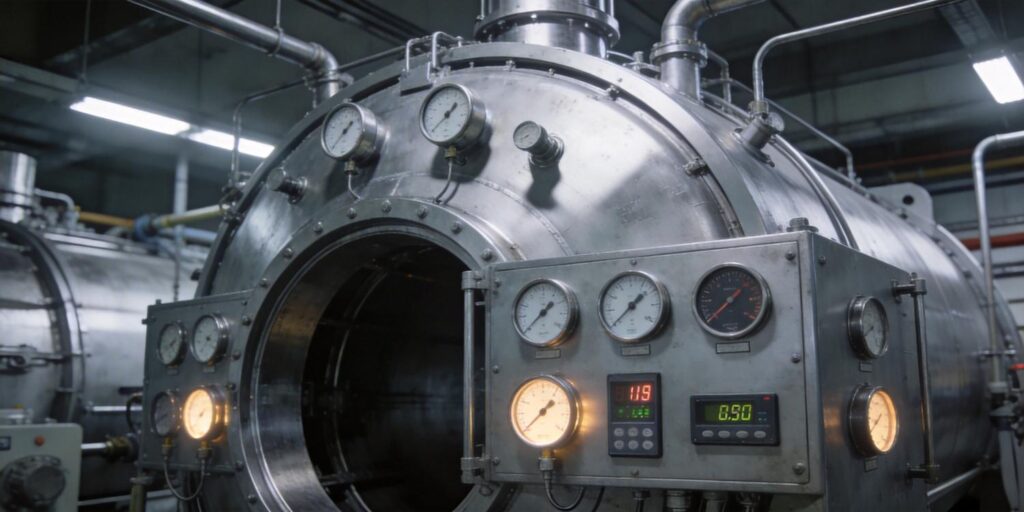
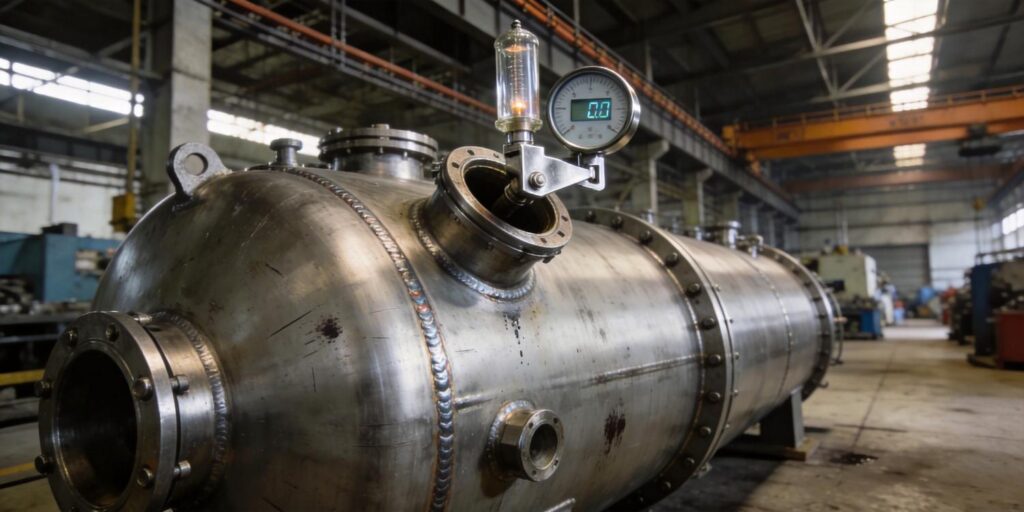
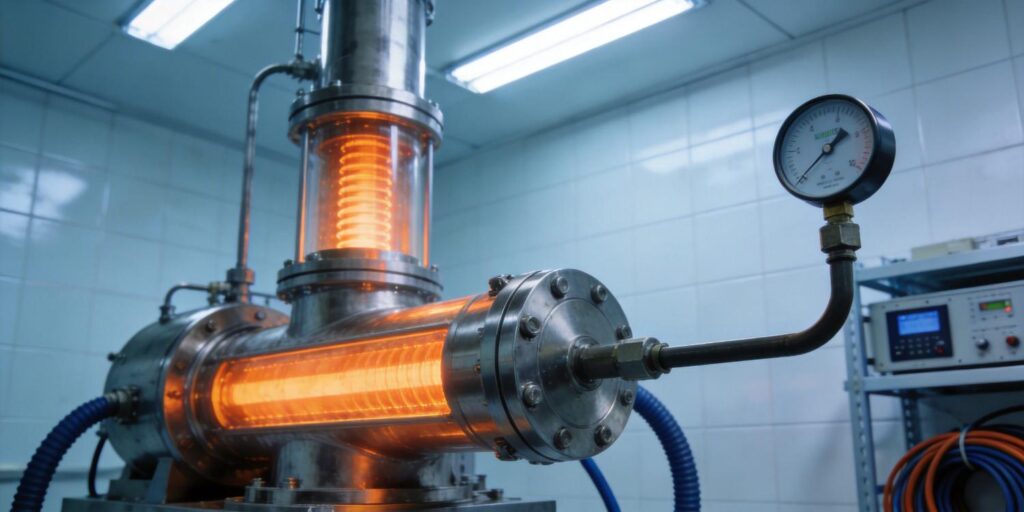
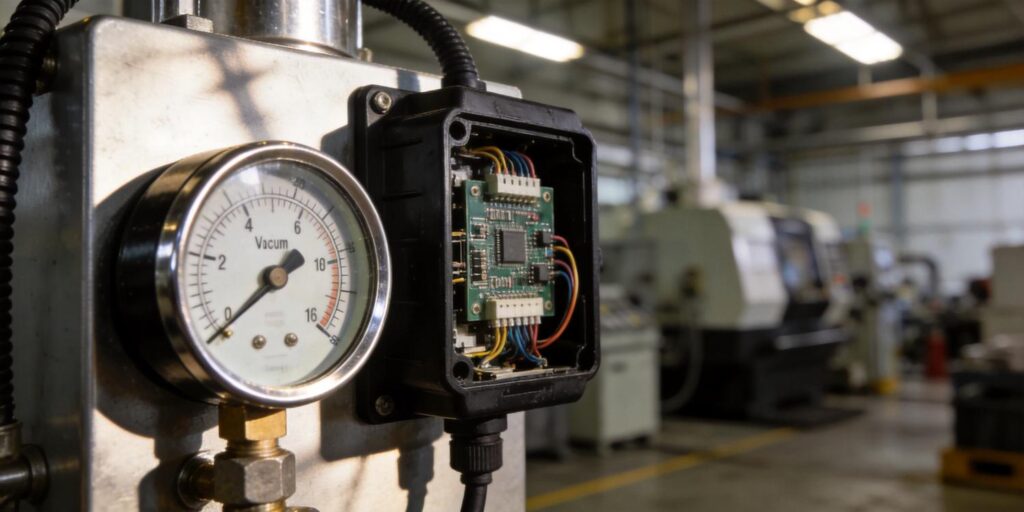
Cold cathode vacuum gauge installed on high vacuum chamber

High Vacuum Measurement Explained: From 10-3 to 10-7 Torr

Defining the High Vacuum Region High vacuum is the pressure regime where gas behavior transitions fully into molecular flow and surface effects dominate. In practical industrial and laboratory terms, high vacuum spans from 10−3 Torr (≈0.133 Pa) down to 10−7 Torr (and below). At these pressures the mean free path of molecules exceeds the dimensions […]

High Vacuum Measurement Explained: From 10-3 to 10-7 Torr Read More »

Engineer reviewing vacuum system design before selecting gauge

How to Request the Right Vacuum Gauge for Your Application

Introduction Selecting the right vacuum gauge for your specific application is one of the highest-ROI decisions you can make in vacuum system design. The correct instrument delivers stable, repeatable pressure data that improves yield, reduces scrap, shortens pump-down times, and minimizes maintenance. The wrong choice leads to range gaps, signal noise, calibration drift, or safety

How to Request the Right Vacuum Gauge for Your Application Read More »

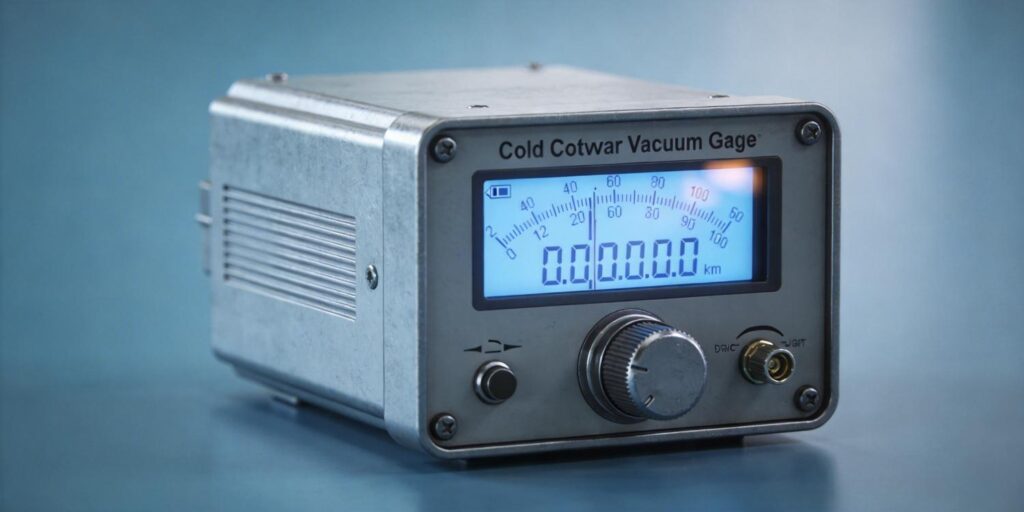
Vacuum gauge with graphical logarithmic scale overlay

Understanding Logarithmic Output in High Vacuum Measurement

Introduction High-vacuum measurement spans many orders of magnitude—from 10−7 Torr in ultra-clean chambers to 10−3 Torr during process gas introduction. A linear voltage output would compress most of the useful range into a few millivolts at the low-pressure end, making precise control impossible. The Poseidon Scientific VG-SM225 Cold Cathode Vacuum Gauge therefore uses a logarithmic

Understanding Logarithmic Output in High Vacuum Measurement Read More »

Vacuum gauge installed on PVD coating chamber

Selecting Vacuum Gauges for PVD and Coating Equipment

Introduction Physical vapor deposition (PVD) and thin-film coating systems demand precise pressure control across a wide range—from atmosphere during venting and load-lock cycling to high vacuum during sputtering or evaporation. A gauge that cannot deliver stable, repeatable readings in both regimes will cause thickness variations, poor adhesion, or arcing that scrapes entire batches. Engineers and

Selecting Vacuum Gauges for PVD and Coating Equipment Read More »

Electrical wiring of vacuum gauge inside control cabinet

Vacuum Gauge Signal Noise: Causes and Solutions

Introduction Signal noise in vacuum gauge outputs can turn accurate pressure data into unreliable process variables. In automated systems, even 50 mV of ripple on a 0–10 V analog line or corrupted packets on an RS232 link can appear as pressure spikes of several decades, triggering false interlocks, extending pump-down times, or causing batch scrap.

Vacuum Gauge Signal Noise: Causes and Solutions Read More »

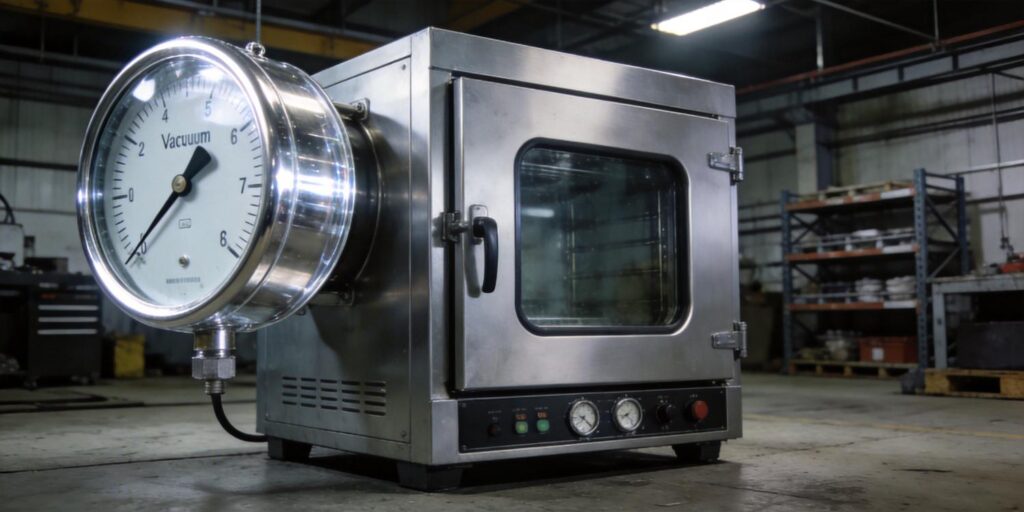
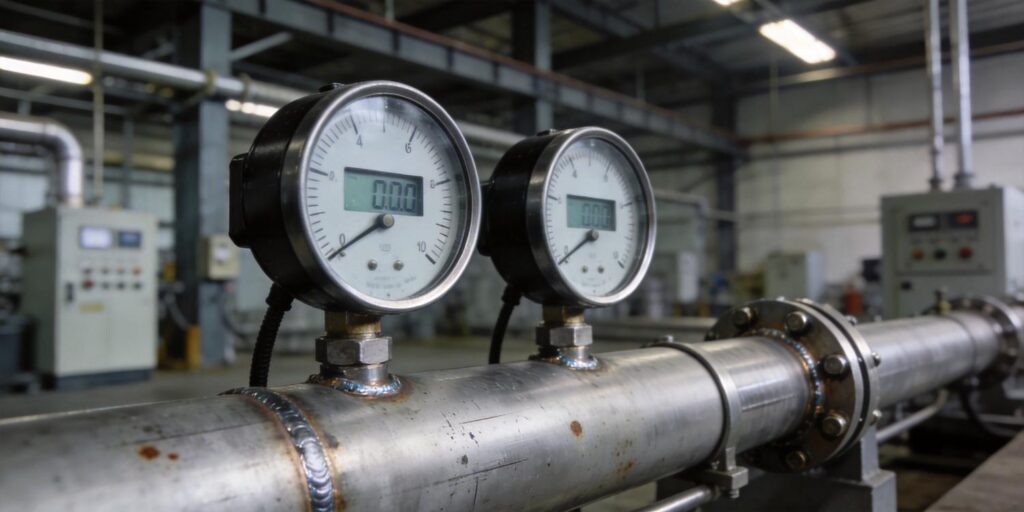
Dual vacuum gauges installed on industrial vacuum chamber

Combining Pirani and Cold Cathode Gauges for Full Range Measurement

Introduction Most industrial vacuum processes span six decades of pressure—from atmosphere during venting and roughing to high vacuum during deposition, etching, or analysis. A single gauge cannot deliver accurate, continuous readings across this entire range. Thermal-conductivity gauges lose sensitivity below 10−3 Torr; ionization gauges cannot operate reliably near atmosphere. The practical solution is to combine

Combining Pirani and Cold Cathode Gauges for Full Range Measurement Read More »

Technician tightening KF25 clamp on vacuum gauge connection

Vacuum Gauge Installation Best Practices (KF25, Electrical, Safety)

Introduction Correct installation is the foundation of accurate, long-term vacuum gauge performance. A loose KF25 flange, damaged O-ring, or improper electrical connection can introduce leaks, noise, or safety hazards that compromise process repeatability and equipment safety. At Poseidon Scientific, where I serve as product manager for the VG-SP205 Pirani Vacuum Transmitter and VG-SM225 Cold Cathode

Vacuum Gauge Installation Best Practices (KF25, Electrical, Safety) Read More »

Internal view of Pirani sensor filament measuring vacuum

How Pirani Vacuum Transmitters Maintain Constant Temperature Measurement

Introduction Pirani vacuum transmitters provide fast, reliable pressure measurement in the rough-to-medium vacuum range by exploiting the thermal conductivity of residual gas. Unlike ionization gauges that require high voltage and magnetic fields, the Pirani operates on a simple thermal principle: gas molecules carry heat away from a heated filament, and the rate of heat loss

How Pirani Vacuum Transmitters Maintain Constant Temperature Measurement Read More »

Internal visualization of cold cathode plasma ionization process

Cold Cathode Gauge Working Principle: A Technical Overview

Introduction The cold cathode ionization gauge is a cornerstone of high-vacuum measurement, offering reliable pressure readings from 10−7 to 10−3 Torr without the filament-related limitations of hot-cathode designs. At Poseidon Scientific, we developed the VG-SM225 Cold Cathode Vacuum Gauge around the proven inverted-magnetron geometry to deliver stable, low-maintenance performance for semiconductor research, PVD systems, vacuum

Cold Cathode Gauge Working Principle: A Technical Overview Read More »

Vacuum gauge wired to PLC control panel in factory

How to Integrate Vacuum Gauges with PLC and Automation Systems

Introduction Modern industrial vacuum systems rarely operate in isolation. Whether controlling a semiconductor load lock, a PVD coater, or a vacuum furnace, engineers integrate vacuum gauges directly into PLCs, SCADA systems, or Industry 4.0 platforms to enable closed-loop pressure control, automated pump-down sequences, interlocks, and real-time data logging. A poorly integrated gauge can introduce noise,

How to Integrate Vacuum Gauges with PLC and Automation Systems Read More »

Shopping Cart
Poseidon Scientific
Privacy Overview

This website uses cookies so that we can provide you with the best user experience possible. Cookie information is stored in your browser and performs functions such as recognising you when you return to our website and helping our team to understand which sections of the website you find most interesting and useful.