Vacuum gauge installed on automated industrial vacuum system

Why Vacuum Gauge Response Time Matters in Automation

Response Definition: What “Response Time” Really Means for Vacuum Gauges In automated vacuum systems, response time is the interval between a sudden pressure change in the chamber and the moment the gauge output reaches a stable, usable value. Engineers typically measure it as the time to 63 % of final reading (one time constant, τ) […]

Why Vacuum Gauge Response Time Matters in Automation Read More »

Digital vacuum gauge display showing pressure units

Vacuum Technology Basics: Understanding Pressure Units

Pa, mbar, Torr: The Three Core Units of Vacuum Pressure Vacuum technology spans an enormous dynamic range—from atmospheric pressure down to ultra-high vacuum levels below 10−7 Torr. Because no single unit can conveniently express every value across this six-order-of-magnitude spectrum, three primary units have become industry standards: the pascal (Pa), millibar (mbar), and torr (Torr).

Vacuum Technology Basics: Understanding Pressure Units Read More »

comparison diagram SPE vs LLE

Why SPE is Better Than Liquid-Liquid Extraction for Many Applications

1. Overview of Liquid-Liquid Extraction (LLE) Liquid-Liquid Extraction (LLE), also known as solvent extraction, is a traditional sample preparation technique that has been widely used for decades in analytical chemistry. The fundamental principle involves partitioning compounds between two immiscible liquid phases based on their relative solubilities. Typically, an aqueous sample is mixed with an organic

Why SPE is Better Than Liquid-Liquid Extraction for Many Applications Read More »

environmental laboratory SPE extraction

Environmental Pollutant Extraction Using SPE

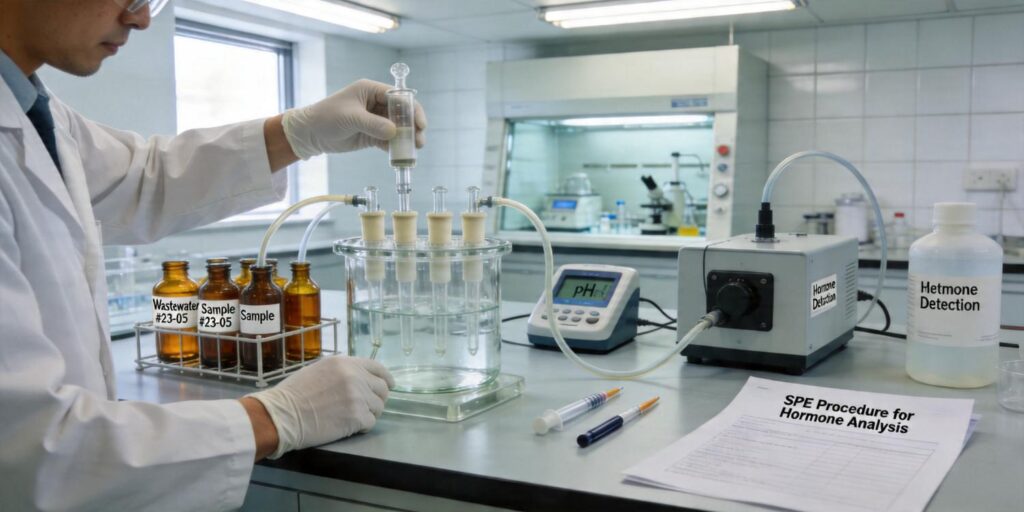
Common Environmental Pollutants Extracted Using SPE Solid Phase Extraction (SPE) has become an indispensable tool for environmental monitoring, particularly for extracting trace-level pollutants from water matrices. The technique’s ability to concentrate analytes while removing matrix interferences makes it ideal for detecting contaminants at parts-per-billion (ppb) and parts-per-trillion (ppt) levels that are typical in environmental samples.

Environmental Pollutant Extraction Using SPE Read More »

Vacuum gauge installed on pharmaceutical freeze dryer chamber

Vacuum Gauge Requirements in Pharmaceutical Freeze Drying

Freeze Drying Vacuum Stages In pharmaceutical lyophilization, the vacuum system drives the transition from frozen product to stable dry powder while preserving active ingredients. The process divides into three primary stages, each with distinct vacuum requirements that demand reliable monitoring to maintain product quality and regulatory compliance. Freezing Stage The product solution freezes on cooled

Vacuum Gauge Requirements in Pharmaceutical Freeze Drying Read More »

SPE extraction in food safety laboratory

SPE in Food Safety Testing

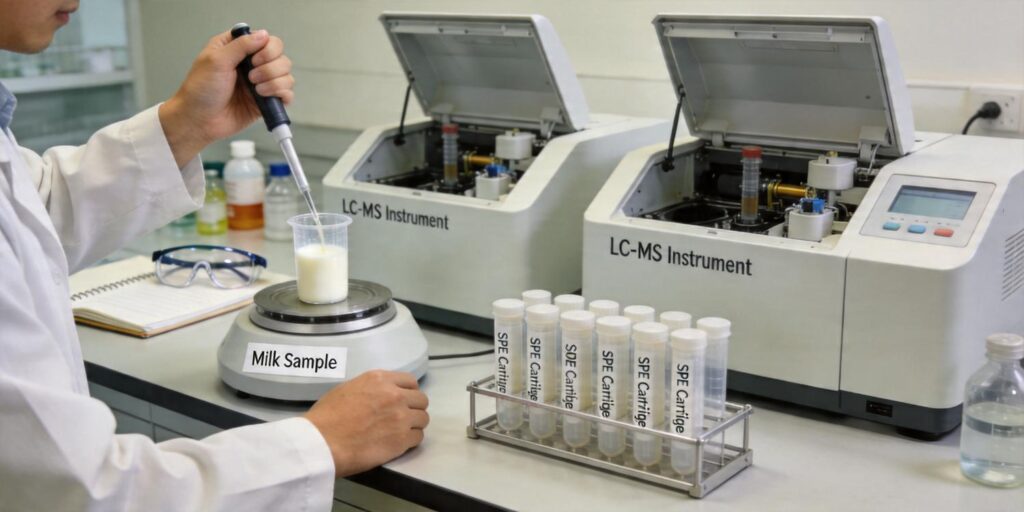
Contaminant Monitoring Overview in Food Safety Testing Solid Phase Extraction (SPE) has become an indispensable tool in modern food safety testing, particularly for contaminant monitoring across diverse food matrices. The technique’s ability to selectively isolate target analytes from complex food samples while removing interfering matrix components makes it ideal for regulatory compliance testing and quality

SPE in Food Safety Testing Read More »

Cold cathode vacuum gauge mounted on industrial system

How to Detect Early Failure in High Vacuum Gauges

Performance Degradation Signs High vacuum gauges are the silent sentinels of analytical instruments, vacuum furnaces, coating systems, and solar deposition tools. When they begin to degrade, the consequences appear gradually—longer pump-down times, inconsistent process results, or unexpected interlock trips—before escalating into full system downtime. Early detection prevents these issues and extends overall equipment life. The

How to Detect Early Failure in High Vacuum Gauges Read More »

Vacuum transmitter with digital display installed on vacuum pipeline

Comparing Analog and Digital Vacuum Gauge Outputs

Analog Outputs: The 4-20 mA Standard and Alternatives Analog signals remain the workhorse of industrial vacuum monitoring because they are simple, widely supported by legacy PLCs, and require no protocol programming. The 4-20 mA current loop is the most common analog standard in process industries. It transmits pressure data as a current rather than voltage,

Comparing Analog and Digital Vacuum Gauge Outputs Read More »

pharmaceutical lab SPE drug extraction

SPE for Pharmaceutical Drug Monitoring

Therapeutic Drug Monitoring Overview Therapeutic drug monitoring (TDM) represents a critical component of modern clinical pharmacology, enabling healthcare professionals to optimize medication efficacy while minimizing adverse effects. At its core, TDM involves measuring drug concentrations in biological fluids—typically plasma or serum—to ensure they remain within a therapeutic range. This practice has become particularly vital for

SPE for Pharmaceutical Drug Monitoring Read More »

Compact vacuum equipment with integrated vacuum transmitter

Vacuum Gauge Installation in Compact Equipment Designs

Space Limitations Modern analytical instruments, benchtop mass spectrometers, portable vacuum systems, and compact coating tools leave little room for traditional vacuum gauges. Legacy cold cathode or Pirani sensors often measure 50–100 mm in diameter and require bulky flanges or separate controller boxes, forcing designers to enlarge enclosures, reroute tubing, or compromise on component layout. In

Vacuum Gauge Installation in Compact Equipment Designs Read More »

Shopping Cart
Poseidon Scientific
Privacy Overview

This website uses cookies so that we can provide you with the best user experience possible. Cookie information is stored in your browser and performs functions such as recognising you when you return to our website and helping our team to understand which sections of the website you find most interesting and useful.