Overview of Plate-Based SPE
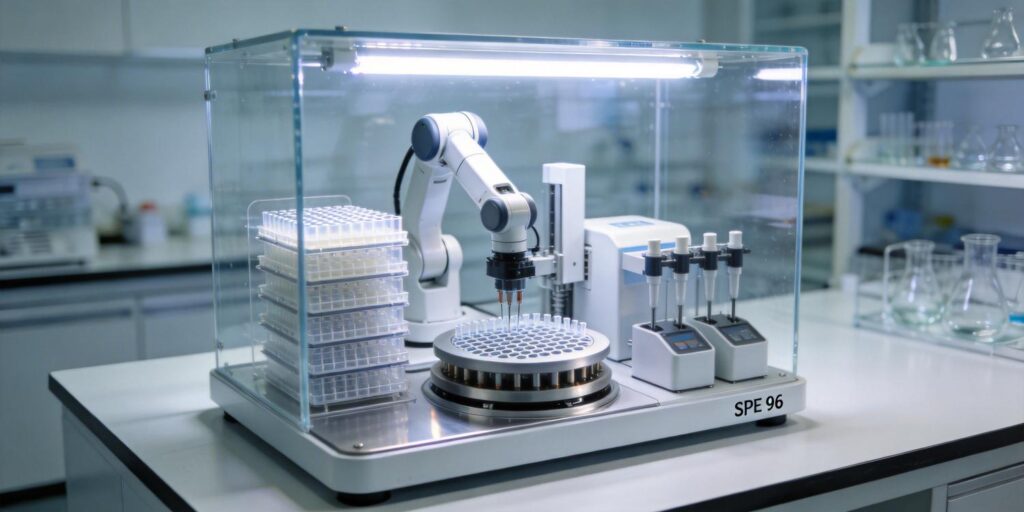
Solid-phase extraction (SPE) has evolved significantly from traditional cartridge formats to high-throughput plate-based systems. The 96-well SPE plate represents a paradigm shift in sample preparation technology, enabling laboratories to process up to 96 samples simultaneously in a compact, standardized format. According to industry literature, SPE usage has been accelerating due to increased LC-MS usage, smaller sample requirements, and the need for automation in pharmaceutical and environmental laboratories.
The fundamental principles of SPE remain consistent across formats: selective adsorption of analytes from complex matrices, followed by washing and elution steps. However, plate-based systems offer distinct advantages in workflow efficiency and integration with modern analytical instrumentation. The 96-well format, standardized in the pharmaceutical industry for high-throughput screening, has become the preferred platform for laboratories requiring rapid sample preparation.
Throughput Comparison with Cartridge SPE
Traditional cartridge-based SPE systems typically process samples in batches of 10-24 using vacuum manifolds, which can become the rate-limiting step in high-throughput laboratories. In contrast, 96-well SPE plates enable parallel processing of up to 96 samples simultaneously, dramatically increasing throughput. Research indicates that SPE usage is accelerating due to combinatorial synthesis and high-throughput LC-MS analysis, with overall LC-MS usage increasing and greater instrument uptime requirements.
The throughput advantages are particularly significant in pharmaceutical and clinical laboratories where sample volumes have decreased while analysis requirements have increased. Studies show that 96-well plate formats can achieve sample throughputs between 320 and 960 samples per day for broad-range pharmaceutical screens in human plasma, compared to significantly lower throughputs with traditional cartridge systems.
Key Throughput Metrics
- Parallel Processing: 96 samples processed simultaneously vs. 10-24 with cartridge manifolds
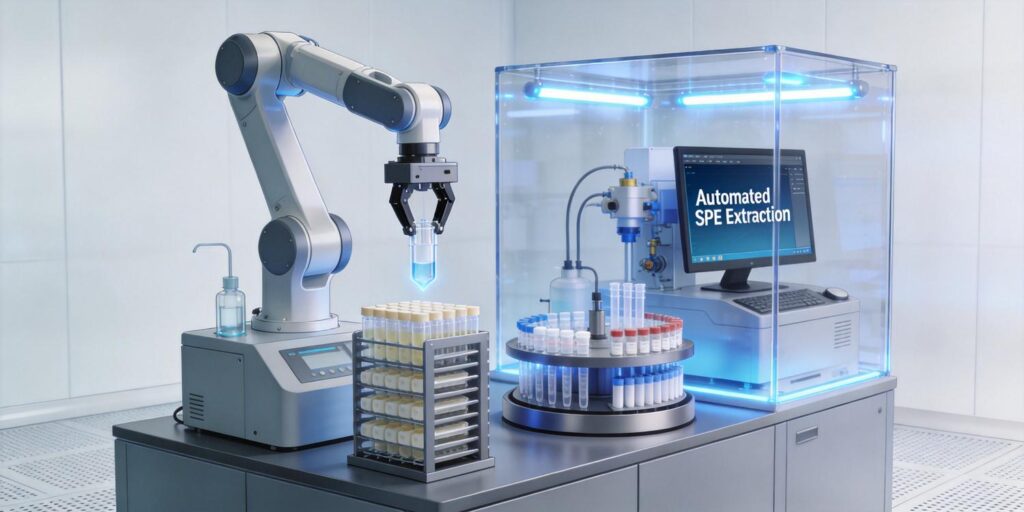
- Automation Compatibility: Seamless integration with liquid handling robots and automated systems
- Reduced Hands-on Time: Minimal operator intervention compared to individual cartridge handling
- Standardized Format: Consistent 8×12 array compatible with modern laboratory equipment
Vacuum Manifold Operation
Modern vacuum manifolds for 96-well SPE plates are engineered for precision and efficiency. These systems typically feature precision-machined covers with alignment posts for quick and easy alignment with collection plates, vacuum gauges placed outside the fluid path for easy waste removal, and enhanced vacuum control valves designed specifically for SPE applications. The vacuum manifold capacity to process multiple samples simultaneously has been a critical development in SPE technology.
According to technical documentation, vacuum manifolds offer several key features for optimal operation:
Essential Manifold Components
- Precision Alignment Systems: Delrin covers with alignment posts ensure proper plate positioning
- Vacuum Control: Enhanced valves allow for quick and momentary rises in vacuum above frit bubble points
- Fluid Path Design: High-purity polypropylene needle valves and tips with minimum dead volume
- Collection Compatibility: Support for various collection plate formats including 350 μL, 1 mL, and 2 mL plates
Proper vacuum control is critical for maintaining consistent flow rates across all 96 wells, which directly impacts recovery and reproducibility. Modern manifolds allow for precise adjustment of vacuum levels to optimize flow rates for different sorbent chemistries and sample matrices.
Sample Loading Across 96 Wells
Efficient sample loading across 96 wells requires careful consideration of several factors to ensure consistent performance. The uniform distribution of samples and reagents is essential for obtaining reproducible results across all positions in the plate. Research indicates that flow rate control is particularly important during sample loading, with studies showing that extraction yields can increase from about 80% to 95% when lowering flow rates from 1.5 to 0.33 mL/minute.
Optimization Strategies for Sample Loading
- Flow Rate Control: Maintaining consistent flow rates across all wells is critical for reproducible recoveries
- Volume Consistency: Automated liquid handling systems ensure precise volume delivery to each well
- Matrix Considerations: Different sample matrices may require adjusted loading conditions
- pH Optimization: Proper pH adjustment during loading enhances analyte retention
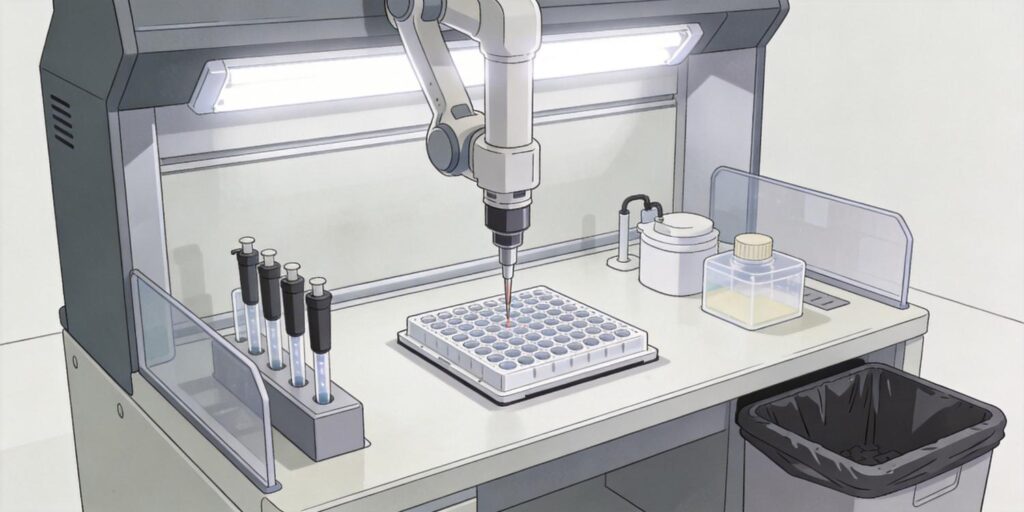
Automated liquid handling systems have become essential for consistent sample loading across 96-well plates. These systems can precisely deliver samples and reagents to each well while maintaining the appropriate flow rates and conditions for optimal SPE performance.
Parallel Washing and Elution
The parallel processing capability of 96-well SPE plates extends to washing and elution steps, where all 96 samples undergo identical treatment simultaneously. This parallel approach ensures consistent conditions across all samples, leading to improved reproducibility compared to sequential processing in cartridge systems. Studies have demonstrated that automated SPE can provide improved precision, accuracy, and recovery by performing identical sequences of steps on each sample.
Washing Optimization
Effective washing removes interfering compounds while retaining analytes of interest. The parallel nature of 96-well plates allows for:
- Consistent Wash Volumes: Identical wash conditions across all samples
- Optimized Solvent Selection: Wash solvents that won’t elute analytes but remove interferences
- Flow Rate Control: Consistent washing conditions for all wells
Elution Efficiency
Elution in 96-well plates focuses on obtaining analytes in the smallest possible volume for maximum concentration:
- Small Elution Volumes: Typically 25-200 μL per well for maximum concentration
- Solvent Optimization: Selection of appropriate elution solvents based on analyte properties
- Parallel Processing: Simultaneous elution of all 96 samples
- Collection Efficiency: Direct elution into compatible collection plates
Research indicates that elution using pure organic solvents without modifiers or buffer ions is desirable for LC-MS applications, as this improves system performance by eliminating excess ions that could disrupt MS fragmentation and ionization processes.
Integration with LC-MS Autosamplers
The 96-well format is ideally suited for integration with modern LC-MS autosamplers, creating a seamless workflow from sample preparation to analysis. This integration addresses one of the major challenges in high-throughput laboratories: keeping expensive LC-MS instruments operating at full capacity. Current LC-MS/MS operating practices employ sample run times of 2-3 minutes, creating a backlog in sample preparation that 96-well SPE plates can effectively address.
Direct Compatibility Features
- Standardized Format: 96-well plates match autosampler tray configurations
- Volume Optimization: Elution volumes compatible with autosampler injection requirements
- Seamless Transfer: Direct transfer from SPE collection plates to autosampler trays
- Automated Workflows: Integration with robotic systems for unattended operation
Performance Advantages
Integration with LC-MS systems offers several performance benefits:
- Reduced Sample Handling: Minimized transfer steps reduce potential for contamination or loss
- Improved Reproducibility: Consistent sample preparation conditions lead to better analytical results
- Enhanced Sensitivity: Concentration of analytes in small elution volumes improves detection limits
- Increased Throughput: Parallel processing keeps pace with rapid LC-MS analysis times
Studies have shown that on-line SPE/LC-MS systems can achieve sample throughputs comparable to off-line 96-well plate SPE, with some systems reporting between 320 and 960 samples per day for pharmaceutical screening applications. The choice between on-line and off-line approaches depends on various factors, but raw speed need not be a deciding factor as both can achieve high throughput.
Future Developments
The trend toward smaller particle size SPE sorbents and narrow-bore SPE devices continues to evolve, allowing for even greater sensitivity in LC-MS applications. As noted in research literature, the use of 30 μm sorbent packed in 2 mm I.D. SPE cartridges has enabled sensitivities of 50 pg/mL for sample sizes of only 200 μL, with even greater sensitivity possible through further miniaturization.
The 96-well SPE plate format represents a mature technology that continues to evolve to meet the demands of modern analytical laboratories. By providing high-throughput sample preparation with excellent reproducibility and seamless integration with analytical instrumentation, these systems have become essential tools in pharmaceutical development, clinical research, environmental monitoring, and forensic analysis.