Vacuum Gauge Application in Vacuum Casting Systems
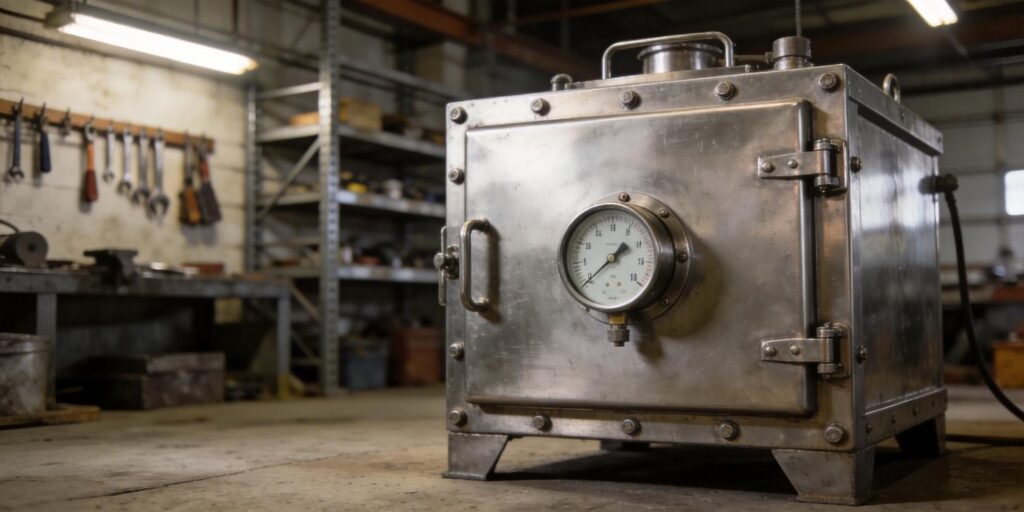
Vacuum casting—whether for jewelry, prototype parts, or polyurethane and epoxy resin components—relies on precise pressure control to eliminate air bubbles, ensure complete mold filling, and deliver defect-free castings. The process typically demands rapid pump-down from atmosphere to 10–100 mbar (roughly 7.5–75 Torr) for degassing, followed by stable low-pressure conditions during pouring and curing. Monitoring this range accurately and reliably is critical to cycle time, part quality, and equipment uptime.
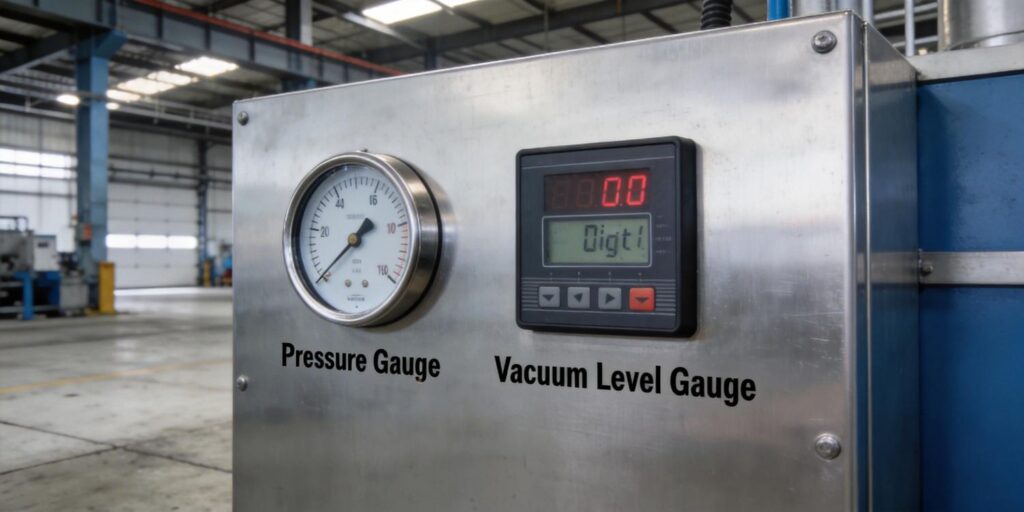
The VG-SP205 Pirani Vacuum Transmitter and VG-SM225 Cold Cathode Vacuum Gauge from Poseidon Scientific provide a compact, cost-effective solution engineered specifically for these demands. The Pirani covers the full rough-vacuum range (atmosphere to 10−3 Torr) with fast response and zero routine maintenance, while the cold cathode extends monitoring into higher vacuum if ultra-clean castings or leak detection are required. Their RJ45 interface and customizable RS232 protocol integrate directly with casting-machine PLCs, delivering stable data even in the presence of resin vapors. This article outlines how these gauges address the unique requirements of vacuum casting systems, from pressure targets to long-term durability and cycle integration.
1. Vacuum Casting Pressure Requirements
Effective vacuum casting balances two goals: thorough degassing of the resin or investment slurry and bubble-free mold filling under reduced pressure. Industry standards and resin manufacturer guidelines typically specify the following operating windows:
- Degassing phase: 15–50 Torr (20–65 mbar absolute) for most polyurethane and epoxy resins. At these levels, dissolved and entrained air expands and is drawn out without boiling the material.
- Pouring / casting phase: 1–10 Torr (1.3–13 mbar) to collapse any remaining microbubbles and ensure complete mold penetration.
- Final hold / cure: Often maintained at 5–20 Torr to prevent outgassing while the resin sets.
These pressures lie squarely in the linear high-accuracy band of the VG-SP205 Pirani (10 Torr to 10−2 Torr). The gauge’s thermal-conductivity principle delivers ±5 % accuracy in this core range and responds in milliseconds to pressure changes—fast enough to track the rapid evacuation of small casting chambers. For applications requiring verification of leak-tightness or deeper vacuum (e.g., high-end jewelry investment casting or silicone mold degassing), the VG-SM225 Cold Cathode provides seamless extension to 10−7 Torr with linear ion-current output once the system crosses 10−3 Torr.
Because the Poseidon pair spans the entire required spectrum without gaps, operators avoid the cost and complexity of wide-range ionization gauges while still meeting ISO or ASTM traceability requirements for critical parts.
2. Rapid Evacuation Phase
Vacuum casting cycles are time-sensitive: total pump-down from atmosphere to target casting pressure is often limited to 30–90 seconds to maintain production throughput. The VG-SP205 Pirani excels here. Its platinum filament and temperature-compensated circuitry track the pressure drop from 760 Torr to 10−3 Torr in real time, with no lag from thermal inertia.
Key performance advantages during rapid evacuation:
- Analog 0–10 V output (effective 2–8 V) updates every 100 ms, enabling PLC-based pump-speed modulation or valve sequencing.
- RS232 digital stream delivers calibrated Torr values plus status codes, allowing automated crossover logic when deeper vacuum is needed.
- Compact KF16/KF25 footprint installs directly on the chamber or manifold without restricting conductance.
In practice, the Pirani confirms safe degassing pressure within seconds of roughing-pump activation, triggering the pour sequence automatically. The VG-SM225 remains disabled via software interlock until pressure drops below 10−3 Torr, preventing premature high-voltage stress and ensuring the system never operates the cold cathode in the viscous-flow regime where arcing could occur.
3. Sensor Durability Under Resin Vapor
Resin vapors—volatile monomers, solvents, and outgassed byproducts—represent the primary environmental challenge in vacuum casting. These compounds can condense on gauge surfaces, altering thermal conductivity (Pirani) or electrode work function (cold cathode). The Poseidon design addresses this head-on.
The VG-SP205 Pirani uses chemically inert platinum filament material that resists corrosion and deposition far better than tungsten alternatives. Its sealed sensor head and low operating temperature keep filament life at 3–5 years even with daily exposure to polyurethane or epoxy vapors. No routine cleaning is required; the gauge remains maintenance-free throughout its service life.
The VG-SM225 Cold Cathode, while more sensitive to surface deposits, features a fully disassemblable sensor head. When resin vapors eventually form thin carbon or oxide layers on the discharge plate and cathode rod, a 15-minute field procedure restores original performance:
- Remove the electrode rod and discharge plate.
- Lightly sand with 200–500 mesh paper until metallic luster returns.
- Reassemble and restart.
Because the cold cathode is only active below 10−3 Torr—where resin vapor partial pressure is already low—exposure is minimal. Combined with an inline sorption trap or charcoal filter on the gauge port, electrode life routinely exceeds 2 years in continuous casting service. This durability far outpaces sealed competitor gauges that require factory return or full replacement when contaminated.
4. Integration with Casting Cycle
Modern vacuum casting machines operate on tightly timed PLC or HMI cycles: load mold → evacuate → degas resin → pour → hold → vent. The Poseidon gauges integrate natively into this sequence via their RJ45/RS232 interface and customizable protocol.
Typical integration points include:
- Evacuation interlock: Pirani output confirms target degassing pressure before allowing resin pour or mold rotation.
- High-vacuum verification: Cold-cathode reading (when used) triggers “ready to cast” status and logs the exact pressure for batch traceability.
- End-of-cycle monitoring: Both gauges track pressure rise during venting, ensuring safe atmospheric return and preventing premature mold opening.
The RS232 data frame includes vacuum value, status codes, and error flags, enabling the PLC to generate alarms for slow pump-down (possible leak) or unexpected pressure rise (resin outgassing). Because protocol customization is available even at 5–10 unit volumes, the gauges speak the exact language of your existing machine controller—no additional converters or custom drivers required. Many OEMs report integration completed in a single afternoon, with the dual-gauge pair replacing two or three legacy instruments while reducing wiring complexity.
5. Maintenance Interval Planning
Predictable maintenance keeps vacuum casting lines running at 95 %+ uptime. The VG-SP205 Pirani requires zero scheduled service—its platinum filament and solid-state compensation eliminate filament burnout and drift. Annual verification against a reference gauge (30-minute procedure) is sufficient to confirm ongoing accuracy.
The VG-SM225 Cold Cathode follows a usage-based schedule driven by resin exposure:
- Clean environment / low resin load: Inspect every 12–18 months; clean electrodes only if startup delay exceeds 5 minutes at 10−6 Torr.
- Standard casting service: 6–12 month interval, with the simple sanding procedure restoring performance in under 15 minutes.
- Heavy resin vapor duty: Add an inline trap and shorten to 4–6 months; still far less frequent than competitor units that demand full sensor replacement.
Both gauges support real-time trend logging via RS232, allowing maintenance teams to monitor ignition delay or output drift and schedule service during planned downtime. This data-driven approach typically reduces annual maintenance labor by 60–70 % compared with imported cold-cathode gauges that lack field-service capability.
Conclusion: Reliable Vacuum Control for Consistent Castings
Vacuum casting succeeds or fails on precise, repeatable pressure measurement across the rapid evacuation and low-pressure hold phases. The Poseidon Scientific VG-SP205 Pirani and VG-SM225 Cold Cathode combination delivers exactly that—full-range coverage, resin-vapor durability, seamless PLC integration, and minimal maintenance—all in a compact package priced 30–50 % below legacy imported solutions. Whether you run jewelry investment casting, prototype polyurethane parts, or high-volume resin molding, these gauges ensure bubble-free results, shorter cycle times, and lower total ownership cost.
Engineers gain confidence in every pour; production managers gain measurable uptime improvements; procurement teams gain immediate budget relief.
Ready to upgrade your vacuum casting pressure monitoring? Explore the VG-SP205 Pirani Vacuum Transmitter and VG-SM225 Cold Cathode Vacuum Gauge specifications today. Request a sample pair for your casting chamber, a custom RS232 protocol matched to your PLC, or a complete system diagram with recommended inline traps. Our application engineers will configure the exact solution for your resin type, pump set, and cycle timing—usually within 48 hours. Contact Poseidon Scientific now and achieve consistent, defect-free castings with the lowest long-term cost.