Flavonoid Compounds in Green Tea (Catechins)
Green tea is rich in flavonoids, particularly catechins such as epigallocatechin gallate (EGCG), epigallocatechin (EGC), epicatechin gallate (ECG), and epicatechin (EC). These polyphenolic compounds contribute to the antioxidant, anti-inflammatory, and cardioprotective properties of green tea. Their isolation and purification are critical for nutritional research, quality control, and functional food development. Solid-phase extraction (SPE) offers a robust platform for selective enrichment of catechins from complex tea matrices prior to HPLC analysis.
Extraction Using Aqueous Methanol
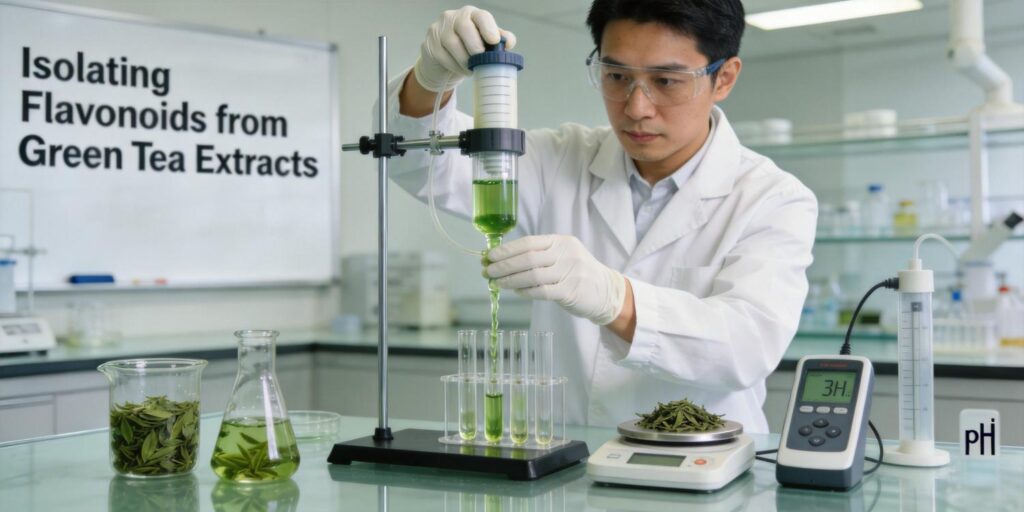
Initial extraction of flavonoids from green tea leaves typically employs aqueous methanol (e.g., 70% methanol in water) under controlled temperature and pH. This solvent system efficiently solubilizes both polar catechins and their gallate esters. The extract is then filtered and diluted to reduce organic solvent content before SPE loading, ensuring optimal analyte retention.
SPE Sorbent Selection for Flavonoid Enrichment
For flavonoid enrichment, reversed-phase sorbents such as C18 or polymeric HLB are preferred. Poseidon HLB SPE cartridges offer balanced hydrophilic-lipophilic retention, making them ideal for trapping catechins while allowing interfering sugars and organic acids to pass through. Alternatively, mixed-mode sorbents like MCX or WAX can be used for additional selectivity if charged analytes are present.
Conditioning and Loading Tea Extracts
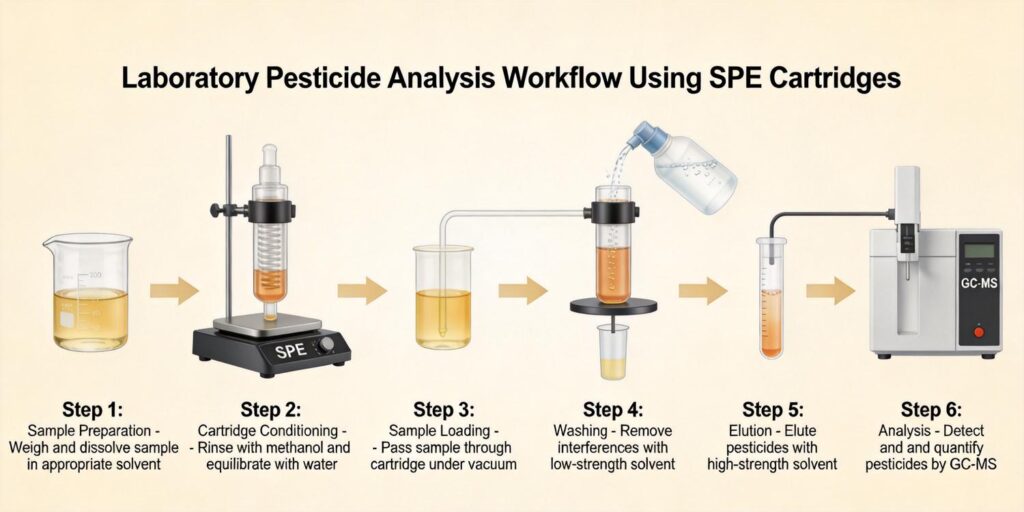
Before sample loading, the SPE cartridge must be conditioned with methanol followed by water or dilute acid to activate the sorbent surface. The diluted tea extract is then loaded at a controlled flow rate (e.g., 1–2 mL/min) to maximize breakthrough capacity. After loading, a gentle wash removes loosely bound matrix components.
Washing Steps Removing Sugars and Caffeine
A critical wash step employs 5–10% methanol in water or a low-pH aqueous solution to elute sugars, organic acids, and caffeine while retaining catechins. For higher purity, a second wash with 20% methanol can remove additional phenolics without stripping target analytes. The wash volume should be optimized to avoid premature elution of flavonoids.
Elution Solvents for Flavonoids
Pure methanol or acetonitrile, sometimes acidified with 0.1% formic acid, effectively elutes catechins from reversed-phase sorbents. Elution volumes of 1–2 mL are typically sufficient for quantitative recovery. The eluate is then evaporated under nitrogen and reconstituted in mobile phase for HPLC injection.
HPLC Analysis Workflow
Analysis is performed on a reversed-phase C18 column (e.g., 250 × 4.6 mm, 5 μm) with a gradient of acetonitrile and aqueous formic acid (pH 2.5–3.0). UV detection at 280 nm (for catechins) or 320 nm (for phenolic acids) provides sensitive quantification. Calibration curves with pure catechin standards ensure accuracy. For high-throughput applications, 96-well SPE plates can simultaneously process multiple samples.
Applications in Nutritional Research
SPE-purified catechin fractions enable precise bioavailability studies, antioxidant capacity assays, and quality control of green tea extracts. The method is also scalable for preparative isolation of individual catechins for nutraceutical production. By selecting appropriate MAX or WCX sorbents, researchers can further tailor the cleanup for specific flavonoid subgroups, making SPE an indispensable tool in phytochemical analysis.