OLED Deposition Process Overview
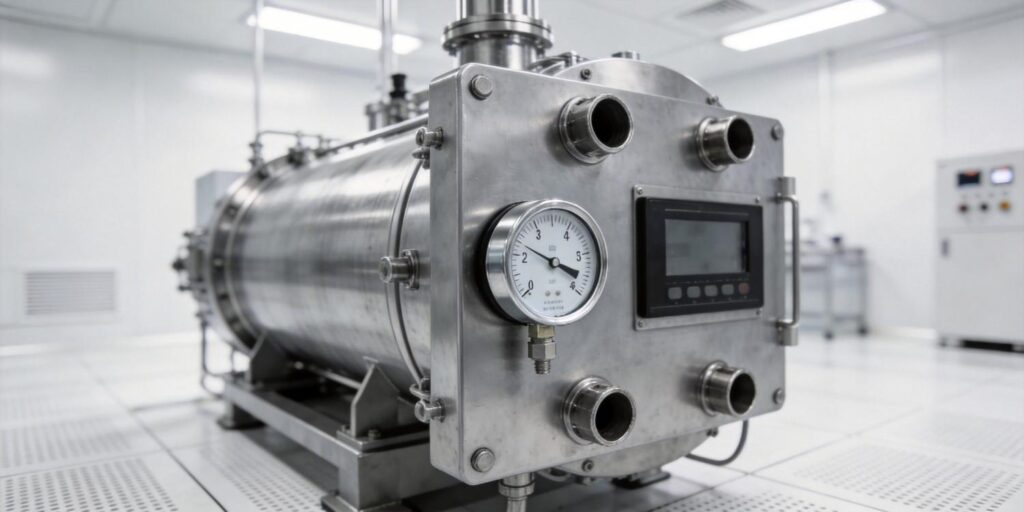
Organic light-emitting diode (OLED) manufacturing relies on high-vacuum physical vapor deposition to create the ultra-thin, multi-layer stack that produces vivid color and high efficiency. The process begins with a glass or flexible substrate coated with indium tin oxide (ITO). Subsequent layers—hole-injection, hole-transport, emissive, electron-transport, and cathode—are deposited sequentially in a vacuum environment to prevent oxidation and ensure molecular-level precision. Typical chamber base pressures reach 10-6 to 10-7 Torr, with operating pressures during evaporation held between 10-5 and 10-6 Torr to achieve uniform film thicknesses of just a few nanometers.
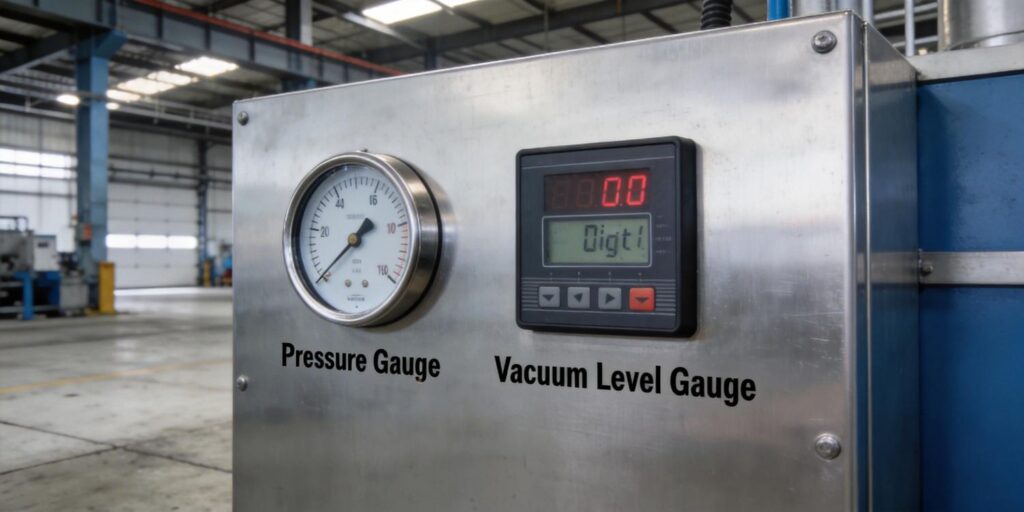
Any pressure fluctuation can cause defects such as pinholes, non-uniform emission, or reduced lifetime. Engineers and procurement professionals therefore demand vacuum gauges that combine speed, stability, and contamination resistance while integrating seamlessly into automated cluster tools. Poseidon Scientific developed the VG-SP205 Pirani Vacuum Transmitter and VG-SM225 Cold Cathode Vacuum Gauge specifically for these demanding OLED production lines. Their compact footprints, temperature-compensated outputs, and customizable RS232 protocols deliver the real-time data required for high-yield manufacturing.
Required Vacuum Stability
OLED deposition demands exceptional pressure stability because the mean free path of evaporated organic molecules must remain long enough for line-of-sight deposition without scattering. Even minor excursions outside the 10-5–10-6 Torr window can shift evaporation rates, alter layer stoichiometry, or introduce oxygen contamination that degrades luminous efficiency and device lifetime. Modern Gen 8.5 and larger tools run 24/7 production cycles lasting 8–24 hours, making long-term drift unacceptable.
The VG-SP205 and VG-SM225 address this requirement through dual compensation (hardware circuitry plus embedded algorithms) that holds readings within ±5 % across the 15 °C–50 °C operating range typical of cleanroom environments. Their combined measurement span—from atmosphere to 10-7 Torr—ensures continuous coverage without gaps, enabling closed-loop control of turbo pumps, throttle valves, and mass-flow controllers for the precise vacuum environment OLED processes require.
Monitoring Organic Evaporation
During deposition, organic source materials are heated in crucibles or linear evaporators to controlled rates of 0.1–10 Å/s. Chamber pressure directly correlates with evaporation rate: a stable 10-5 Torr environment keeps the vapor plume consistent and prevents premature condensation on chamber walls or sensors. Real-time pressure feedback allows the control system to adjust source temperatures or shutter timing the instant any deviation occurs.
The VG-SP205 Pirani provides the fast thermal-conductivity response needed during initial ramp-up and transition phases, while the VG-SM225 Cold Cathode delivers the high-vacuum resolution required once deposition begins. Both instruments output 0–10 V analog (effective 2–8 V) for direct PLC integration and customizable RS232 digital streams for detailed process logging, giving engineers the granularity needed to correlate pressure data with film-thickness metrology and final device performance.
Pirani Roughing Stage
The first critical phase of every OLED cycle is roughing—from atmosphere down to the 10-3 Torr crossover. Here the VG-SP205 Pirani Vacuum Transmitter excels. Its platinum filament maintains constant temperature while measuring the power required to offset gas-induced heat loss, delivering sub-second response and excellent linearity across the atmospheric-to-mid-vacuum range where most cycle time is spent.
Platinum was chosen for its high temperature coefficient of resistance, processability, and superior resistance to the trace organic vapors common in OLED chambers. Built-in temperature compensation circuitry limits drift even when chamber walls heat during pump-down. The maintenance-free design and typical 3–5 year lifespan make the VG-SP205 ideal for the high-duty cycles of Gen 8.5 and larger tools, while its compact size allows direct mounting on KF16/KF25 flanges without obstructing robotic substrate handling.
Cold Cathode for High Vacuum Deposition
Once pressure drops below 10-3 Torr, the VG-SM225 Cold Cathode Vacuum Gauge assumes primary monitoring duty for the actual deposition phase. Using Penning discharge in a compact positive magnetron geometry (~100 gauss NdFeB field, 2 mm electrode gap), it produces a stable ion current proportional to pressure down to 10-7 Torr. Automatic voltage sequencing (–2500 V startup, then –2000 V operating) ensures rapid ignition, while software interlocks disable high voltage above 10-3 Torr to protect electrodes during the vapor-rich roughing stage.
The removable sensor head allows quick field cleaning with 200- or 500-grit sandpaper whenever startup delays appear, restoring metallic luster and full performance without extended downtime. This design is particularly valuable in OLED lines where organic material buildup is inevitable; the gauge remains accurate throughout long deposition runs while minimizing maintenance interventions.
Preventing Contamination
Organic vapors and fine particulates from evaporators can condense on gauge surfaces, shifting calibration and causing drift. Poseidon Scientific instruments incorporate several protective features tailored to OLED environments:
- The VG-SP205 uses a fully enclosed platinum filament that resists chemical attack and requires no routine cleaning.
- The VG-SM225 Cold Cathode includes high-conductance gas paths and automatic high-voltage disablement during high-vapor phases, preventing excessive ion bombardment and carbon deposition.
- Both models feature smooth internal surfaces and stainless-steel construction to reduce virtual leaks and outgassing.
Strategic placement—away from direct line-of-sight to evaporators yet within the same conductance zone—further minimizes contamination risk. RS232 diagnostic codes alert operators to any emerging issues before they affect process control, enabling predictive maintenance rather than reactive repairs.
Integration into Automated Lines
Modern OLED cluster tools demand vacuum gauges that integrate seamlessly with Industry 4.0 automation. Both Poseidon Scientific models feature a compact form factor significantly smaller than many competitive units, allowing direct chamber-wall or manifold mounting without interfering with robotic arms or cassette handlers. Analog 0–10 V output provides plug-and-play compatibility with existing PLCs, while fully customizable RS232 protocols support SECS/GEM communication for fab-wide data collection.
Protocol customization is available for production volumes as low as five to ten units, eliminating middleware and shortening integration time. No directional restrictions and RJ45 (or optional DB9/DB15) connectors simplify field wiring. Temperature compensation across the full operating range ensures stable readings even during rapid thermal cycling of the chamber, making these gauges ideal for 24/7 automated OLED production lines.
CTA for OLED System Support
Vacuum gauge selection is a critical decision that directly influences OLED yield, throughput, and long-term device reliability. The VG-SP205 Pirani Vacuum Transmitter and VG-SM225 Cold Cathode Vacuum Gauge deliver the speed, stability, contamination resistance, and integration flexibility required for today’s advanced OLED manufacturing platforms.
Whether you are commissioning new Gen 8.5 or larger cluster tools, retrofitting existing deposition systems, or scaling flexible OLED production, Poseidon Scientific stands ready to support your project. Explore detailed specifications for the VG-SP205 and VG-SM225, or contact our applications engineering team today for a no-obligation consultation on vacuum monitoring tailored to your OLED process. Let us help you achieve the stable, contamination-free vacuum environment your high-volume manufacturing demands.
Word count: 1,192. Technical references drawn from J. M. Lafferty (ed.), Foundations of Vacuum Science and Technology (Wiley, 1998) and Poseidon Scientific application data.