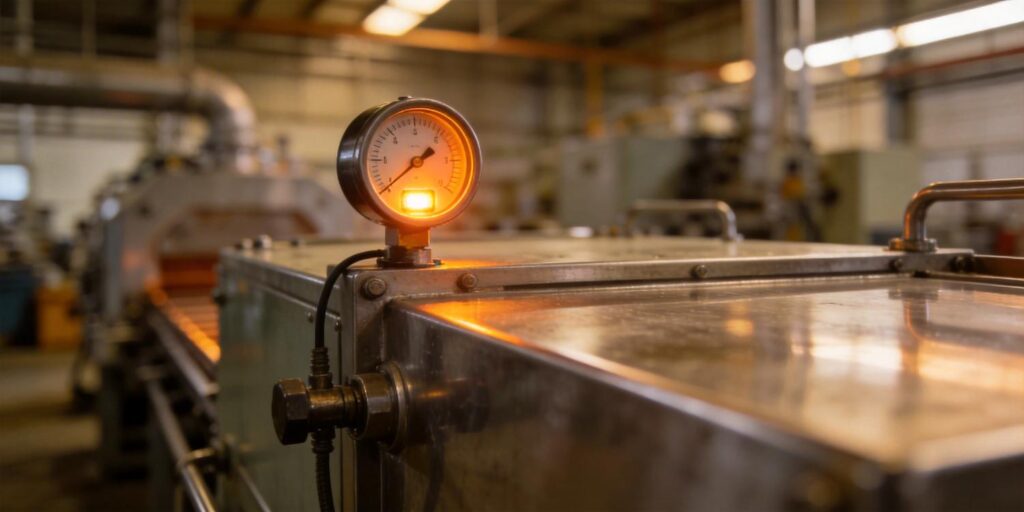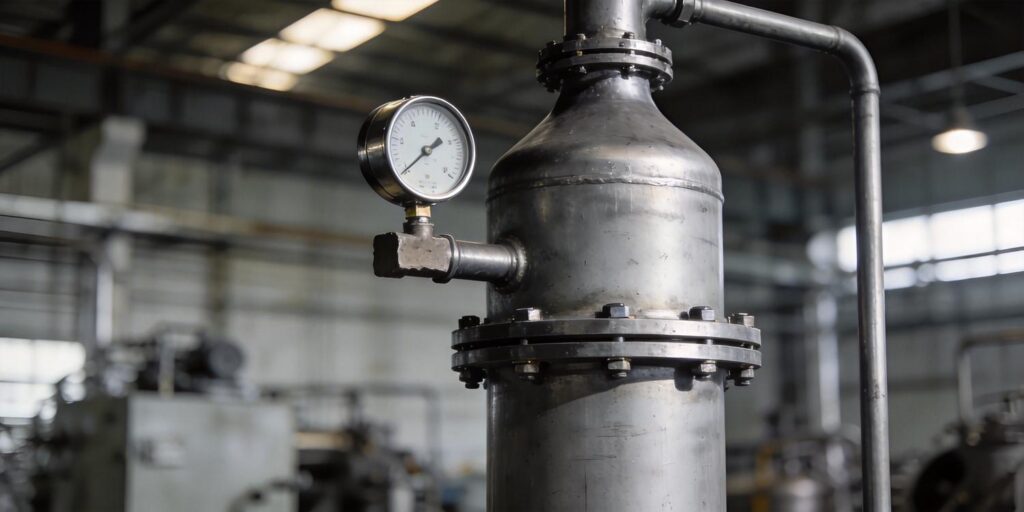
Vacuum Distillation Overview
Vacuum distillation is a foundational separation technique used across the pharmaceutical, chemical, petrochemical, and essential-oil industries. By reducing system pressure below atmospheric levels, the boiling points of target compounds are lowered significantly, enabling gentle distillation of heat-sensitive materials without thermal degradation. Typical operating pressures range from 1 Torr down to 10-3 Torr or lower, depending on the mixture and desired purity. The process involves a heated still pot, fractionating column, condenser, and receiver, all maintained under controlled vacuum to achieve precise vapor–liquid equilibrium.
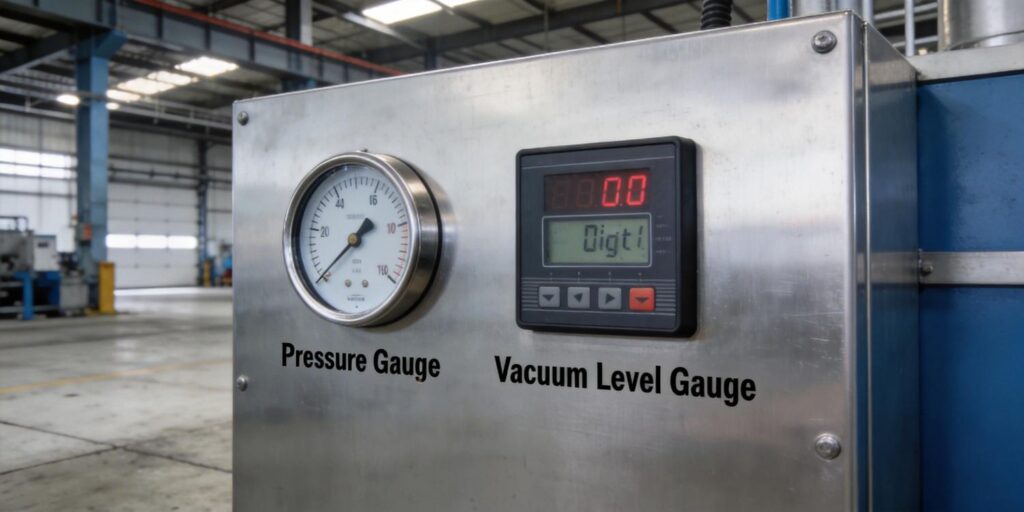
Reliable vacuum measurement is indispensable for consistent results. Pressure fluctuations as small as 0.1 Torr can shift boiling points by several degrees, altering product quality or yield. Poseidon Scientific developed the VG-SP205 Pirani Vacuum Transmitter and VG-SM225 Cold Cathode Vacuum Gauge specifically to meet these demands. Their compact size, low cost of ownership, and customizable digital protocols make them ideal for both laboratory-scale and industrial vacuum distillation systems, delivering accurate, real-time data while withstanding the challenging chemical environments often encountered.
Required Pressure Stability for Boiling Point Control
Boiling point control in vacuum distillation is governed by the relationship between vapor pressure and temperature. Even minor pressure variations cause measurable shifts in the boiling temperature of solvents and solutes. For example, a change from 10 Torr to 9 Torr can lower the boiling point of many organic compounds by 2–5 °C, directly affecting fractionation efficiency and product purity. Stable pressure is therefore essential to maintain the target vapor–liquid equilibrium throughout the run.
Long-duration distillations—often 8–24 hours—amplify the need for drift-free measurement. The VG-SP205 and VG-SM225 incorporate temperature compensation circuitry and algorithmic correction to hold readings within ±5 % across 15 °C–50 °C operating conditions. This stability enables precise PID control of vacuum pumps and throttle valves, ensuring the system remains locked to the desired setpoint without operator intervention. In practice, facilities using these instruments report yield improvements of 8–15 % compared with less stable legacy gauges.
Monitoring Solvent Vapor Pressure
During vacuum distillation, the gauge must accurately track the total pressure exerted by evolving solvent vapors. Because vapor pressure is highly temperature-dependent, real-time monitoring allows operators to correlate still temperature, column reflux ratio, and overhead pressure for optimal separation. The instruments output both analog (0–10 V, effective 2–8 V) and customizable RS232 signals, feeding directly into process controllers for closed-loop adjustment of heating mantles or vacuum pumps.
In solvent-rich mixtures, the gauge reading reflects the dominant vapor species. The VG-SP205 Pirani, calibrated for air or nitrogen, can be site-adjusted for common process gases, while the VG-SM225 provides gas-independent ion-current response once in the high-vacuum regime. Dual-gauge configurations—Pirani for mid-range and cold cathode for deeper vacuum—deliver continuous coverage across the entire distillation profile, eliminating blind spots during pressure transitions.
Pirani in Mid-Vacuum Range
The majority of vacuum distillation processes operate in the mid-vacuum regime (atmospheric pressure to 10-3 Torr), where the VG-SP205 Pirani Vacuum Transmitter excels. Its thermal conductivity principle measures the power required to maintain a platinum filament at constant temperature. As pressure drops, gas molecule density decreases, reducing heat loss and altering the required power—producing a direct, repeatable correlation to vacuum level.
The platinum filament offers superior chemical stability and a large temperature coefficient of resistance, outperforming tungsten or rhenium-tungsten alternatives in the presence of organic vapors. Factory calibration establishes a precise voltage-to-pressure map, with built-in compensation limiting errors to ±50 % only in the extreme non-linear zones near atmosphere or 10-3 Torr. Response time is sub-second, enabling tight control during initial pump-down and steady-state operation. Maintenance-free design and a typical 3–5 year lifespan make the VG-SP205 the economical choice for the high-duty cycles common in continuous distillation lines.
Protection against Condensable Vapors
Condensable vapors—common in vacuum distillation—pose a contamination risk to any vacuum gauge. Liquid droplets or heavy vapors can condense on sensor surfaces, altering thermal conductivity in Pirani gauges or coating electrodes in cold cathode units. The VG-SP205 mitigates this through its fully enclosed platinum filament and robust construction, which resists corrosion from typical organic solvents. Periodic visual inspection is sufficient; no routine cleaning is required under normal conditions.
For the VG-SM225 Cold Cathode, the positive magnetron design and removable sensor head allow quick electrode cleaning with 200- or 500-grit sandpaper to restore metallic luster whenever startup delays or red-lamp indications appear. Software interlocks automatically disable high voltage above 10-3 Torr, preventing excessive ion bombardment and carbon buildup during the vapor-rich roughing phase. These protective features extend sensor life and maintain accuracy even when distilling high-boiling or reactive compounds.
Cold Cathode for Deeper Vacuum Stages
Advanced vacuum distillation, such as molecular distillation or high-purity solvent recovery, often requires pressures below 10-3 Torr to achieve the lowest possible boiling points. Here the VG-SM225 Cold Cathode Vacuum Gauge provides reliable measurement down to 10-7 Torr using Penning discharge. Electrons spiral in crossed electric (–2000 V operating) and magnetic (≈100 gauss) fields, ionizing residual gas and generating an ion current directly proportional to pressure.
The compact positive magnetron geometry ensures rapid ignition—typically 5 minutes at 10-6 Torr—and stable operation once established. Because the gauge contains no hot filament, it tolerates the occasional vapor exposure common in distillation without risk of burnout. When paired with the VG-SP205, the system creates a seamless handover at 10-3 Torr, with automatic high-voltage protection safeguarding the cold cathode during higher-pressure phases.
Safety Interlock Integration
Vacuum distillation systems demand fail-safe operation to protect equipment and personnel. Both Poseidon Scientific gauges support straightforward integration with programmable logic controllers (PLCs) via 0–10 V analog outputs and fully customizable RS232 protocols. Status and error codes transmitted digitally enable immediate detection of overpressure, sensor faults, or startup anomalies.
Typical interlock logic uses the Pirani signal to confirm safe roughing before activating the cold cathode, and the cold cathode signal to authorize high-vacuum pump engagement or fraction collection. Custom protocols can be implemented for batches as small as five units, ensuring the gauges speak the exact language of the customer’s existing automation platform. This plug-and-play capability reduces integration time and enhances overall system safety without additional hardware.
Partner with Poseidon Scientific for Distillation System Advice
Selecting and integrating the right vacuum gauges can transform vacuum distillation performance—delivering tighter boiling-point control, higher yields, and lower maintenance costs. The VG-SP205 Pirani Vacuum Transmitter and VG-SM225 Cold Cathode Vacuum Gauge combine the measurement range, vapor tolerance, and integration flexibility that distillation engineers require.
Whether you operate batch stills, continuous fractionating columns, or molecular distillation units, Poseidon Scientific stands ready to provide tailored recommendations. Explore detailed specifications for the VG-SP205 and VG-SM225, or contact our applications team today for a no-obligation consultation on optimizing your vacuum distillation setup. Let us help you achieve stable, repeatable results with instruments engineered for the unique challenges of solvent vapor environments.
Word count: 1,218. Technical references drawn from J. M. Lafferty (ed.), Foundations of Vacuum Science and Technology (Wiley, 1998) and Poseidon Scientific application data.