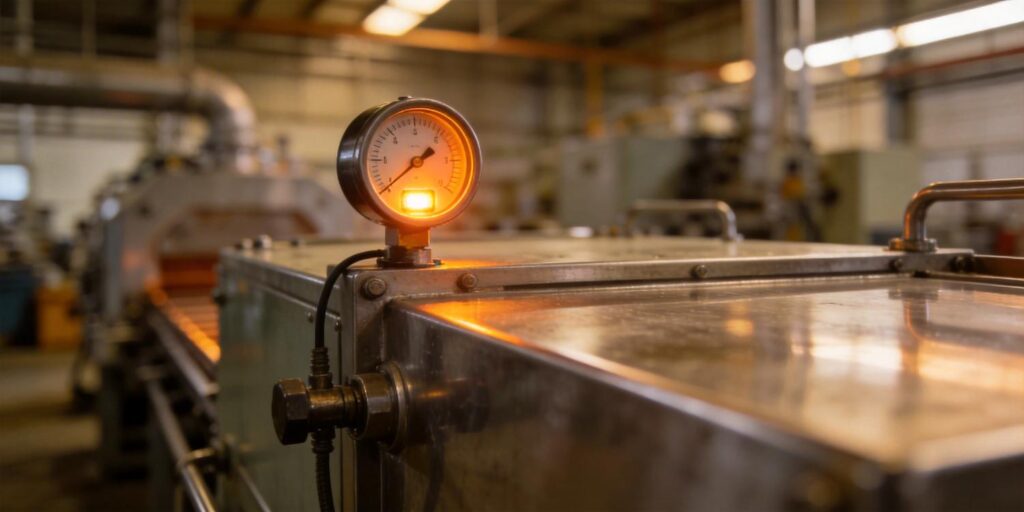
Degassing Process Overview
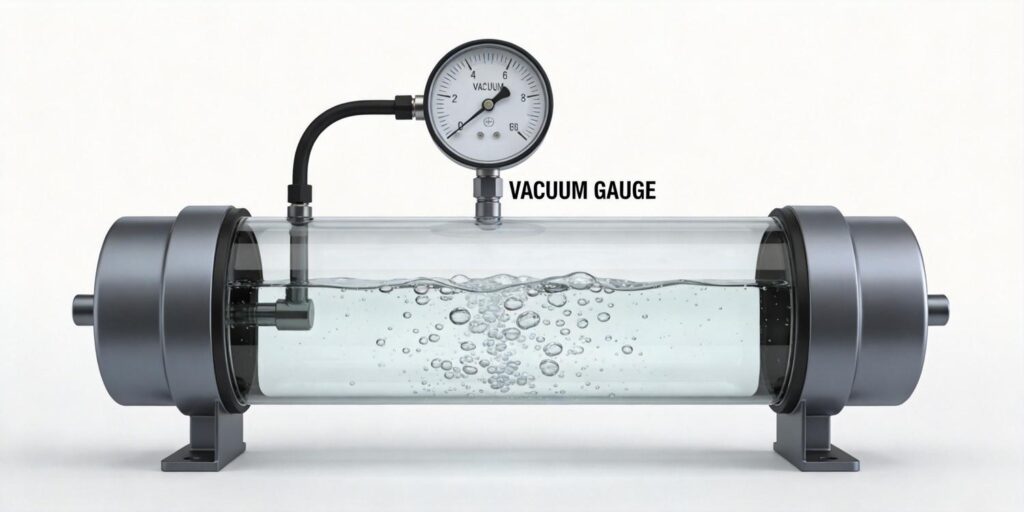
Vacuum degassing removes dissolved gases, trapped air, moisture, and volatile compounds from liquids such as epoxy resins, polyurethane, silicone, and transformer oils. In electronics encapsulation, composite manufacturing, and adhesive formulation, even microscopic bubbles can cause voids, reduced dielectric strength, or mechanical failure after curing. The process typically begins by placing the material in a chamber, evacuating to a target pressure, and often applying gentle agitation or heat to accelerate gas release. Once degassing is complete, the material is either cured under vacuum or removed for further processing.
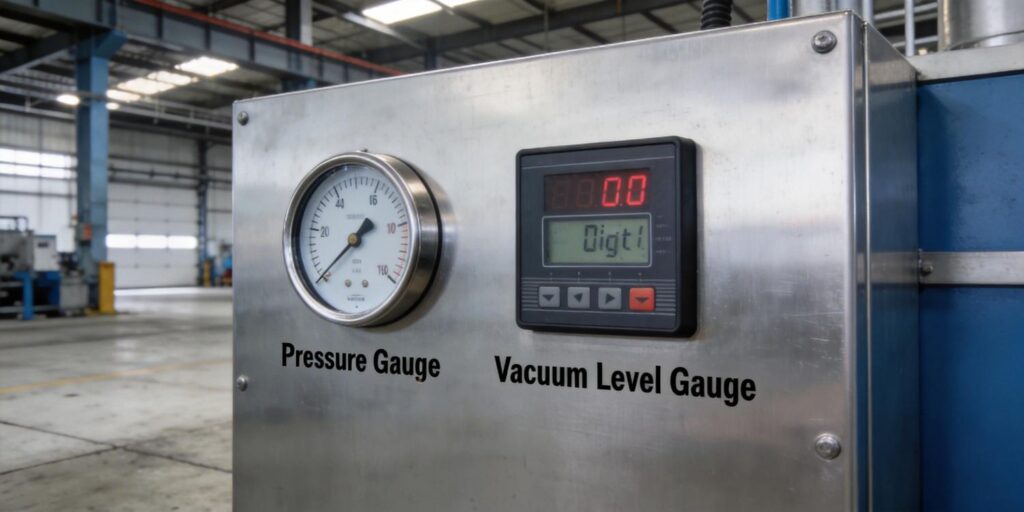
Effective degassing requires precise pressure control across two distinct phases: an initial high-gas-load pump-down where large volumes of air and volatiles are released, followed by a final low-pressure hold where residual dissolved gases are extracted. Poseidon Scientific’s VG-SP205 Pirani Vacuum Transmitter and VG-SM225 Cold Cathode Vacuum Gauge provide the complementary measurement capabilities needed for reliable, repeatable degassing cycles while maintaining the low cost and field-serviceable design that OEMs and production facilities demand.
Required Pressure Stability
Pressure stability is critical because any sudden rise can reintroduce air into the material or cause foaming that defeats the purpose of degassing. Most resin systems target a stable absolute pressure between 1 Torr and 10⁻² Torr for primary gas removal, with some high-performance formulations requiring verification below 10⁻³ Torr before curing. Fluctuations greater than 10–20 % during the hold phase can lead to incomplete bubble extraction and batch rejection.
Stable measurement also supports closed-loop control of vacuum pumps and valves. The VG-SP205 Pirani delivers fast response and repeatable output in the rough-to-medium vacuum regime where most gas release occurs, while the VG-SM225 Cold Cathode confirms final base pressure with ±10 % repeatability in the 10⁻³ to 10⁻⁷ Torr band. Together they ensure the system remains within the narrow process window required for consistent material quality.
Monitoring Gas Release Peaks
During the early stages of degassing, dissolved gases and trapped air create visible and measurable pressure peaks as bubbles break the liquid surface. These transients can reach 10–100 Torr even after initial pump-down and must be monitored in real time to determine when the material has been sufficiently degassed. A properly configured system uses rate-of-change alarms to detect these peaks and automatically extends the hold time until pressure stabilizes.
The VG-SP205 Pirani Vacuum Transmitter is ideal for this task. Its thermal-conductivity principle responds in <50 ms to sudden pressure increases caused by gas bursts, and the linear high-accuracy region (10 Torr to 10⁻² Torr) matches the exact range where most resin degassing occurs. Engineers route the 0–10 V analog output or customizable RS232 data directly to the PLC to trigger alarms or pause agitation, preventing material overflow or incomplete degassing.
Pirani During Pump-Down
The pump-down phase—from atmosphere to approximately 10⁻³ Torr—removes the bulk of entrained air and solvent vapors. Poseidon Scientific’s VG-SP205 Pirani Vacuum Transmitter is optimized for exactly this window. Its platinum filament and temperature-compensated circuitry provide monotonic, drift-resistant readings across the full atmospheric-to-10⁻³ Torr span, with best linearity and repeatability in the 10 Torr to 10⁻² Torr band where the majority of gas release happens.
Because the Pirani measures heat transfer rather than ionization, it tolerates the high vapor loads common in resin degassing without risk of contamination or electrode damage. The maintenance-free design (typical 3–5 year life in clean service) and standard KF16/KF25 flanges make it easy to integrate into existing degassing chambers. RS232 digital output with fully customizable protocols allows direct integration with existing controllers for automated cycle sequencing.
Cold Cathode for Final Vacuum Verification
Once bulk gases are removed, many degassing specifications require confirmation of a stable low base pressure before proceeding to cure or pour. The VG-SM225 Cold Cathode Vacuum Gauge delivers reliable verification in the 10⁻³ to 10⁻⁷ Torr range. Its positive-magnetron Penning discharge design with ~100 gauss field and automatic voltage sequencing (–2500 V startup to –2000 V operation) ensures consistent readings once the system has stabilized.
The gauge’s software interlock automatically disables high voltage above 10⁻³ Torr, protecting the sensor during the high-gas-load phase. Field-serviceable modular sensor head allows on-site electrode cleaning with 500-mesh abrasive paper when minor resin vapor contamination occurs. This combination of performance and practicality makes the VG-SM225 the logical choice for final vacuum confirmation in production degassing systems.
Protecting Sensors from Vapor
Resin vapors and volatile solvents can condense inside vacuum gauges, leading to drift or premature failure. Poseidon designs incorporate practical safeguards. The VG-SP205 Pirani uses a chemically stable platinum filament that resists oxidation and contamination far better than tungsten alternatives. Its sealed construction minimizes vapor entrapment.
For the VG-SM225 Cold Cathode, the detachable sensor head can be removed and cleaned on-site without breaking the chamber vacuum seal. When particularly aggressive resins are processed, short isolation tubing or Kalrez O-rings further reduce direct exposure. These features ensure long-term stability even in continuous production environments while keeping routine maintenance simple and inexpensive.
Case Example in Resin Processing
A Midwest electronics manufacturer producing high-voltage transformer encapsulants experienced inconsistent void-free results after switching to a new low-viscosity epoxy. Batch rejection reached 12 % because residual microbubbles remained despite standard 30-minute degassing cycles. After retrofitting two degassing chambers with VG-SP205 Pirani transmitters for pump-down monitoring and VG-SM225 Cold Cathode gauges for final verification, engineers added rate-of-change alarms on the Pirani channel and a 10-minute stable-hold interlock at 5 × 10⁻⁴ Torr on the cold cathode.
The system now automatically extends degassing time when gas-release peaks are detected, ensuring complete bubble extraction. First-pass yield improved to 98.5 %, material usage dropped 9 %, and unplanned chamber cleaning frequency was reduced by half. Payback on the gauge investment occurred in under three months. The same dual-gauge package has since been standardized across the customer’s global resin-processing lines.
Conclusion: Selecting the Right Vacuum Measurement for Reliable Degassing
Vacuum degassing systems require accurate, responsive pressure monitoring across both the high-gas-load pump-down phase and the final low-pressure verification stage. Poseidon Scientific’s VG-SP205 Pirani Vacuum Transmitter handles the dynamic roughing and gas-release monitoring with speed and simplicity, while the VG-SM225 Cold Cathode Vacuum Gauge confirms stable base pressure before curing or pouring. Together they deliver the layered visibility, alarm capability, and field serviceability that modern resin-processing and materials laboratories demand—at a cost structure and total ownership profile that supports both OEM integration and production-scale deployment.
Engineers and procurement teams gain not only immediate process improvements but also long-term support from a manufacturer that customizes communication protocols at low volumes and maintains full traceability.
Ready to optimize vacuum measurement in your degassing systems? Contact Poseidon Scientific today for a no-obligation application review, custom interlock configuration, or sample units. Our team—led by the engineers who designed the VG-SP205 and VG-SM225—will deliver a tailored monitoring solution that fits your resin types, chamber size, and existing control architecture.
Explore the full specifications of the VG-SP205 Pirani Vacuum Transmitter for pump-down and gas-release monitoring or the VG-SM225 Cold Cathode Vacuum Gauge for final vacuum verification and take the next step toward bubble-free, high-quality degassed materials.