Glass Coating Process Overview
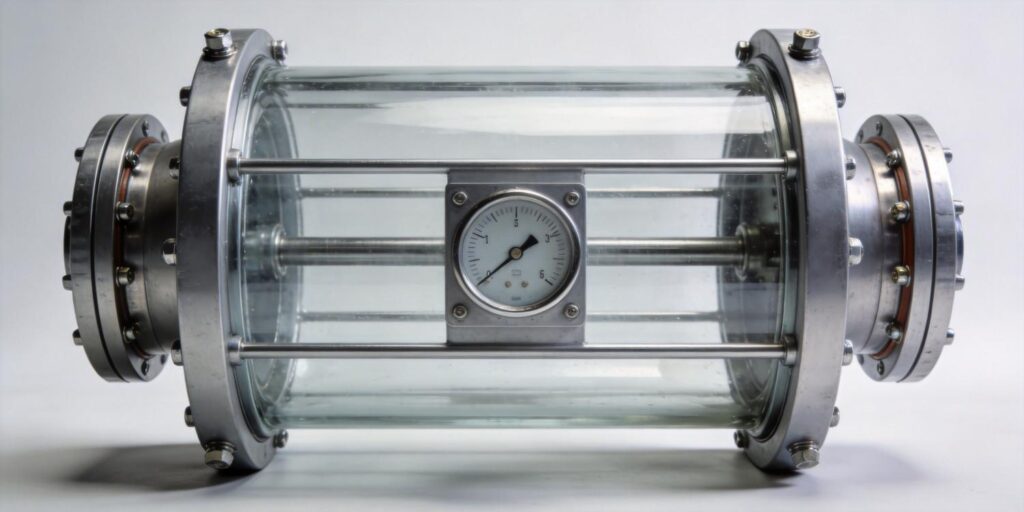
Large-area glass coating, particularly for architectural, automotive, and solar-control applications, relies on high-vacuum physical vapor deposition (PVD) techniques such as magnetron sputtering. In a typical inline coating line, raw glass sheets enter a series of vacuum chambers where multiple thin-film layers—transparent conductive oxides, low-emissivity silver stacks, and protective overcoats—are deposited at high throughput. The process begins with chamber evacuation to base pressures in the 10-5 to 10-6 Torr range, followed by controlled introduction of process gases (usually argon) to establish a stable plasma at approximately 10-3 Torr. Multiple sputtering targets operate simultaneously, requiring precise pressure uniformity across chamber zones measuring several meters in length.
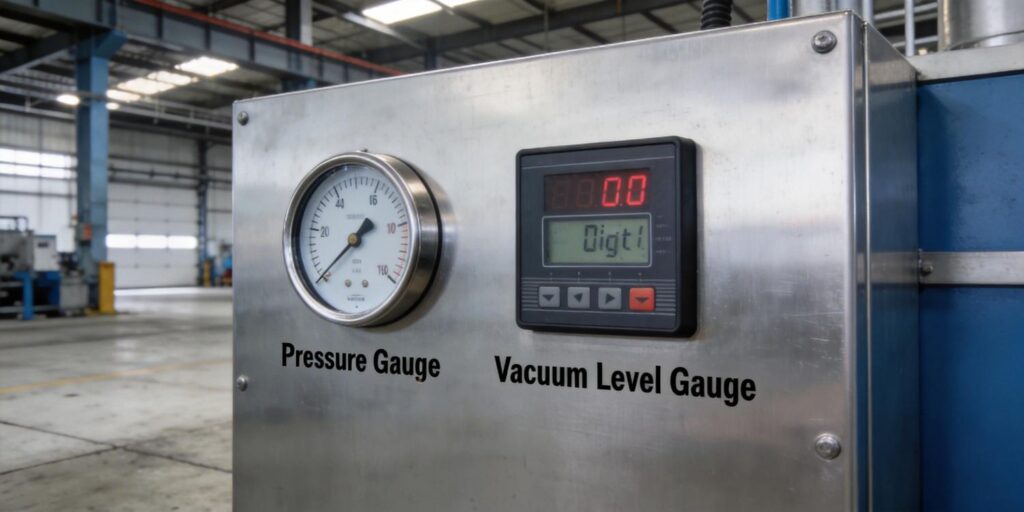
Consistent vacuum monitoring is critical because even minor pressure fluctuations can alter plasma density, sputter rates, and film stoichiometry. Poseidon Scientific’s vacuum gauges were developed specifically for these demanding OEM environments: the VG-SP205 Pirani Vacuum Transmitter handles the roughing phase, while the VG-SM225 Cold Cathode Vacuum Gauge ensures accurate high-vacuum control during deposition. Their compact size, low cost, and customizable RS232 protocols make them ideal for integration into high-volume glass coating systems.
Pressure Stability Requirements in Glass Coating
Glass coating lines impose stringent pressure stability demands. Base vacuum must typically reach and hold below 5 × 10⁻⁵ Torr before process gas is introduced to minimize residual oxygen and water vapor that could oxidize silver layers or reduce coating adhesion. During sputtering, the working pressure is deliberately raised to the low 10-3 Torr range to sustain the argon plasma, yet any deviation greater than ±10 % can shift deposition rates and produce color variations across the glass sheet.
These requirements translate directly into gauge performance needs. The transition from rough vacuum (atmosphere to 10-3 Torr) to high vacuum must be monitored continuously and repeatably. Poseidon’s dual-gauge approach—VG-SP205 for the initial pumpdown and VG-SM225 for the critical high-vacuum regime—provides seamless coverage without gaps. Both models incorporate temperature compensation circuitry that maintains accuracy across the 15–50 °C ambient range typical of production halls, ensuring the pressure stability required for 24/7 inline coating operations.
Avoiding Coating Defects Through Precise Vacuum Monitoring
Common glass coating defects—pinholes, haze, poor adhesion, and color non-uniformity—frequently trace back to vacuum instability. At base pressures above 10-4 Torr, residual gases promote oxide formation on freshly deposited silver films, leading to increased emissivity and visible haze. During the sputtering phase, pressure spikes from outgassing or leaks can cause arcing at the targets, embedding particulates into the coating and creating optical defects that fail quality inspection.
The VG-SM225 Cold Cathode Vacuum Gauge excels at detecting these transients in the 10-3 to 10-7 Torr window. Its Penning discharge delivers a linear ion-current response with minimal hysteresis, allowing real-time PLC feedback to adjust turbo-pump speeds or isolate valves before defects form. The companion VG-SP205 Pirani provides early warning during roughing, flagging pump performance issues that could otherwise propagate into the high-vacuum stage. Together, these instruments help coating lines achieve defect rates below 0.5 %—a benchmark that directly improves yield and reduces costly rework.
Pirani Roughing Stage Monitoring
The roughing stage sets the foundation for every coating cycle. Glass sheets entering the load lock carry adsorbed moisture and atmospheric gases that must be removed rapidly without overloading the high-vacuum pumps. The VG-SP205 Pirani Vacuum Transmitter, based on the proven thermal conductivity principle with a platinum filament, delivers reliable readings from atmosphere down to 10-3 Torr. Its maintenance-free design and 0–10 V analog output (effective linear range 2–8 V) integrate directly into existing PLCs for pump interlocks and cycle timing.
Because the Pirani is insensitive to gas composition in the high-pressure regime (factory-calibrated for air/nitrogen), operators can confidently monitor pumpdown curves and detect leaks or valve malfunctions early. Poseidon’s compact transmitter footprint minimizes chamber intrusion, an important consideration in space-constrained inline coaters. Typical response time under one second ensures the roughing stage completes within the takt time of high-throughput glass lines.
Cold Cathode Monitoring During Sputtering
Once the chamber reaches high vacuum, the VG-SM225 Cold Cathode Vacuum Gauge assumes control. Operating on the Penning discharge principle with a positive magnetron (“工”-shaped) electrode geometry and ~100 gauss neodymium field, it provides stable, repeatable measurements across the 10-3 to 10-7 Torr range critical for sputtering. The gauge’s low internal volume and easy electrode access make it particularly well-suited for the continuous operation demanded by glass coating.
During the sputtering phase, the VG-SM225 monitors both base pressure before gas admission and the stabilized working pressure after argon introduction. Its built-in high-voltage protection automatically disables the discharge above 10-3 Torr, preventing electrode contamination during pressure excursions. Customizable RS232 digital output transmits both pressure and status codes, enabling predictive alerts for contamination or startup delays. This level of visibility allows process engineers to maintain target pressure within ±5 % across multi-meter coating zones, directly translating to uniform film thickness and optical performance.
Maintenance Planning for Continuous Glass Coating Lines
High-volume glass coating demands minimal unplanned downtime. Poseidon’s gauges support a straightforward predictive-maintenance strategy. The VG-SP205 Pirani is essentially maintenance-free with a 3–5 year service life determined by filament integrity; routine checks consist of verifying output voltage against known pressure set points. The VG-SM225 Cold Cathode requires electrode cleaning only when contamination indicators appear—extended startup time or readings consistently one decade low.
Cleaning is simple: remove the sensor head, lightly abrade electrodes with 500-mesh sandpaper to restore metallic luster, and reinstall. The entire procedure takes under 30 minutes and restores original performance without recalibration. Poseidon recommends stocking one spare sensor head per ten installed units and logging RS232 data for trend analysis. This approach keeps maintenance costs low while supporting the 24/7 uptime required by modern coating lines.
Case Example: Yield Improvement in Architectural Glass Coating
A major European architectural glass manufacturer operating a 3.2-meter-wide inline coater experienced periodic haze defects traced to inconsistent base pressure during the silver-layer deposition step. Legacy cold cathode gauges required frequent replacement and exhibited drift after only 12–18 months, contributing to line stops every six weeks.
After retrofitting eight chambers with Poseidon VG-SP205 Pirani and VG-SM225 Cold Cathode pairs, the plant achieved several measurable gains. Base pressure stability improved to ±3 % of setpoint, reducing haze rejects by 68 %. Predictive cleaning alerts eliminated three unplanned outages in the first year. Total gauge-related maintenance costs dropped 55 %, and the compact sensor design fitted existing KF25 ports without chamber modifications. Payback on the investment occurred within four months through higher first-pass yield and reduced scrap. The plant now specifies Poseidon gauges on all new coating tool orders.
Enhance Your Glass Coating Vacuum Monitoring
Precise, reliable vacuum measurement is the invisible foundation of high-performance glass coatings. Poseidon Scientific’s VG-SP205 Pirani Vacuum Transmitter and VG-SM225 Cold Cathode Vacuum Gauge deliver the accuracy, durability, and integration flexibility that today’s inline coating systems require—at a fraction of the cost of traditional imported solutions.
Whether you are optimizing an existing line or specifying gauges for new equipment, our team provides application-specific guidance, custom communication protocols, and rapid delivery to keep your production moving.
Ready to discuss vacuum monitoring solutions for your glass coating system? Contact Poseidon Scientific’s application engineering team today for a no-obligation consultation. We can review your chamber layout, recommend optimal gauge placement, and provide a detailed ROI analysis tailored to your throughput and defect targets. Visit our product pages to download datasheets and user manuals, or reach out directly to explore how Poseidon gauges can elevate coating quality and line efficiency.
Word count: 1,214. All technical recommendations are based on Poseidon Scientific product documentation and established vacuum science principles for PVD glass coating applications.