SPE Preparation of Urine Samples for Drug Abuse Screening
1. Common Drugs of Abuse Detected in Urine Screening
Urine drug screening is a cornerstone of toxicology laboratories, clinical diagnostics, and workplace testing programs. The most frequently targeted analytes include amphetamines, opiates (morphine, codeine, 6-acetylmorphine), cocaine metabolites (benzoylecgonine), cannabinoids (THC-COOH), benzodiazepines (oxazepam, lorazepam), and synthetic cathinones. These compounds exhibit a wide range of physicochemical properties, making robust sample preparation essential for reliable quantification and confirmation.
2. Biological Matrix Challenges Including Salts and Metabolites
Urine is a complex aqueous matrix containing high concentrations of urea, creatinine, inorganic salts (NaCl, KCl, phosphates), and variable pH (typically 4.5–8.0). Endogenous metabolites, such as bilirubin and urobilinogen, can co-extract and interfere with detection. Additionally, target drugs often exist as glucuronide or sulfate conjugates, requiring hydrolysis or careful method design to ensure recovery of both free and conjugated species. Matrix effects in LC-MS/MS—ion suppression or enhancement—are particularly problematic if cleanup is insufficient.
3. SPE Sorbent Selection: MCX or Mixed-Mode
For urine drug screening, mixed-mode sorbents offer superior selectivity. Poseidon MCX SPE cartridges combine strong cation exchange with reversed-phase retention, ideal for basic drugs (pKa > 7) such as amphetamines and opiates. The dual retention mechanisms allow efficient capture of ionizable analytes while enabling selective washes to remove neutral and acidic interferences. Alternatively, WCX SPE cartridges (weak cation exchange) can be used for quaternary ammonium compounds. For comprehensive multi-class screening, a mixed-mode sorbent like Poseidon’s MAX or WAX may be preferred when targeting acidic or zwitterionic metabolites.
4. Sample Pretreatment and pH Adjustment for Optimal Retention
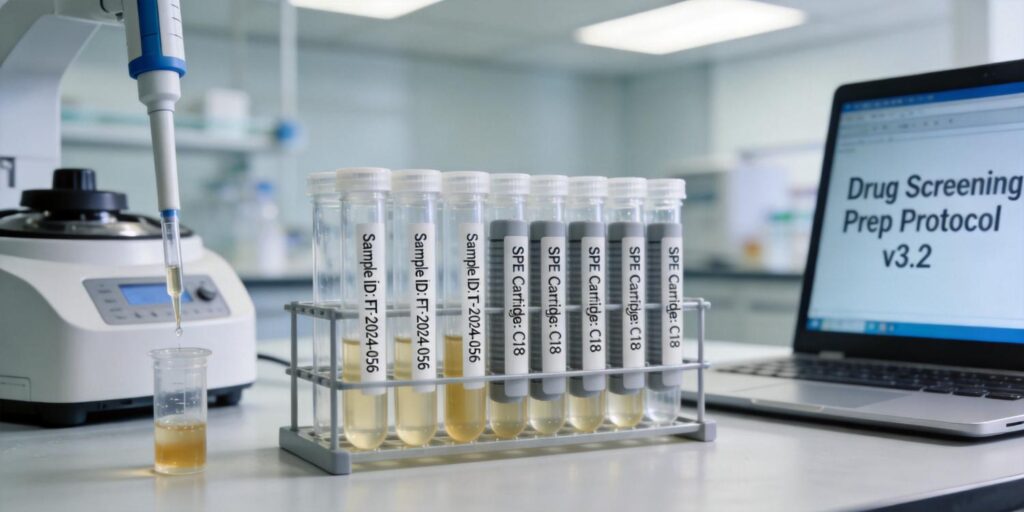
Retention of basic drugs on MCX sorbents requires the analytes to be in their protonated (cationic) form. Adjust the urine sample to pH 2–4 using phosphoric or formic acid. This protonates primary and secondary amines, enhancing ionic interaction with the sulfonic acid groups on the MCX resin. For samples containing glucuronide conjugates, enzymatic hydrolysis (e.g., β-glucuronidase) at pH 5–6 prior to acidification can improve total drug recovery. Centrifugation or filtration (0.45 μm) removes particulate matter that could clog the cartridge.
5. Cartridge Conditioning and Equilibration Steps
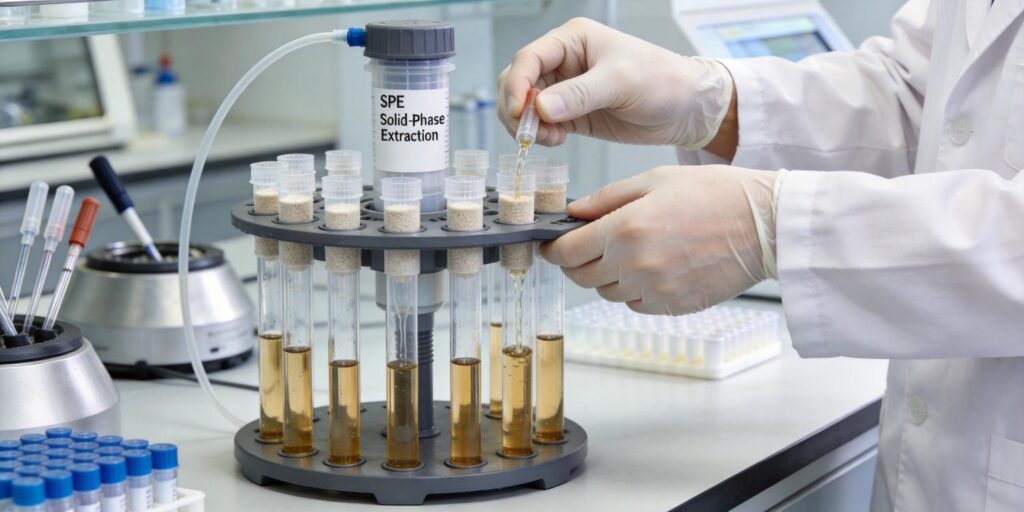
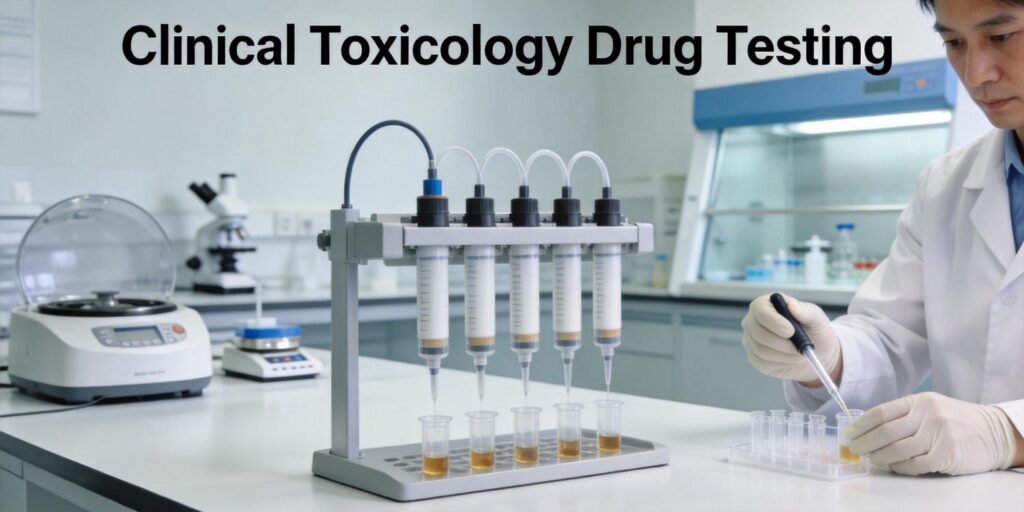
Proper conditioning ensures reproducible sorbent wetting and active site availability. For Poseidon MCX cartridges, sequentially apply 3 mL methanol followed by 3 mL of 0.1 M HCl or 2% formic acid in water. Do not allow the sorbent bed to dry between steps. Equilibration with the same acidic solution used for sample adjustment maintains consistent pH across the bed. Use a vacuum manifold at 2–5 inHg to control flow rate; do not exceed 1 mL/min to prevent channeling.
6. Washing Strategies to Remove Endogenous Interferences
After sample loading, a two-step wash effectively removes matrix components without eluting target analytes. First, wash with 2 mL of 0.1 M HCl or 2% formic acid to displace loosely bound salts and polar metabolites. Second, apply 2 mL of methanol to rinse away neutral lipids, urea, and other non-ionized interferences. For especially dirty samples, an additional 1 mL of 5% methanol in water can be added. The mixed-mode retention ensures that basic drugs remain protonated and retained on the sorbent during these washes.
7. Elution of Basic Drug Compounds Using Ammoniated Solvents
Elution is achieved by neutralizing the sorbent and disrupting ionic interactions. Prepare a fresh elution solution of 5% ammonium hydroxide in methanol (v/v). Apply 2–3 mL of this solution, collecting the eluate into a clean glass tube. The ammonia deprotonates the sorbent’s sulfonic acid groups and the analytes, releasing them into the organic phase. For highly retained compounds, a second elution with 1 mL of the same solution may be necessary. Evaporate the eluate under nitrogen at 40°C and reconstitute in mobile phase for LC-MS/MS analysis.
8. LC-MS/MS Confirmation Workflow
Confirmatory analysis by LC-MS/MS typically employs a C18 reversed-phase column with a gradient of 0.1% formic acid in water and 0.1% formic acid in acetonitrile or methanol. Multiple reaction monitoring (MRM) transitions for each analyte and its deuterated internal standard ensure specificity. Matrix-matched calibration curves are recommended due to potential ion suppression. For high-throughput laboratories, Poseidon 96-well SPE plates offer parallel processing of up to 96 samples, dramatically reducing preparation time while maintaining reproducibility. A well-validated SPE-LC-MS/MS method should achieve limits of detection below 10 ng/mL for most common drugs of abuse, meeting SAMHSA and CAP guidelines.