Pharmaceutical Discharge from Hospitals
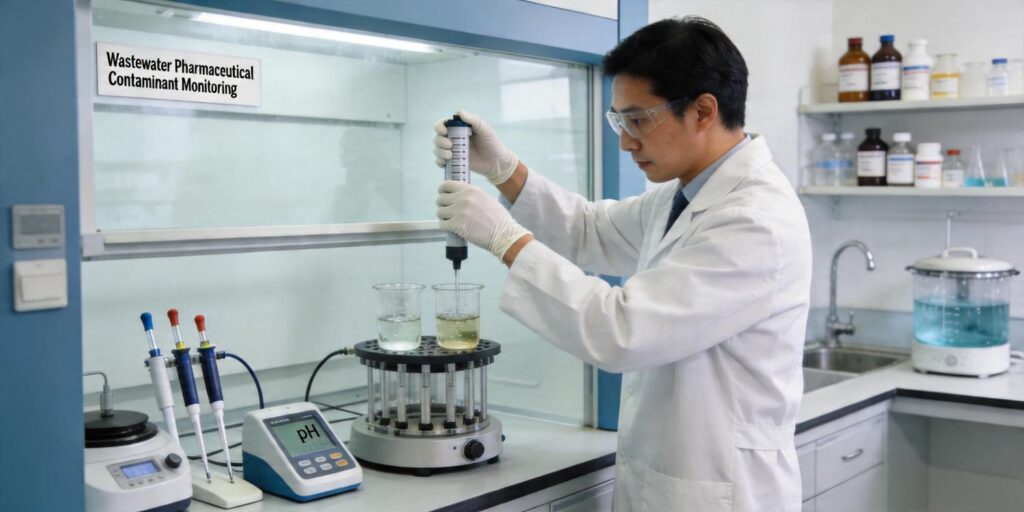
Hospital wastewater represents a significant source of pharmaceutical contamination in aquatic environments. Unlike domestic wastewater, hospital effluents contain higher concentrations of active pharmaceutical ingredients (APIs) due to patient excretion, disposal of unused medications, and diagnostic procedures. These compounds enter wastewater treatment plants where conventional treatment processes often fail to completely remove them, leading to their discharge into surface waters.
The complexity of hospital wastewater matrices presents unique challenges for analytical chemists. As noted in SPE literature, “Environmental matrices are explored with particular emphasis on large volume aqueous samples. The trace enrichment aspect of SPE lends itself very well to the extraction of liquids, especially clean samples such as drinking water or groundwater. The difficulties associated with handling particulate-laden samples like river water or wastewater have already been alluded to.” This observation is particularly relevant to hospital wastewater, which contains not only pharmaceuticals but also biological materials, disinfectants, and various organic compounds.
Target Drug Classes in Wastewater
Several pharmaceutical classes are of particular concern in hospital wastewater monitoring:
Antibiotics
Broad-spectrum antibiotics like fluoroquinolones, macrolides, and beta-lactams are frequently detected. Their presence contributes to antimicrobial resistance development in environmental bacteria.
Analgesics and Anti-inflammatories
Compounds such as diclofenac, ibuprofen, and ketoprofen are commonly found. Research has demonstrated that “solid-phase extraction (SPE) using C-18, diol and ion-exchange sorbents followed by UV spectrophotometric assay was applied to the analysis of basic, acidic and neutral drugs commercially available in creams,” indicating similar approaches can be adapted for wastewater analysis.
Psychiatric Drugs
Antidepressants, antipsychotics, and anxiolytics are increasingly monitored due to their potential ecological effects on aquatic organisms.
Cytostatics
Cancer chemotherapy agents pose particular concern due to their genotoxic properties, even at trace concentrations.
Contrast Media
Iodinated contrast agents used in diagnostic imaging are highly persistent and difficult to remove through conventional treatment.
SPE Enrichment Strategies for Trace Compounds
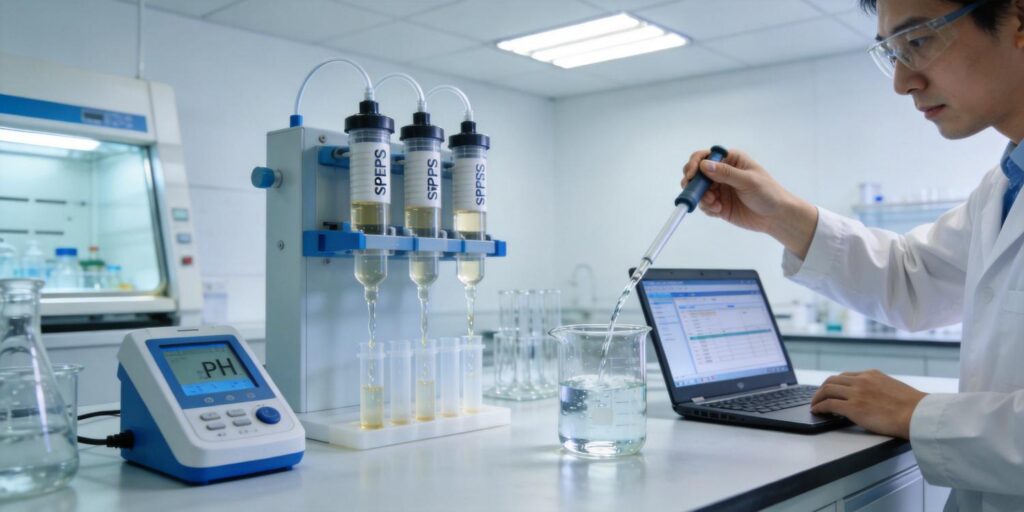
Solid-phase extraction is particularly well-suited for concentrating trace pharmaceutical contaminants from large-volume wastewater samples. The fundamental SPE strategy, as described in technical literature, “generally comprises the isolation (and concentration) of the analytes from a complex matrix by adsorption onto an appropriate sorbent, the removal of interfering impurities by washing with a suitable solvent system and then the selective recovery of the retained analytes with a modified solvent system of suitable elution strength.”
Sorbent Selection
Choosing the appropriate sorbent is critical for successful pharmaceutical extraction:
- HLB (Hydrophilic-Lipophilic Balance): Ideal for broad-spectrum extraction of pharmaceuticals with diverse polarities. Our HLB SPE cartridges provide excellent recovery for both acidic and basic compounds.
- MAX (Mixed-mode Anion Exchange): Specifically designed for acidic compounds. Our MAX SPE cartridges combine reversed-phase and anion-exchange mechanisms.
- MCX (Mixed-mode Cation Exchange): Optimal for basic pharmaceuticals. Our MCX SPE cartridges offer superior recovery of cationic compounds.
- WAX (Weak Anion Exchange): Suitable for strong acids and polar compounds.
- WCX (Weak Cation Exchange): Effective for weak bases and zwitterionic compounds.
As noted in SPE methodology, “If necessary, this process can be modified by selection of sorbent and solvent systems, so that the interfering components are retained by a sorbent and the analytes are then recovered in the filtrate-eluate.” This flexibility is particularly valuable when dealing with complex hospital wastewater matrices.
Matrix Effects Considerations
Hospital wastewater contains dissolved organic matter (DOM) that can affect SPE efficiency. Research indicates that “the influences of humic acid and surfactants on the SPE behavior of aromatic compounds and agricultural chemicals” must be considered. For compounds with log Pow values below approximately 4 when using alkyl-bonded silicas, or below 3 when using polystyrene sorbents, recovery is typically not influenced by the presence of 1 ppm of humic acid.
Example Wastewater Extraction Protocol
Here’s a comprehensive SPE protocol for pharmaceutical extraction from hospital wastewater:
Sample Preparation
- Filtration: Pre-filter samples through 0.45 μm glass-fiber filters to remove suspended solids. As environmental SPE guidelines note, “Glass-fiber filter discs (0.45 μm) having no organic binders should be used. The analytes of interest should be tested for their adsorption potential on the filter selected.”
- pH Adjustment: Adjust sample pH according to target analytes’ pKa values (typically pH 2-3 for acidic compounds, pH 9-10 for basic compounds).
- Addition of Internal Standards: Include deuterated or isotopically labeled analogs of target compounds for quantification.
SPE Procedure Using Poseidon Scientific Cartridges
- Conditioning: Condition HLB cartridges with 5 mL methanol followed by 5 mL ultrapure water at a flow rate of 1-2 mL/min.
- Loading: Load 500 mL of filtered wastewater sample at 5-10 mL/min. For higher throughput, consider our 96-well SPE plates.
- Washing: Wash with 5 mL 5% methanol in water to remove weakly retained interferences.
- Drying: Apply vacuum for 5 minutes to remove residual water.
- Elution: Elute with 2 × 5 mL methanol or methanol:acetonitrile (1:1) mixture.
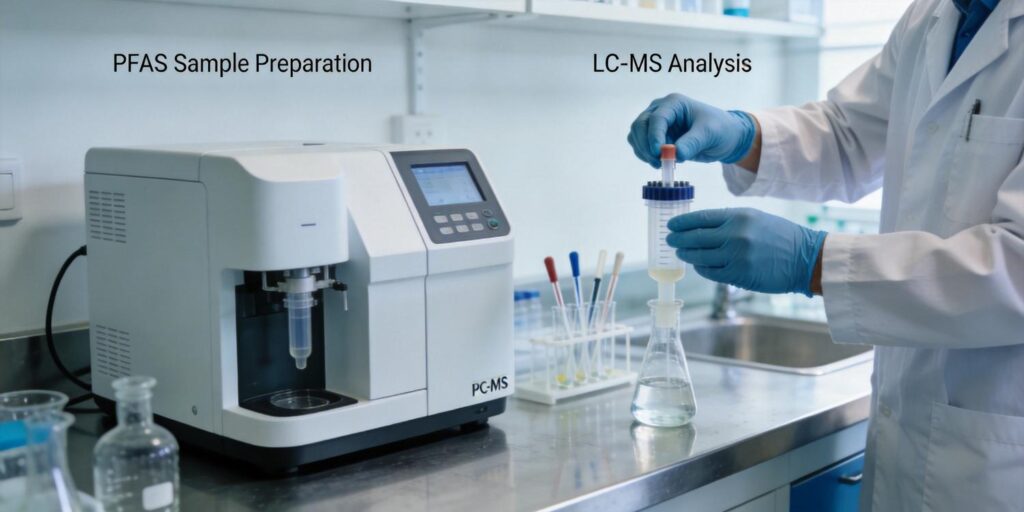
- Concentration: Evaporate eluate to dryness under gentle nitrogen stream and reconstitute in 1 mL mobile phase compatible with LC-MS/MS analysis.
Quality Control Measures
Include procedural blanks, matrix spikes, and duplicate samples to monitor extraction efficiency and potential contamination. As troubleshooting guides note, “An easy method to assess whether contamination is coming from the SPE column is to pass a routine volume of elution solvent through the column, and collect and analyze per your procedure; process and analyze an equal volume of the same elution solvent that is not passed through a column.”
LC-MS/MS Analysis of Contaminants
Liquid chromatography coupled with tandem mass spectrometry provides the sensitivity and selectivity required for trace pharmaceutical analysis:
Chromatographic Conditions
- Column: C18 reversed-phase column (100 × 2.1 mm, 1.7 μm)
- Mobile Phase: A: 0.1% formic acid in water; B: 0.1% formic acid in acetonitrile
- Gradient: 5% B to 95% B over 15 minutes
- Flow Rate: 0.3 mL/min
- Injection Volume: 10 μL
Mass Spectrometry Parameters
- Ionization: Electrospray ionization (ESI) in positive and negative modes
- Scan Mode: Multiple reaction monitoring (MRM)
- Collision Energy: Optimized for each compound
- Source Temperature: 150°C
- Desolvation Temperature: 500°C
Method Validation
Validate according to FDA/ICH guidelines including linearity (r² > 0.99), accuracy (85-115%), precision (RSD < 15%), limit of detection (typically 1-10 ng/L), and limit of quantification (typically 10-50 ng/L).
Environmental Risk Monitoring
Regular monitoring of pharmaceutical contaminants in hospital wastewater serves multiple purposes:
Ecological Risk Assessment
Compare detected concentrations with predicted no-effect concentrations (PNECs) to assess potential environmental impacts. Consider both acute and chronic effects on aquatic organisms.
Source Tracking
Identify specific hospital departments contributing to pharmaceutical loads through fingerprint analysis and mass balance calculations.
Treatment Efficiency Evaluation
Monitor removal efficiencies of different wastewater treatment technologies and optimize processes accordingly.
Regulatory Compliance
Ensure compliance with emerging regulations regarding pharmaceutical discharge limits and environmental quality standards.
Public Health Protection
Assess potential risks from indirect potable water reuse and accumulation in the food chain.
Future Directions
As SPE technology evolves, “there is every indication that it will continue to do so” in meeting analytical challenges. Emerging approaches include:
- Online SPE-LC-MS/MS systems for automated analysis
- Molecularly imprinted polymers for selective extraction
- High-throughput 96-well plate formats for increased productivity
- Miniaturized SPE devices for reduced solvent consumption
The integration of robust SPE methodologies with sensitive analytical techniques provides environmental scientists and regulatory agencies with powerful tools for monitoring pharmaceutical contaminants in hospital wastewater. By implementing systematic sampling, extraction, and analysis protocols, we can better understand the fate and effects of these compounds in aquatic ecosystems and develop effective mitigation strategies.