SPE

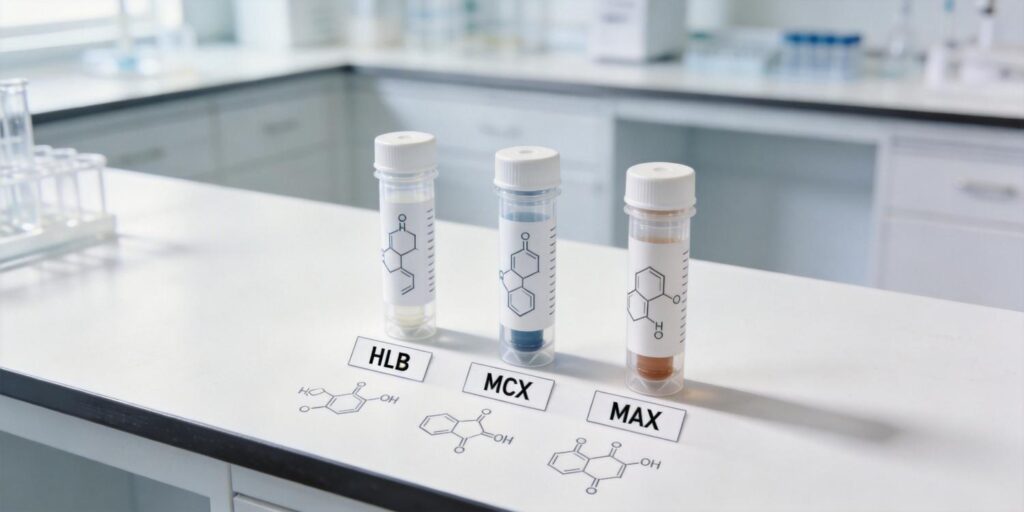
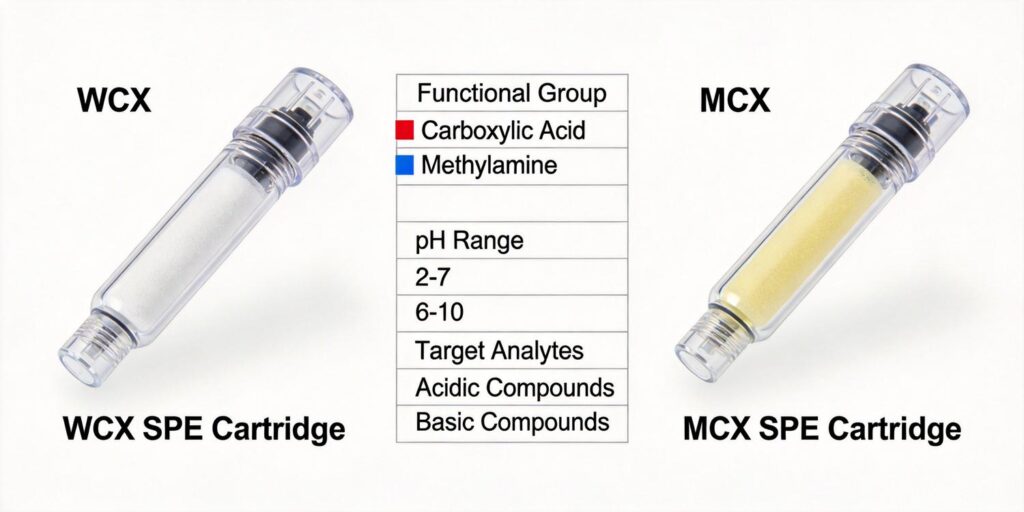
comparison of HLB and MCX SPE cartridges

Choosing Between HLB and MCX SPE Cartridges

Comparison of Sorbent Chemistry When selecting between HLB (Hydrophilic-Lipophilic Balanced) and MCX (Mixed-mode Cation eXchange) SPE cartridges, understanding their fundamental sorbent chemistry is crucial for making informed decisions. These two sorbent types represent different approaches to solid-phase extraction, each with distinct retention mechanisms and applications. HLB Sorbent Chemistry Oasis HLB, introduced in 1996, revolutionized SPE […]

Choosing Between HLB and MCX SPE Cartridges Read More »

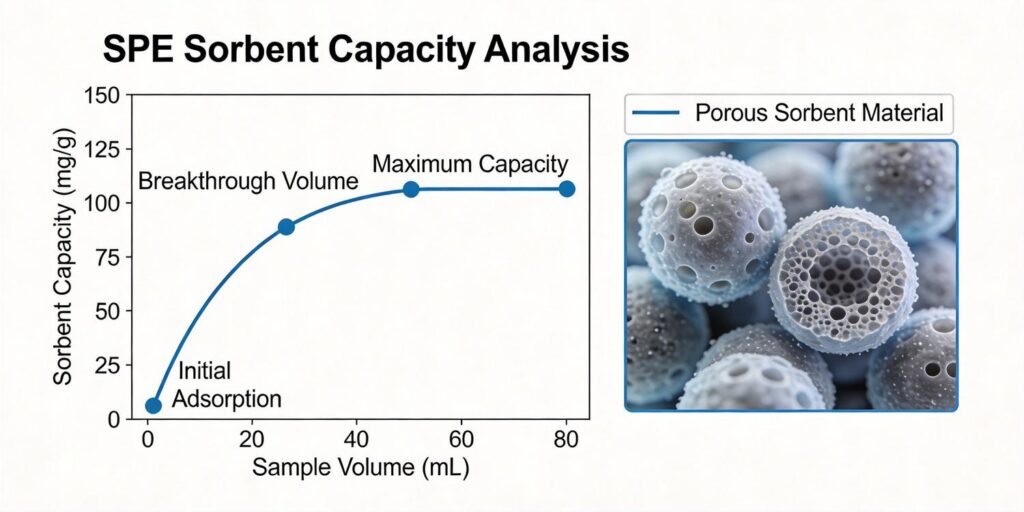
diagram showing analyte breakthrough in SPE cartridge

Breakthrough Volume in SPE Explained

What is Breakthrough Volume in SPE? Breakthrough volume (Vb) is a fundamental concept in solid-phase extraction (SPE) that defines the maximum sample volume that can be processed through an SPE device before analyte loss occurs. According to Larrivee and Poole (1994), breakthrough volume is defined as “the volume of sample, assumed to have a constant

Breakthrough Volume in SPE Explained Read More »

scientist documenting consistent SPE extraction protocol

Improving SPE Reproducibility Between Runs

Understanding the Critical Factors in SPE Reproducibility Solid Phase Extraction (SPE) has revolutionized sample preparation across forensic, clinical, and environmental laboratories, offering significant advantages over traditional liquid-liquid extraction methods. As noted in forensic applications, SPE has been shown to significantly increase gas (GC) and liquid chromatography (LC) column life while reducing downtime on sensitive instruments

Improving SPE Reproducibility Between Runs Read More »

clogged SPE cartridge with particulate sample

Preventing SPE Cartridge Clogging

Sources of Particulate Contamination in SPE Cartridges Particulate contamination represents one of the most common and frustrating challenges in solid-phase extraction workflows. As an experienced product manager at Poseidon Scientific, I’ve seen firsthand how particulate matter can compromise SPE cartridge performance, leading to clogging, reduced flow rates, and inconsistent recoveries. Environmental samples frequently contain a

Preventing SPE Cartridge Clogging Read More »

analytical chemist troubleshooting SPE extraction problem

Why SPE Recovery Can Be Low and How to Fix It

Understanding SPE Recovery Challenges Solid Phase Extraction (SPE) has revolutionized sample preparation across analytical laboratories, offering significant advantages over traditional liquid-liquid extraction methods. However, achieving consistent, high recovery rates (ideally exceeding 90%) can sometimes prove challenging. As a product manager at Poseidon Scientific specializing in SPE products, I’ve encountered numerous scenarios where recovery issues arise.

Why SPE Recovery Can Be Low and How to Fix It Read More »

elution solvent flowing from SPE cartridge into vial

Elution Strategies for Maximum SPE Recovery

Elution Solvent Selection: The Foundation of SPE Recovery Elution is the critical final step in solid-phase extraction where retained analytes are selectively desorbed from the sorbent and collected for analysis. The choice of elution solvent directly impacts recovery percentages, extract cleanliness, and overall method efficiency. According to Simpson and Wells (2000), elution is most successfully

Elution Strategies for Maximum SPE Recovery Read More »

washing solvent being applied to SPE cartridge

Washing Steps in SPE: Removing Matrix Interference

Purpose of the Washing Stage in SPE The washing stage in solid-phase extraction (SPE) serves as a critical purification step designed to remove matrix interferences while retaining target analytes on the sorbent bed. As described in fundamental SPE literature, this step follows sample loading and precedes analyte elution, forming the core of the “digital chromatography”

Washing Steps in SPE: Removing Matrix Interference Read More »

sample being loaded into SPE cartridge during extraction

Optimizing Sample Loading in SPE Methods

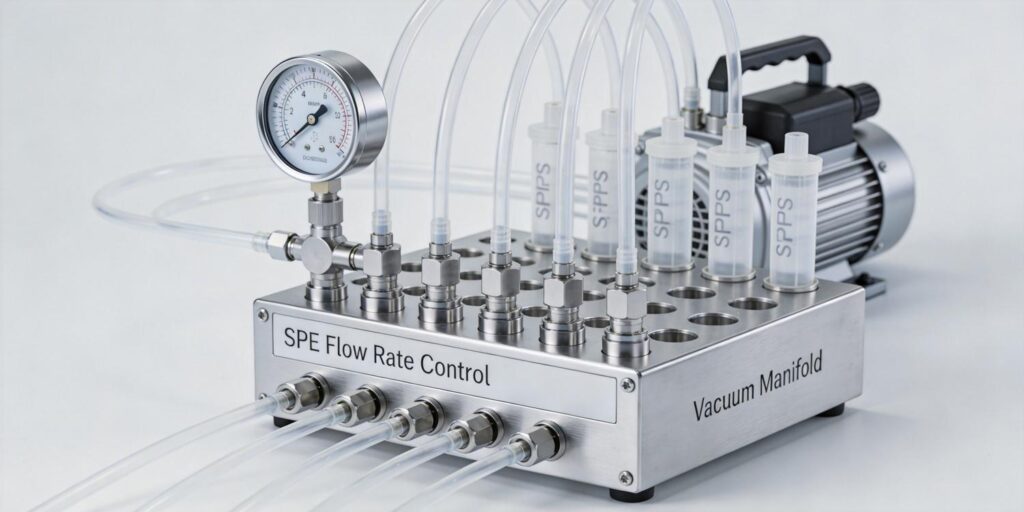
The Critical Role of Controlled Flow Rate in SPE Sample Loading Flow rate control during sample loading represents one of the most fundamental yet often overlooked parameters in solid-phase extraction optimization. As research from Simpson’s comprehensive SPE text demonstrates, “SPE applications may be very sensitive to flow rates. Symptoms may include lower recoveries at higher

Optimizing Sample Loading in SPE Methods Read More »

scientist conditioning SPE cartridge with solvent

Conditioning Solvents in SPE: Why They Matter

The Critical Role of Conditioning in Solid-Phase Extraction Solid-phase extraction (SPE) represents one of the most powerful sample preparation techniques in analytical chemistry, enabling scientists to reduce chromatographic complexity, increase signal-to-noise ratios, improve detection limits, minimize matrix effects, concentrate analytes of interest, and enhance analytical robustness. At the heart of every successful SPE protocol lies

Conditioning Solvents in SPE: Why They Matter Read More »

Shopping Cart
Poseidon Scientific
Privacy Overview

This website uses cookies so that we can provide you with the best user experience possible. Cookie information is stored in your browser and performs functions such as recognising you when you return to our website and helping our team to understand which sections of the website you find most interesting and useful.