Industry Applications

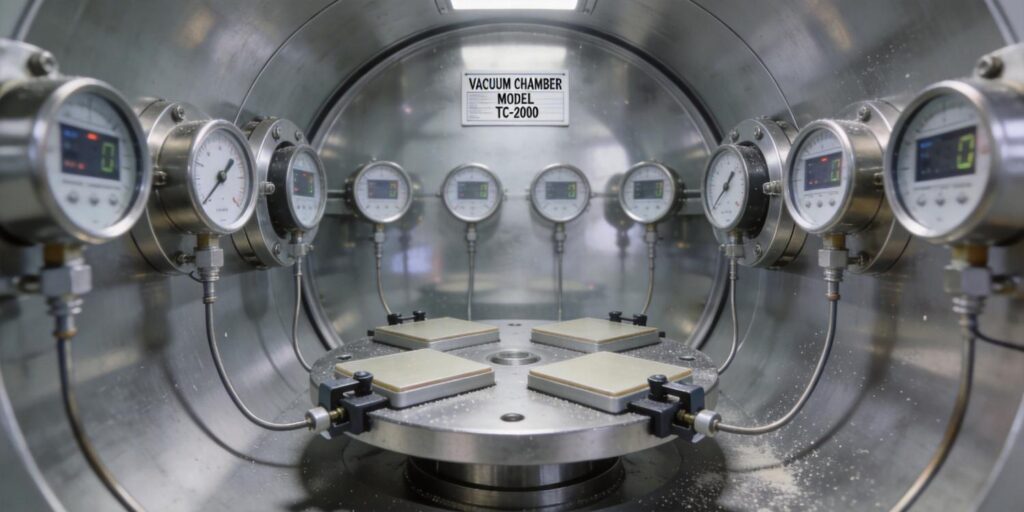
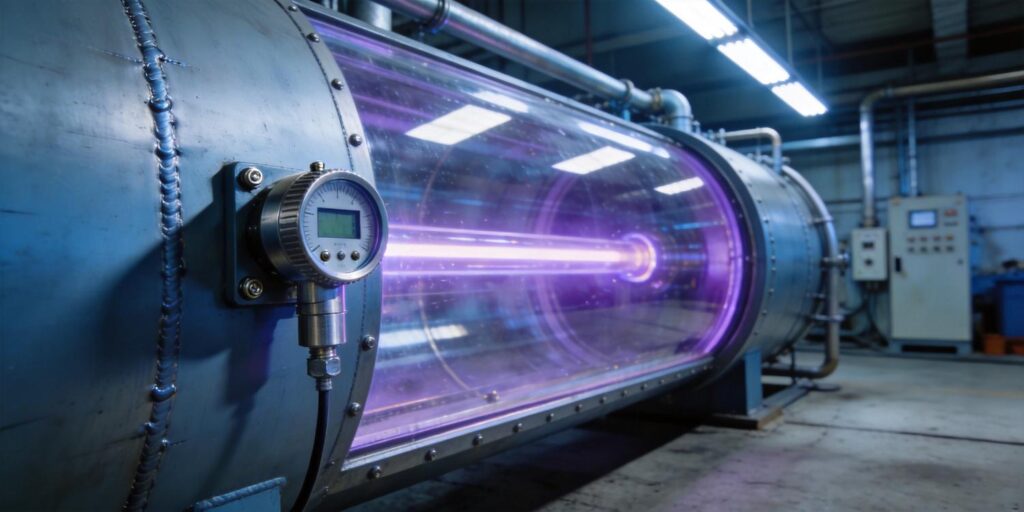
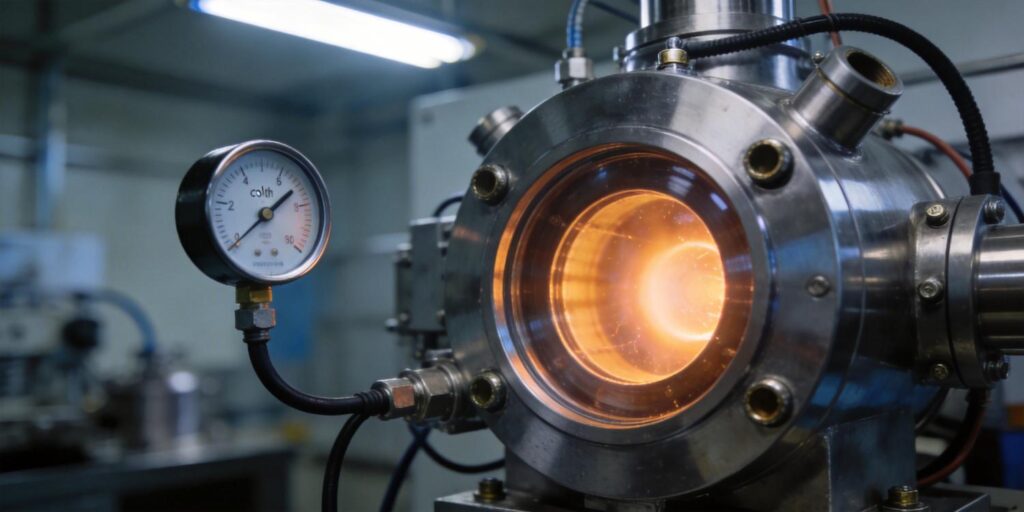
Vacuum gauge installed on vacuum casting chamber

Vacuum Gauge Application in Vacuum Casting Systems

Vacuum Gauge Application in Vacuum Casting Systems Vacuum casting—whether for jewelry, prototype parts, or polyurethane and epoxy resin components—relies on precise pressure control to eliminate air bubbles, ensure complete mold filling, and deliver defect-free castings. The process typically demands rapid pump-down from atmosphere to 10–100 mbar (roughly 7.5–75 Torr) for degassing, followed by stable low-pressure […]

Vacuum Gauge Application in Vacuum Casting Systems Read More »

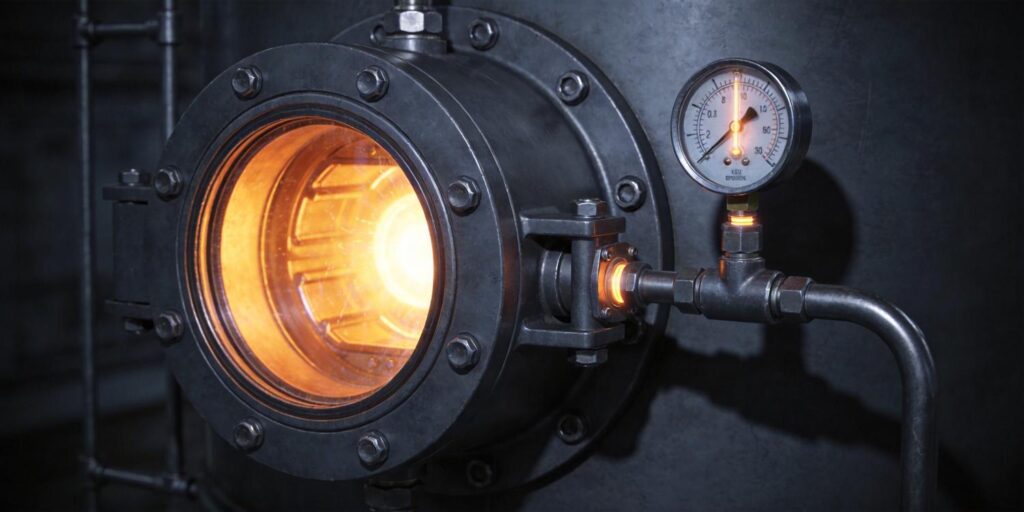
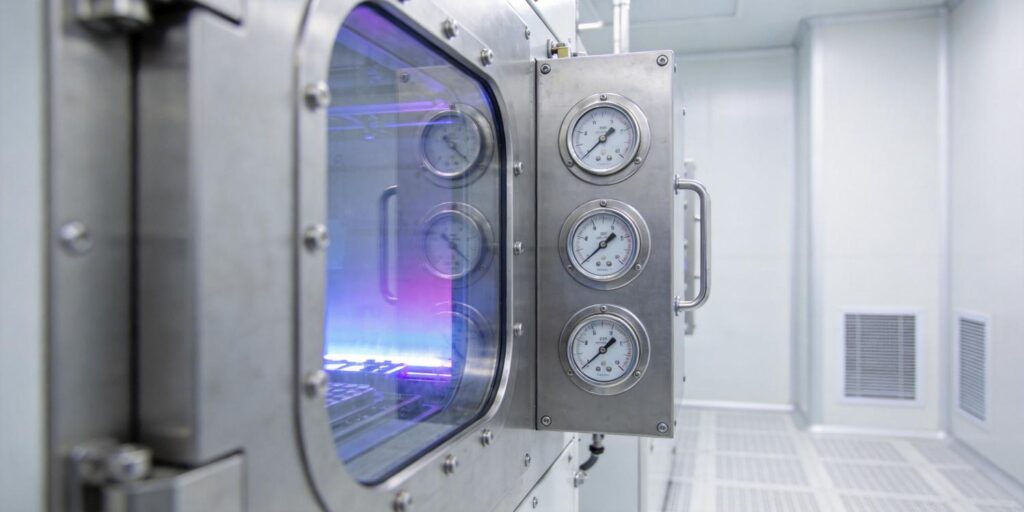
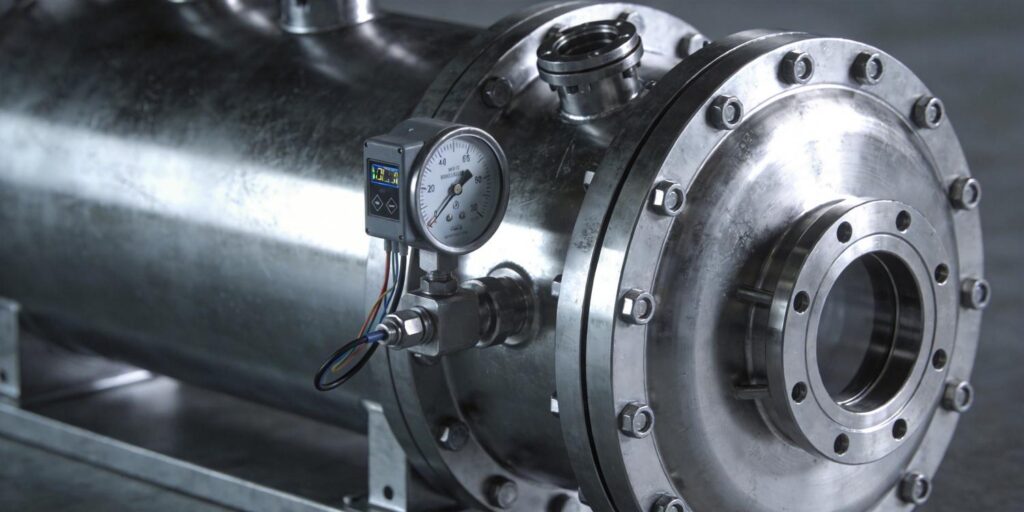
Vacuum gauge mounted on industrial drying oven pipeline

Designing Vacuum Monitoring for Vacuum Drying Ovens

Vacuum drying ovens are the workhorse of lithium-ion battery electrode production, pharmaceutical powder processing, and high-precision optics manufacturing. By combining controlled heat with reduced pressure, these ovens remove bound and adsorbed moisture far faster and more uniformly than atmospheric drying—often cutting cycle times by 50 % while achieving residual moisture levels below 10 ppm. Yet

Designing Vacuum Monitoring for Vacuum Drying Ovens Read More »

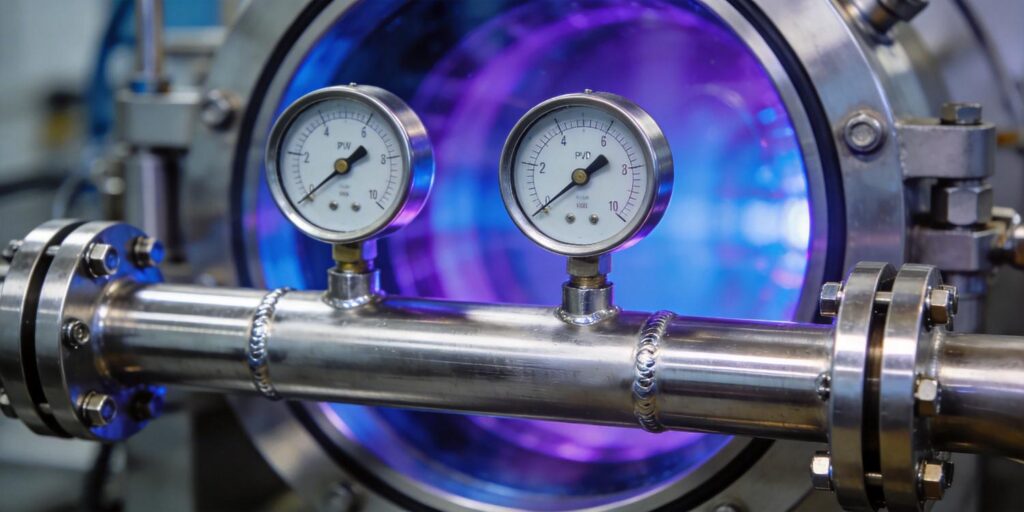
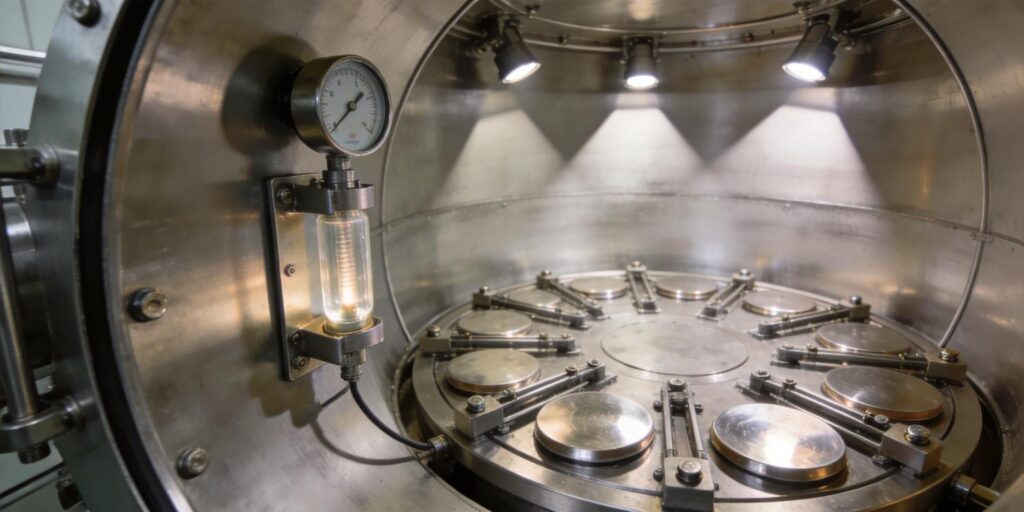
Vacuum gauge installed on lithium battery manufacturing system

Vacuum Gauge Selection for Lithium Battery Cell Production

Lithium-ion battery cell production operates under relentless pressure for yield, safety, and cost control. Every trace of moisture must be eliminated before electrolyte filling—otherwise residual water reacts with LiPF₆ to form HF, corroding electrodes, reducing capacity, and creating safety hazards. Vacuum drying of electrode coils and vacuum-assisted electrolyte filling are therefore non-negotiable process steps. Choosing

Vacuum Gauge Selection for Lithium Battery Cell Production Read More »

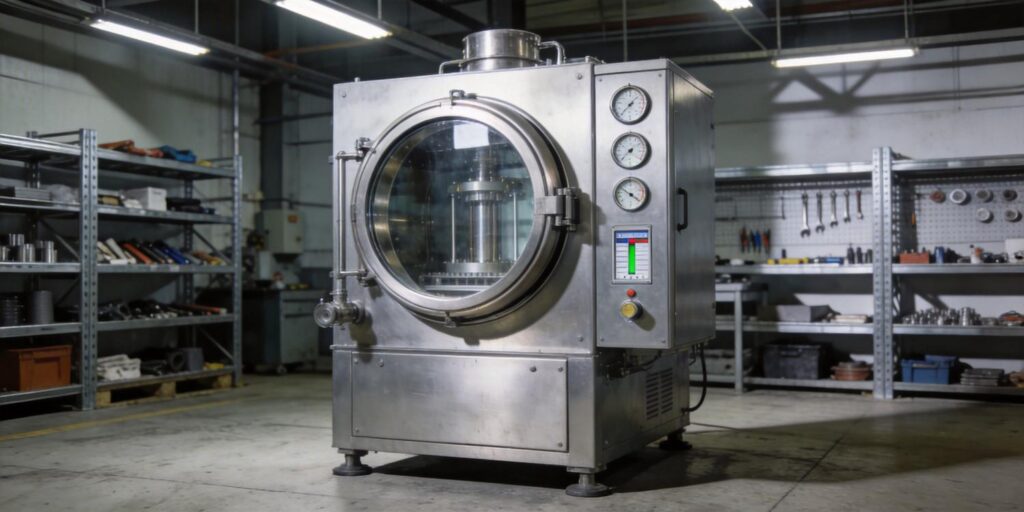
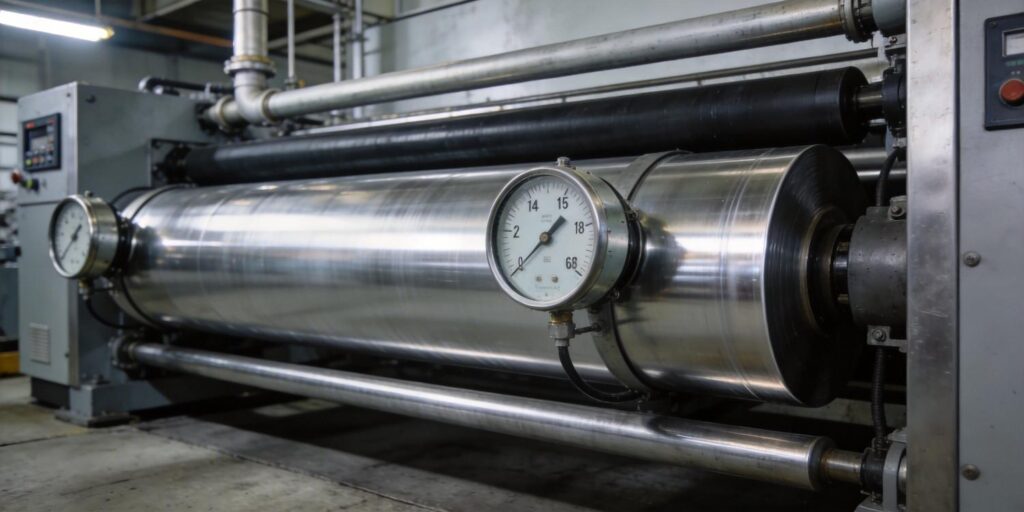
Vacuum gauge installed on industrial distillation system

Optimizing Vacuum Measurement for Vacuum Distillation Systems

Distillation Vacuum Stage Requirements Vacuum distillation systems separate heat-sensitive compounds, high-boiling petroleum fractions, pharmaceuticals, and essential oils by lowering operating pressure. Reducing pressure lowers boiling points dramatically—water boils at 100 °C at atmosphere but at only 46 °C at 50 Torr—preventing thermal decomposition while improving separation efficiency. Most industrial and laboratory vacuum distillation processes operate

Optimizing Vacuum Measurement for Vacuum Distillation Systems Read More »

Vacuum gauges mounted on aerospace vacuum coating chamber

High Vacuum Monitoring in Aerospace Component Manufacturing

Required Vacuum Level for Aerospace Coating Aerospace component manufacturing demands ultra-clean deposition environments for protective coatings on turbine blades, landing gear, satellite structures, and avionics hardware. Physical vapor deposition (PVD) processes—including electron-beam PVD for thermal barrier coatings (TBCs) and magnetron sputtering for wear-resistant layers—require base pressures typically between 10⁻⁵ and 10⁻⁷ Torr (1.33 × 10⁻³

High Vacuum Monitoring in Aerospace Component Manufacturing Read More »

Vacuum gauge installed on industrial packaging machine

Vacuum Gauge Application in Vacuum Packaging Systems

Packaging Vacuum Level Requirements Vacuum packaging systems for food, pharmaceuticals, and electronics demand precise pressure control to extend shelf life, prevent oxidation, and ensure hermetic seals. Most commercial vacuum chamber machines operate in the rough-vacuum regime—atmospheric pressure down to 1–50 Torr (1.33–66.7 mbar). This range removes >99 % of air while remaining fast enough for

Vacuum Gauge Application in Vacuum Packaging Systems Read More »

Vacuum gauge installed on medical sterilization chamber

Selecting Vacuum Gauges for Medical Device Sterilization Chambers

Sterilization Vacuum Cycle Stages Medical device sterilization chambers rely on precise vacuum control to ensure complete air removal, sterilant penetration, and safe drying. Whether using steam autoclaves, ethylene oxide (EtO) systems, or low-temperature hydrogen peroxide plasma processes, the vacuum cycle follows distinct stages that demand reliable pressure monitoring. In prevacuum steam sterilization (per ISO 17665),

Selecting Vacuum Gauges for Medical Device Sterilization Chambers Read More »

Vacuum gauge installed on hydrogen processing vacuum line

Vacuum Gauge Application in Hydrogen Processing Systems

Vacuum Gauge Application in Hydrogen Processing Systems Hydrogen processing—whether in annealing furnaces, fuel-cell manufacturing, semiconductor hydrogenation, or hydrogen storage systems—requires precise vacuum control to prevent oxidation, ensure purity, and maintain process safety. Hydrogen’s unique physical properties, however, introduce measurement challenges that standard air-calibrated gauges cannot ignore. The VG-SP205 Pirani Vacuum Transmitter and VG-SM225 Cold Cathode

Vacuum Gauge Application in Hydrogen Processing Systems Read More »

Vacuum gauge mounted on industrial heat treatment furnace

Vacuum Gauge Selection for Vacuum Heat Treatment Processes

Vacuum Gauge Selection for Vacuum Heat Treatment Processes Vacuum heat treatment—encompassing annealing, tempering, brazing, and sintering—relies on precise pressure control to eliminate oxidation, decarburization, and hydrogen embrittlement while achieving uniform metallurgical properties. Incorrect vacuum levels during critical stages can ruin entire batches, leading to costly rework or scrap. The VG-SP205 Pirani Vacuum Transmitter and VG-SM225

Vacuum Gauge Selection for Vacuum Heat Treatment Processes Read More »

Cold cathode vacuum gauge mounted on mass spectrometer system

Vacuum Monitoring in Research Mass Spectrometry Systems

The Critical Ultra-High Vacuum Region in Research Mass Spectrometry Systems Research mass spectrometry (MS) demands precise control of gas density to ensure accurate ion trajectories, minimal scattering, and high signal-to-noise ratios. In quadrupole, time-of-flight, or sector-field analyzers, the mean free path of ions must exceed the instrument path length—typically requiring pressures below 10−6 Torr in

Vacuum Monitoring in Research Mass Spectrometry Systems Read More »

Shopping Cart
Poseidon Scientific
Privacy Overview

This website uses cookies so that we can provide you with the best user experience possible. Cookie information is stored in your browser and performs functions such as recognising you when you return to our website and helping our team to understand which sections of the website you find most interesting and useful.