Industry Applications

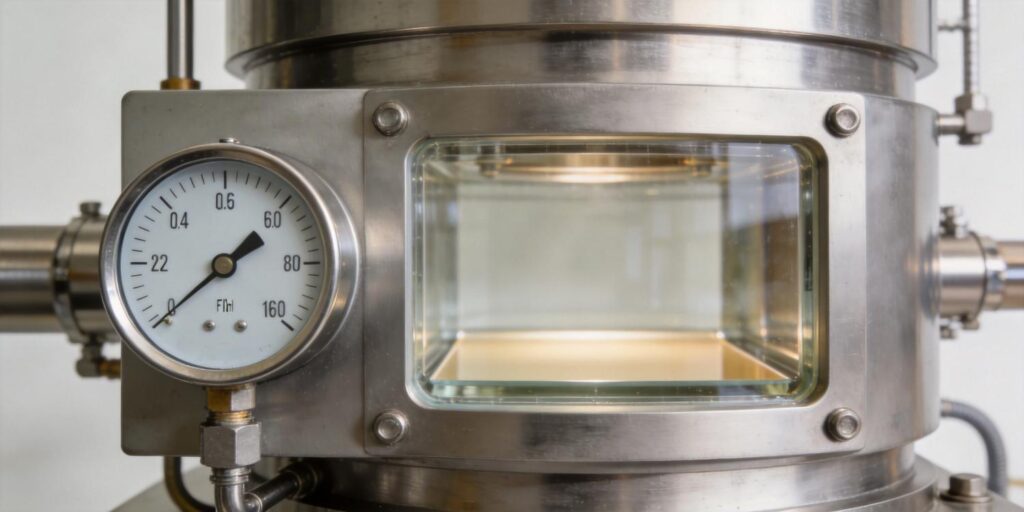
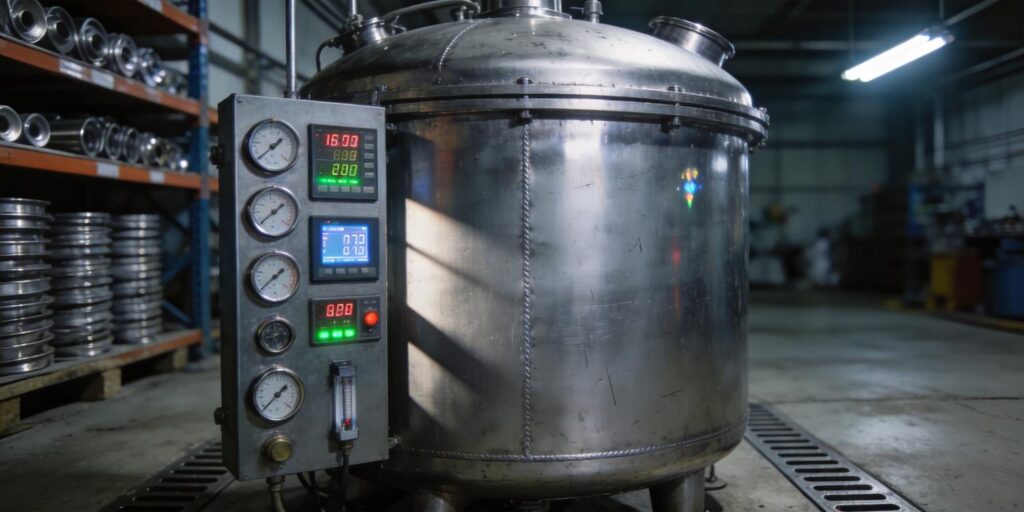
Vacuum gauge mounted on battery production vacuum chamber

Vacuum Measurement Optimization for Battery Manufacturing

Battery Production Vacuum Stages In lithium-ion battery manufacturing, vacuum technology plays a pivotal role across multiple critical stages. Precise pressure control and monitoring ensure the removal of moisture, solvents, and trapped gases that can compromise electrode integrity, electrolyte wetting, and overall cell performance. Residual moisture levels below a few ppm are essential for battery longevity, […]

Vacuum Measurement Optimization for Battery Manufacturing Read More »
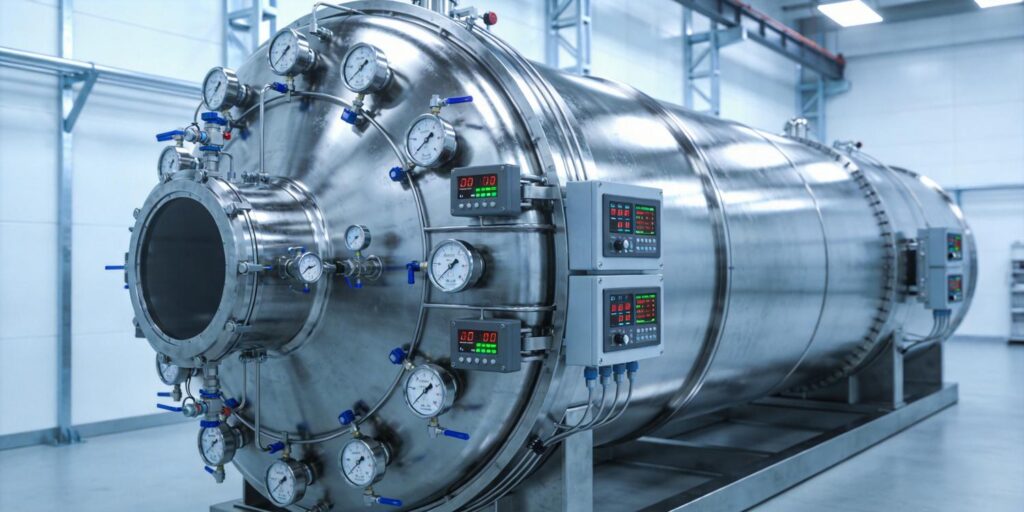
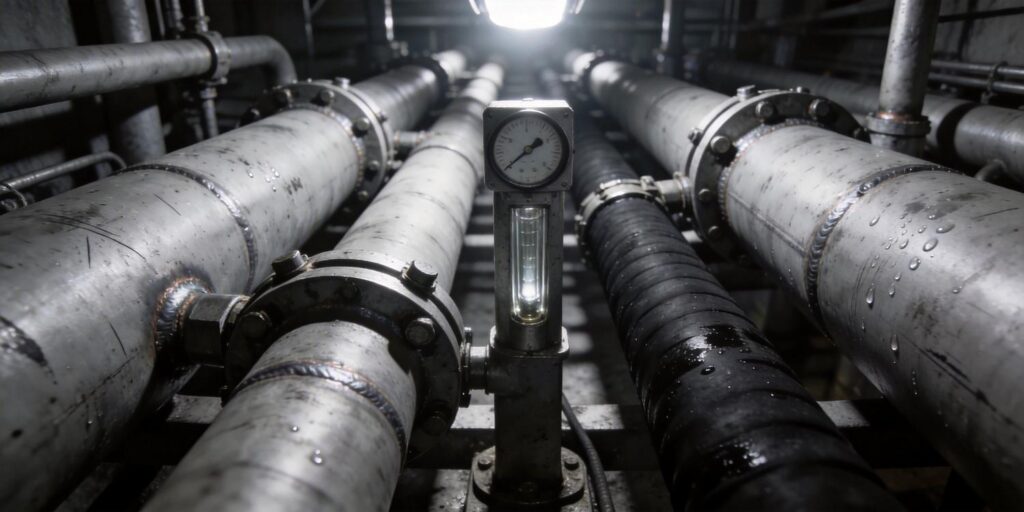
Vacuum gauges installed on aerospace testing chamber

Vacuum Measurement Challenges in Aerospace Testing

Aerospace testing facilities—whether NASA, ESA, or commercial satellite manufacturers—rely on vacuum chambers to replicate the harsh environment of space. From thermal vacuum cycling of spacecraft components to propulsion system qualification and materials outgassing studies, the accuracy and reliability of vacuum measurement directly affect test validity, certification timelines, and mission success. A single erroneous pressure reading

Vacuum Measurement Challenges in Aerospace Testing Read More »

Pirani vacuum transmitter mounted on roughing line

Optimizing Rough Vacuum Monitoring in Industrial Systems

In large-scale industrial vacuum systems—vacuum furnaces, PVD coating chambers, freeze-dryers, and metallurgy lines—the rough vacuum stage sets the foundation for every successful process cycle. This is where the system transitions from atmosphere to the 10⁻³ Torr crossover point, where mechanical pumps hand off to high-vacuum pumps. Pressure must be monitored accurately, quickly, and reliably to

Optimizing Rough Vacuum Monitoring in Industrial Systems Read More »

Vacuum gauge installed on thin film coating equipment

How Vacuum Gauges Improve Thin Film Uniformity

In thin-film deposition processes such as magnetron sputtering, electron-beam evaporation, and thermal evaporation, coating uniformity across the substrate is the difference between a functional device and scrap. Variations as small as 5 % in thickness can degrade optical performance, reduce semiconductor yield, or compromise adhesion in protective coatings. While substrate rotation, target power, and source-to-substrate

How Vacuum Gauges Improve Thin Film Uniformity Read More »

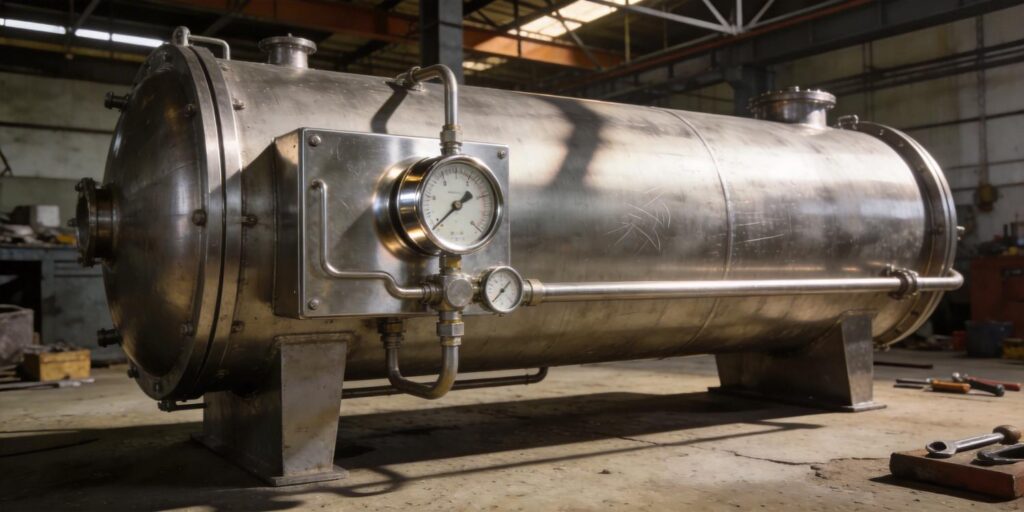
Vacuum gauge mounted on metallurgy furnace chamber

Selecting Vacuum Gauges for Vacuum Metallurgy Processes

In vacuum metallurgy processes—vacuum arc melting, vacuum induction melting, electron-beam melting, and high-temperature heat treatment—precise pressure control directly determines material purity, microstructure, and final mechanical properties. Oxygen, nitrogen, or hydrogen partial pressures above 10⁻⁴ Torr can cause embrittlement, inclusions, or unwanted phase changes. Yet the operating environment is punishing: chamber temperatures often exceed 1500 °C,

Selecting Vacuum Gauges for Vacuum Metallurgy Processes Read More »

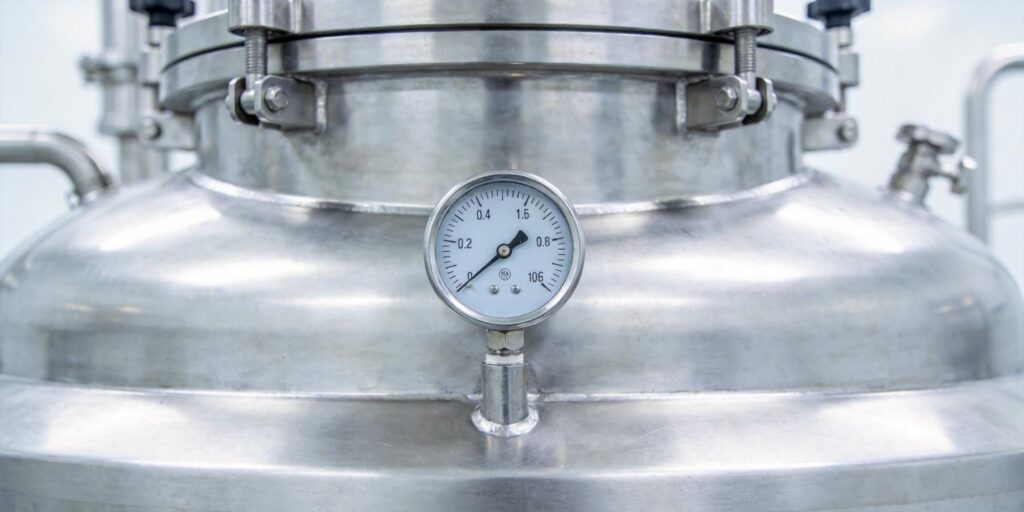
Vacuum gauge mounted on pharmaceutical freeze dryer chamber

Vacuum Gauge Selection for Pharmaceutical Freeze Drying Systems

In pharmaceutical freeze-drying (lyophilization) systems, vacuum is the critical process variable that controls sublimation rate, product temperature, and final moisture content. A collapsed cake, excessive residual moisture, or batch rejection can result from even minor pressure deviations. Yet many systems still rely on a single-gauge approach that forces compromises in range, response, or contamination resistance.

Vacuum Gauge Selection for Pharmaceutical Freeze Drying Systems Read More »

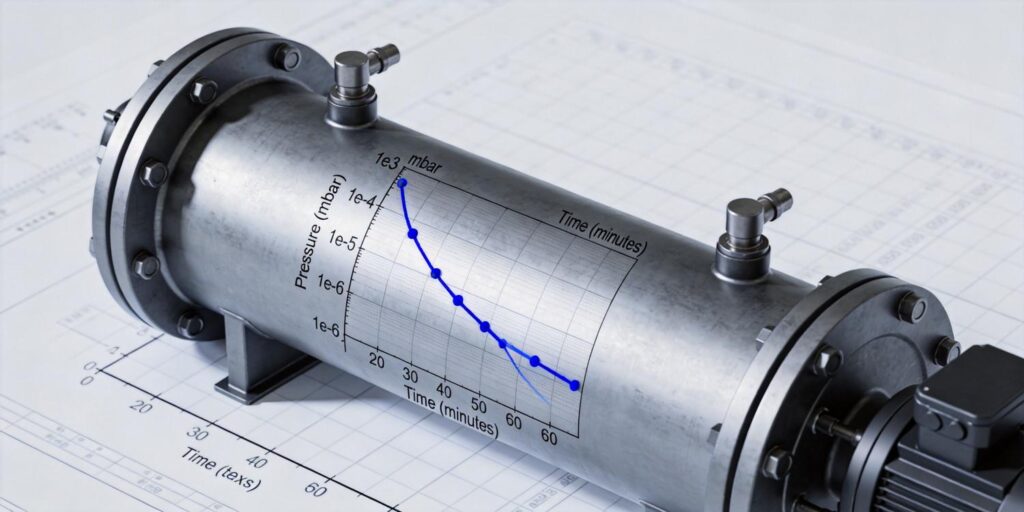
Pump-down curve graph associated with vacuum chamber

How to Optimize Pump-Down Time with Proper Vacuum Measurement

Define Pump-Down Curve The pump-down curve is the fundamental performance signature of any vacuum system. It plots chamber pressure (typically in Torr or Pa) against time, starting at atmosphere (760 Torr) and descending toward the system’s ultimate base pressure. In practice, the curve reveals three distinct regimes: viscous flow (high pressure, rapid gas removal), transitional

How to Optimize Pump-Down Time with Proper Vacuum Measurement Read More »

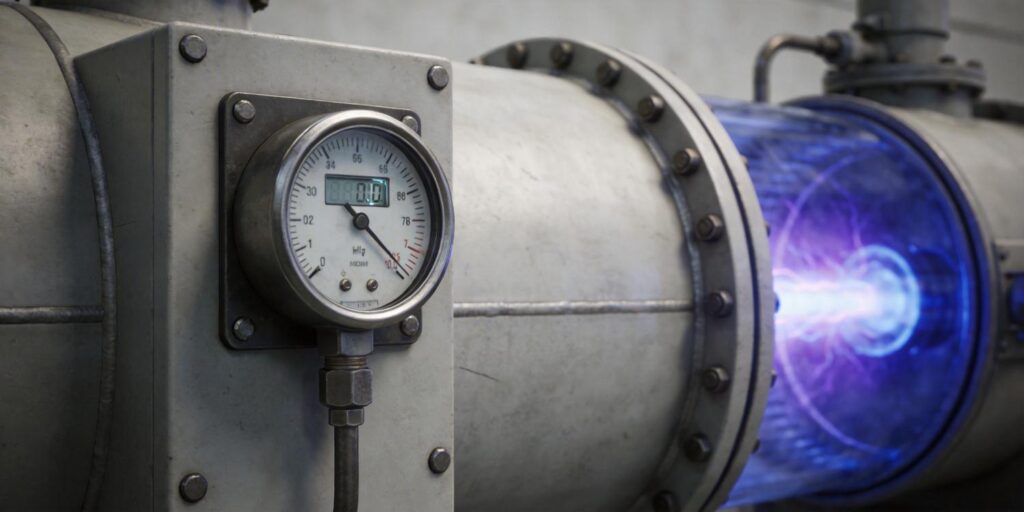
Vacuum gauge attached to plasma processing chamber

Vacuum Monitoring in Plasma Processing Equipment

Plasma Chamber Pressure Stages In plasma processing equipment—whether for reactive ion etching, physical vapor deposition (PVD), chemical vapor deposition (CVD), or atomic layer deposition (ALD)—the vacuum system progresses through distinct pressure stages. Each stage demands accurate, real-time monitoring to ensure process stability, repeatability, and equipment protection. The first stage is rough vacuum pump-down, from atmosphere

Vacuum Monitoring in Plasma Processing Equipment Read More »

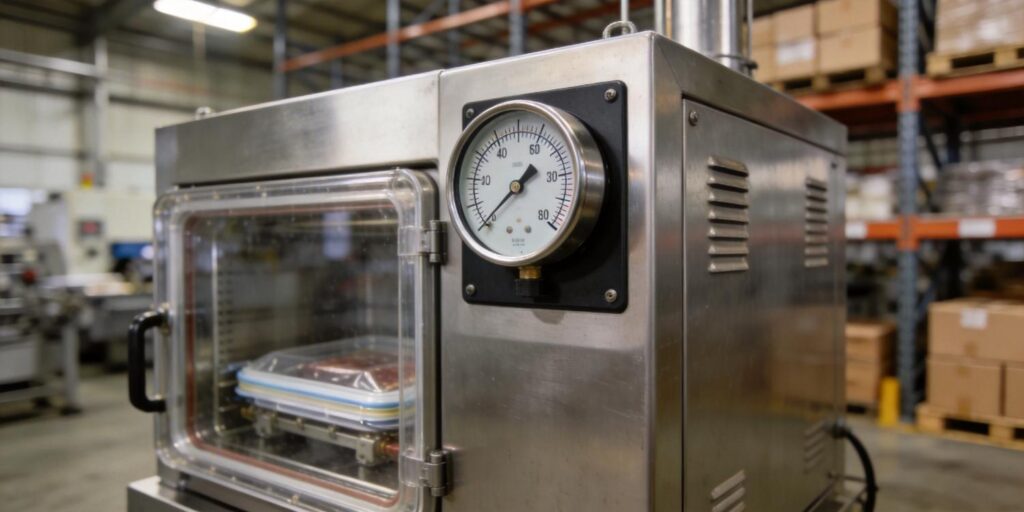
Vacuum gauge mounted on packaging machine

Vacuum Gauge Selection for Vacuum Packaging Systems

Vacuum Requirements in Modern Packaging Systems Vacuum packaging is a cornerstone of food preservation, medical device sterility, and electronics protection. Whether sealing fresh produce in modified-atmosphere packs, extending shelf life of pharmaceuticals, or preventing oxidation in semiconductor components, the process demands precise, repeatable vacuum levels. Most industrial vacuum packaging machines operate entirely in the rough

Vacuum Gauge Selection for Vacuum Packaging Systems Read More »

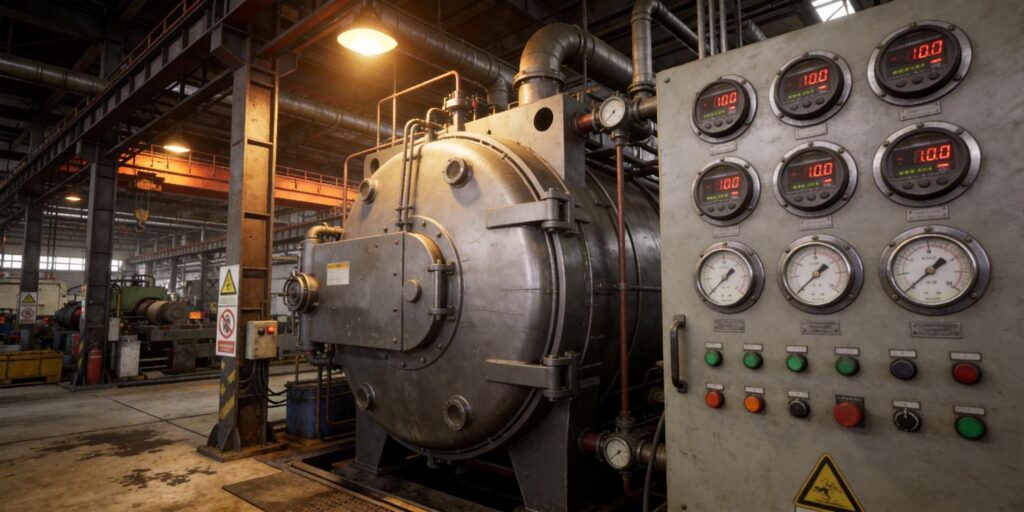
Vacuum gauge mounted on industrial furnace chamber

Vacuum Monitoring in Heat Treatment Furnaces

Vacuum Stages in Heat Treatment Processes Vacuum heat treatment—encompassing annealing, tempering, brazing, and sintering—relies on controlled pressure to eliminate oxidation, promote uniform microstructure, and achieve target mechanical properties. The process follows three distinct vacuum stages that mirror the overall pump-down curve of the furnace. The rough vacuum stage (atmosphere to ~1 Torr) removes bulk air

Vacuum Monitoring in Heat Treatment Furnaces Read More »

Shopping Cart
Poseidon Scientific
Privacy Overview

This website uses cookies so that we can provide you with the best user experience possible. Cookie information is stored in your browser and performs functions such as recognising you when you return to our website and helping our team to understand which sections of the website you find most interesting and useful.