Technical Deep Dive

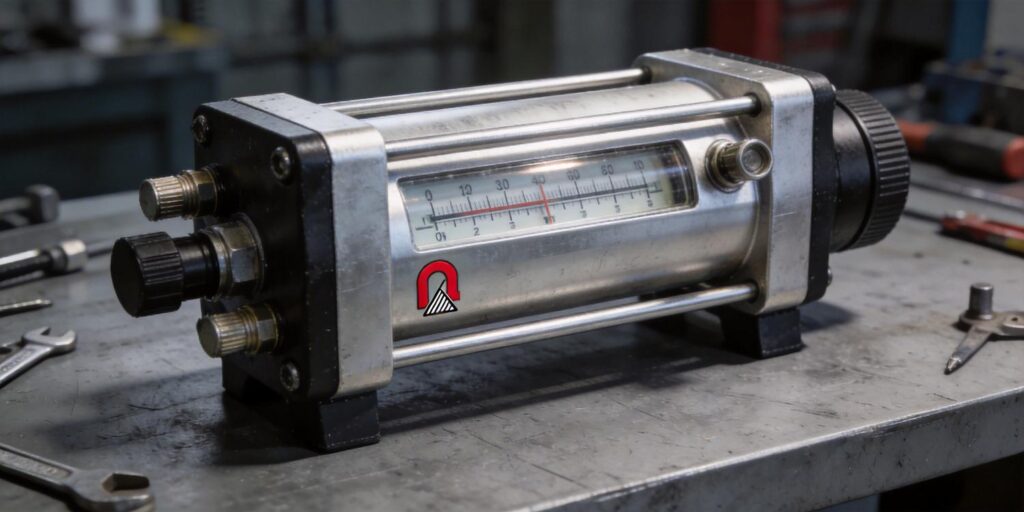
Cold cathode vacuum gauge installed on high vacuum system

How Cold Cathode Gauges Handle Ultra-Low Pressure Measurement

Introduction Cold cathode gauges are the workhorse of high-vacuum measurement in modern industrial and laboratory systems. Unlike hot-cathode ionization gauges that rely on a heated filament, cold cathode designs generate ions through a self-sustaining plasma discharge. This makes them ideal for the ultra-low pressure regime from 10−3 Torr down to 10−7 Torr, where precise, stable […]

How Cold Cathode Gauges Handle Ultra-Low Pressure Measurement Read More »

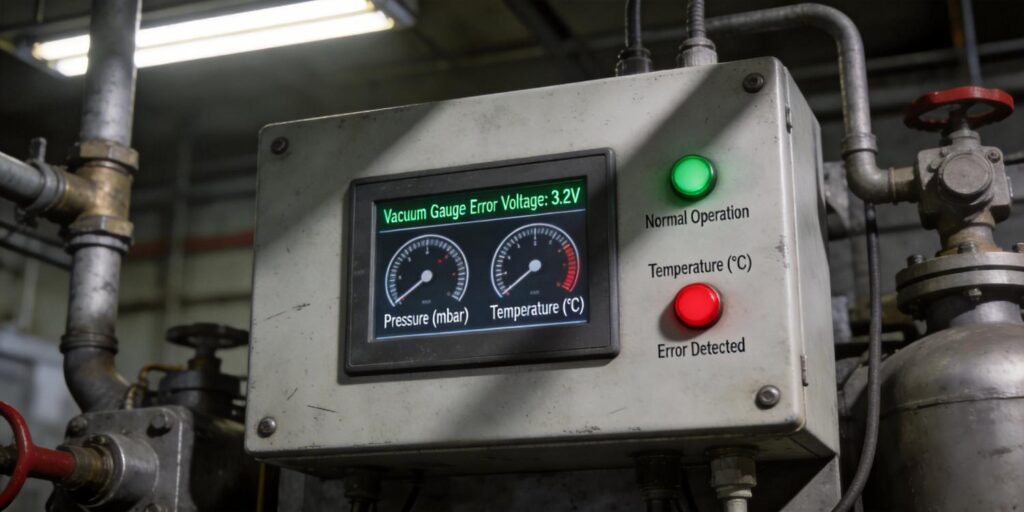
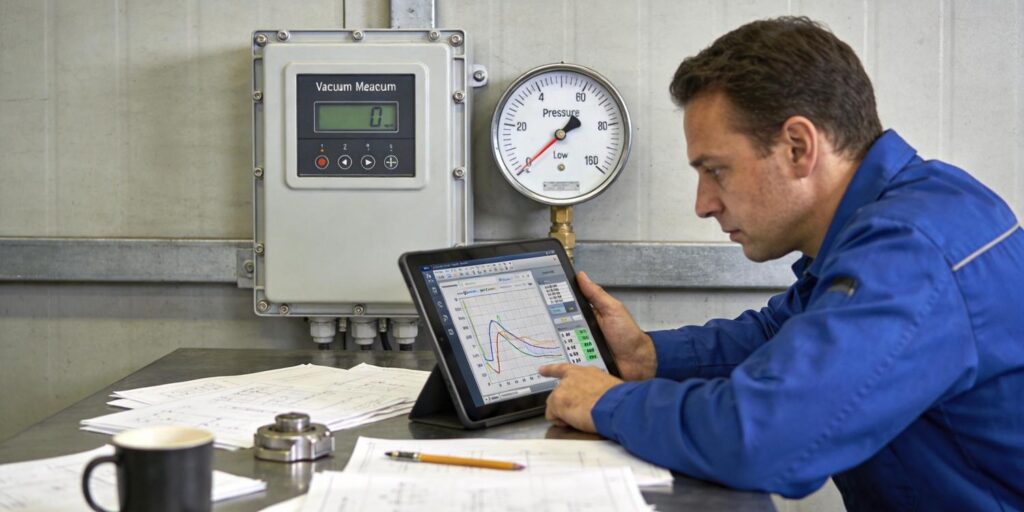
Analog voltage signal display from industrial vacuum gauge

Analog Output Scaling for Industrial Vacuum Sensors

Introduction Industrial vacuum sensors must deliver clean, usable signals to PLCs, SCADA systems, and data loggers for closed-loop control, trending, and interlocks. The 0–10 V analog output is the most widely adopted interface because it is simple, noise-resistant when properly wired, and compatible with virtually every industrial controller. The Poseidon Scientific VG-SM225 Cold Cathode Vacuum

Analog Output Scaling for Industrial Vacuum Sensors Read More »

Digital vacuum readout with engineering calculations

Vacuum Gauge Accuracy vs Repeatability: What Engineers Must Know

Introduction In vacuum system design and process control, engineers often focus on a single number: “gauge accuracy.” Yet the real performance that determines yield, repeatability, and long-term stability is frequently repeatability. Understanding the difference between accuracy and repeatability—and knowing when each matters most—can save thousands in calibration costs, reduce scrap, and prevent process drift in

Vacuum Gauge Accuracy vs Repeatability: What Engineers Must Know Read More »

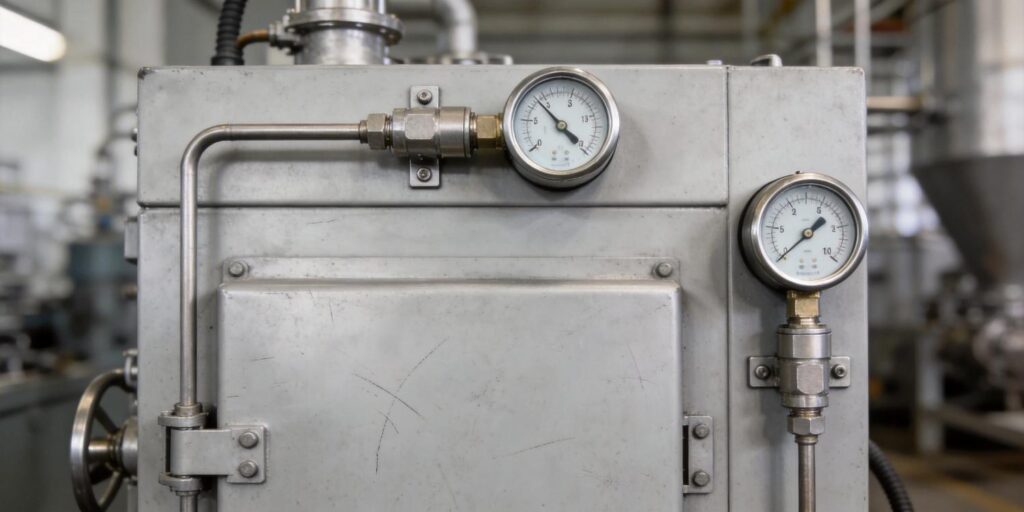
Cold cathode vacuum gauge installed on high vacuum chamber

High Vacuum Measurement Explained: From 10-3 to 10-7 Torr

Defining the High Vacuum Region High vacuum is the pressure regime where gas behavior transitions fully into molecular flow and surface effects dominate. In practical industrial and laboratory terms, high vacuum spans from 10−3 Torr (≈0.133 Pa) down to 10−7 Torr (and below). At these pressures the mean free path of molecules exceeds the dimensions

High Vacuum Measurement Explained: From 10-3 to 10-7 Torr Read More »

Vacuum gauge with graphical logarithmic scale overlay

Understanding Logarithmic Output in High Vacuum Measurement

Introduction High-vacuum measurement spans many orders of magnitude—from 10−7 Torr in ultra-clean chambers to 10−3 Torr during process gas introduction. A linear voltage output would compress most of the useful range into a few millivolts at the low-pressure end, making precise control impossible. The Poseidon Scientific VG-SM225 Cold Cathode Vacuum Gauge therefore uses a logarithmic

Understanding Logarithmic Output in High Vacuum Measurement Read More »

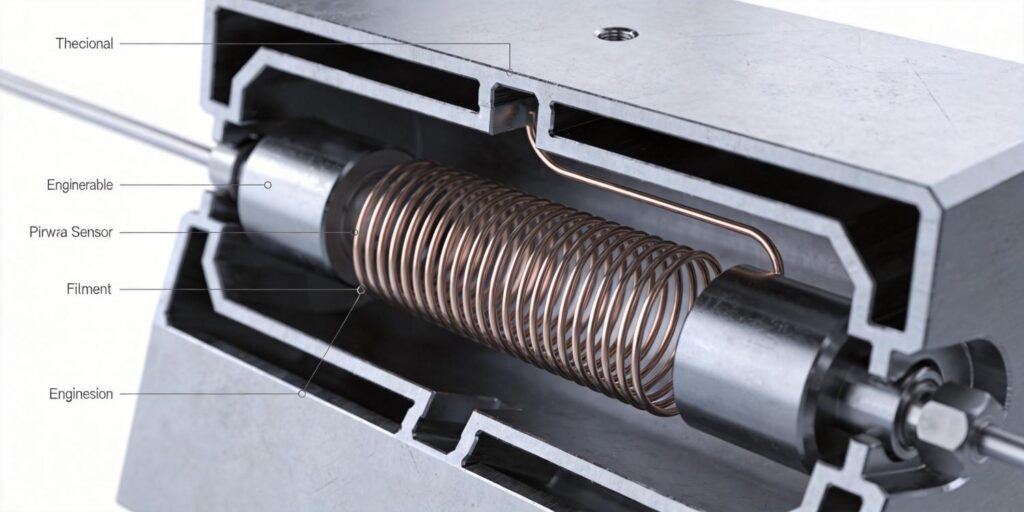
Internal view of Pirani sensor filament measuring vacuum

How Pirani Vacuum Transmitters Maintain Constant Temperature Measurement

Introduction Pirani vacuum transmitters provide fast, reliable pressure measurement in the rough-to-medium vacuum range by exploiting the thermal conductivity of residual gas. Unlike ionization gauges that require high voltage and magnetic fields, the Pirani operates on a simple thermal principle: gas molecules carry heat away from a heated filament, and the rate of heat loss

How Pirani Vacuum Transmitters Maintain Constant Temperature Measurement Read More »

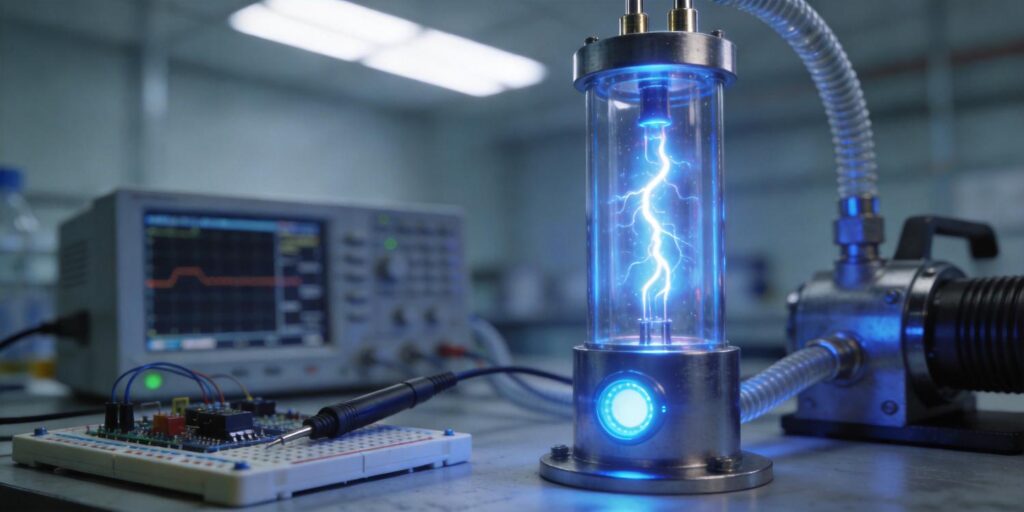
Internal visualization of cold cathode plasma ionization process

Cold Cathode Gauge Working Principle: A Technical Overview

Introduction The cold cathode ionization gauge is a cornerstone of high-vacuum measurement, offering reliable pressure readings from 10−7 to 10−3 Torr without the filament-related limitations of hot-cathode designs. At Poseidon Scientific, we developed the VG-SM225 Cold Cathode Vacuum Gauge around the proven inverted-magnetron geometry to deliver stable, low-maintenance performance for semiconductor research, PVD systems, vacuum

Cold Cathode Gauge Working Principle: A Technical Overview Read More »

Vacuum pressure scale chart integrated with industrial vacuum system

Understanding Vacuum Measurement Ranges: From Rough to High Vacuum

Introduction Vacuum measurement ranges are the foundation of reliable process control in semiconductor manufacturing, physical vapor deposition (PVD), vacuum furnaces, and countless other industrial systems. Understanding where “rough,” “medium,” and “high” vacuum begin and end—and which gauge technology excels in each regime—helps engineers specify the right sensor the first time, avoid costly crossover errors, and

Understanding Vacuum Measurement Ranges: From Rough to High Vacuum Read More »

Shopping Cart
Poseidon Scientific
Privacy Overview

This website uses cookies so that we can provide you with the best user experience possible. Cookie information is stored in your browser and performs functions such as recognising you when you return to our website and helping our team to understand which sections of the website you find most interesting and useful.