Cold cathode gauge installed on ultra-high vacuum chamber

Understanding Vacuum Gauge Noise Floor at Ultra-Low Pressure

In high-vacuum research, semiconductor processing, and advanced analytical instruments, the ability to resolve true pressure signals at 10−6 mbar (≈7.5 × 10⁻⁷ Torr) and below separates reliable vacuum monitoring from marginal performance. At these ultra-low pressures, the ion current generated by a cold-cathode gauge becomes extremely small, and any background current—whether from electronic noise, leakage, […]

Understanding Vacuum Gauge Noise Floor at Ultra-Low Pressure Read More »

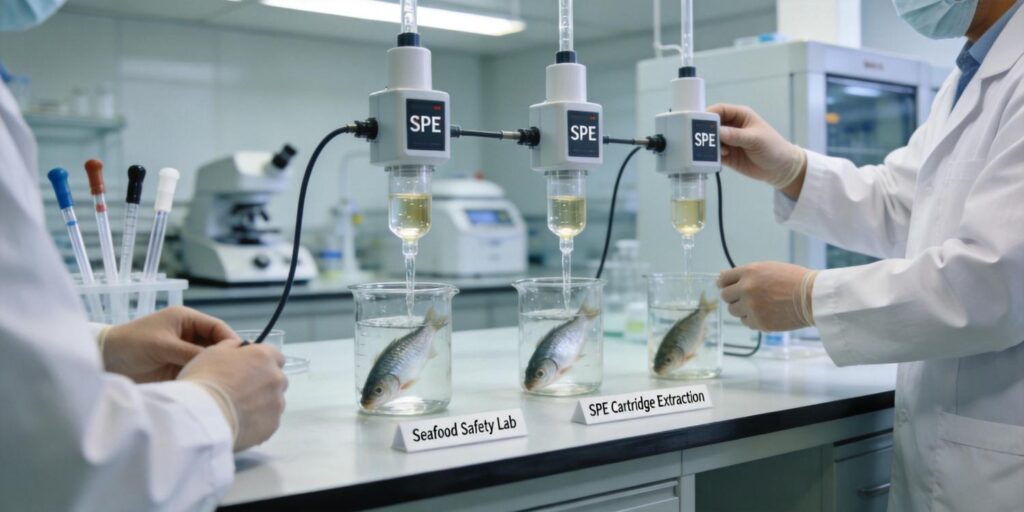
SPE cartridge extracting veterinary drugs from fish tissue

SPE Method for Extracting Veterinary Drugs from Fish Tissue

Homogenization of Fish Tissue Samples The first critical step in extracting veterinary drug residues from fish tissue involves proper sample homogenization. As noted in the literature, tissue samples like fish muscle require liquefaction or solubilization of analytes from the solid matrix. A typical approach involves homogenizing the fish tissue in a slurrying buffer such as

SPE Method for Extracting Veterinary Drugs from Fish Tissue Read More »

Vacuum gauge installed on metal additive manufacturing system

Vacuum Gauge Application in Metal Additive Manufacturing

Metal additive manufacturing—particularly electron-beam powder bed fusion (EB-PBF) and emerging vacuum laser powder bed fusion (vacuum LPBF)—relies on precise vacuum control to eliminate oxidation, stabilize the melt pool, and achieve dense, high-integrity parts from reactive alloys such as titanium, aluminum, and nickel superalloys. Chambers must rapidly reach and maintain high vacuum before energy-source ignition, then

Vacuum Gauge Application in Metal Additive Manufacturing Read More »

Pirani and cold cathode gauges installed in research lab

Designing Vacuum Monitoring for Research Laboratories

Research laboratories in universities, national labs, and R&D centers routinely handle a wide spectrum of vacuum applications—from sample preparation at rough vacuum to surface science experiments requiring high or ultra-high vacuum. Selecting the right vacuum monitoring solution can be challenging when budgets are tight, space is limited, and experiments change frequently. Poseidon Scientific’s VG-SP205 Pirani

Designing Vacuum Monitoring for Research Laboratories Read More »

laboratory optimizing SPE recovery for polar pharmaceuticals

Improving Recovery of Polar Pharmaceuticals in SPE Methods

Challenges of Extracting Highly Polar Compounds (logP <1) Extracting highly polar pharmaceuticals with logP values less than 1 presents unique challenges in solid-phase extraction (SPE) method development. These compounds exhibit strong affinity for aqueous environments, making retention on traditional reversed-phase sorbents problematic. The fundamental issue stems from the weak hydrophobic interactions between polar analytes and

Improving Recovery of Polar Pharmaceuticals in SPE Methods Read More »

Vacuum gauge mounted on industrial vacuum chamber

Vacuum Gauge Performance Under Rapid Pressure Cycling

Rapid pressure cycling is a daily reality in atomic layer deposition (ALD), plasma-enhanced chemical vapor deposition (PECVD), and etch tools. Chambers swing from base pressures below 10−6 Torr to process pressures of 0.1–5 Torr and back hundreds or thousands of times per shift. Each transition stresses vacuum instrumentation, yet accurate, repeatable readings remain essential for

Vacuum Gauge Performance Under Rapid Pressure Cycling Read More »

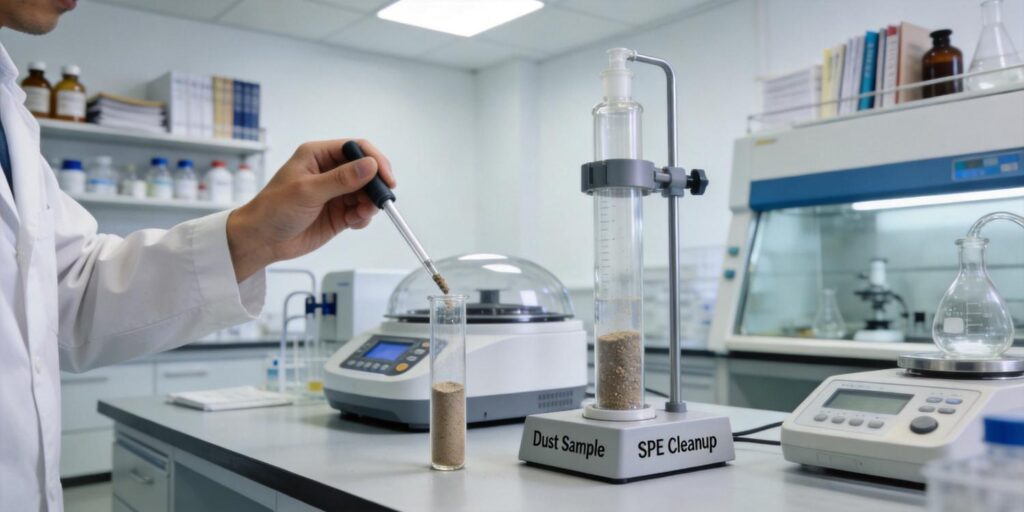
SPE cartridge cleaning cosmetic sample extract

SPE Sample Cleanup Strategy for Cosmetic Ingredient Analysis

Analytical Challenges in Cosmetic Formulations Cosmetic ingredient analysis presents unique challenges due to the complex nature of cosmetic formulations. These products typically contain a diverse array of components including oils, waxes, pigments, surfactants, and preservatives that can interfere with analytical measurements. The lipid-soluble nature of many cosmetic ingredients, combined with the presence of emulsifiers and

SPE Sample Cleanup Strategy for Cosmetic Ingredient Analysis Read More »

Vacuum gauge installed on corrosive gas processing line

How to Protect Vacuum Gauges from Corrosive Process Gases

In semiconductor etching, chemical vapor deposition (CVD), and atomic layer deposition (ALD) tools, corrosive process gases such as chlorine and fluorine compounds rapidly degrade vacuum instrumentation. Filament corrosion, electrode contamination, and drift in pressure readings can lead to unplanned downtime, inaccurate process control, and costly sensor replacements. Poseidon Scientific’s VG-SP205 Pirani Vacuum Transmitter and VG-SM225

How to Protect Vacuum Gauges from Corrosive Process Gases Read More »

MAX SPE cartridge extracting perchlorate from drinking water

MAX SPE Method for Perchlorate Detection in Drinking Water

Environmental Concern of Perchlorate Contamination Perchlorate contamination in drinking water has emerged as a significant environmental and public health concern over the past two decades. Perchlorate (ClO4–) is a highly soluble and stable anion that originates primarily from industrial activities, particularly the manufacture and use of rocket propellants, fireworks, and explosives. Unlike many other contaminants,

MAX SPE Method for Perchlorate Detection in Drinking Water Read More »

Vacuum gauge mounted on ALD deposition chamber

Vacuum Gauge Integration in Thin Film ALD Systems

Atomic Layer Deposition (ALD) systems demand exceptional vacuum control to achieve self-limiting surface reactions, uniform film growth at the angstrom scale, and minimal contamination. Engineers and procurement specialists integrating vacuum instrumentation know that even minor pressure drifts or delayed response during precursor pulses can compromise throughput, film quality, and process repeatability. Poseidon Scientific’s VG-SP205 Pirani

Vacuum Gauge Integration in Thin Film ALD Systems Read More »

Shopping Cart
Poseidon Scientific
Privacy Overview

This website uses cookies so that we can provide you with the best user experience possible. Cookie information is stored in your browser and performs functions such as recognising you when you return to our website and helping our team to understand which sections of the website you find most interesting and useful.