Drug Classes Commonly Analyzed in Clinical Toxicology
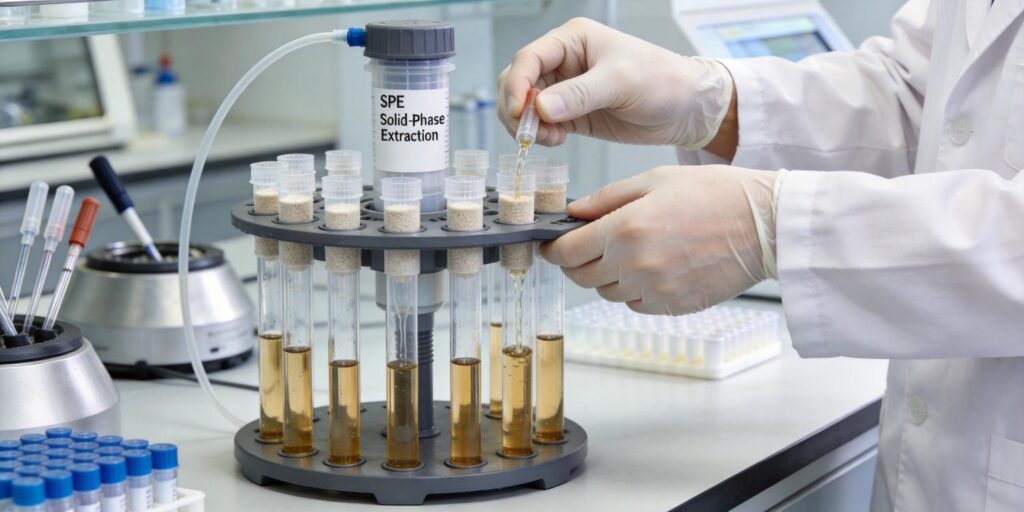
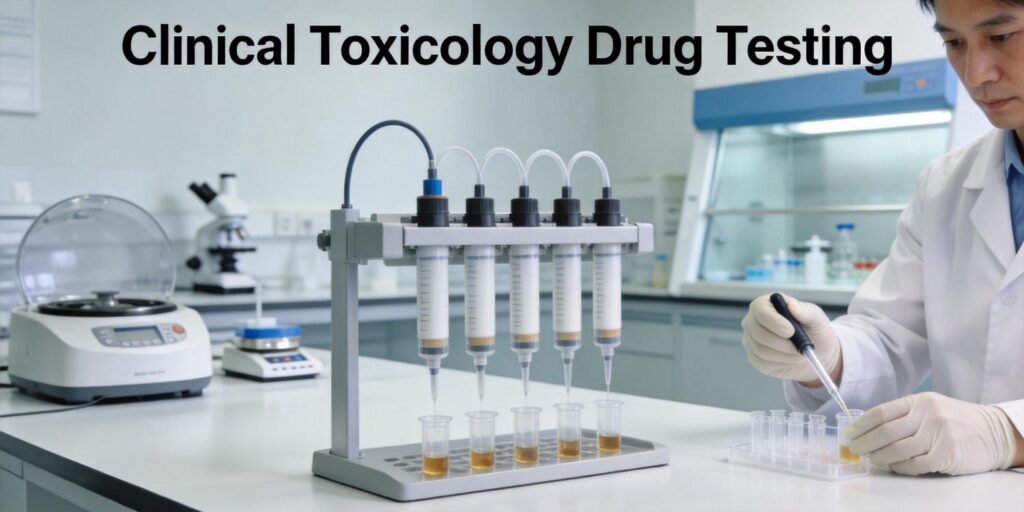
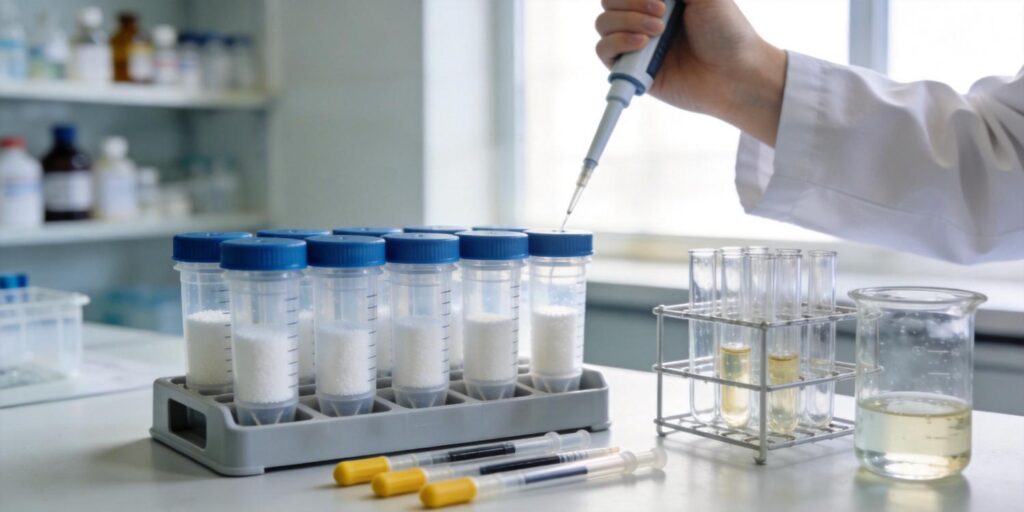
Mixed-mode cation exchange (MCX) solid phase extraction (SPE) cartridges are particularly effective for analyzing basic and neutral drugs in clinical toxicology applications. The MCX sorbent combines hydrophobic interactions with strong cation exchange properties, making it ideal for compounds that are positively charged at acidic pH. Commonly analyzed drug classes include:
Opioids and Opiates
Morphine, codeine, oxycodone, hydrocodone, and their metabolites are frequently extracted using MCX SPE. These compounds contain amine groups that become protonated at acidic pH, allowing strong retention on the cation exchange sites. Research shows that norcodeine and normorphine can be effectively extracted from urine using MCX methodology with recoveries exceeding 90%.
Stimulants
Amphetamines, methamphetamines, and related compounds are well-suited for MCX extraction. The basic amine groups in these molecules interact strongly with the sulfonic acid groups on the MCX sorbent. Studies demonstrate that amphetamine and methamphetamine can be extracted from urine with excellent recoveries using MCX SPE followed by GC-MS analysis.
Cocaine and Metabolites
Benzoylecgonine, norcocaine, and other cocaine metabolites are effectively retained on MCX cartridges. The basic nitrogen in these compounds interacts with the cation exchange sites, while hydrophobic interactions with the polymer backbone provide additional retention. Literature indicates that benzoylecgonine can be extracted from urine with high efficiency using MCX SPE.
Benzodiazepines
While many benzodiazepines are neutral at physiological pH, some metabolites like nordiazepam contain basic nitrogen atoms that can interact with MCX sorbents. The mixed-mode nature of MCX allows for retention of both basic and neutral compounds through different mechanisms.
Tricyclic Antidepressants and Antipsychotics
Compounds like imipramine, trimipramine, and phenothiazines contain tertiary amine groups that are strongly retained on MCX sorbents. These drugs are commonly analyzed in clinical toxicology for therapeutic drug monitoring and overdose cases.
Urine and Plasma Matrix Preparation
Proper sample preparation is crucial for successful MCX SPE extraction from biological matrices. The approach differs between urine and plasma due to their distinct compositions.
Urine Sample Preparation
Urine typically requires minimal pretreatment before MCX SPE. Standard protocols involve:
- pH Adjustment: Urine samples are typically adjusted to pH 4.5-6.0 using phosphate or acetate buffer to ensure basic drugs are protonated and properly retained on the MCX sorbent.
- Dilution: Some methods recommend diluting urine with buffer (typically 1:1 ratio) to reduce matrix effects and viscosity.
- Enzymatic Hydrolysis: For drugs excreted as glucuronide conjugates (like morphine-3-glucuronide), enzymatic hydrolysis with β-glucuronidase may be necessary before extraction.
- Centrifugation: Urine samples should be centrifuged to remove any particulate matter that could clog the SPE cartridge.
Plasma and Whole Blood Preparation
Plasma and whole blood require more extensive pretreatment due to their protein content:
- Protein Precipitation: Common methods include adding methanol, acetonitrile, or perchloric acid to precipitate proteins. For example, adding 2 volumes of methanol to 1 volume of plasma, vortexing, and centrifuging.
- Dilution: The supernatant is typically diluted with buffer (often phosphate buffer pH 6.0) to reduce organic solvent content and adjust pH.
- Alternative Approaches: Some methods use sonication followed by dilution with phosphate buffer for whole blood samples, which helps disrupt cell membranes without clogging SPE cartridges.
- pH Adjustment: Similar to urine, the pH is adjusted to acidic conditions (typically pH 4.5-6.0) to ensure proper drug protonation.
MCX Cartridge Conditioning Steps
Proper conditioning of MCX cartridges is essential for optimal performance. The conditioning sequence serves multiple purposes: activating the sorbent, removing impurities, and creating the appropriate chemical environment for sample loading.
Standard Conditioning Protocol
The typical MCX conditioning sequence includes:
- Methanol Wash: 3-6 mL of methanol is passed through the cartridge to solvate the polymer and open the pores for optimal interaction with analytes.
- Water Wash: 3-6 mL of deionized water removes methanol and prepares the sorbent for aqueous sample loading.
- Buffer Conditioning: 1-3 mL of acidic buffer (typically 0.1 M phosphate buffer pH 6.0 or 0.1 M acetate buffer pH 4.5) establishes the proper pH environment and activates the cation exchange sites.
Critical Considerations
Several factors must be controlled during conditioning:
- Flow Rate: Conditioning solvents should be applied at 1-3 mL/min to ensure proper wetting of the sorbent bed.
- Vacuum Control: Excessive vacuum during conditioning can cause channeling or drying of the sorbent bed, which reduces extraction efficiency. Most protocols recommend using gravity flow or minimal vacuum (3 in. Hg or less).
- Sorbent Drying Prevention: The sorbent bed should never be allowed to dry completely between conditioning and sample loading, as this can reduce recovery.
Sample Loading pH Control
pH control during sample loading is critical for MCX SPE because it determines the ionization state of both the analytes and the sorbent functional groups.
Optimal pH Range
For basic drugs, the sample should be loaded at pH 4.5-6.0. This pH range ensures that:
- Basic drugs (pKa typically 8-10) are protonated and positively charged
- The sulfonic acid groups on the MCX sorbent are fully ionized (pKa < 1)
- Ion-exchange interactions between protonated drugs and sulfonate groups are maximized
pH Adjustment Methods
Common approaches for pH adjustment include:
- Buffer Addition: Adding 0.1 M phosphate buffer (pH 6.0) or acetate buffer (pH 4.5) to the sample. A typical ratio is 2 mL of buffer to 5 mL of urine.
- Acid Addition: For samples requiring lower pH, 0.1 M hydrochloric acid or acetic acid can be added. Some protocols use 150-300 μL of 1.0 M acetic acid to adjust 5-10 mL samples to pH 4.8-5.5.
- Verification: The final pH should be verified using pH paper or a pH meter to ensure it falls within the optimal range.
Loading Conditions
Sample loading should be performed at controlled flow rates (typically 1-2 mL/min) to ensure adequate contact time between analytes and sorbent. Higher flow rates can reduce retention efficiency, particularly for compounds with marginal affinity for the sorbent.
Wash Solvents to Remove Endogenous Compounds
Effective washing steps are crucial for removing endogenous compounds while retaining analytes of interest. MCX cartridges allow for selective washing due to their dual retention mechanisms.
Standard Wash Sequence
A typical MCX wash protocol includes:
- Water Wash: 2-3 mL of deionized water removes water-soluble salts, sugars, and other polar endogenous compounds.
- Acidic Wash: 2-3 mL of 0.1 M hydrochloric acid or acetic acid removes weakly basic compounds and further protonates retained analytes.
- Organic Wash: 2-3 mL of methanol or acetonitrile removes neutral and hydrophobic interferences. Some protocols use 20% acetonitrile in water for more selective washing.
- Drying Step: After washing, the cartridge is dried under vacuum (typically 5-10 minutes at 10 in. Hg) to remove residual water and prepare for elution.
- Hexane Wash (Optional): Some methods include a hexane wash (1-2 mL) to remove lipids and other non-polar interferences, particularly for fatty matrices.
Selective Wash Optimization
Research shows that 20% acetonitrile in water can effectively remove polar endogenous compounds without eluting basic drugs of interest. This wash is particularly useful for urine samples, which contain various polar metabolites that could interfere with analysis.
Elution with Ammonium Hydroxide in Methanol
Elution is the final critical step in MCX SPE, where retained analytes are released from the sorbent for analysis.
Elution Mechanism
Ammonium hydroxide in methanol serves as an effective elution solvent for several reasons:
- pH Adjustment: Ammonium hydroxide (typically 2-5% in methanol) raises the pH to 10-11, deprotonating basic drugs and neutralizing the ion-exchange interaction.
- Organic Solvent: Methanol disrupts hydrophobic interactions between analytes and the polymer backbone.
- Competitive Displacement: Ammonium ions compete with protonated drugs for cation exchange sites, facilitating elution.
Standard Elution Protocol
Typical elution conditions include:
- Elution Volume: 3-5 mL of 2-5% ammonium hydroxide in methanol
- Flow Rate: 1-2 mL/min to ensure complete elution
- Collection: Eluate is collected in a clean tube for subsequent processing
- Alternative Eluents: Some methods use methylene chloride-isopropanol-ammonium hydroxide (78:20:2) for more efficient elution of certain drug classes
Post-Elution Processing
After elution, the collected fraction typically requires:
- Evaporation: Eluate is evaporated to dryness at 35-40°C under nitrogen or vacuum
- Reconstitution: Dried extract is reconstituted in appropriate solvent (often 50-100 μL of mobile phase or derivatization solvent)
- Derivatization (if needed): Some analytes require derivatization for GC-MS analysis (e.g., silylation for THC metabolites)
LC-MS/MS Detection Following MCX SPE
LC-MS/MS is the preferred detection method for clinical toxicology applications due to its sensitivity, specificity, and ability to analyze multiple analytes simultaneously.
Method Development Considerations
When developing LC-MS/MS methods following MCX SPE:
- Ionization Mode: Electrospray ionization (ESI) in positive mode is typically used for basic drugs extracted by MCX
- Mobile Phase: Acidic mobile phases (with formic acid or ammonium formate) enhance ionization of basic compounds
- Chromatographic Separation: Reversed-phase columns (C18 or similar) provide adequate separation for most toxicology panels
Quality Control Parameters
Validated LC-MS/MS methods should include:
- Calibration Standards: Typically 6-8 points covering the expected concentration range
- Quality Controls: Low, medium, and high concentration QCs to monitor method performance
- Internal Standards: Stable isotope-labeled analogs of target analytes compensate for matrix effects and recovery variations
- Matrix Effects Evaluation: Post-extraction addition experiments to assess ion suppression/enhancement
Typical Performance Characteristics
Well-optimized MCX SPE-LC-MS/MS methods typically achieve:
- Recoveries: 80-100% for most basic drugs
- Precision: <15% RSD for intra- and inter-day analyses
- Linearity: R² > 0.99 over the calibration range
- Limit of Quantitation: Sub-ng/mL levels for most analytes
Advantages of MCX SPE for LC-MS/MS
MCX SPE offers several advantages for clinical toxicology LC-MS/MS applications:
- Clean Extracts: Effective removal of endogenous compounds reduces matrix effects and instrument contamination
- Concentration: Allows for analysis of low-concentration analytes
- Selectivity: Mixed-mode retention provides cleaner extracts compared to single-mode SPE
- Automation Compatibility: MCX SPE procedures are easily automated for high-throughput laboratories
For laboratories considering MCX SPE implementation, Poseidon Scientific’s MCX SPE cartridges offer reliable performance with consistent lot-to-lot reproducibility. The mixed-mode design provides excellent retention for basic drugs while effectively removing endogenous interferences, making them ideal for clinical toxicology applications requiring sensitive and specific analysis.