Antibiotic Contamination in Aquaculture
Aquaculture is a rapidly expanding sector of global food production, but its intensification has led to widespread use of antibiotics for disease prevention and growth promotion. This practice results in the release of antibiotic residues into surrounding water bodies through uneaten feed, fish excreta, and direct water discharge. These residues pose significant environmental risks, including the promotion of antibiotic resistance genes (ARGs) in aquatic microbial communities and potential entry into the human food chain. Monitoring antibiotic levels in aquaculture water is therefore critical for environmental risk assessment and regulatory compliance.
Target Compound Classes
The most commonly detected antibiotics in aquaculture water include:
- Fluoroquinolones (e.g., enrofloxacin, ciprofloxacin)
- Sulfonamides (e.g., sulfamethazine, sulfamethoxazole)
- Tetracyclines (e.g., oxytetracycline, doxycycline)
- Macrolides (e.g., erythromycin, azithromycin)
- β-Lactams (e.g., amoxicillin, penicillin G)
These compounds exhibit a wide range of physicochemical properties (pKa, log Kow, water solubility), making HLB SPE cartridges an ideal choice for their simultaneous extraction due to the balanced hydrophilic-lipophilic retention mechanism.
Sample Filtration and Preservation
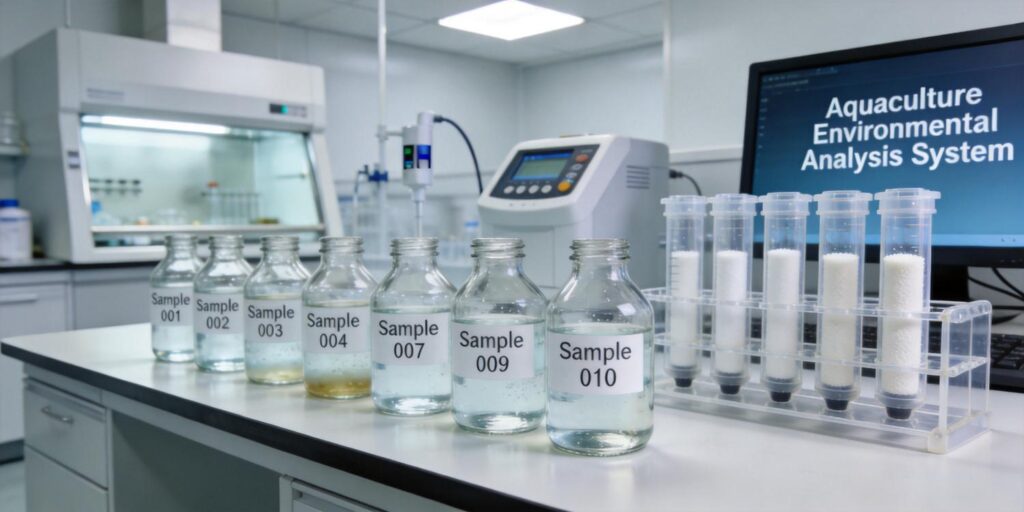
Upon collection, water samples should be immediately filtered through 0.45 µm or 0.22 µm membrane filters (e.g., glass fiber or nylon) to remove suspended solids and microorganisms that could degrade target analytes. To minimize biodegradation, samples are typically acidified to pH 2–3 using hydrochloric acid or sulfuric acid, and stored at 4°C in amber glass bottles. Antioxidants such as ascorbic acid (1 g/L) may be added to prevent oxidation of labile compounds like tetracyclines. Analysis should be performed within 48 hours of collection; if longer storage is needed, freeze at -20°C.
HLB SPE Cartridge Preparation
Poseidon Scientific HLB SPE cartridges (200 mg/6 mL recommended for 100–500 mL samples) are conditioned prior to use. The conditioning sequence is:
- Methanol (5 mL) – to wet the sorbent and remove impurities.
- Deionized water (5 mL) – to equilibrate the cartridge with the aqueous sample matrix.
- Buffer or acidified water (5 mL, pH adjusted to match sample) – to optimize retention.
Do not allow the cartridge to dry between conditioning steps. For tetracycline analysis, include 5 mL of 0.1 M Na₂EDTA solution to chelate metal ions that can form complexes.
Loading and Washing Protocols
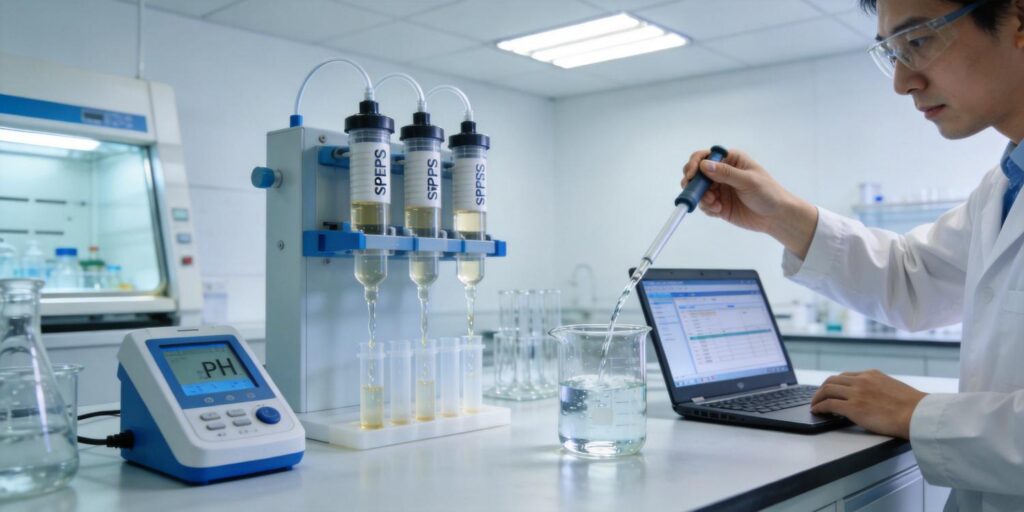
Sample Loading: Pass the filtered, acidified water sample through the preconditioned HLB cartridge at a flow rate of 1–2 mL/min using a vacuum manifold or positive pressure. For turbid samples, pre-filtration is critical to avoid clogging. After loading, wash the cartridge with 5 mL of deionized water containing 5% methanol (v/v) to remove salts and polar interferences while retaining target analytes.
Optional Wash for Enhanced Cleanup: For complex matrices like shrimp pond water, a wash with 5 mL of 5% methanol in 0.1 M acetate buffer (pH 5) can reduce matrix effects in subsequent LC-MS/MS analysis.
Elution Conditions
Elution is performed using a solvent that disrupts the retention mechanism. The optimal eluent for HLB with multi-class antibiotics is:
- Elution Solvent: Methanol containing 0.1% formic acid (v/v), 5 mL.
- Alternatively, acetonitrile with 0.1% formic acid can be used for better recovery of sulfonamides and fluoroquinolones.
Collect the eluate in a glass tube, then evaporate to dryness under a gentle nitrogen stream at 40°C. Reconstitute in 200 µL of mobile phase (e.g., 90:10 water:methanol with 0.1% formic acid) and filter through a 0.22 µm PTFE syringe filter before injection.
LC-MS/MS Analysis
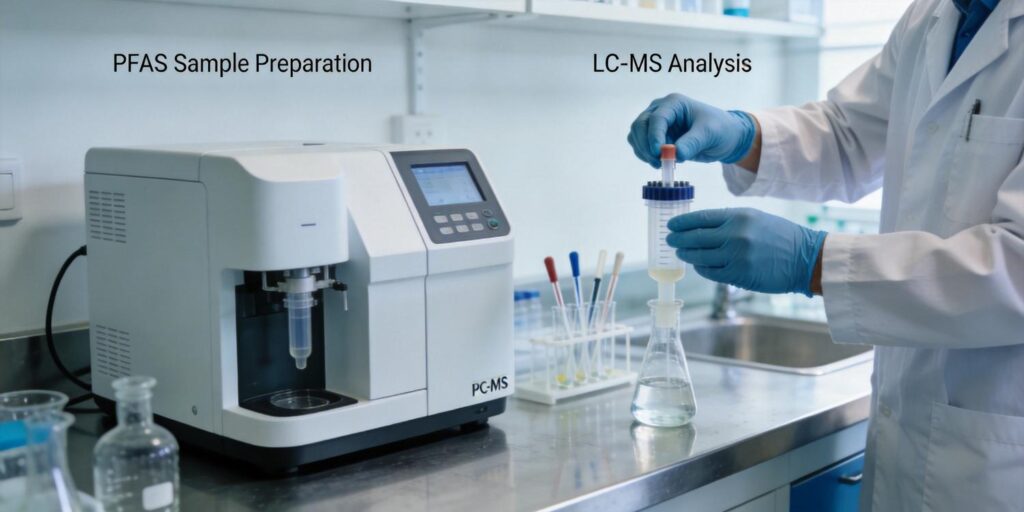
Analysis is typically performed using reversed-phase liquid chromatography (C18 column, 2.1 × 100 mm, 1.7 µm) coupled with triple quadrupole mass spectrometry operated in positive electrospray ionization mode. A gradient elution using water (A) and methanol (B), both containing 0.1% formic acid, is recommended. Multiple reaction monitoring (MRM) transitions are optimized for each compound. Quantification should use isotope-labeled internal standards (e.g., enrofloxacin-d5, sulfamethazine-¹³C₆) to correct for matrix effects.
Method validation parameters (linearity, LOD, LOQ, recovery, precision) should meet the guidelines established by the European Union Decision 2002/657/EC or the U.S. EPA Method 1694. Typical recoveries for HLB extraction of antibiotics from water range from 70% to 120% with RSD < 20%.
Environmental Monitoring Interpretation
Concentrations of antibiotics detected in aquaculture water are typically in the ng/L to µg/L range. The presence of multiple compound classes indicates mixed contamination sources. Risk quotients (RQs) can be calculated by dividing measured concentrations by predicted no-effect concentrations (PNECs) derived from ecotoxicity data. An RQ > 1 suggests potential ecological risk. Additionally, the detection of transformation products (e.g., N-acetyl-sulfonamides) indicates ongoing degradation processes.
For comprehensive monitoring programs, we recommend using MAX SPE cartridges for acidic compounds or MCX SPE cartridges for mixed-mode retention, depending on the target analyte spectrum. For high-throughput screening of multiple sites, 96-well SPE plates can significantly reduce sample preparation time while maintaining data quality.
By implementing this standardized SPE-LC-MS/MS workflow, laboratories can reliably monitor antibiotic residues in aquaculture water, supporting both regulatory compliance and environmental stewardship.