Overview of Endocrine Disrupting Chemicals
Endocrine disrupting chemicals (EDCs) are exogenous compounds that interfere with the endocrine system, leading to adverse health effects in humans and wildlife. They include natural hormones like estrogens, synthetic compounds such as bisphenol A (BPA), phthalates, and persistent organic pollutants (POPs). The European Commission defines EDCs as substances that alter hormone function, causing effects on development, reproduction, and metabolism. The US EPA also prioritizes EDC screening under the Endocrine Disruptor Screening Program (EDSP). Monitoring EDCs is critical for regulatory compliance and environmental protection.
Environmental Occurrence of EDCs
EDCs enter the environment through industrial discharge, agricultural runoff, wastewater treatment plant (WWTP) effluents, and leachate from landfills. They are detected in surface water, groundwater, soil, and sediment at trace levels (ng/L to µg/L). Common EDCs include 17β-estradiol (E2), estrone (E1), ethinylestradiol (EE2), nonylphenol (NP), octylphenol (OP), and bisphenol A (BPA). Their persistence, bioaccumulation, and potential for endocrine disruption make them a priority for monitoring programs worldwide.
Selection of HLB SPE Sorbents
Solid-phase extraction (SPE) is the gold standard for preconcentration and cleanup of EDCs from aqueous samples. Among SPE sorbents, hydrophilic-lipophilic balanced (HLB) polymers offer superior performance for a broad polarity range. Our HLB SPE cartridges feature a water-wettable polymer with both hydrophilic (N-vinylpyrrolidone) and lipophilic (divinylbenzene) moieties, enabling high retention of polar and nonpolar EDCs. Compared to C18, HLB provides better recovery for polar compounds like BPA without requiring conditioning with organic solvent. For acidic or basic EDCs, mixed-mode sorbents such as MAX, MCX, WAX, or WCX can be used for selective retention.
Sample Collection and Filtration
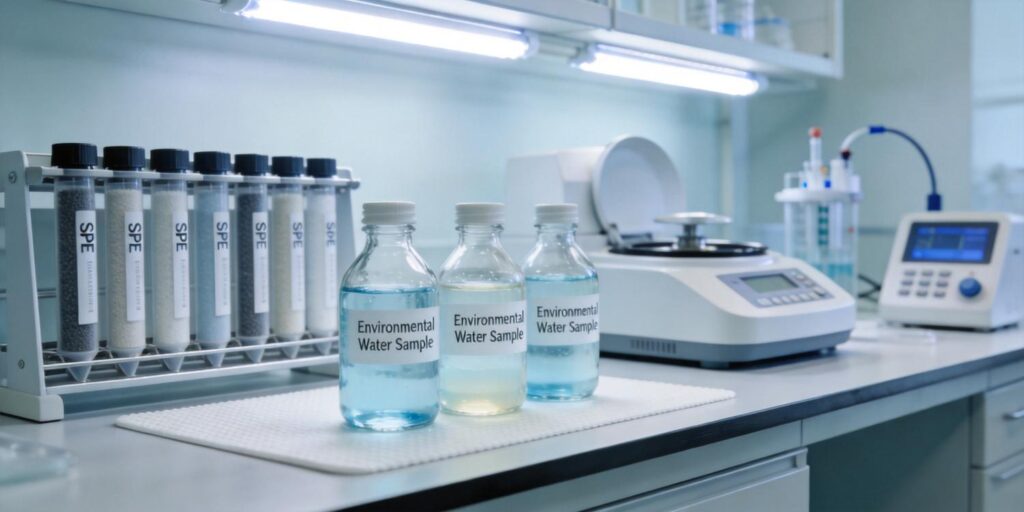
Collect water samples in pre-cleaned amber glass bottles (1 L) to prevent photodegradation. Add 0.1% formic acid (v/v) to minimize microbial activity and stabilize analytes. Filter samples through 0.45 µm glass fiber filters to remove suspended solids that could clog SPE cartridges. For sediment or soil, air-dry, homogenize, and extract with methanol or acetone before SPE cleanup. Store samples at 4°C and process within 48 hours to ensure stability.
SPE Extraction Workflow
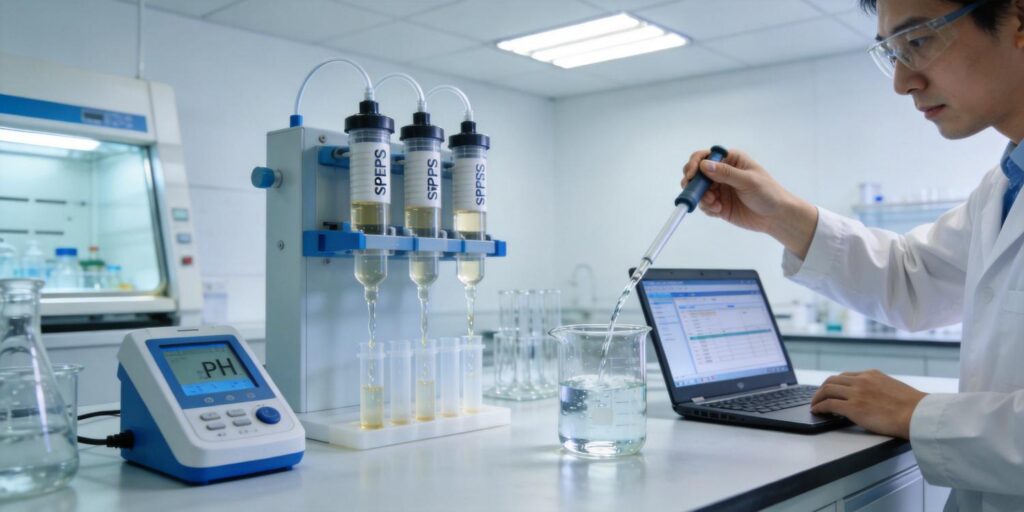
The typical SPE procedure using HLB cartridges (500 mg, 6 mL) includes:
- Conditioning: 5 mL methanol followed by 5 mL HPLC-grade water at 1 mL/min.
- Loading: Peristaltically pump 500 mL (or 1 L) of filtered sample through the cartridge at 5–10 mL/min.
- Washing: 5 mL of 5% methanol in water to remove weakly retained interferences.
- Drying: Apply vacuum for 5–10 minutes to remove residual water.
- Elution: 5 mL methanol followed by 5 mL ethyl acetate at 1 mL/min into a 15 mL tube.
For high-throughput analysis, 96-well SPE plates are recommended, enabling parallel processing of multiple samples.
Elution and Concentration Steps
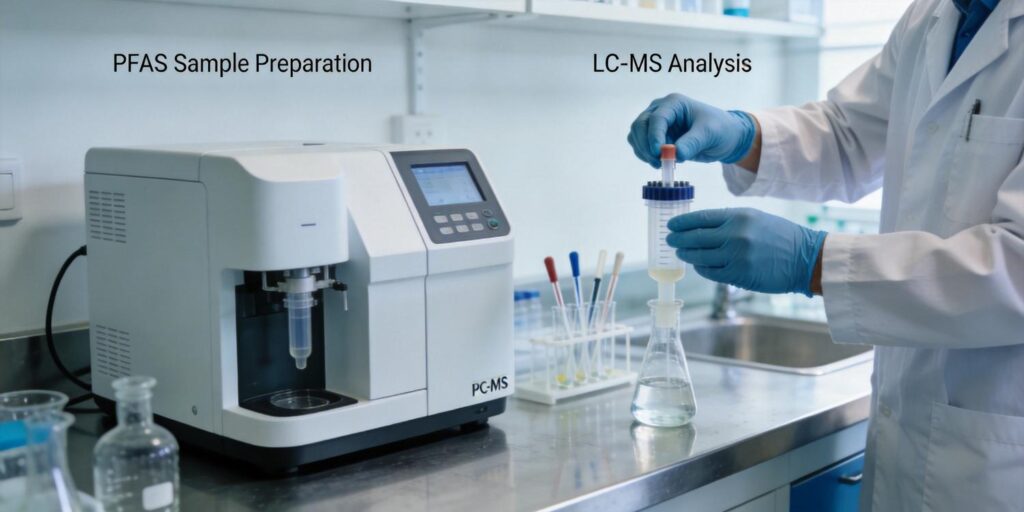
After elution, evaporate the combined eluate to dryness under a gentle nitrogen stream at 40°C. Reconstitute the residue in 200 µL of methanol:water (50:50, v/v) and vortex for 30 seconds. Filter through a 0.22 µm PTFE syringe filter into an autosampler vial. For enhanced sensitivity, derivatization (e.g., dansyl chloride for phenols) can be applied prior to LC-MS/MS analysis.
LC-MS/MS Analysis
Separate EDCs on a C18 reversed-phase column (e.g., 2.1 × 100 mm, 1.7 µm) with a mobile phase of 0.1% ammonium hydroxide in water (A) and methanol (B) at 0.3 mL/min. A gradient starts at 30% B, ramps to 95% B over 10 min, holds for 2 min, then re-equilibrates. Use negative electrospray ionization (ESI-) for acidic compounds and positive ESI for others. Multiple reaction monitoring (MRM) transitions are optimized for each analyte. Quantify using isotope-labeled internal standards (e.g., BPA-d16, E2-d5).
Risk Assessment Interpretation
Compare measured concentrations against environmental quality standards (EQS) such as those in the EU Water Framework Directive (e.g., EE2 annual average: 0.035 ng/L). For sediments, use equilibrium partitioning to estimate porewater concentrations. Calculate risk quotients (RQ = MEC/PNEC) where predicted no-effect concentrations (PNECs) are derived from ecotoxicity data. RQ > 1 indicates potential risk. The WHO/IPCS framework also integrates exposure and hazard characterization. Regular monitoring with robust SPE methods like those using Poseidon’s HLB cartridges ensures reliable data for informed decision-making.