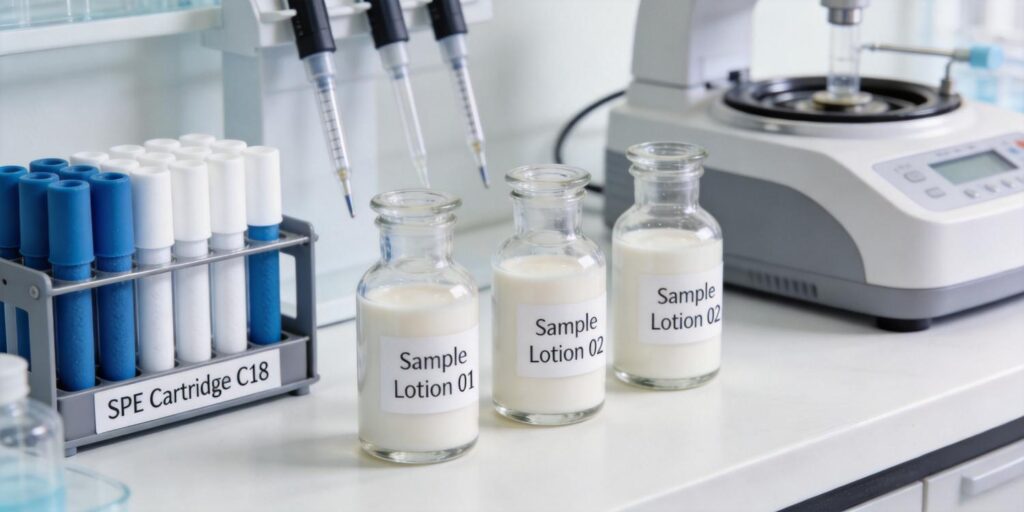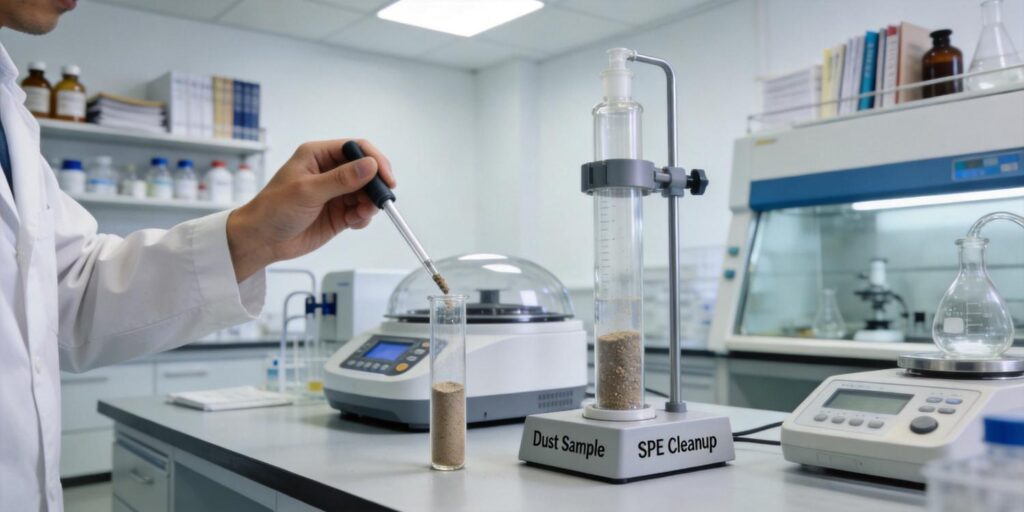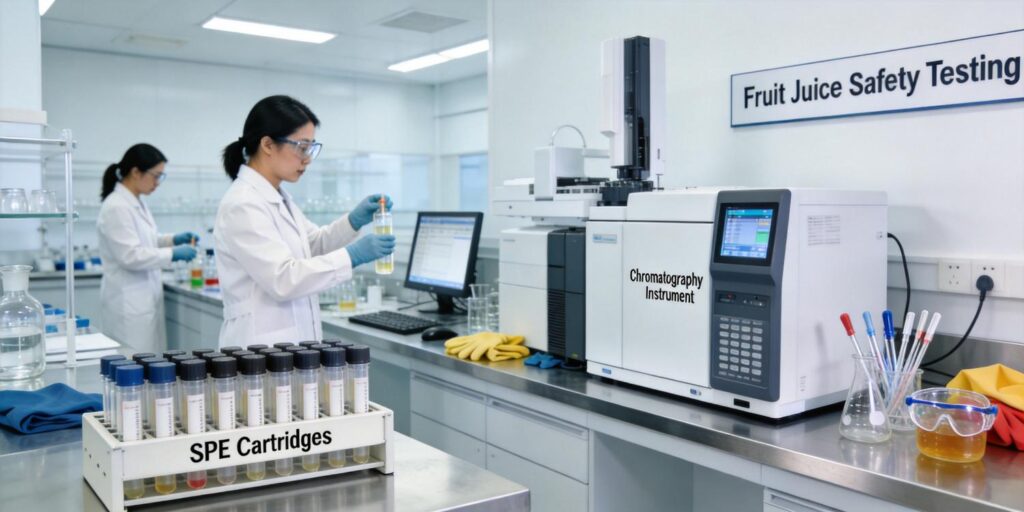
MAX SPE Method for Extracting Acidic Pharmaceuticals from Wastewater
MAX SPE Method for Extracting Acidic Pharmaceuticals from Wastewater Read More »
The Critical Ultra-High Vacuum Region in Research Mass Spectrometry Systems Research mass spectrometry (MS) demands precise control of gas density to ensure accurate ion trajectories, minimal scattering, and high signal-to-noise ratios. In quadrupole, time-of-flight, or sector-field analyzers, the mean free path of ions must exceed the instrument path length—typically requiring pressures below 10−6 Torr in
Vacuum Monitoring in Research Mass Spectrometry Systems Read More »
Recovering Your Cold Cathode Vacuum Gauge After Atmospheric Exposure In high-vacuum systems, brief exposure to atmosphere is inevitable—whether during chamber maintenance, sample loading, or routine venting. For the VG-SM225 Cold Cathode Vacuum Gauge from Poseidon Scientific, such events introduce temporary challenges to plasma discharge stability. Unlike hot-cathode gauges, cold-cathode designs rely on Penning discharge, which
Cold Cathode Gauge Recovery After Exposure to Atmosphere Read More »
In vacuum-dependent manufacturing and research, engineers often debate whether a gauge’s absolute accuracy or its repeatability deserves priority. For many production processes—continuous coating, heat treatment, or semiconductor wafer processing—repeatability consistently proves more valuable. A gauge that delivers the same reading today, tomorrow, and next week under identical chamber conditions enables tighter statistical process control, fewer
Why Vacuum Gauge Repeatability Matters More Than Absolute Accuracy in Some Processes Read More »
In multi-stage vacuum systems—common in semiconductor processing, optical coating, analytical instrumentation, and vacuum metallurgy—reliable pressure measurement at every stage is essential for safe pump operation, process repeatability, and equipment protection. A typical architecture combines a roughing pump, a high-vacuum turbomolecular pump, and a backing pump (often the same roughing pump in smaller systems). Without strategic
Vacuum Measurement Strategy for Multi-Stage Pump Systems Read More »
In vacuum process control, raw gauge signals often contain noise from thermal fluctuations, electromagnetic interference, plasma transients, or minor mechanical vibrations. Filtering smooths these variations to produce stable pressure readings suitable for alarms, interlocks, and closed-loop control. The choice between hardware (analog) filtering and software (digital) filtering significantly affects system responsiveness, noise rejection, and overall
Vacuum Gauge Signal Filtering: Hardware vs Software Approaches Read More »
In long-duration production runs—such as continuous PVD coating, vacuum heat treatment, or 24/7 semiconductor processing—Pirani vacuum gauges face a subtle but persistent challenge: thermal drift. Over hours or days of continuous operation, small changes in filament temperature, ambient conditions, and electronic components accumulate, shifting the reported pressure by 10–30 % even when actual chamber vacuum
Thermal Drift in Pirani Gauges During Long Production Runs Read More »