Introduction to Drug Metabolite Analysis
In pharmaceutical development, drug metabolism studies are critical for understanding the absorption, distribution, metabolism, and excretion (ADME) properties of new chemical entities. Metabolite identification and quantification help predict pharmacokinetics, potential toxicity, and drug-drug interactions. Regulatory agencies like the FDA require comprehensive metabolite profiling during preclinical and clinical phases, making robust sample preparation workflows essential. Traditional liquid-liquid extraction (LLE) and protein precipitation often lack the selectivity and throughput needed to handle hundreds of samples daily, driving adoption of solid-phase extraction (SPE) in microplate format.
Need for High-Throughput Sample Preparation
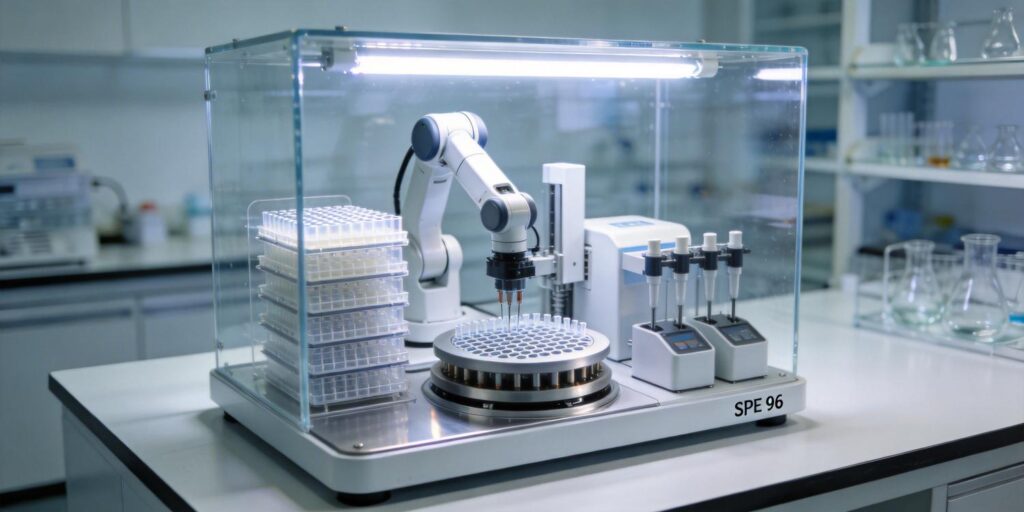
Modern drug discovery pipelines generate thousands of biological samples—plasma, urine, tissue homogenates—that require rapid, reproducible processing. Manual SPE with individual columns is labor-intensive and prone to variability. High-throughput screening (HTS) demands parallel processing to reduce cycle times. 96-well SPE plates address this bottleneck by enabling simultaneous preparation of 96 samples, matching the throughput of liquid handlers and analytical instruments like LC-MS/MS.
Why 96-Well SPE Plates Are the Preferred Format
Compared to traditional cartridges or pipette tip SPE, 96-well plates offer significant advantages:
- Parallel Processing: All 96 wells undergo identical conditioning, loading, washing, and elution steps, minimizing well-to-well variability.
- Automation Compatibility: Standard plate dimensions (ANSI/SLAS) allow seamless integration with robotic liquid handlers and positive pressure manifolds.
- Reduced Solvent Consumption: Well volumes (0.5–2 mL) require less organic solvent than cartridges, lowering cost and environmental impact.
- Direct Elution into Collection Plates: Eluates can be collected in 96-well plates compatible with autosampler racks, eliminating transfer steps.
For labs needing flexible sorbent selection, our 96-well SPE plates are available with silica-based, polymer-based, and mixed-mode phases to match diverse analyte chemistries.
Plate Conditioning and Equilibration
Proper conditioning ensures sorbent activation and reproducible retention. For reversed-phase sorbents (e.g., C18, polymeric HLB), condition with 1–2 bed volumes of methanol, then equilibrate with water or buffer matching the sample matrix. This step wets the sorbent and removes impurities. For mixed-mode sorbents (e.g., MCX, MAX), conditioning may include one extra step with an organic solvent followed by aqueous buffer at target pH. Use vacuum (10–15 inHg) or positive pressure (1–2 psi) to control flow rates; avoid sorbent drying between steps.
Automated Sample Loading
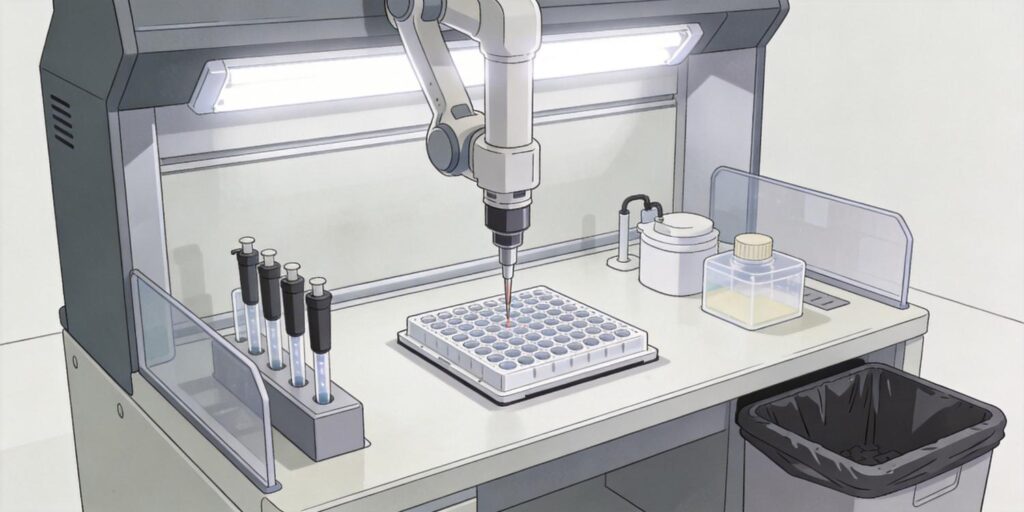
Loading volumes typically range 100–2000 µL. Use a robotic liquid handler to aspirate and dispense samples evenly across wells. For plasma or urine, dilute with buffer (e.g., 1:1 or 1:2) to reduce viscosity and improve flow. Apply vacuum slowly (5–10 inHg) to achieve ~1–2 mL/min flow. Proper loading ensures target analytes bind while interfering compounds pass through.
Washing and Elution Protocols
Washing removes co-extracted matrix components. For reversed-phase, wash with 5–10% methanol/water or buffer. For ion-exchange, use a wash with intermediate pH or low organic content to retain target analytes. Elute with minimal volume (200–500 µL) of strong solvent. For polymeric sorbents, methanol or acetonitrile containing 0.1–1% formic acid works well. Collect eluates directly into a deep-well plate, then evaporate or dilute for injection.
Integration with LC-MS Autosamplers
After elution, seal the collection plate with a pierceable mat and place it directly in the autosampler. Many modern autosamplers accept 96-well plates, minimizing manual handling. For best results, ensure the elution solvent is compatible with the mobile phase. If using a high organic eluent (e.g., 100% methanol), consider diluting with aqueous buffer to avoid solvent effects on chromatography.
Throughput and Reproducibility Metrics
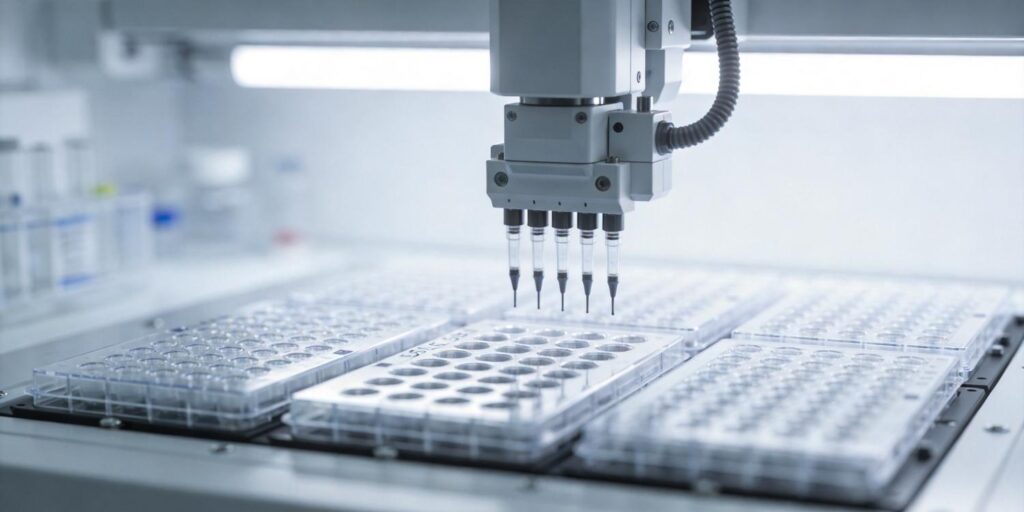
Validation studies for 96-well SPE plates typically report recovery >85%, CV <10% within a plate, and CV <15% across multiple plates. Throughput can exceed 384 samples per hour using a 4-plate parallel setup. For example, in a recent study on propranolol metabolites in human plasma, our polymeric reversed-phase 96-well plate achieved recoveries of 92–97% and RSD <6% (n=96). These metrics rival traditional cartridge SPE while reducing processing time by 80%.
Additional Resources
For a deeper dive into sorbent chemistry, refer to our blog on HLB SPE cartridges and mixed-mode options like MAX, MCX, WAX, and WCX. For application-specific protocols, contact our technical support team.
By adopting 96-well SPE plates, laboratories can accelerate drug metabolite profiling while maintaining high data quality—a crucial advantage in the competitive landscape of pharmaceutical R&D.