Introduction to Wastewater-Based Epidemiology
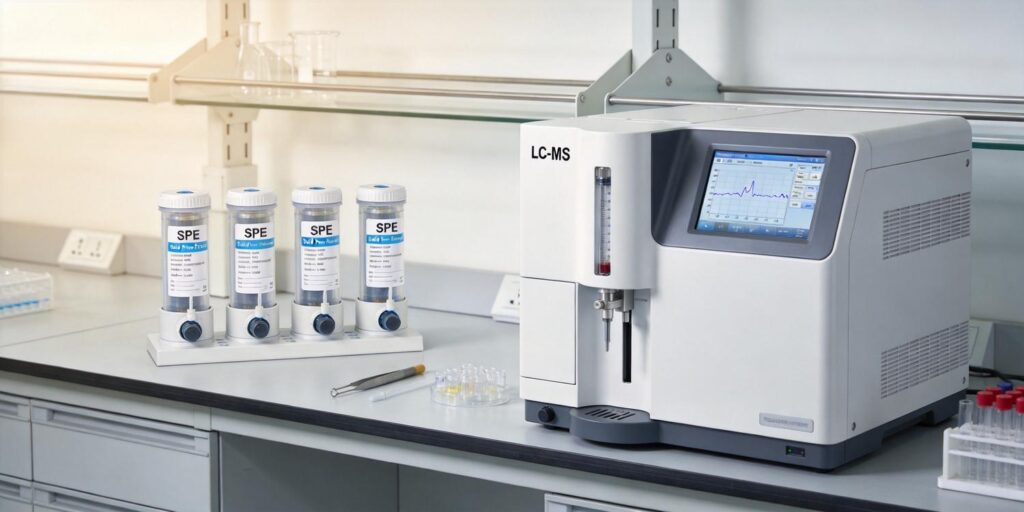
Wastewater-based epidemiology (WBE) has emerged as a powerful, non-invasive tool for monitoring community-level drug use. By analyzing the chemical signatures in wastewater, public health authorities can estimate drug consumption patterns in real time. The technique relies on the detection of specific drug metabolites that are excreted in urine and survive the sewer system. Solid-phase extraction (SPE) is critical for concentrating these trace-level analytes from complex wastewater matrices. Among SPE sorbents, hydrophilic-lipophilic balance (HLB) cartridges are widely preferred due to their ability to retain both polar and non-polar compounds, making them ideal for capturing a broad spectrum of drug residues.
Target Analytes: Key Drug Metabolites
The most commonly monitored illicit drugs in WBE include cocaine and amphetamines. Cocaine is rapidly metabolized in the human body to benzoylecgonine, which is excreted in urine and stable in wastewater. Amphetamine and methamphetamine are similarly monitored as parent compounds or metabolites like 4-hydroxyamphetamine. These target analytes require efficient extraction due to their low concentrations (typically ng/L levels) and the presence of interfering organic matter. HLB SPE cartridges, such as those offered by Poseidon Scientific (HLB SPE Cartridges), provide high recovery rates and reproducible performance for these metabolites.
Sample Collection and Prefiltration
Wastewater samples are typically collected as 24-hour composite samples from influent streams of treatment plants. Immediately after collection, samples are acidified (e.g., pH 2) to preserve metabolites and stored at 4°C to minimize degradation. Before SPE, samples must be filtered to remove suspended solids that could clog the cartridge or reduce extraction efficiency. Common practice uses glass microfiber filters (e.g., 0.7 µm) or membrane filters. Filtration should be performed under vacuum to maintain throughput. For samples with high particulate loads, sequential filtration (e.g., 1.0 µm then 0.45 µm) may be necessary.
HLB SPE Cartridge Conditioning and Loading
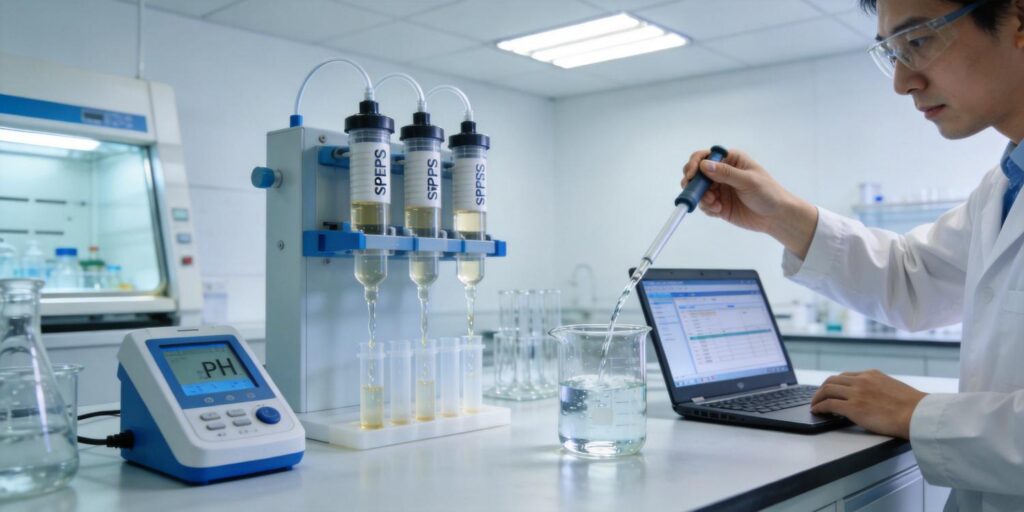
The HLB sorbent is a copolymer of divinylbenzene and N-vinylpyrrolidone, providing both hydrophobic and hydrophilic retention mechanisms. The conditioning protocol is critical: first, 3 mL of methanol is passed through the cartridge to wet the sorbent and remove air. Next, 3 mL of deionized water (or buffer at sample pH) equilibrates the bed. Sample loading is performed at a controlled flow rate of 1-2 mL/min to maximize analyte retention. The loading volume can range from 100 mL to 1000 mL depending on analyte concentration and detection limits. After loading, the cartridge is dried under vacuum (10-15 minutes) to remove residual water.
Washing Steps to Remove Interferences
Wastewater contains high levels of natural organic matter (humic and fulvic acids), salts, and other matrix components. A washing step is essential to remove these interferences while minimizing analyte loss. A typical wash uses 3 mL of 5% methanol in water (v/v) or a low-pH aqueous solution to retain acidic metabolites on the sorbent. For basic drugs like amphetamines, a neutral wash is preferred. Some protocols incorporate a second wash with pure water to ensure salt removal. The wash should be collected and discarded; any colored eluate indicates incomplete removal of humic substances, which can suppress ionization in mass spectrometry.
Elution Protocol for Maximum Recovery
Elution of retained analytes is achieved with 3 mL of methanol, optionally containing 0.1% formic acid to enhance desorption of acidic compounds. For comprehensive extraction, a two-step elution using methanol followed by 2% ammonia in methanol (v/v) can capture both neutral and basic drugs. The eluate is collected in a glass tube and evaporated to dryness under a gentle nitrogen stream at 40°C. The residue is reconstituted in 200-500 µL of mobile phase (e.g., 0.1% formic acid in water/methanol, 90:10). For dilute samples, a pre-concentration factor of up to 5000 can be achieved.
LC-MS/MS Analysis
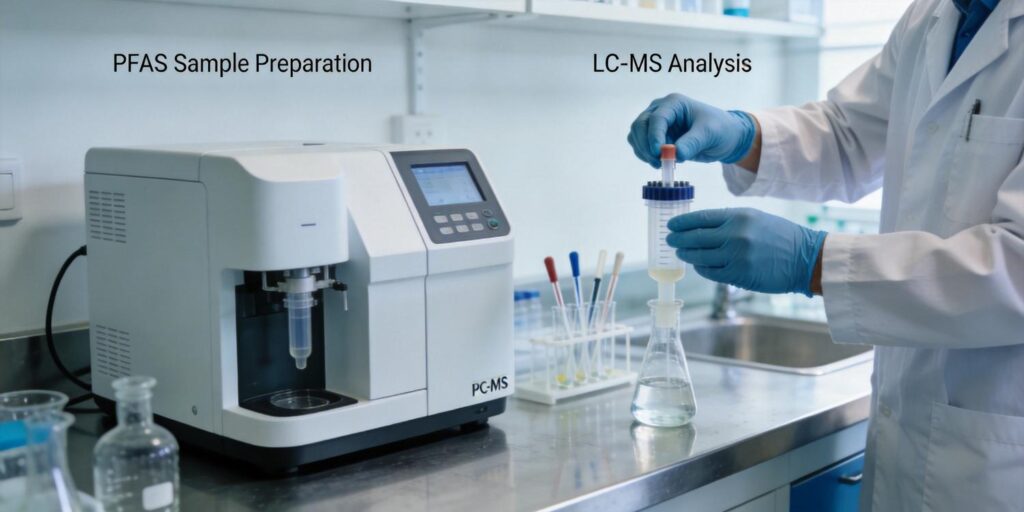
Reconstituted extracts are analyzed using liquid chromatography-tandem mass spectrometry (LC-MS/MS) in multiple reaction monitoring (MRM) mode. A typical column is a C18 reversed-phase (e.g., 50 mm x 2.1 mm, 1.7 µm) with a gradient of water/acetonitrile containing 0.1% formic acid. MRM transitions for benzoylecgonine: 290 → 168 (quantifier) and 290 → 105 (qualifier); for amphetamine: 136 → 91 and 136 → 119. Internal standards (e.g., benzoylecgonine-d3, amphetamine-d5) are added prior to SPE to correct for matrix effects and recovery losses. Limits of detection typically range from 0.1 to 1 ng/L, enabling sensitive population-level monitoring.
Data Interpretation for Public Health
Raw mass spectrometry signals are converted to concentration (ng/L) using calibration curves. Back-calculation to community drug consumption involves several factors: the flow rate of wastewater (L/day), the population served by the treatment plant, the excretion factor of the drug/metabolite, and the stability in the sewer system. For example, cocaine consumption (g/day) = (benzoylecgonine concentration × flow rate) / (excretion factor × molecular weight ratio). The HLB SPE cartridges from Poseidon Scientific provide consistent performance needed for these quantitative assessments. Temporal and spatial trends can indicate the effectiveness of drug intervention policies or changes in usage patterns (e.g., during festivals). WBE data is increasingly used alongside traditional survey data to provide a more objective picture of drug abuse at the community level.
Additional Resources
For laboratories requiring high-throughput formats, the 96-well SPE plate enables parallel processing of up to 96 samples, ideal for large-scale monitoring programs. For comprehensive SPE product lines, explore MAX, MCX, WAX, and WCX cartridges to address specific analyte chemistries.