Why Multi-Residue Pesticide Screening Demands High Throughput
Regulatory bodies such as the EPA and EFSA require monitoring of hundreds of pesticides in food and environmental samples. Traditional single-cartridge solid-phase extraction (SPE) methods struggle to keep pace with the volume of samples, creating a bottleneck in laboratories. High-throughput methods are essential to meet compliance deadlines and reduce turnaround times, especially during harvest seasons when sample influx peaks.
The Throughput Advantage of 96-Well SPE Plates
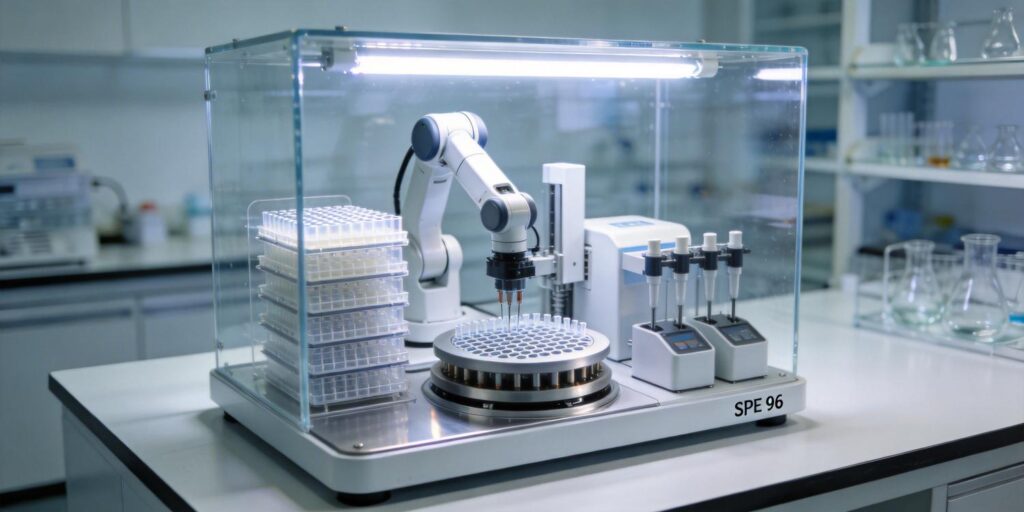
96-well SPE plates are designed for parallel processing. Each plate contains 96 individual sorbent beds, typically packed with reversed-phase (C18), mixed-mode, or polymeric materials. By processing 96 samples simultaneously, labs can achieve throughput up to 10–20 times higher than conventional cartridge SPE. This is critical for large-scale monitoring programs where speed and reproducibility are non-negotiable.
Plate Conditioning and Vacuum Manifold Setup
Proper conditioning is essential for reproducible results. For most 96-well SPE plates, a standard protocol includes:
- Methanol activation: 1 mL per well, followed by a brief vacuum pulse.
- Water equilibration: 1 mL of deionized water to prepare the sorbent for aqueous matrices.
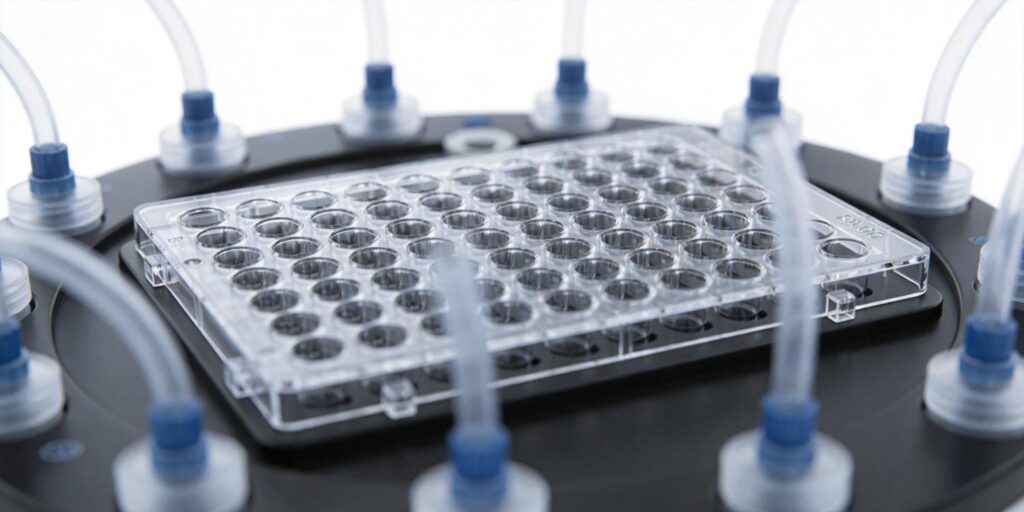
- Vacuum manifold: Use a dedicated 96-well manifold with adjustable vacuum control. Typical vacuum pressure ranges from 5–10 inHg during loading, and 10–15 inHg during elution.
Sample Loading from Agricultural Extracts
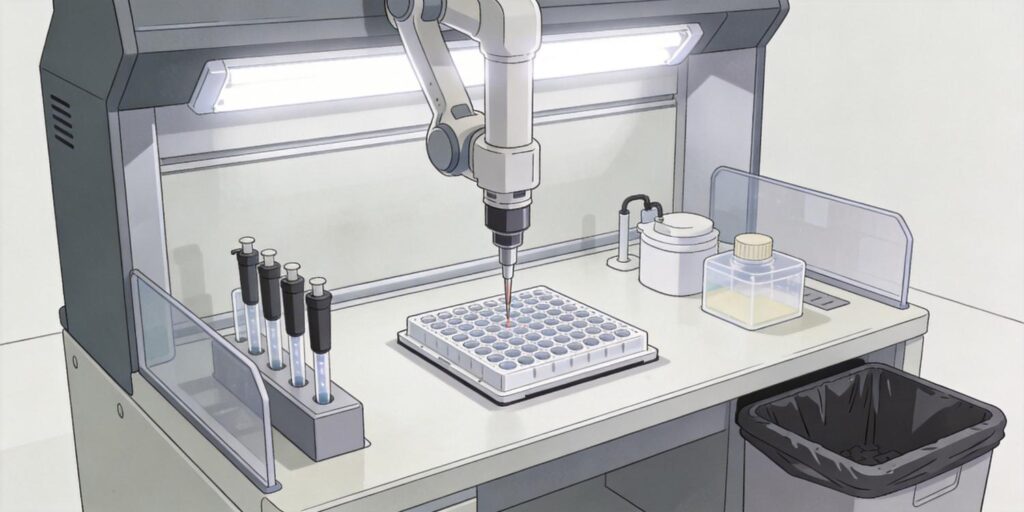
Agricultural extracts (e.g., QuEChERS, ethyl acetate or acetonitrile-based) often contain co-extractives like sugars, fats, and pigments. For 96-well plates, loading volumes typically range from 200 µL to 1 mL per well. It’s critical to use a multichannel pipette or automated liquid handler to ensure uniform flow rates across the plate. Flow rates should be kept at 1–2 mL/min per well to avoid channeling and ensure analyte retention.
Washing Protocols to Remove Pigments and Lipids
Effective washing is crucial for clean chromatograms. A common wash scheme for multi-residue analysis includes:
- Pigment removal: 5% methanol in water (1 mL) to elute chlorophyll and carotenoids.
- Lipid removal: Hexane or hexane/ethyl acetate mixture (1 mL) to remove fatty acids and triglycerides.
- Final water wash: 1 mL of water to remove any remaining polar interferences.
For mixed-mode plates like MCX or WAX, adjust pH during washing to retain analytes of interest while washing away matrix components.
Parallel Elution into Collection Plates
Elution is performed using a suitable solvent (e.g., methanol, acetonitrile, or acidified solvent) typically 0.5–1 mL per well. The eluate is collected into a 96-well collection plate compatible with the autosampler. For mass spectrometry, it’s advisable to filter the eluate through a 0.2 µm PTFE membrane to remove any particulate matter. The collection plate can then be directly placed into the LC-MS/MS system.
Integration with LC-MS/MS Autosamplers
Most modern LC-MS/MS systems accept 96-well plates directly. The 96-well SPE plates we supply are designed to fit standard autosampler racks (e.g., Waters, Agilent, Thermo). This eliminates the need for manual transfer, saving time and reducing the risk of sample mix-ups. When interfacing, ensure that the elution solvent is compatible with the mobile phase to avoid mismatch issues.
Throughput Comparison with Cartridge SPE
| Parameter | Cartridge SPE | 96-Well SPE Plate |
|---|---|---|
| Number of samples per batch | 1–24 (manifold) | 96 |
| Time per batch (condition–elution) | ~2–3 hours | ~30–45 minutes |
| Solvent consumption | 10–20 mL per sample | 3–5 mL per sample |
| Labor burden | High manual handling | Automation-friendly |
| Reproducibility (RSD) | 5–15% | 2–8% |
For laboratories that run hundreds of pesticide residue analyses per week, switching to 96-well plates can reduce labor costs by 60% and solvent waste by 70%, while improving data quality.
If you are considering transitioning from cartridge-based methods, our product line offers a range of sorbents (HLB, MCX, WAX, WCX) in 96-well format, compatible with existing vacuum manifolds. For further assistance, refer to our HLB SPE cartridges and MAX SPE cartridges for method development guidance.