The Critical Role of Metabolite Profiling in Pharmacokinetics
Metabolite profiling stands as a cornerstone of modern pharmacokinetic studies, providing essential data on drug absorption, distribution, metabolism, and excretion (ADME). Unlike parent drug monitoring alone, comprehensive metabolite analysis reveals the complete metabolic fate of pharmaceutical compounds, enabling researchers to understand therapeutic efficacy, potential toxicity, and metabolic pathways. This detailed understanding is particularly crucial during drug development phases where safety profiles and dosing regimens are established.
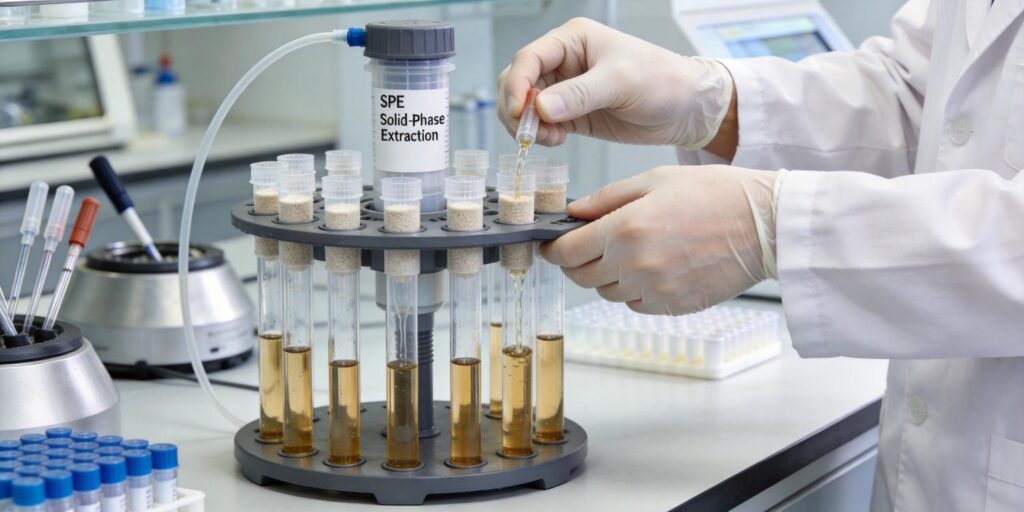
According to pharmaceutical research literature, modern drug candidates are often very potent substances, requiring low doses in preclinical and clinical studies. Consequently, assay sensitivity becomes a major goal of pharmacokinetic studies—sensitivity must be high enough to allow estimation of the terminal plasma half-life in vivo. To achieve such sensitivities, clean plasma extracts are essential, making proper sample preparation through solid-phase extraction (SPE) a critical step in the analytical workflow.
Plasma Matrix Challenges for LC-MS Analysis
Plasma presents one of the most challenging biological matrices for LC-MS analysis due to its complex composition of proteins, lipids, salts, and endogenous compounds. The high protein content (approximately 60-80 mg/mL) can cause column clogging, ion suppression, and interference with analyte detection. Additionally, plasma contains phospholipids that can adsorb to analytical columns and cause matrix effects in mass spectrometry detection.
As noted in SPE literature, “The emphasis in this chapter has been laid on extraction of blood plasma for HPLC assay. This should not imply serious limitations because many of the basic principles for extracting plasma are generally applicable to other biological matrices and to different analytical techniques.” The primary objectives of plasma sample preparation include concentration and clean-up, prevention of clogging of analytical columns, and elimination of protein binding—all critical for successful LC-MS/MS analysis of drug metabolites.
Selecting SPE Sorbents for Polar and Nonpolar Metabolites
Mixed-Mode SPE Cartridges
For comprehensive metabolite profiling, mixed-mode SPE cartridges providing both hydrophobic and cation exchange interactions have proven particularly effective. Research demonstrates that “the strategy of a mixed-mode cartridge providing hydrophobic and cation exchange interactions, combined with a pH-dependent sample application and extraction, can give high recoveries of analytes from plasma, urine, whole blood, and tissues.” This approach allows simultaneous extraction of both polar and nonpolar metabolites within a single workflow.
pH Considerations for Metabolite Retention
The starting pH in SPE procedures significantly affects metabolite recoveries, especially for polar compounds. Studies have shown that “the recoveries of these compounds were found to be affected by the starting pH in the SPE procedure (pH 6.0). When the sample is buffered at this pH the more strongly acidic drugs are present in their dissociated, ionic forms. These ionic species retain poorly by non-polar mechanisms, compared to the neutral species.” For acidic metabolites like salicylic acid and paracetamol, adjusting the starting pH to 2.2 results in less ionization and better retention on the cartridge.
Sorbent Selection Guidelines
- HLB (Hydrophilic-Lipophilic Balanced): Ideal for broad-spectrum extraction of both polar and nonpolar metabolites without pH adjustment requirements
- MCX (Mixed-mode Cation Exchange): Excellent for basic metabolites and zwitterionic compounds through combined reversed-phase and cation exchange mechanisms
- MAX (Mixed-mode Anion Exchange): Specifically designed for acidic metabolites and compounds with carboxylic acid groups
- WCX (Weak Cation Exchange): Suitable for strong basic compounds that require gentle elution conditions
- WAX (Weak Anion Exchange): Effective for strong acidic metabolites requiring specific pH control
Example Protocol for Plasma Extraction and SPE Cleanup
Sample Pretreatment
Begin with 1 mL of plasma sample. For optimal recovery of polar acidic compounds, dilute the sample 1:1 with 0.01 M phosphoric acid (pH 2.2) rather than the traditional fourfold dilution. This reduced dilution helps prevent washing away of more polar acidic compounds during subsequent steps. As research indicates, “the amounts of water in the sample application step and in the wash step should be kept as small as possible. If not, the more polar acidic compounds will be partly washed away.”
SPE Procedure
- Cartridge Conditioning: Condition the mixed-mode SPE cartridge with 2 mL methanol followed by 2 mL 0.01 M phosphoric acid (pH 2.2)
- Sample Application: Load the pretreated plasma sample at a controlled flow rate of 1-2 mL/min
- Wash Steps: Wash with 0.5 mL 0.01 M phosphoric acid (pH 2.2), followed by cartridge drying under full vacuum for 3 minutes
- Elution Strategy: Employ fractionated elution for comprehensive metabolite recovery:
- Acid/Neutral Fraction: Elute with 3 mL acetone:chloroform (1:1 v/v)
- Non-polar Basic Fraction: Elute with 2 mL ammoniated (2%) ethyl acetate
- Polar Basic Fraction: Elute with 2 mL ammoniated (2%) methylene chloride/isopropanol (4:1 v/v)
Evaporation and Reconstitution
Evaporate eluates to dryness at 40°C under gentle nitrogen stream. Reconstitute in 50-100 μL of mobile phase compatible solvent (typically methanol:water or acetonitrile:water mixtures) for LC-MS/MS analysis. For particularly sensitive analyses, consider reconstitution in pure organic solvent without modifiers or buffer ions to improve MS system performance.
LC-MS/MS Detection of Metabolites
Chromatographic Considerations
For comprehensive metabolite profiling, gradient elution HPLC systems provide optimal separation of diverse metabolite structures. A typical gradient program might include: 90% aqueous phase (0.025 M triethyl-ammonium phosphate buffer, pH 3.0) to 30% aqueous phase over 30 minutes (linear gradient), followed by isocratic conditions and return to initial conditions. This approach allows good separation and sensitive detection of a wide variety of metabolites without the need for derivatization.
Mass Spectrometry Parameters
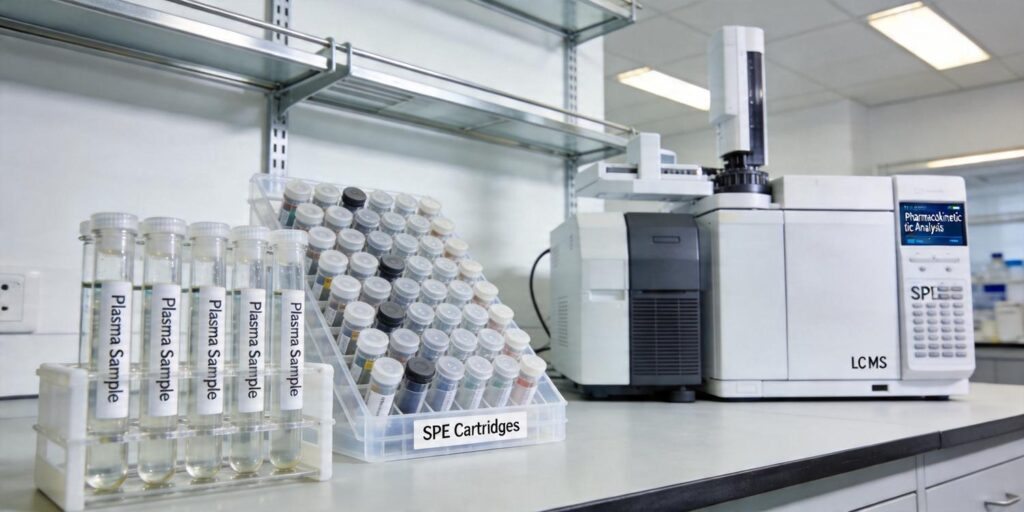
Modern LC-MS/MS systems offer unparalleled sensitivity for metabolite detection, with some methods achieving sensitivities of 50 pg/mL from sample sizes of only 200 μL. Such sensitivities are crucial in first human-subject trials for pharmaceuticals undergoing safety testing, where pharmacokinetics and toxicity need to be tested using the lowest possible drug dosage. Electrospray ionization (ESI) in positive and negative modes, combined with multiple reaction monitoring (MRM), provides selective and sensitive detection of metabolite structures.
Data Analysis Strategies
Metabolite identification typically involves comparing retention times, precursor ions, and product ion spectra with authentic standards. For unknown metabolites, high-resolution mass spectrometry (HRMS) enables accurate mass measurements and elemental composition determination. Software tools for metabolite prediction and identification have become essential components of modern metabolite profiling workflows.
Improving Reproducibility in Pharmacokinetic Studies
Automated SPE Systems
Automation significantly enhances reproducibility in high-throughput pharmacokinetic studies. Automated SPE systems can achieve sample throughput of between 320 and 960 samples per day for broad-range pharmaceutical screens in human plasma. As noted in research, “there is no ‘best’ way to perform sample preparation for LC-MS analysis. The choice made by the analyst for on-line or off-line SPE will be dictated by many factors, but raw speed of either technique need not be a deciding factor in the final choice.”
Quality Control Measures
Implement comprehensive quality control protocols including:
- Use of stable isotope-labeled internal standards for each metabolite class
- Regular assessment of SPE cartridge lot-to-lot reproducibility
- Inclusion of quality control samples at low, medium, and high concentrations
- Monitoring of extraction efficiencies through recovery experiments
- Regular system suitability testing of LC-MS/MS instrumentation
Method Validation Parameters
For regulatory-compliant pharmacokinetic studies, validate SPE-LC-MS/MS methods according to FDA and EMA guidelines, including assessments of:
- Accuracy and precision across the calibration range
- Matrix effects and recovery efficiencies
- Selectivity and specificity against endogenous interferences
- Stability of metabolites during sample processing and storage
- Carry-over effects between samples
Future Directions
The field continues to evolve with innovations in SPE technology, including smaller particle size SPE sorbents (30 μm) packed in narrow-bore SPE cartridges (2 mm I.D.) that allow even greater sensitivity. Additionally, 96-well SPE plates have revolutionized high-throughput sample preparation, enabling simultaneous processing of multiple samples while maintaining excellent reproducibility. As metabolite profiling becomes increasingly important in personalized medicine and therapeutic drug monitoring, optimized SPE protocols will remain essential for generating reliable pharmacokinetic data.
For researchers seeking reliable SPE solutions for metabolite profiling, Poseidon Scientific offers a comprehensive range of HLB SPE cartridges, MCX mixed-mode cartridges, and 96-well SPE plates designed specifically for challenging biological matrices like plasma. These products provide the consistency and performance needed for reproducible metabolite profiling in pharmacokinetic studies.