Laboratory Techniques

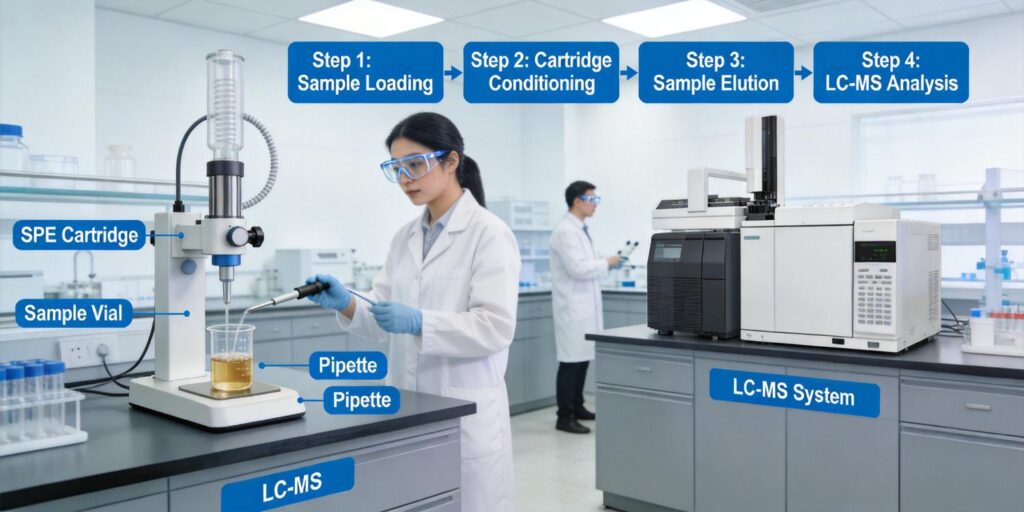
laboratory vacuum manifold SPE system in operation

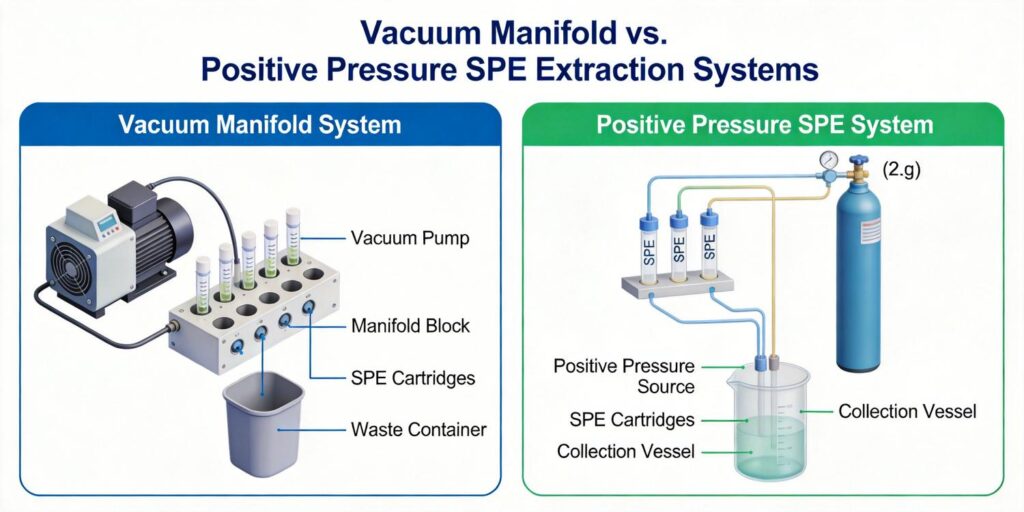
Comparing Vacuum Manifold and Positive Pressure SPE Systems

Principle of Vacuum Manifold Operation Vacuum manifold systems represent the traditional workhorse of solid-phase extraction (SPE) laboratories, with their origins dating back to 1979 when Analytichem International (now Varian Sample Preparation Products) introduced the first commercial systems for parallel processing. These systems operate on a simple yet effective principle: negative pressure differential drives fluid flow […]

Comparing Vacuum Manifold and Positive Pressure SPE Systems Read More »

laboratory validating SPE extraction method performance

SPE Method Validation Parameters for Analytical Laboratories

Overview of Validation Requirements for SPE Methods Solid-phase extraction method validation is a critical process that ensures analytical laboratories can consistently produce reliable, accurate, and reproducible results. According to regulatory guidelines and industry best practices, SPE method validation must demonstrate that the extraction procedure is suitable for its intended purpose across various sample matrices and

SPE Method Validation Parameters for Analytical Laboratories Read More »

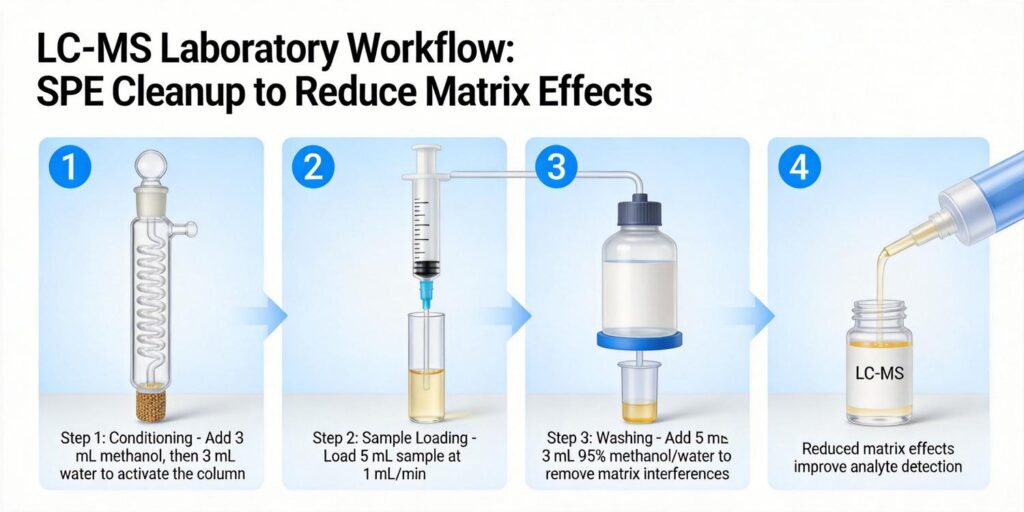
SPE sample preparation workflow before LC-MS analysis

Understanding Matrix Effects in SPE-LC-MS Workflows

What Are Matrix Effects in LC-MS Analysis? Matrix effects represent one of the most significant challenges in liquid chromatography-mass spectrometry (LC-MS) workflows, particularly when analyzing complex biological or environmental samples. These effects occur when co-eluting compounds from the sample matrix interfere with the ionization process of target analytes in the mass spectrometer, leading to either

Understanding Matrix Effects in SPE-LC-MS Workflows Read More »

laboratory performing routine SPE extraction workflow

Improving SPE Method Robustness for Routine Laboratory Testing

Importance of Robustness in Routine Analytical Testing In routine laboratory testing, method robustness is not merely a desirable attribute—it’s an absolute necessity for maintaining data integrity and regulatory compliance. Robust SPE methods ensure consistent analyte recovery, reproducible results, and reliable detection limits across different operators, instruments, and time periods. According to industry standards, a robust

Improving SPE Method Robustness for Routine Laboratory Testing Read More »

proper storage of SPE cartridges in analytical laboratory

Best Practices for SPE Cartridge Storage and Handling

Proper Storage Conditions for SPE Cartridges Solid-phase extraction (SPE) cartridges require specific storage conditions to maintain their performance characteristics and ensure consistent analytical results. The fundamental principle governing SPE cartridge storage is the preservation of sorbent integrity, which directly impacts extraction efficiency and reproducibility. SPE cartridges, whether silica-based or polymeric, should be stored in their

Best Practices for SPE Cartridge Storage and Handling Read More »

laboratory performing reproducible SPE sample preparation workflow

SPE Techniques for Improving Reproducibility in LC-MS Sample Prep

1. Sources of Variability in Sample Preparation Workflows Solid-phase extraction (SPE) has revolutionized sample preparation for LC-MS analysis, offering significant advantages over traditional liquid-liquid extraction (LLE). However, achieving reproducible results requires careful attention to numerous variables that can introduce variability into your workflow. As noted in forensic and clinical applications, “SPE has been shown to

SPE Techniques for Improving Reproducibility in LC-MS Sample Prep Read More »

SPE cartridge used for chromatography sample preparation

Sample Cleanup Strategies Before Chromatography Analysis

The Critical Role of Sample Cleanup in Chromatography Analysis In analytical chemistry, sample preparation is often the most critical yet overlooked step in achieving reliable chromatography results. As Dr. Xu, product manager at Poseidon Scientific, I’ve witnessed firsthand how proper sample cleanup strategies can make or break analytical outcomes. The fundamental truth is this: no

Sample Cleanup Strategies Before Chromatography Analysis Read More »

scientist loading sample into SPE cartridge

SPE Sample Loading: Best Practices

Sample Preparation Before Loading Proper sample preparation is the foundation of successful solid-phase extraction (SPE). Before loading your sample onto an SPE cartridge, several critical factors must be addressed to ensure optimal analyte recovery and minimize interferences. The sample matrix can significantly impact SPE performance, particularly when dealing with viscous samples or those containing particulates,

SPE Sample Loading: Best Practices Read More »

scientist validating SPE extraction results

SPE Method Validation in Analytical Chemistry

The Critical Role of SPE Method Validation in Analytical Chemistry Solid Phase Extraction (SPE) has become the cornerstone of modern sample preparation, offering unparalleled advantages over traditional liquid-liquid extraction methods. However, the effectiveness of any SPE method hinges on rigorous validation protocols that ensure analytical results are reliable, reproducible, and compliant with regulatory standards. As

SPE Method Validation in Analytical Chemistry Read More »

properly stored SPE cartridges in laboratory

SPE Cartridge Storage and Handling

Proper Storage Conditions for SPE Cartridges As a product manager at Poseidon Scientific with extensive experience in SPE technology, I can confidently state that proper storage conditions are fundamental to maintaining the performance and reliability of SPE cartridges. Based on comprehensive research and manufacturing standards, SPE cartridges should be stored under specific environmental conditions to

SPE Cartridge Storage and Handling Read More »

Shopping Cart
Poseidon Scientific
Privacy Overview

This website uses cookies so that we can provide you with the best user experience possible. Cookie information is stored in your browser and performs functions such as recognising you when you return to our website and helping our team to understand which sections of the website you find most interesting and useful.