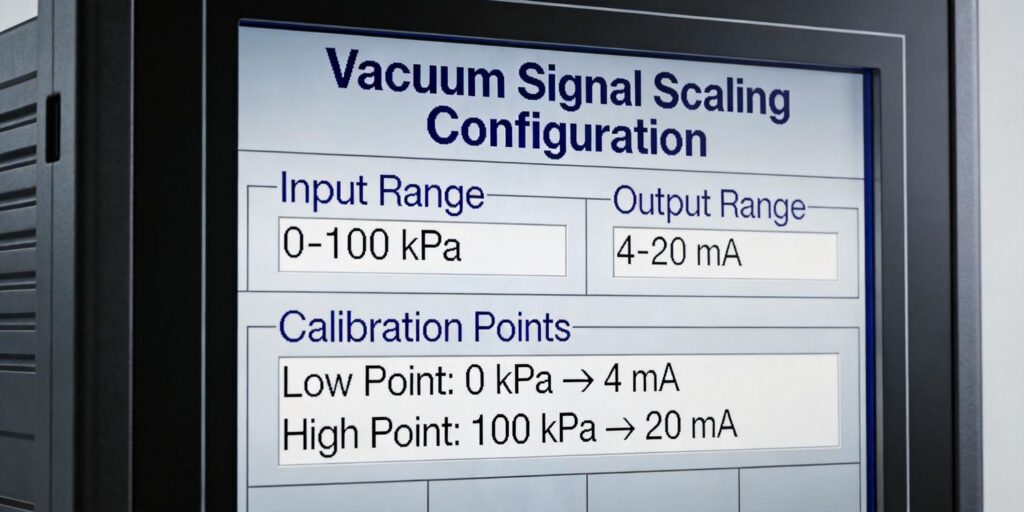
MES screen displaying real-time vacuum data

Vacuum Gauge Integration into MES Systems

In today’s smart factories, Manufacturing Execution Systems (MES) serve as the digital backbone that connects shop-floor equipment to enterprise resource planning (ERP) and quality management platforms. For vacuum-dependent processes—whether in semiconductor fabrication, pharmaceutical lyophilization, vacuum metallurgy, or thin-film coating—real-time pressure data is not optional; it is a critical production parameter that directly affects yield, purity, […]

Vacuum Gauge Integration into MES Systems Read More »

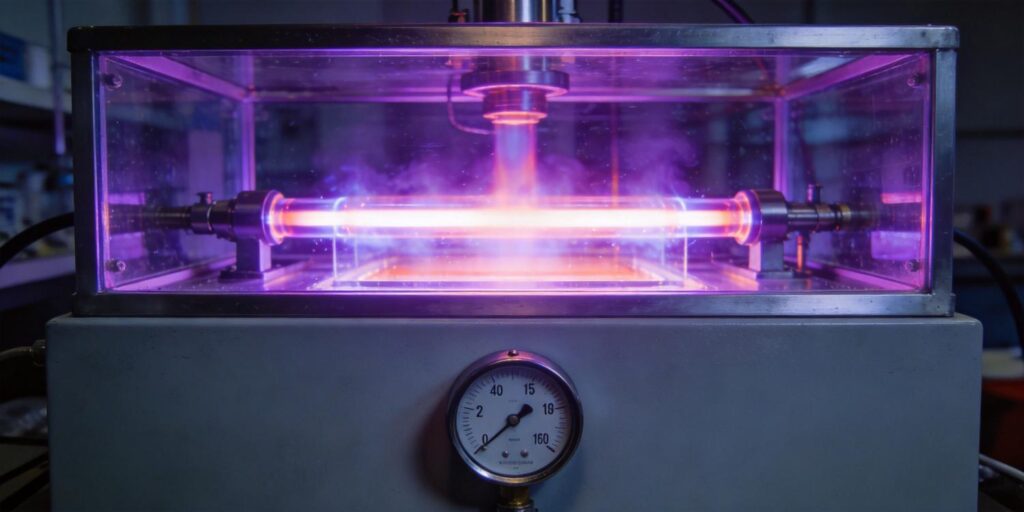
Pirani vacuum transmitter mounted on roughing line

Optimizing Rough Vacuum Monitoring in Industrial Systems

In large-scale industrial vacuum systems—vacuum furnaces, PVD coating chambers, freeze-dryers, and metallurgy lines—the rough vacuum stage sets the foundation for every successful process cycle. This is where the system transitions from atmosphere to the 10⁻³ Torr crossover point, where mechanical pumps hand off to high-vacuum pumps. Pressure must be monitored accurately, quickly, and reliably to

Optimizing Rough Vacuum Monitoring in Industrial Systems Read More »

Vacuum gauge signal shown as error range on control panel

Vacuum Gauge Output Error Range Explained

In vacuum systems for mass spectrometry, thin-film deposition, vacuum metallurgy, and pharmaceutical lyophilization, the pressure signal from your gauge is the single most important input to the control system. When that signal enters an error state—whether from sensor failure, over-range pressure, or communication dropout—the entire process can halt, waste batches, or trigger costly safety interlocks.

Vacuum Gauge Output Error Range Explained Read More »

diagram showing sorbent capacity inside SPE cartridge

SPE Sorbent Capacity and Loading Limits

What Determines Sorbent Capacity in SPE? Solid Phase Extraction (SPE) sorbent capacity represents the maximum amount of analyte a packed bed can retain from a sample matrix. Understanding the factors that determine this capacity is crucial for method development and optimization. According to established literature, specific capacity (Csp) is an intrinsic property defined as the

SPE Sorbent Capacity and Loading Limits Read More »

clean laboratory SPE workflow preventing contamination

Preventing Cross-Contamination in SPE Workflows

Sources of Contamination in SPE Workflows Solid Phase Extraction (SPE) contamination problems can arise from multiple sources, compromising analytical accuracy and reproducibility. According to forensic science literature, contamination issues are categorized alongside flow problems, recovery problems, and nonextraction problems as fundamental SPE troubleshooting areas. SPE Device-Related Contamination The most common contamination sources directly attributable to

Preventing Cross-Contamination in SPE Workflows Read More »

Technician polishing cold cathode electrode

Understanding Cold Cathode Electrode Cleaning Procedures

In high-vacuum systems for mass spectrometry, vacuum metallurgy, electron-beam welding, and thin-film deposition, the cold-cathode gauge is valued for its robustness and ability to measure down to 10⁻⁷ Torr without a fragile hot filament. Yet even the most durable cold-cathode design eventually requires attention. Contamination from metal vapors, hydrocarbons, or process by-products gradually coats the

Understanding Cold Cathode Electrode Cleaning Procedures Read More »

vacuum manifold controlling SPE cartridge flow

Flow Rate Control in SPE Extraction

Why Flow Rate Matters in SPE Extraction In solid phase extraction (SPE), flow rate control is not merely a procedural detail—it’s a fundamental parameter that directly impacts extraction efficiency, analyte recovery, and method reproducibility. Unlike high-performance liquid chromatography (HPLC), where flow characteristics are precisely engineered, SPE flow dynamics are more variable and require careful optimization

Flow Rate Control in SPE Extraction Read More »

Vacuum gauge installed on thin film coating equipment

How Vacuum Gauges Improve Thin Film Uniformity

In thin-film deposition processes such as magnetron sputtering, electron-beam evaporation, and thermal evaporation, coating uniformity across the substrate is the difference between a functional device and scrap. Variations as small as 5 % in thickness can degrade optical performance, reduce semiconductor yield, or compromise adhesion in protective coatings. While substrate rotation, target power, and source-to-substrate

How Vacuum Gauges Improve Thin Film Uniformity Read More »

Vacuum gauge installed in university laboratory system

Selecting Vacuum Gauges for University Research Labs

University research laboratories operate under unique constraints: tight budgets, rapidly changing experimental setups, and the need for instruments that deliver reliable data across a wide range of vacuum applications—from basic pump-down studies to advanced mass spectrometry, thin-film deposition, and scanning electron microscopy. Selecting the right vacuum gauge is rarely about chasing the absolute lowest uncertainty;

Selecting Vacuum Gauges for University Research Labs Read More »

conditioning SPE cartridge with solvent before extraction

SPE Cartridge Conditioning Best Practices

The Critical Importance of Proper SPE Cartridge Conditioning Solid Phase Extraction (SPE) cartridge conditioning is the foundational step that determines the success or failure of your entire extraction process. As Dr. Xu, product manager at Poseidon Scientific, I’ve seen firsthand how proper conditioning techniques can dramatically improve recovery rates, precision, and overall method reliability. SPE

SPE Cartridge Conditioning Best Practices Read More »

Shopping Cart
Poseidon Scientific
Privacy Overview

This website uses cookies so that we can provide you with the best user experience possible. Cookie information is stored in your browser and performs functions such as recognising you when you return to our website and helping our team to understand which sections of the website you find most interesting and useful.