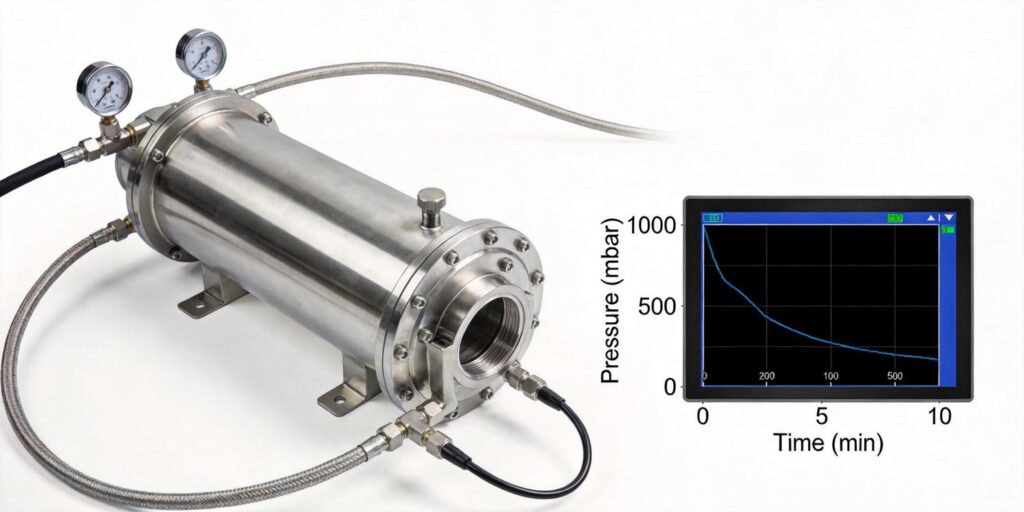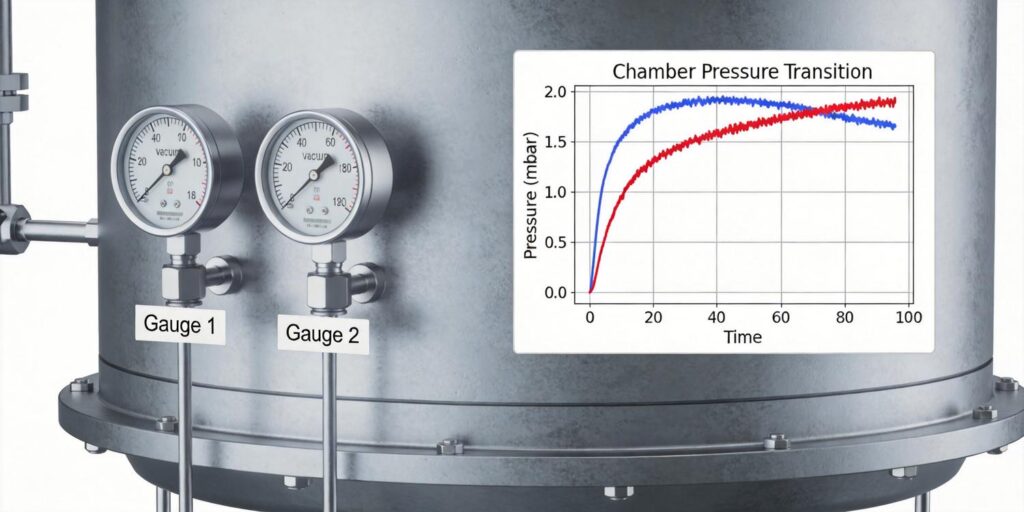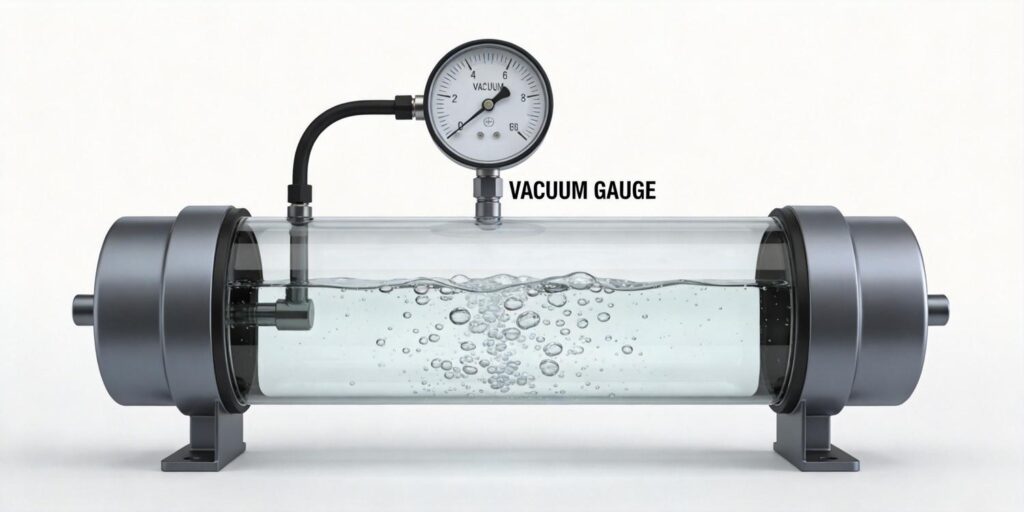
IoT dashboard showing vacuum pressure data

Vacuum Gauge Integration into IoT Monitoring Platforms

In modern manufacturing and research facilities, vacuum systems are no longer isolated islands of equipment. Industrial IoT (IIoT) platforms now connect pressure sensors, pumps, and valves into unified dashboards that deliver real-time visibility, automated alerts, and predictive analytics across multiple sites. For engineers and procurement teams managing mass spectrometers, pharmaceutical lyophilizers, vacuum metallurgy furnaces, or […]

Vacuum Gauge Integration into IoT Monitoring Platforms Read More »

comparison of WCX and MCX SPE cartridges

WCX vs MCX SPE Cartridges: Cation Exchange Comparison

Understanding Cation Exchange SPE: MCX vs WCX Fundamentals In the world of solid-phase extraction (SPE), cation exchange cartridges play a crucial role in isolating and purifying basic compounds from complex matrices. Two primary cation exchange options dominate the market: Mixed-mode Cation eXchange (MCX) and Weak Cation eXchange (WCX). As Dr. Xu, product manager at Poseidon

WCX vs MCX SPE Cartridges: Cation Exchange Comparison Read More »

Industrial wiring connected to vacuum gauge transmitter

Vacuum Gauge Cable Length Limitations and Signal Stability

In vacuum systems ranging from analytical mass spectrometers to large-scale industrial heat-treatment furnaces, reliable signal transmission from the gauge to the control system is non-negotiable. A drifting or noisy pressure reading can trigger false interlocks, extend pump-down times, or compromise process quality. Poseidon Scientific’s VG-SP205 Pirani Vacuum Transmitter and VG-SM225 Cold Cathode Vacuum Gauge support

Vacuum Gauge Cable Length Limitations and Signal Stability Read More »

comparison of MAX and WAX SPE cartridges

MAX vs WAX SPE Cartridges: Understanding the Differences

Strong vs Weak Anion Exchange: The Fundamental Distinction When selecting between MAX (Mixed-mode Anion eXchange) and WAX (Weak Anion eXchange) SPE cartridges, the primary distinction lies in their ion-exchange strength and retention mechanisms. MAX cartridges feature strong anion exchange functionality with a tightly controlled ion-exchange capacity of 0.25 meq/g, designed specifically for acidic compounds with

MAX vs WAX SPE Cartridges: Understanding the Differences Read More »

Cold cathode vacuum gauge starting up with LED indicator

Cold Cathode Gauge Ignition Delay: Causes and Optimization

In high-vacuum applications such as mass spectrometry, vacuum metallurgy, and electron-beam welding, the cold-cathode gauge is prized for its robustness, lack of hot filament, and ability to measure down to 10⁻⁷ Torr. Yet one operational characteristic consistently draws questions from engineers: ignition delay—the time required for the Penning discharge to establish after high voltage is

Cold Cathode Gauge Ignition Delay: Causes and Optimization Read More »

Vacuum gauge mounted on metallurgy furnace chamber

Selecting Vacuum Gauges for Vacuum Metallurgy Processes

In vacuum metallurgy processes—vacuum arc melting, vacuum induction melting, electron-beam melting, and high-temperature heat treatment—precise pressure control directly determines material purity, microstructure, and final mechanical properties. Oxygen, nitrogen, or hydrogen partial pressures above 10⁻⁴ Torr can cause embrittlement, inclusions, or unwanted phase changes. Yet the operating environment is punishing: chamber temperatures often exceed 1500 °C,

Selecting Vacuum Gauges for Vacuum Metallurgy Processes Read More »

comparison of HLB and MCX SPE cartridges

Choosing Between HLB and MCX SPE Cartridges

Comparison of Sorbent Chemistry When selecting between HLB (Hydrophilic-Lipophilic Balanced) and MCX (Mixed-mode Cation eXchange) SPE cartridges, understanding their fundamental sorbent chemistry is crucial for making informed decisions. These two sorbent types represent different approaches to solid-phase extraction, each with distinct retention mechanisms and applications. HLB Sorbent Chemistry Oasis HLB, introduced in 1996, revolutionized SPE

Choosing Between HLB and MCX SPE Cartridges Read More »

Multiple vacuum gauges mounted on large industrial vacuum chamber

Vacuum Monitoring Strategy for Large-Scale Industrial Chambers

Large-scale industrial vacuum chambers—whether 10 m³ vacuum heat-treatment furnaces, multi-meter PVD coating systems, or aerospace simulation chambers—present unique monitoring challenges that small analytical instruments simply do not face. With volumes measured in cubic meters rather than liters, pump-down times stretch from minutes to hours, outgassing becomes significant, and pressure gradients across the chamber can reach

Vacuum Monitoring Strategy for Large-Scale Industrial Chambers Read More »

pharmaceutical scientist using HLB SPE cartridge

HLB SPE Applications in Pharmaceutical Testing

Understanding Pharmaceutical Impurities in Modern Drug Testing In pharmaceutical testing, impurities represent a critical concern that directly impacts drug safety, efficacy, and regulatory compliance. These unwanted substances can originate from various sources including raw materials, manufacturing processes, degradation products, or environmental contaminants. Pharmaceutical impurities are broadly categorized into organic impurities (related substances, degradation products), inorganic

HLB SPE Applications in Pharmaceutical Testing Read More »

MAX SPE cartridges used for acidic compound extraction

MAX SPE Cartridges for Acidic Compound Extraction

Chemistry of MAX Sorbents MAX (Mixed-mode Anion eXchange) SPE cartridges represent a sophisticated approach to acidic compound extraction through their unique polymeric architecture. Unlike traditional silica-based sorbents, MAX utilizes a water-wettable polymeric backbone that eliminates problematic silanol groups, which can complicate retention mechanisms and method development. The core chemistry involves a tightly controlled ion-exchange capacity

MAX SPE Cartridges for Acidic Compound Extraction Read More »

Shopping Cart
Poseidon Scientific
Privacy Overview

This website uses cookies so that we can provide you with the best user experience possible. Cookie information is stored in your browser and performs functions such as recognising you when you return to our website and helping our team to understand which sections of the website you find most interesting and useful.