diagram illustrating SPE breakthrough

Why SPE Breakthrough Happens and How to Prevent It

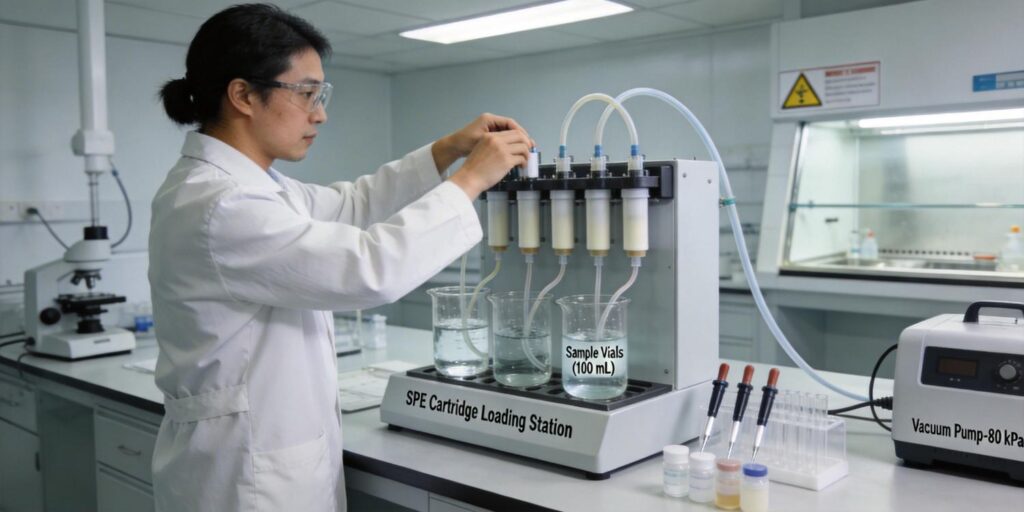
Understanding SPE Breakthrough: The Critical Phenomenon in Solid-Phase Extraction Solid-phase extraction (SPE) breakthrough represents one of the most significant challenges in analytical sample preparation, directly impacting method accuracy, precision, and overall analytical performance. As product manager at Poseidon Scientific, I’ve witnessed how breakthrough issues can compromise entire analytical workflows, leading to false negatives, inaccurate quantitation, […]

Why SPE Breakthrough Happens and How to Prevent It Read More »

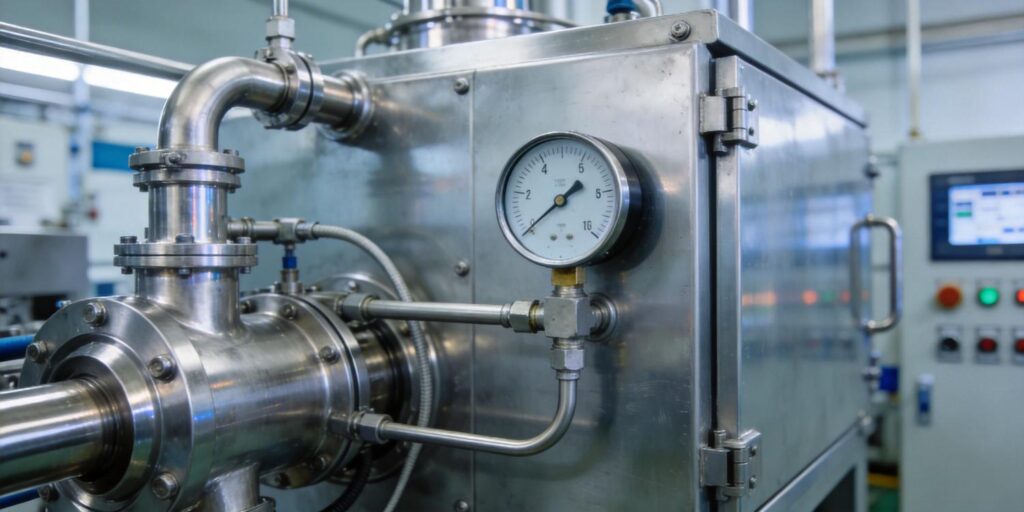
Cold cathode gauge installed on high vacuum stainless steel chamber

Why Cold Cathode Gauges Are Ideal for High Vacuum Ranges

Ionization Mechanism Cold cathode vacuum gauges measure high vacuum through a self-sustaining gas discharge known as the Penning discharge. Unlike hot-cathode ionization gauges that rely on a thermionic filament to emit electrons, cold cathode designs use field emission and crossed electric and magnetic fields to generate and trap electrons. This fundamental difference eliminates filament-related issues

Why Cold Cathode Gauges Are Ideal for High Vacuum Ranges Read More »

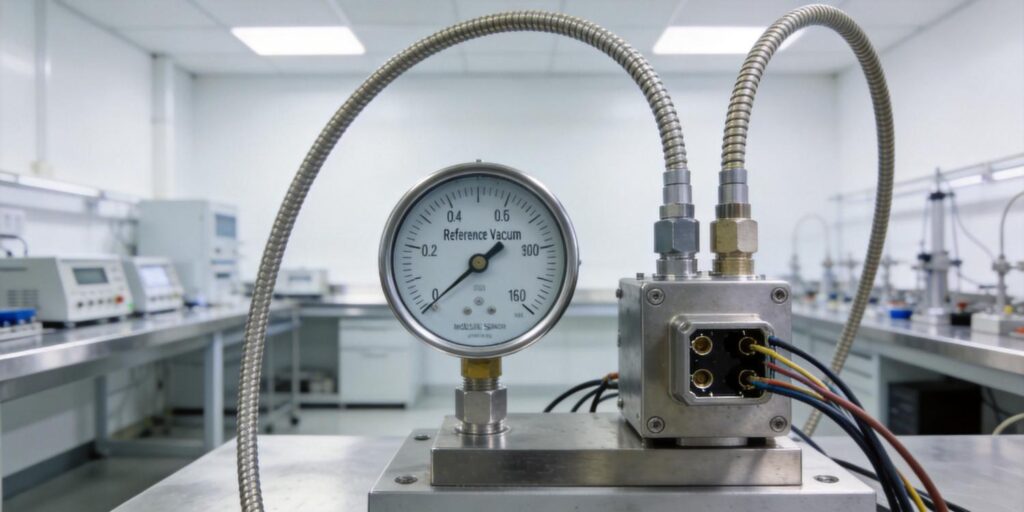
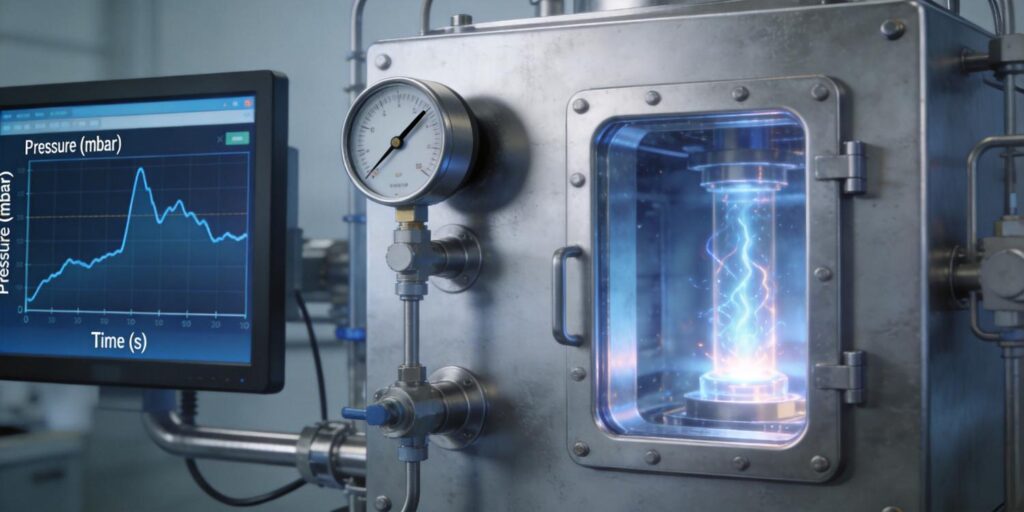
Vacuum chamber during pump-down process with pressure gauge installed

Optimizing Pump-Down Time with Proper Vacuum Gauge Strategy

Pump-down Curve Basics Every vacuum system follows a characteristic pump-down curve: a plot of pressure versus time that reveals how quickly the chamber reaches target vacuum levels. The curve is typically plotted on a logarithmic pressure scale against linear time, showing three distinct phases driven by gas-flow regimes. In the initial viscous-flow stage (atmosphere down

Optimizing Pump-Down Time with Proper Vacuum Gauge Strategy Read More »

Industrial vacuum gauge display showing stable pressure reading

Vacuum Gauge Accuracy vs Repeatability: What Really Matters?

Define Accuracy vs Repeatability In vacuum measurement, two terms frequently cause confusion: accuracy and repeatability. Understanding the distinction is essential for engineers specifying gauges and procurement teams evaluating total system performance. Accuracy describes how close a gauge reading is to the true absolute pressure. It quantifies systematic error—how far the displayed value deviates from a

Vacuum Gauge Accuracy vs Repeatability: What Really Matters? Read More »

laboratory troubleshooting SPE extraction

Troubleshooting Low Recovery in SPE

Common Causes of Low Recovery in SPE Low recovery in solid phase extraction (SPE) is one of the most frustrating challenges analytical chemists face. When your target analytes fail to appear in expected concentrations, it’s essential to systematically identify where the problem lies. According to forensic science literature, recovery problems in SPE can be categorized

Troubleshooting Low Recovery in SPE Read More »

elution of analytes from SPE cartridge

Elution Strategies for Solid Phase Extraction

Fundamentals of Elution Elution represents the critical final step in solid phase extraction (SPE) where retained analytes are selectively desorbed from the sorbent surface. This process involves creating conditions where the distribution coefficient (k’) between the analyte concentration on the solid surface and in the eluting liquid becomes very small, favoring analyte movement into the

Elution Strategies for Solid Phase Extraction Read More »

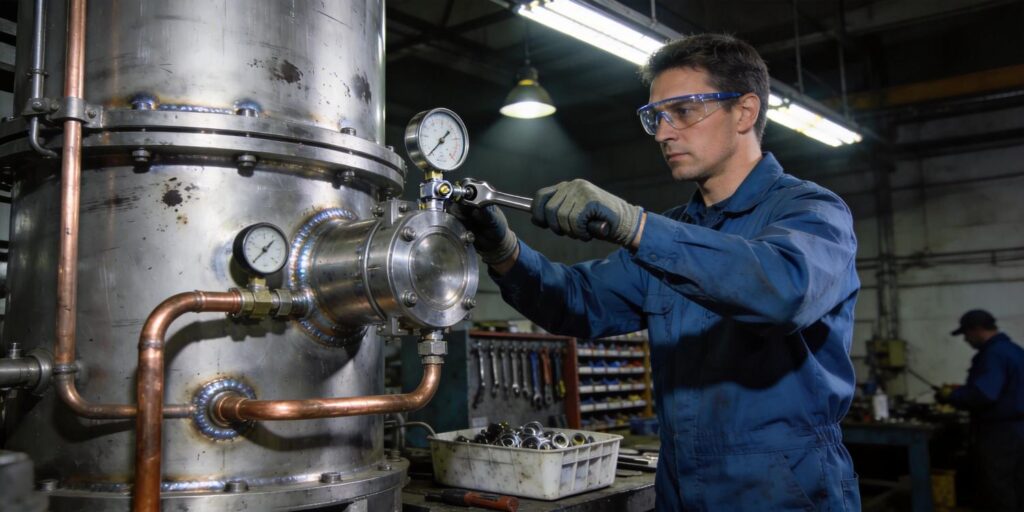
Vacuum gauge mounted on industrial vacuum furnace pipeline

Selecting Vacuum Gauges for Industrial Furnaces

Furnace Vacuum Stages Industrial vacuum furnaces—whether for annealing, tempering, brazing, or sintering—operate through distinct vacuum stages that demand precise pressure monitoring at every step. The process begins with rough vacuum, where mechanical pumps evacuate the chamber from atmosphere down to approximately 10-3 Torr. This stage removes bulk air and moisture, establishes a controlled atmosphere, and

Selecting Vacuum Gauges for Industrial Furnaces Read More »

SPE wash step laboratory process

How to Optimize SPE Washing Steps

Purpose of Wash Step in SPE The wash step in solid-phase extraction (SPE) serves as a critical purification phase that bridges sample loading and analyte elution. According to established SPE principles, this step “removes excess sample matrix and unretained compounds” while selectively eliminating weakly bound interferences without displacing target analytes. The wash solvent acts as

How to Optimize SPE Washing Steps Read More »

Vacuum gauge connected to chamber during leak testing

How Vacuum Leaks Affect Gauge Readings

Leak Types Vacuum leaks fall into two primary categories that directly influence gauge behavior: real leaks and virtual leaks. Real leaks involve the physical ingress of atmospheric gases through imperfect seals, cracks, or permeable materials. Common sources include damaged O-rings, scratched KF flanges, loose compression fittings, or microscopic pores in welds. These leaks introduce ambient

How Vacuum Leaks Affect Gauge Readings Read More »

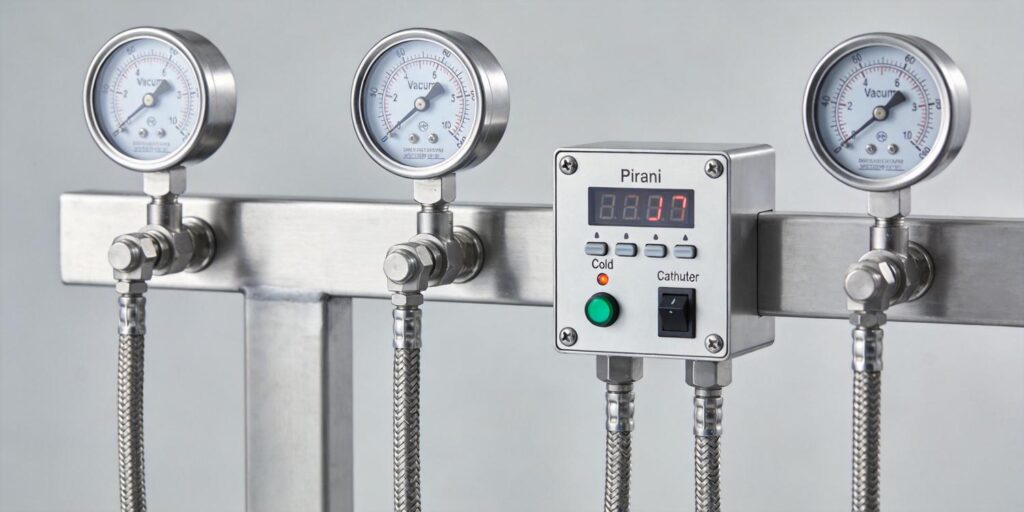
Pirani and cold cathode vacuum gauges mounted on vacuum system

Thermal Conductivity vs Ionization Gauges Explained

Working Principles Thermal conductivity gauges and ionization gauges represent two fundamentally different approaches to vacuum measurement, each leveraging distinct physical phenomena to infer pressure. Understanding these mechanisms helps engineers select the right technology for reliable process control and system protection. Thermal Conductivity Gauges (Pirani Principle) A Pirani gauge measures pressure through the thermal conductivity of

Thermal Conductivity vs Ionization Gauges Explained Read More »

Shopping Cart
Poseidon Scientific
Privacy Overview

This website uses cookies so that we can provide you with the best user experience possible. Cookie information is stored in your browser and performs functions such as recognising you when you return to our website and helping our team to understand which sections of the website you find most interesting and useful.