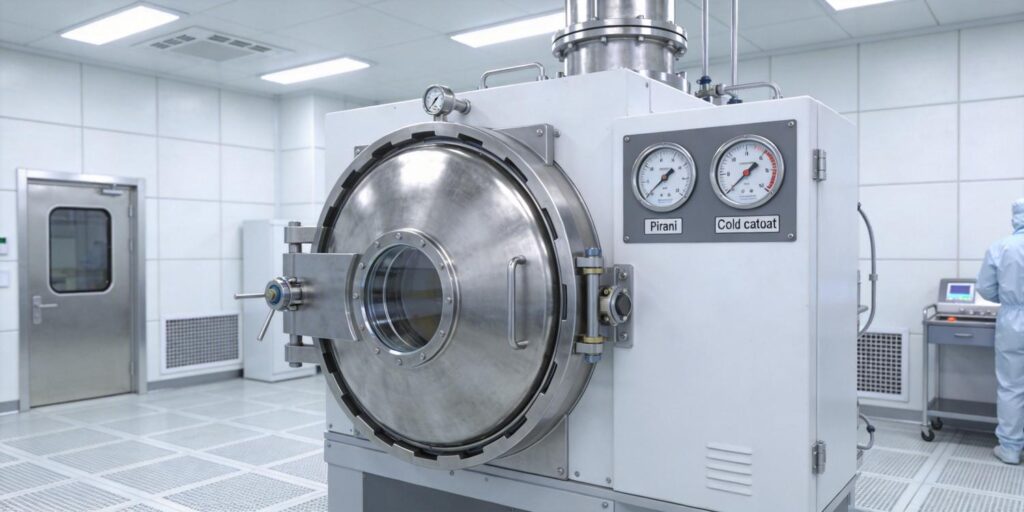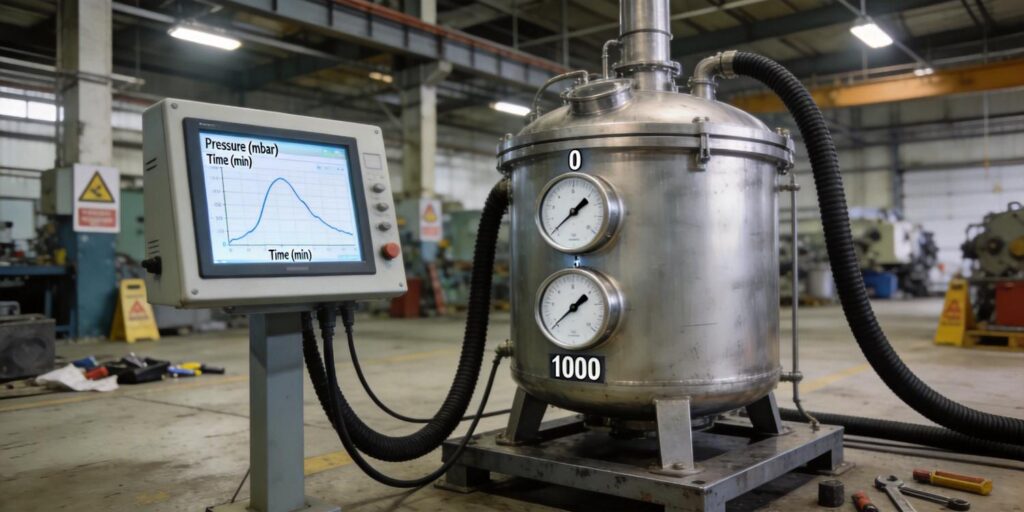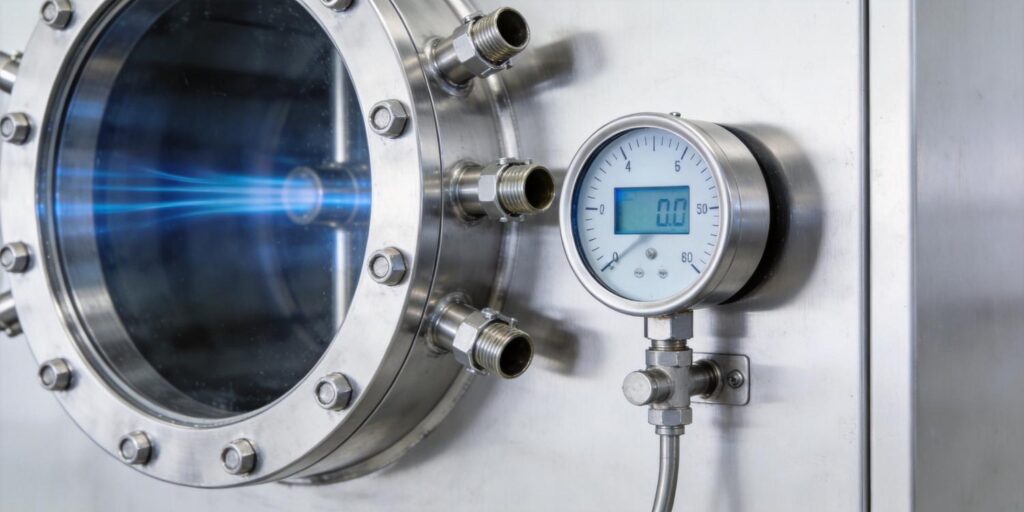
Vacuum gauge display during pump-down process

Why Your Vacuum Gauge Shows Pressure Plateau During Pump-Down

Defining the Plateau Phenomenon in Vacuum Pump-Down During a typical vacuum pump-down cycle in systems like mass spectrometers, scanning electron microscopes, or heat-treatment furnaces, pressure initially drops exponentially as the pump evacuates bulk gas. However, engineers often observe a “plateau”—a region where the pressure decline flattens or halts temporarily, as indicated by stable readings on […]

Why Your Vacuum Gauge Shows Pressure Plateau During Pump-Down Read More »

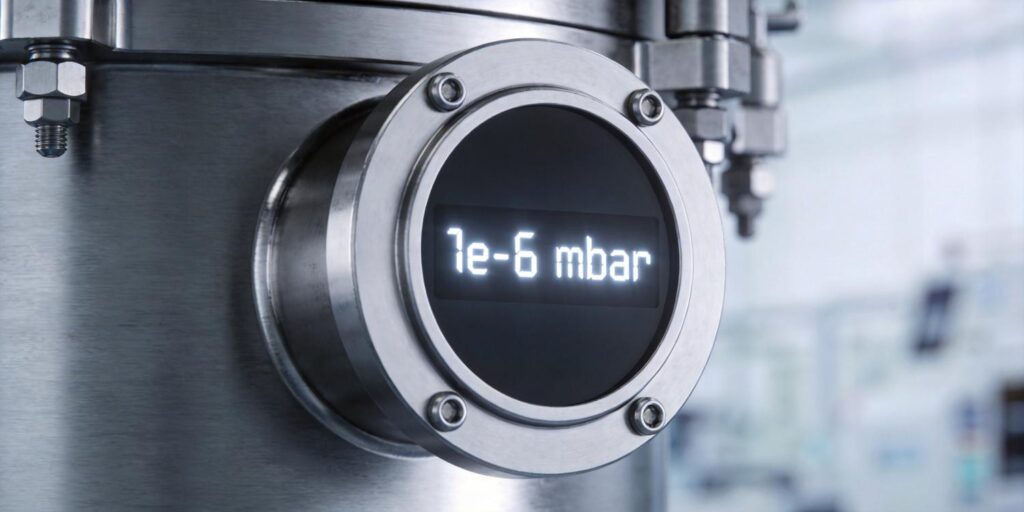
Cold cathode gauge installed on ultra-high vacuum chamber

Understanding Ionization Gauge Discharge Characteristics at Ultra-Low Pressure

Understanding Ionization Gauge Discharge Characteristics at Ultra-Low Pressure In high-vacuum applications such as scanning electron microscopes, electron-beam lithography systems, and precision analytical instruments, reliable pressure measurement below 10−5 mbar (approximately 7.5 × 10⁻⁶ Torr) is essential for maintaining mean free paths long enough to prevent ion scattering and ensure beam stability. Cold-cathode ionization gauges, exemplified

Understanding Ionization Gauge Discharge Characteristics at Ultra-Low Pressure Read More »

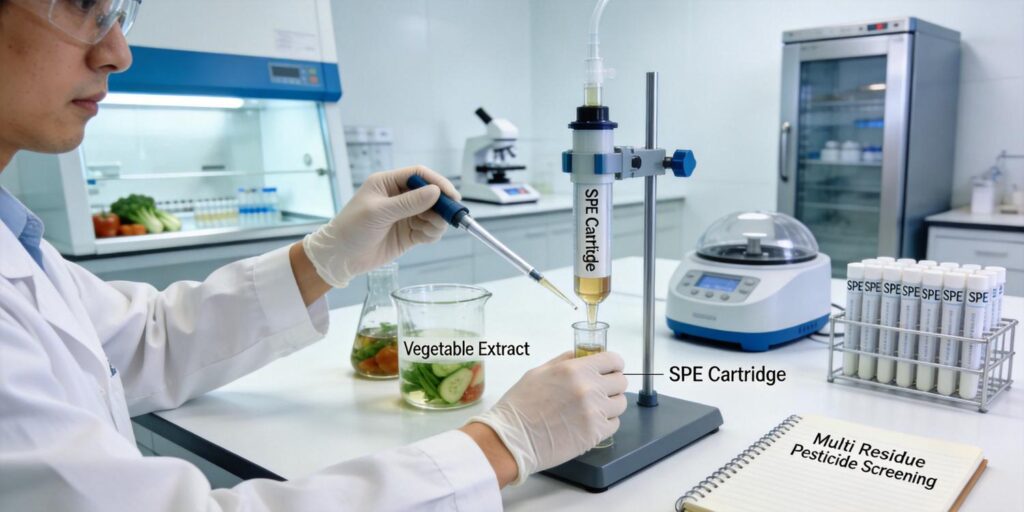
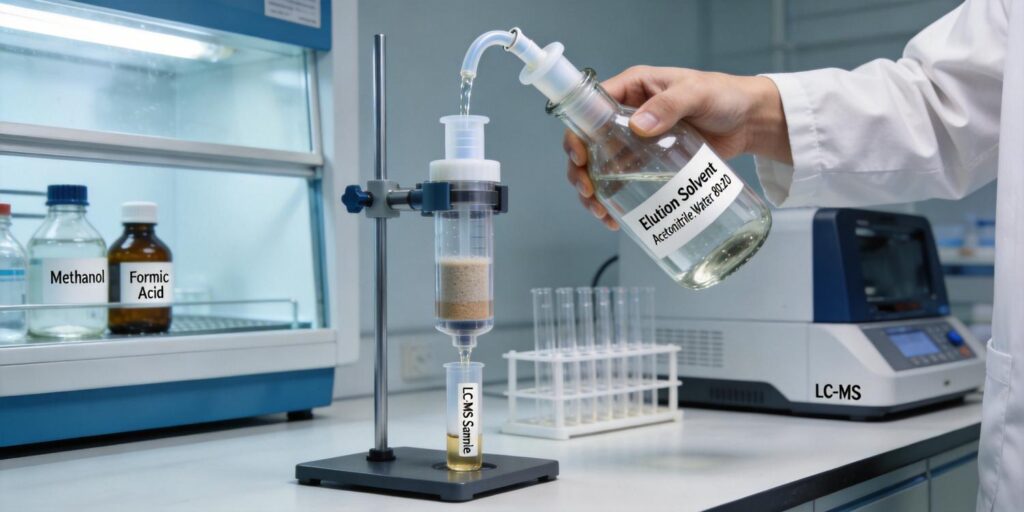
SPE cartridge used in LC-MS/MS biological sample preparation

SPE Sample Preparation for LC-MS/MS Bioanalysis

The Critical Role of SPE in LC-MS/MS Bioanalysis In the demanding world of bioanalysis, where pharmaceutical development, clinical research, and forensic toxicology rely on precise measurements of drugs and metabolites in biological matrices, sample preparation stands as the critical foundation for success. Liquid chromatography-tandem mass spectrometry (LC-MS/MS) has revolutionized quantitative bioanalysis with its exceptional sensitivity

SPE Sample Preparation for LC-MS/MS Bioanalysis Read More »

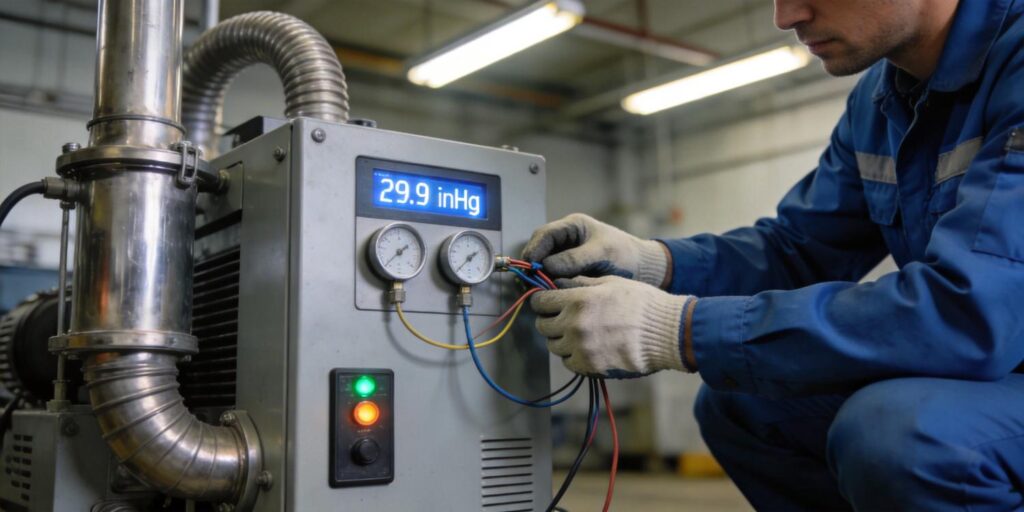
Vacuum gauge mounted on industrial heat treatment furnace

Vacuum Gauge Selection for Vacuum Heat Treatment Processes

Vacuum Gauge Selection for Vacuum Heat Treatment Processes Vacuum heat treatment—encompassing annealing, tempering, brazing, and sintering—relies on precise pressure control to eliminate oxidation, decarburization, and hydrogen embrittlement while achieving uniform metallurgical properties. Incorrect vacuum levels during critical stages can ruin entire batches, leading to costly rework or scrap. The VG-SP205 Pirani Vacuum Transmitter and VG-SM225

Vacuum Gauge Selection for Vacuum Heat Treatment Processes Read More »

Cold cathode vacuum gauge installed on industrial vacuum system

How to Prevent Cold Cathode Gauge Arcing in Contaminated Vacuum Systems

How to Prevent Cold Cathode Gauge Arcing in Contaminated Vacuum Systems Contaminated vacuum environments—common in vacuum heat-treatment furnaces, older diffusion-pumped systems, or processes with residual hydrocarbons—pose a hidden risk to cold-cathode ionization gauges. Uncontrolled arcing can damage electrodes, trigger protective shutdowns, or produce erratic pressure readings that compromise process control. The VG-SM225 Cold Cathode Vacuum

How to Prevent Cold Cathode Gauge Arcing in Contaminated Vacuum Systems Read More »

Control room dashboard displaying vacuum pressure trends

Designing a Vacuum Monitoring Dashboard for Industrial Plants

Designing a Vacuum Monitoring Dashboard for Industrial Plants Modern industrial vacuum systems—whether supporting mass spectrometers, vacuum heat-treatment furnaces, or analytical instrumentation—generate continuous pressure data that must be actionable in real time. A well-designed dashboard transforms raw outputs from vacuum gauges into intuitive visuals, predictive alerts, and auditable logs. The VG-SP205 Pirani Vacuum Transmitter (atmosphere to

Designing a Vacuum Monitoring Dashboard for Industrial Plants Read More »

Vacuum gauge installed with protective enclosure in humid facility

Vacuum Gauge Failure Modes in High-Humidity Environments

Vacuum Gauge Failure Modes in High-Humidity Environments High-humidity laboratories, tropical installations, or facilities near steam processes create unique challenges for vacuum instrumentation. Even when the vacuum chamber itself remains dry, ambient moisture can condense on external surfaces, penetrate connectors, or migrate along feedthroughs when the system vents. For the VG-SP205 Pirani Vacuum Transmitter and VG-SM225

Vacuum Gauge Failure Modes in High-Humidity Environments Read More »

Shopping Cart
Poseidon Scientific
Privacy Overview

This website uses cookies so that we can provide you with the best user experience possible. Cookie information is stored in your browser and performs functions such as recognising you when you return to our website and helping our team to understand which sections of the website you find most interesting and useful.