Amino acid profiling has become a cornerstone of metabolomics, clinical diagnostics, and nutritional research. The quantitative analysis of free amino acids in biological fluids enables researchers to investigate metabolic disorders, monitor disease progression, and evaluate therapeutic interventions. Solid-phase extraction (SPE) is the preferred sample preparation technique due to its ability to clean up complex matrices while concentrating target analytes. This guide walks through the entire workflow, from sorbent selection to LC-MS analysis, with a focus on reproducibility and method validation.
Sample Matrices and Challenges
Common biological samples for amino acid analysis include plasma and urine. Plasma contains high levels of proteins (60–80 g/L), lipids, and salts that can interfere with downstream LC-MS analysis. Urine, while lower in protein, contains urea, creatinine, and variable pH that affect analyte stability and retention. Both matrices require efficient removal of interfering substances to achieve accurate quantification. SPE effectively reduces matrix effects such as ion suppression or enhancement, which are critical for achieving reliable data in untargeted and targeted workflows.
Plasma Processing Considerations
Plasma samples typically undergo protein precipitation using organic solvents like acetonitrile or methanol before SPE. The supernatant, diluted with aqueous buffer, is loaded onto the SPE cartridge. This step prevents protein fouling of the sorbent bed and ensures consistent retention of amino acids.
Urine Processing Considerations
Urine samples often require pH adjustment and dilution to reduce ionic strength. Centrifugation or filtration may be necessary to remove particulates. The high variability in urine concentration (measured by specific gravity or creatinine) should be accounted for during data normalization.
SPE Sorbent Selection Strategy
Amino acids are amphoteric compounds with both amino and carboxyl functional groups. Their isoelectric points (pI) range from ~2.8 (aspartic acid) to ~10.8 (arginine), meaning their charge state is highly pH-dependent. Selecting the right SPE sorbent depends on the desired retention mechanism:
- Mixed-Mode Cation Exchange (MCX): Best suited for basic amino acids (e.g., lysine, arginine, histidine) at low pH where they carry a net positive charge. The strong cation exchange groups retain protonated amines, while reversed-phase interactions provide secondary retention. Poseidon MCX SPE Cartridges offer high capacity and selectivity for such analytes.
- Mixed-Mode Anion Exchange (MAX): Ideal for acidic amino acids (e.g., aspartic acid, glutamic acid) at high pH where they carry a net negative charge. Poseidon MAX SPE Cartridges provide strong anion exchange with excellent reproducibility.
- Weak Cation Exchange (WCX): Useful for selective retention of basic amino acids under less aggressive pH conditions. Poseidon WCX SPE Cartridges allow differential elution based on pKa differences.
- Weak Anion Exchange (WAX): Suitable for acidic amino acids when a weaker retention is desired. Poseidon WAX SPE Cartridges offer tunable selectivity.
- Hydrophilic-Lipophilic Balance (HLB): A universal sorbent that retains both polar and nonpolar amino acids via reversed-phase and water-wettable interactions. Poseidon HLB SPE Cartridges are often used when a broad-spectrum cleanup is needed.
For most multi-amino-acid profiling applications, mixed-mode sorbents (MCX or MAX) provide superior selectivity by combining ion exchange with reversed-phase retention. This dual mode allows efficient removal of salts and polar interferences while retaining amino acids.
Sample Derivatization Considerations
Amino acids generally lack chromophores or fluorophores, making them difficult to detect by UV or fluorescence without derivatization. Common derivatization reagents include:
- Phenyl isothiocyanate (PITC): Used for pre-column derivatization; stable derivatives detectable by UV at 254 nm.
- o-Phthaldialdehyde (OPA): Reacts with primary amines, producing fluorescent derivatives; must be used with thiol co-reagent.
- 6-Aminoquinolyl-N-hydroxysuccinimidyl carbamate (AQC): Produces stable derivatives for both UV and fluorescence detection.
Derivatization can be performed before or after SPE. Pre-SPE derivatization modifies the amino acids to more hydrophobic derivatives, improving retention on reversed-phase sorbents. However, excess reagent may compete for binding sites or cause interferences. Post-SPE derivatization avoids these issues but requires an additional evaporation or reconstitution step. For LC-MS analysis without derivatization, hydrophilic interaction liquid chromatography (HILIC) or ion-pairing chromatography can be used, but reproducibility may be lower.
SPE Extraction Workflow
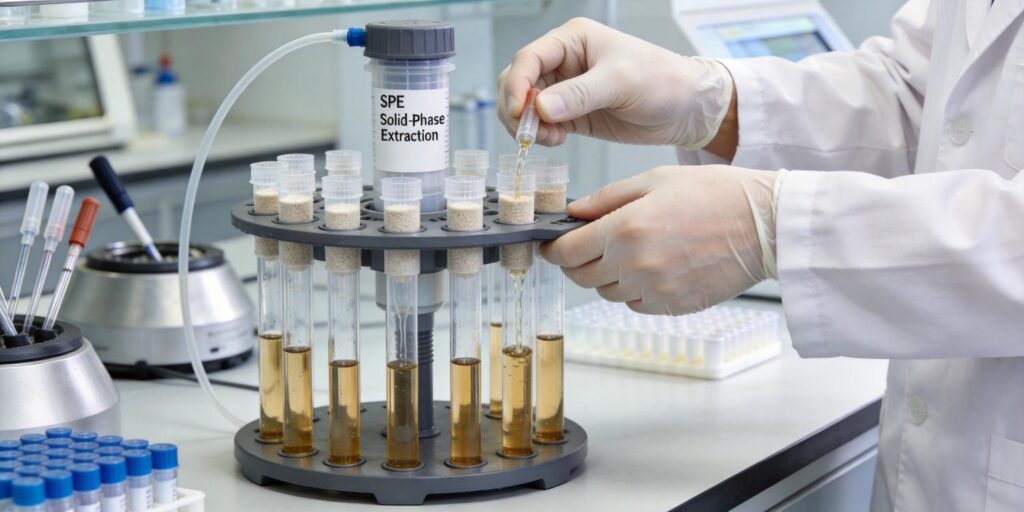
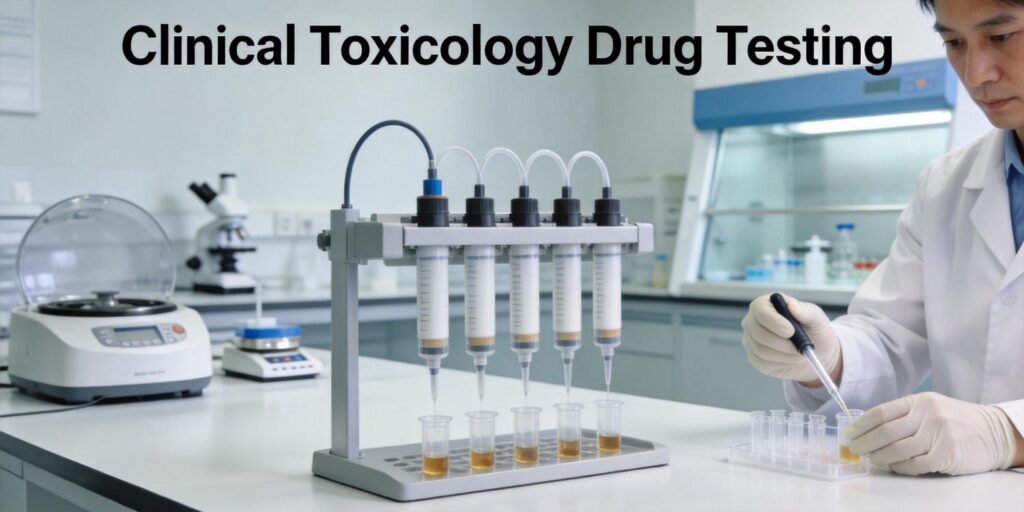
A typical SPE procedure for amino acids using MCX cartridges (e.g., Poseidon MCX SPE Cartridges) follows these steps:
- Condition: Pass 3 mL methanol, then 3 mL water, followed by 3 mL of 0.1% formic acid in water (adjust pH to ~2–3).
- Load: Apply the sample (e.g., protein-precipitated plasma supernatant) at ~1 mL/min. Amino acids are protonated and retained by cation exchange.
- Wash: Rinse with 3 mL of 0.1% formic acid to remove salts and weakly bound interferences. For more stringent cleanup, include a 5% methanol wash.
- Elute: Use 3 mL of 5% ammonium hydroxide in methanol (v/v). The basic pH deprotonates the amino groups, releasing them from the cation exchanger.
- Evaporate & Reconstitute: Dry the eluate under nitrogen at 40°C and reconstitute in mobile phase compatible with LC-MS analysis.
For MAX sorbents, the workflow is similar but uses acidic elution (e.g., 2% formic acid in methanol) after loading at high pH (pH ~10–11).
Washing and Elution Optimization
Washing is critical for removing non-target interferences without losing amino acids. A common wash solvent is 0.1% formic acid (for MCX) or 0.1% ammonium hydroxide (for MAX). Adding a small percentage of organic solvent (e.g., 5–10% methanol) can help remove hydrophobic contaminants, but higher concentrations may elute weakly retained amino acids.
Elution optimization should aim for minimal volume to maximize concentration factor. Typically, 2–3 mL of elution solvent is sufficient for a 60 mg/3 mL cartridge. Breakthrough curves using spiked samples can determine the optimal volume. The elution solvent pH and ionic strength are key; for MCX, ammonia in methanol (5% NH4OH) or 5% ammonium hydroxide in methanol works well.
LC-MS Analysis
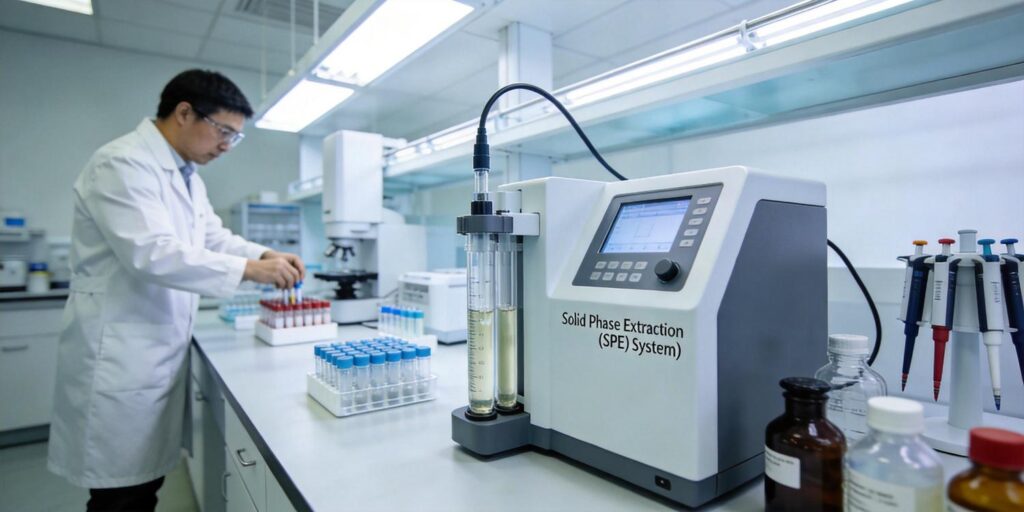
After SPE, the reconstituted sample is analyzed by LC-MS. Common approaches:
- Reversed-Phase LC: Use C18 columns with ion-pairing reagents (e.g., heptafluorobutyric acid) or derivatized amino acids. Derivatized samples are well retained and separated.
- Hydrophilic Interaction LC (HILIC): Ideal for underivatized polar amino acids. Mobile phases typically contain high acetonitrile (≥70%) with ammonium formate buffer.
- Mass Spectrometry: Triple quadrupole (QQQ) in MRM mode provides sensitive and specific quantification. For untargeted profiling, high-resolution MS (e.g., Q-TOF) is preferred.
Matrix effects should be evaluated by post-column infusion experiments. If ion suppression is observed, further optimization of the SPE wash steps or LC gradient may be needed.
Method Validation and Reproducibility
Reliable amino acid profiling demands rigorous validation. Key parameters include:
- Linearity: Calibration curves should span the expected concentration range (e.g., 1–500 µM) with R² > 0.99.
- Recovery: Spike known amounts at three levels (low, mid, high) in the matrix. Recovery should be 80–120% for most amino acids.
- Precision: Intra-day and inter-day variability (RSD) should be <15% for most analytes.
- Matrix Effects: Compare response in neat solution vs. post-extraction spiked matrix. Acceptable matrix effect is within ±20%.
- Limits of Detection (LOD) and Quantification (LOQ): Determine based on signal-to-noise ratios of 3 and 10, respectively.
Using a 96-well SPE plate can significantly improve throughput and reproducibility when processing large batches of biological samples. Automation reduces manual error and ensures consistent flow rates across wells.
By carefully selecting the SPE sorbent, optimizing pH conditions, and validating the method, researchers can achieve robust and reproducible amino acid profiling from complex biological matrices. This approach is widely applicable in clinical research, biomarker discovery, and nutritional studies.