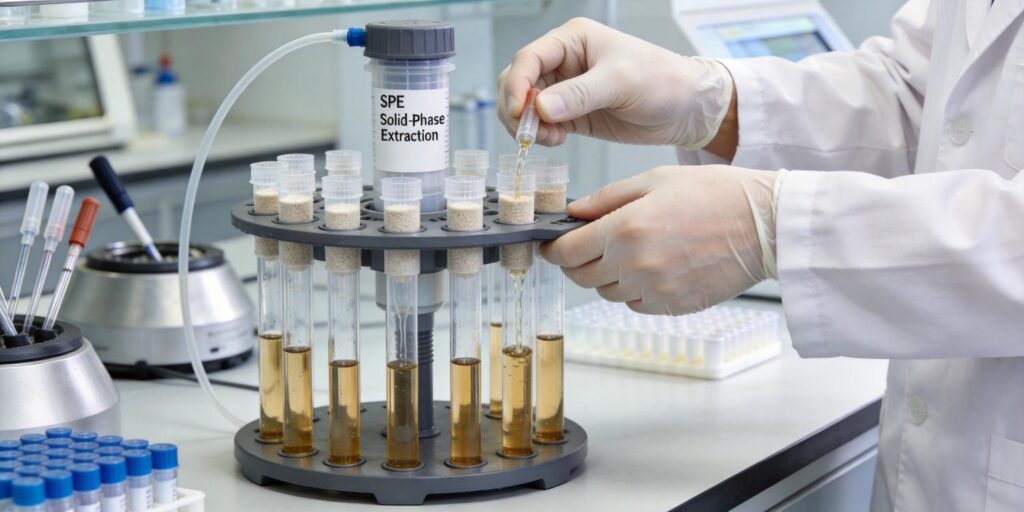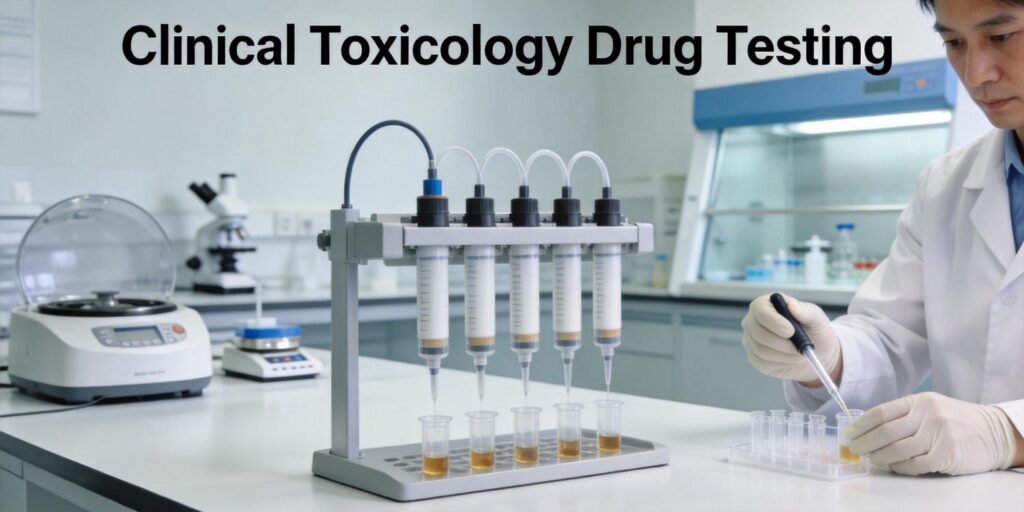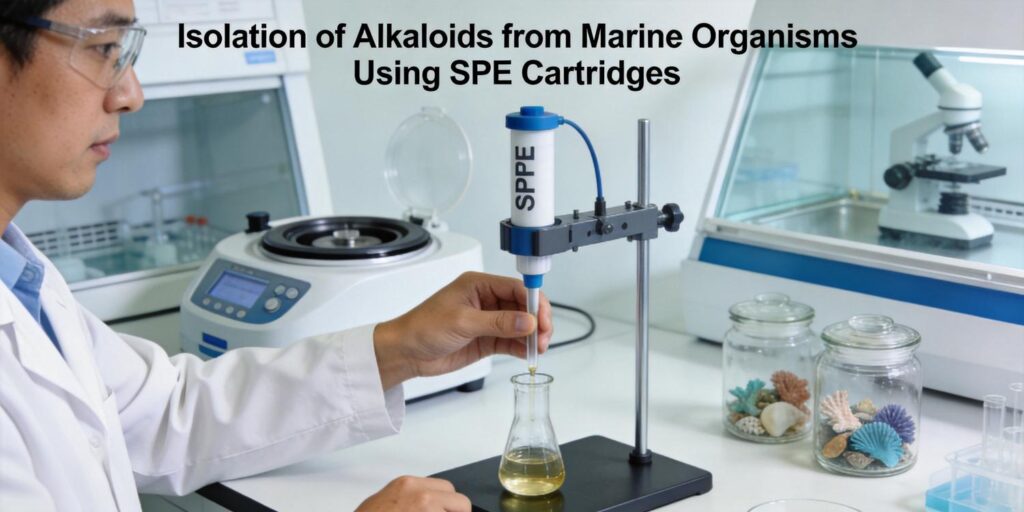
SPE Isolation of Bioactive Alkaloids from Marine Organisms
1. The Importance of Marine Alkaloids in Pharmaceutical Research
Marine alkaloids represent a structurally diverse class of natural products with significant pharmacological potential. Isolated from organisms such as sponges, tunicates, and algae, these compounds exhibit anticancer, anti-inflammatory, antimicrobial, and neuroprotective activities. Notable examples include the anticancer agent trabectedin (Yondelis®) derived from the tunicate Ecteinascidia turbinata and the analgesic ziconotide (Prialt®) from cone snail venom. The unique chemical scaffolds of marine alkaloids often inspire the development of novel synthetic drugs. However, their low abundance in complex biological matrices necessitates efficient and reproducible isolation methods. Solid-phase extraction (SPE) has emerged as a critical technique for the preconcentration and purification of alkaloids prior to downstream analysis or bioassay-guided fractionation.
2. Extraction from Marine Sponge or Algae Samples
Initial sample preparation begins with the collection and homogenization of marine biomass (e.g., sponge or algae). A typical extraction protocol involves maceration or ultrasonication with acidified methanol (e.g., 0.1% formic acid in MeOH) to protonate basic alkaloids and improve solubility. The crude extract is then filtered and concentrated under reduced pressure. For lipid-rich samples, a liquid-liquid partition with hexane or dichloromethane can remove non-polar interferences. The resulting aqueous-methanolic phase is adjusted to an appropriate pH (typically 2-4) to ensure alkaloids remain in their ionized form for optimal SPE retention.
3. SPE Sorbent Selection for Basic Compounds
For the retention of basic alkaloids (pKa typically 6-10), mixed-mode reversed-phase/strong cation exchange (C8/SCX or C18/SCX) sorbents are highly recommended. Our MCX SPE Cartridges offer a unique blend of hydrophobic C18 chains and sulfonic acid groups, providing dual retention mechanisms: reversed-phase interactions for the carbon backbone and ionic interactions for protonated amine groups. Alternatively, WCX SPE Cartridges (weak cation exchange) are suitable for strongly basic alkaloids (pKa >10) where selective elution under mild conditions is desired. For neutral or zwitterionic alkaloids, HLB SPE Cartridges (hydrophilic-lipophilic balanced) provide broad pH stability and high loading capacity.
4. Conditioning and Loading Extracts
Proper conditioning is essential for reproducible SPE performance. For MCX cartridges, a standard protocol includes: (1) 1 mL methanol, (2) 1 mL deionized water, and (3) 1 mL of loading buffer (e.g., 0.1% formic acid in water, pH ~2.7). The acidified aqueous extract is then loaded at a flow rate of 1-2 mL/min. To maximize recovery, the loading volume should not exceed the sorbent’s breakthrough capacity (typically 5-10% of the sorbent weight). For highly viscous extracts, dilution with loading buffer is recommended to reduce clogging.
5. Washing Steps Removing Salts and Lipids
After loading, a sequential wash regime effectively removes interferences. First, 1 mL of 0.1% formic acid in water elutes salts, polar pigments, and sugars. Second, 1 mL of methanol removes neutral lipids, chlorophyll, and other hydrophobic compounds while retaining alkaloids on the cation exchange groups. For MCX sorbents, this methanol wash is critical: the strong ionic interaction keeps protonated alkaloids bound even in 100% organic solvent. Optionally, a third wash with 1 mL of 5% ammonium hydroxide in methanol (for MCX) can neutralize residual acids before elution, depending on the target analytes.
6. Elution Solvents for Alkaloids
Elution of alkaloids from mixed-mode sorbents typically requires a basic organic solvent to deprotonate the amine groups and disrupt ionic interactions. For MCX cartridges, 1-2 mL of 5% ammonium hydroxide in methanol (v/v) is the standard eluent. For WCX, acidic methanol (e.g., 2% formic acid in MeOH) may be used. The eluate is collected, evaporated under nitrogen, and reconstituted in a suitable LC-MS mobile phase. If higher selectivity is needed, stepwise elution with increasing methanol content (e.g., 20%, 50%, 80% MeOH in 0.1% NH4OH) can fractionate alkaloids by polarity. For high-throughput applications, our 96-Well SPE Plates allow parallel processing of multiple samples with compatible vacuum manifolds.
7. LC-MS Detection Workflow
The purified alkaloid fraction is analyzed by reversed-phase LC-MS using a C18 column (e.g., 2.1 × 100 mm, 1.7 μm) with a gradient of 0.1% formic acid in water (A) and acetonitrile with 0.1% formic acid (B) over 15-30 min. For targeted analysis, multiple reaction monitoring (MRM) in positive ion mode is preferred, using precursor-to-product ion transitions characteristic of the alkaloid core. For untargeted discovery, high-resolution mass spectrometry (HRMS) with full-scan and data-dependent MS/MS provides molecular formula and structural information. The SPE step significantly reduces matrix effects (ion suppression), improving detection limits by 10- to 100-fold compared to direct injection of crude extracts.
8. Application in Natural Product Discovery
SPE-based purification is integral to modern marine natural product discovery pipelines. For example, in a recent study on the sponge Haliclona sp., MCX SPE enabled the isolation of nine brominated alkaloids that exhibited nanomolar activity against the malaria parasite Plasmodium falciparum. The method’s scalability from milligrams to grams facilitates bioassay-guided fractionation and dereplication using databases like MarinLit. By coupling SPE with high-throughput screening, researchers can rapidly prioritize bioactive fractions. For laboratories requiring robust, reproducible results, our MAX SPE Cartridges (mixed-mode anion exchange) offer complementary selectivity for acidic metabolites, while WAX SPE Cartridges are ideal for weak acids. Together, these tools empower scientists to explore the full chemical diversity of marine ecosystems.
For more detailed protocols and application notes, visit Poseidon Scientific or contact our technical support team.