Maintenance & Troubleshooting

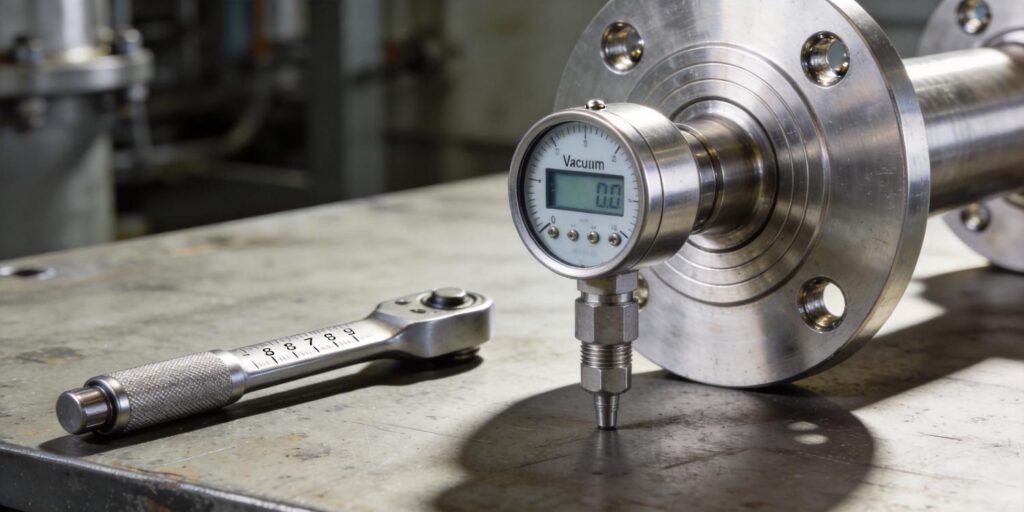
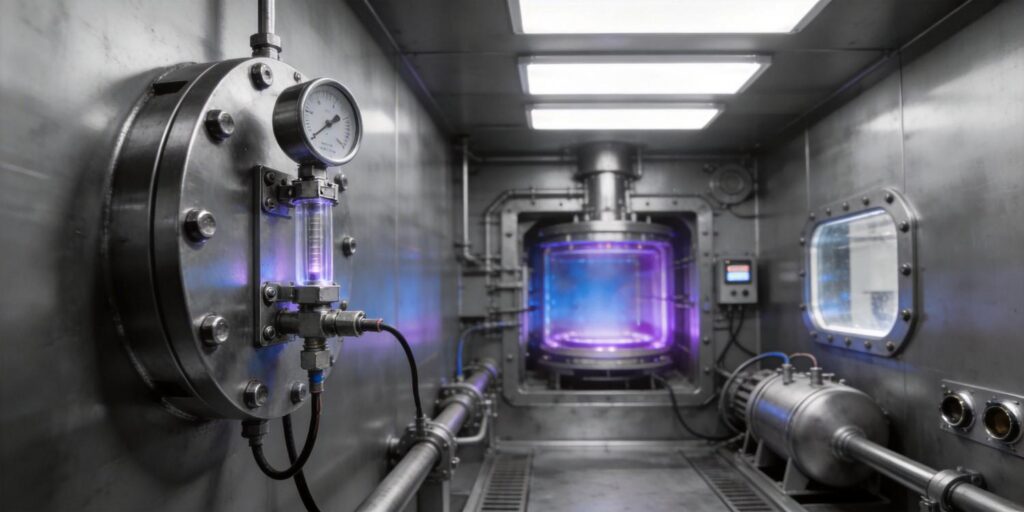
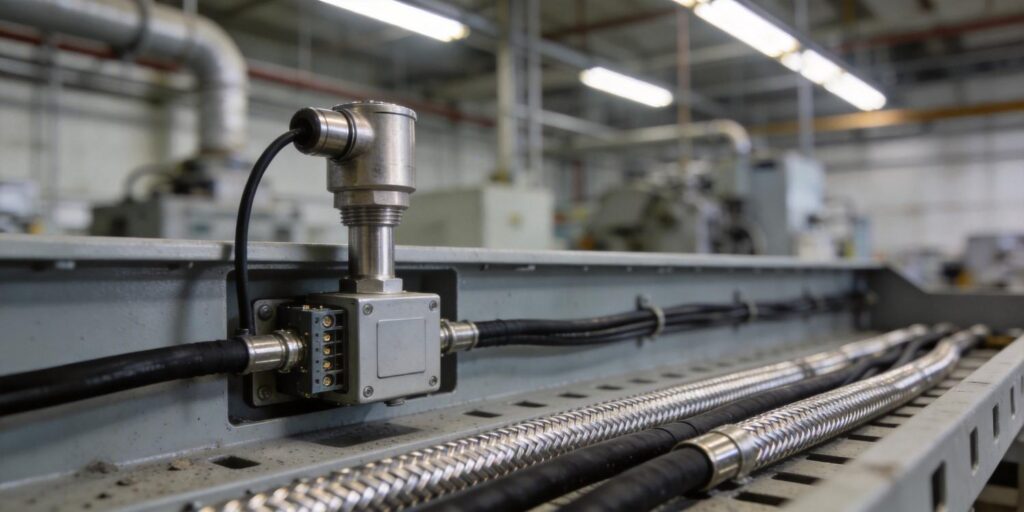
Two vacuum gauges mounted on industrial vacuum pipeline

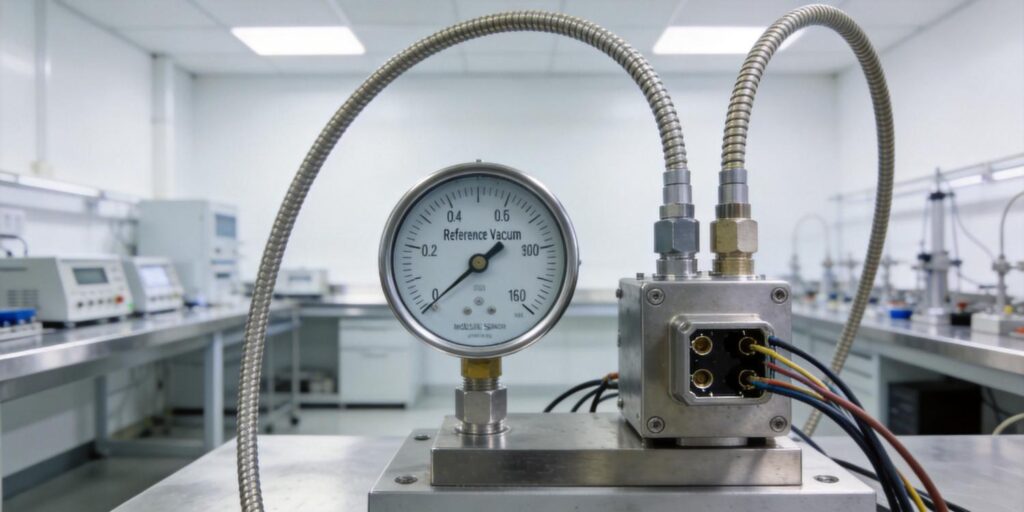
How to Verify Vacuum Gauge Accuracy Without a Reference Standard

In vacuum systems for mass spectrometry, semiconductor processing, vacuum heat treatment, and lithium-ion battery production, gauge accuracy directly impacts process yield, safety, and repeatability. Yet most production environments lack access to a certified reference standard or a full calibration chamber. Poseidon Scientific’s VG-SP205 Pirani Vacuum Transmitter and VG-SM225 Cold Cathode Vacuum Gauge are factory-calibrated against […]

How to Verify Vacuum Gauge Accuracy Without a Reference Standard Read More »

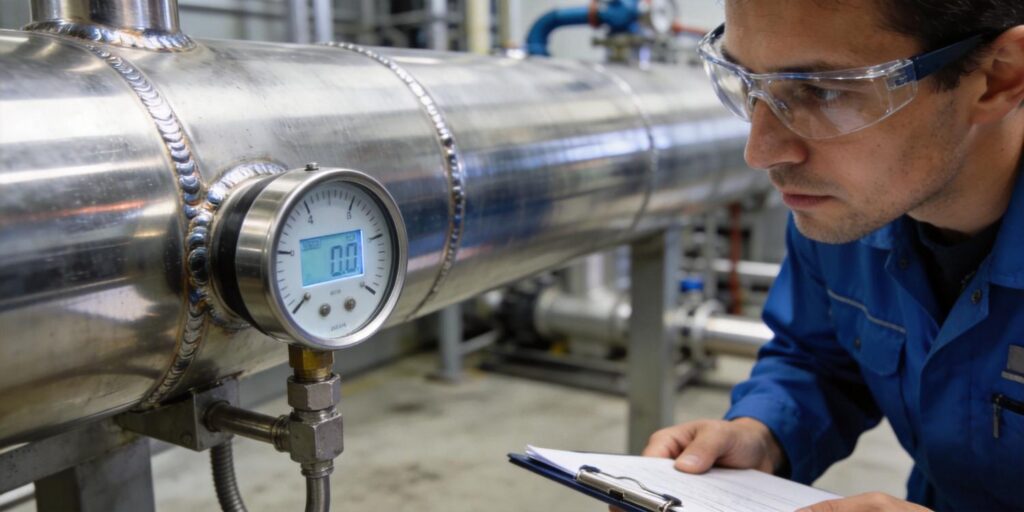
Vacuum gauge mounted on heated high vacuum chamber

How to Prevent Vacuum Gauge Damage During Chamber Bake-Out

In high-vacuum systems used for semiconductor processing, mass spectrometry, vacuum heat treatment, and medical-device sterilization, a bake-out cycle is the final step to reach true ultra-high vacuum. By heating the chamber walls, flanges, and internal components to 150–250 °C (or higher) for 12–48 hours under active pumping, adsorbed water vapor, hydrocarbons, and other contaminants are

How to Prevent Vacuum Gauge Damage During Chamber Bake-Out Read More »

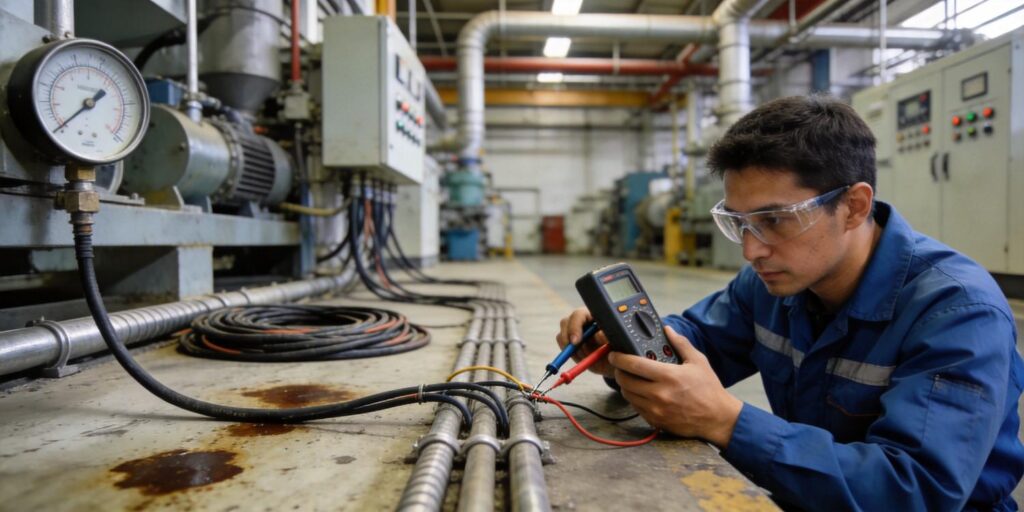
Vacuum gauges installed on continuously operating industrial system

Evaluating Vacuum Gauge Performance Under Continuous 24/7 Operation

In vacuum-dependent industries—semiconductor fabrication, mass spectrometry, vacuum heat treatment, and medical-device sterilization—systems often run 24/7 for months or years without interruption. A gauge that drifts, fails to start, or suddenly reports an erroneous reading can halt production, compromise yield, or trigger costly scrap. Evaluating vacuum gauge performance under continuous duty therefore goes far beyond datasheet

Evaluating Vacuum Gauge Performance Under Continuous 24/7 Operation Read More »

Vacuum gauge installed on industrial production line

Vacuum Gauge Calibration Drift Over Long Operating Cycles

Electronic Aging Effects Vacuum gauge calibration drift over long operating cycles often originates in the electronics rather than the sensor itself. High-voltage converters in cold-cathode gauges and precision constant-temperature circuits in Pirani gauges rely on reference voltages, operational amplifiers, and capacitors that exhibit gradual aging. Even with high-stability components, resistor values can shift by 0.1–0.5

Vacuum Gauge Calibration Drift Over Long Operating Cycles Read More »

Cold cathode vacuum gauge installed on stainless vacuum chamber

Cold Cathode Gauge Ignition Delay After Extended Shutdown

Cold Cathode Gauge Ignition Delay After Extended Shutdown Extended shutdowns—whether for scheduled maintenance, facility upgrades, or seasonal downtime—are common in vacuum heat-treatment furnaces, mass-spectrometer labs, and scanning electron microscope installations. When the system is brought back online, operators frequently observe longer-than-normal ignition delays on cold-cathode gauges. The VG-SM225 Cold Cathode Vacuum Gauge from Poseidon Scientific

Cold Cathode Gauge Ignition Delay After Extended Shutdown Read More »

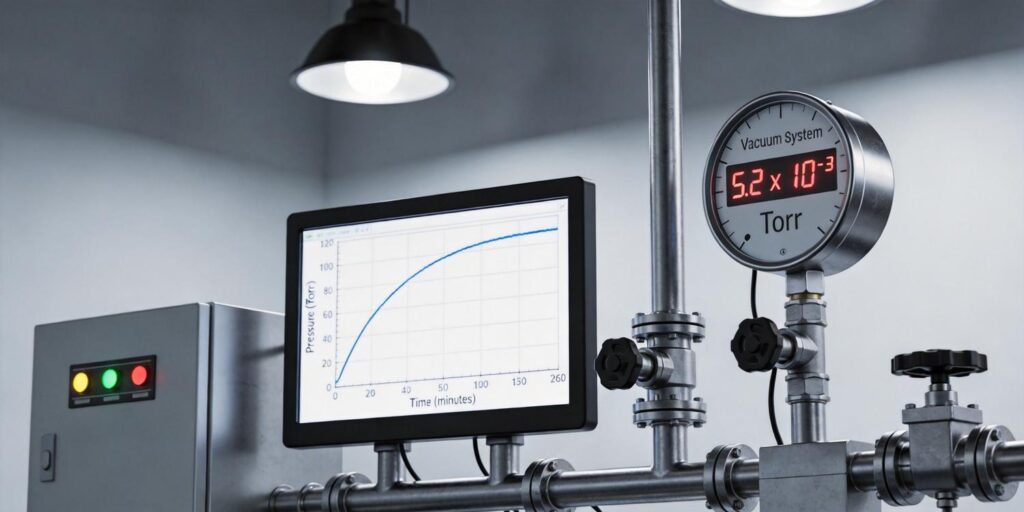
Vacuum gauge display during pump-down process

Why Your Vacuum Gauge Shows Pressure Plateau During Pump-Down

Defining the Plateau Phenomenon in Vacuum Pump-Down During a typical vacuum pump-down cycle in systems like mass spectrometers, scanning electron microscopes, or heat-treatment furnaces, pressure initially drops exponentially as the pump evacuates bulk gas. However, engineers often observe a “plateau”—a region where the pressure decline flattens or halts temporarily, as indicated by stable readings on

Why Your Vacuum Gauge Shows Pressure Plateau During Pump-Down Read More »

Vacuum gauge installed with protective enclosure in humid facility

Vacuum Gauge Failure Modes in High-Humidity Environments

Vacuum Gauge Failure Modes in High-Humidity Environments High-humidity laboratories, tropical installations, or facilities near steam processes create unique challenges for vacuum instrumentation. Even when the vacuum chamber itself remains dry, ambient moisture can condense on external surfaces, penetrate connectors, or migrate along feedthroughs when the system vents. For the VG-SP205 Pirani Vacuum Transmitter and VG-SM225

Vacuum Gauge Failure Modes in High-Humidity Environments Read More »

Cold cathode vacuum gauge mounted on vented chamber

Cold Cathode Gauge Recovery After Exposure to Atmosphere

Recovering Your Cold Cathode Vacuum Gauge After Atmospheric Exposure In high-vacuum systems, brief exposure to atmosphere is inevitable—whether during chamber maintenance, sample loading, or routine venting. For the VG-SM225 Cold Cathode Vacuum Gauge from Poseidon Scientific, such events introduce temporary challenges to plasma discharge stability. Unlike hot-cathode gauges, cold-cathode designs rely on Penning discharge, which

Cold Cathode Gauge Recovery After Exposure to Atmosphere Read More »

Pirani vacuum transmitter mounted on production vacuum line

Thermal Drift in Pirani Gauges During Long Production Runs

In long-duration production runs—such as continuous PVD coating, vacuum heat treatment, or 24/7 semiconductor processing—Pirani vacuum gauges face a subtle but persistent challenge: thermal drift. Over hours or days of continuous operation, small changes in filament temperature, ambient conditions, and electronic components accumulate, shifting the reported pressure by 10–30 % even when actual chamber vacuum

Thermal Drift in Pirani Gauges During Long Production Runs Read More »

Vacuum gauge installed on chamber during venting

Vacuum Gauge Failure After Sudden Venting: Root Cause Analysis

Sudden venting—dropping a vacuum chamber from high vacuum to atmosphere in seconds—remains one of the most common causes of premature vacuum gauge failure. Engineers and maintenance teams report filament burnout in Pirani transmitters, erratic readings or permanent electrode damage in cold-cathode gauges, and occasional electronics faults after unplanned fast vents. These failures are not random;

Vacuum Gauge Failure After Sudden Venting: Root Cause Analysis Read More »

Shopping Cart
Poseidon Scientific
Privacy Overview

This website uses cookies so that we can provide you with the best user experience possible. Cookie information is stored in your browser and performs functions such as recognising you when you return to our website and helping our team to understand which sections of the website you find most interesting and useful.